

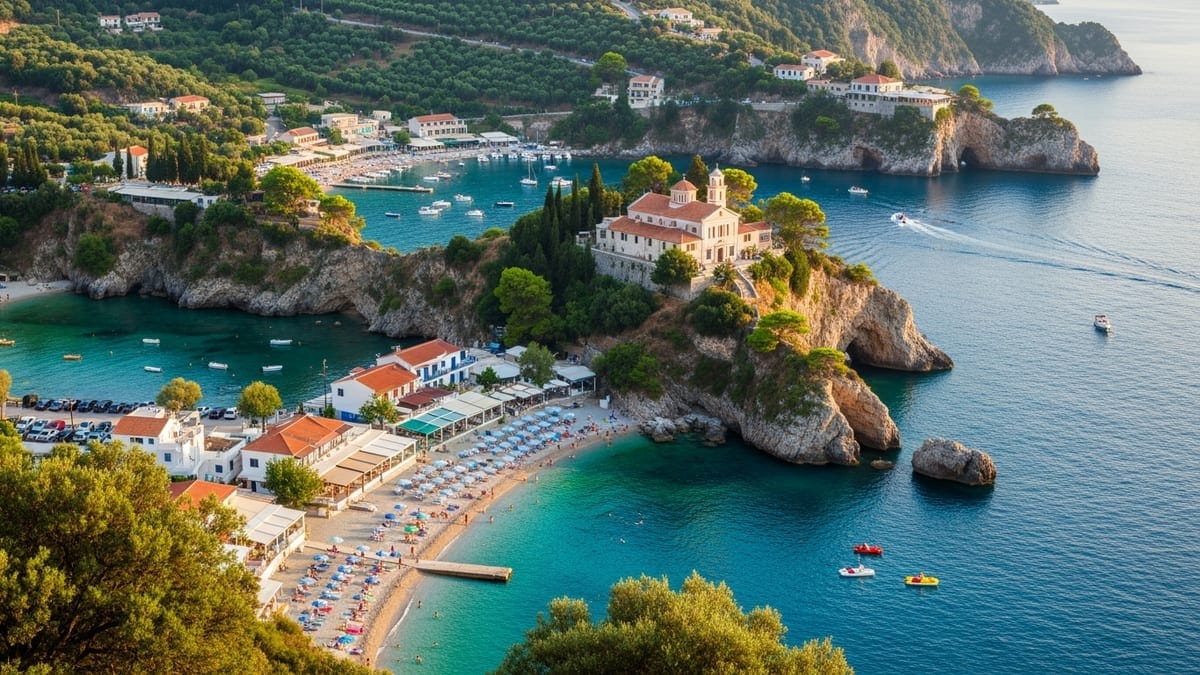
Paleokastritsa is one of Corfu’s most photographed corners, a dramatic meeting of forested headlands, limestone cliffs and small turquoise bays that look almost unreal in strong sunlight. Frequently used as a postcard image for the island, this compact resort on Corfu’s northwest coast balances beach life with boat trips, cliffside viewpoints and a centuries-old monastery looking down from above. Whether you are planning a day trip from Corfu Town or a longer stay, Paleokastritsa rewards visitors who know how to time their visit, choose the right bay and escape the midday crowds.
Getting Your Bearings in Paleokastritsa
Paleokastritsa is not a single continuous beach but a cluster of small coves and bays separated by rocky promontories. The main hub sits around Agios Spiridon, often simply called Paleokastritsa Beach, where you will find the largest car park, several tavernas, boat jetties and the bus stop. From here, narrow roads and paths branch off toward neighboring coves such as Agios Petros and Ampelaki, as well as up the hill to the famous Monastery of the Virgin Mary.
The resort lies roughly 25 to 30 minutes by car from Corfu Town and the island’s airport, though traffic in peak summer can stretch this considerably. Public buses run several times daily from Corfu Town on the Green Line network, taking about 45 minutes and stopping close to the main beach, which makes visiting without a car perfectly feasible if you are prepared to work around the timetable. Taxis and organized excursions offer additional options, often combining Paleokastritsa with hilltop viewpoints or nearby villages.
The landscape here is what sets Paleokastritsa apart. Steep hills carpeted in olive trees rise directly behind the bays, while limestone cliffs plunge into deep water only a few meters from shore. Underwater springs keep the sea notably cool even in midsummer, which surprises some visitors but also contributes to remarkable clarity, ideal for snorkeling. Once you understand this geography, it becomes easier to plan your days, alternating between beaches, viewpoints and time out on the water.
Orientation is simple: the main road follows the coastline, passing the different bays and climbing gradually to the monastery. Walking between coves is possible and often pleasant, but gradients are steep in places and summer temperatures can make short distances feel longer than they look on a map. Comfortable footwear, water and patience with traffic are useful even if you are just exploring the resort itself.
Beaches and Bays: Choosing Where to Swim
Paleokastritsa’s appeal rests heavily on its small beaches, each with its own character but all sharing vivid water that shifts quickly from emerald to inky blue with depth. Six main beaches are usually mentioned: Agios Spiridon, Agios Petros, Ampelaki, Alipa, Agia Triada and a small cove beneath La Grotta. All are pebbly or mixed sand and shingle, so beach shoes are highly recommended for entering the water comfortably.
Agios Spiridon is the busiest and most accessible, framed by cliffs and with direct access to the central car park, restaurants, boat rentals and the path up to the monastery. Sunbeds and umbrellas line much of the shore in high season, and space can be tight by late morning. Agios Petros, on the opposite side of the small peninsula, is smaller and slightly quieter while still offering sunbeds and easy access to sea caves by paddleboat or small boat. Ampelaki sits just beyond and often feels more relaxed, with similar facilities and impressive cliffs enclosing the bay.
Agia Triada and the beach near La Grotta bar lie slightly further around the headland and draw visitors who want to combine swimming with a livelier bar scene. Here, platforms built into the rock allow for cliffside sunbathing and jumping into deeper water. It is atmospheric, particularly later in the day when the sun begins to soften on the cliffs. Families with small children often prefer the shallower, more sheltered sections of Agios Spiridon or Alipa, near the small port, where the entry into the water is more gradual and boat traffic is more controlled.
Water temperature is an important consideration. Even in July and August the sea here can feel brisk, especially when you first step in, and it remains cooler than many other Corfiot beaches through much of the season. For many travelers that is part of the attraction, especially during heatwaves, but if you are particularly sensitive to cold water you may want to time your swims for mid to late afternoon, when the sun has had longest to warm the shallows.
Top Things to See and Do
Beyond lying on the beach, Paleokastritsa offers a surprisingly full list of activities for such a compact area. At the heart of most itineraries is the Monastery of the Virgin Mary, or Theotokos Monastery, perched on a rocky headland above the main bay. Founded in the 13th century and largely rebuilt in later centuries, it remains a working monastery with a small community of monks, a chapel, simple museum and a series of gardens and courtyards scented with flowers and incense. Admission is free, though donations are appreciated, and dress codes require shoulders and knees to be covered.
From the main beach, the walk to the monastery takes around ten minutes uphill along the road, with limited parking at the top that quickly fills in high season. Many visitors combine a monastery visit with a short walk out to nearby viewpoints, which offer some of the best panoramic photographs of the bays below. Paths lead from just beside the monastery and from behind a nearby restaurant, and although some routes feel a little overgrown, they reward perseverance with wide views of cliffs, islets and the open Ionian Sea.
Down at sea level, a defining Paleokastritsa experience is exploring the coastline by boat. Small tour boats operate from jetties at Agios Spiridon, Agios Petros and Alipa Port, offering 30 to 45 minute trips into sea caves and along the cliffs. These usually include the famous Blue Eye Cave, where sunlight reflecting off the shallow seabed gives the water an intense turquoise glow. Operators typically do not require advance booking on normal summer days; you can simply walk up and take the next departure, though at the height of July and August short waits are not unusual.
For something different, Corfu Aquarium near the center of the resort gives a compact introduction to local marine life, including fish, octopus and some reptiles. It is a useful option for families, particularly on days when the sun or wind makes the beach less appealing. Combined with a wander through the small lanes behind the main beach and a coffee or ice cream stop, it can easily fill a half day without getting back in a car or on a bus.
Exploring by Boat and on the Water
The shape of the coastline around Paleokastritsa makes boat trips more than a simple add-on. Many of the prettiest coves and caves are best seen from the water, and the perspective from a small boat looking back at the cliffside monastery is dramatically different from what you see on land. Beyond short cave tours, independent boat rental has become one of the most popular activities here for visitors comfortable with a bit of basic seamanship.
In Greece, small motorboats below a certain engine power can be rented without a boat license, and that rule continues to apply in Paleokastritsa. Several companies based around Alipa Port and Agios Petros offer half-day and full-day rentals, typically including a brief lesson on controls, safety and local navigation rules before you depart. Prices vary by season, boat size and duration, but travelers often report full-day rentals in high summer costing in the low to mid hundreds of euros, plus fuel. Pre-booking can be useful in July and August, but outside peak season many visitors arrange rentals on the day.
With your own boat you can access quieter beaches along the coast that are difficult or time-consuming to reach on foot, including remote stretches of shingle where there are no facilities at all. It is common to drop anchor in a deserted cove, swim from the boat and simply drift with views back to the green hills. Safety should always come first: pay attention to wind forecasts, keep clear of cliff edges where rockfall is possible, and respect swimming zones near organized beaches where motorboats are restricted.
For those who prefer to stay closer to shore, pedalos, kayaks and stand-up paddleboards are widely available for rent on the main beaches. The relatively calm, enclosed nature of the bays makes them suitable for beginners on quieter days, though boat traffic and chop increase substantially at the height of the season. Snorkeling is rewarding around the rocky edges of the bays and near cave entrances, where clear water reveals schools of smaller fish, sea urchins and interesting rock formations. Always enter and exit the water well clear of boat lanes, and consider wearing a bright rash vest for visibility.
Hiking, Viewpoints and Nearby Villages
Although Paleokastritsa is best known as a seaside resort, the surrounding hills offer some of Corfu’s most celebrated viewpoints, especially around the traditional village of Lakones. Often described as a balcony above the Ionian Sea, Lakones stretches along a ridge high above the bays, with several cafés and terraces looking straight down on the headlands and coves that define Paleokastritsa. These viewpoints are particularly striking in late afternoon or around sunset, when the low angle of the light picks out details in the cliffs and the sea deepens to a rich blue.
Reaching Lakones can be done by car or taxi using the main road that snakes up from Paleokastritsa, but hikers often favor the old “Donkey Path” trail that climbs from the resort through olive groves and forest to the village. Allow 30 to 45 minutes for the ascent depending on your fitness and the heat, and expect a steep but shaded path in many sections. Good shoes, water and sun protection are essential, especially in summer. From Lakones you can return the same way or continue along quiet roads and paths to other hill villages before looping back down by road or trail.
Shorter walks radiate from around the monastery area, where rough paths head out along the cliffs to natural lookouts above the open sea. These are not formal hiking routes but rather informal tracks used by locals and repeat visitors, so surfaces can be uneven and sometimes overgrown. The reward, beyond the views, is a sense of being quickly away from the bustle at the main beach even on busy days. Late afternoon and early evening are prime times for these small excursions, when temperatures ease and crowds thin out.
If you have a car and a full day to explore, it is easy to combine Paleokastritsa with other west-coast stops, including the larger bay at Agios Georgios to the north or the inland villages near mountaintop viewpoints. Several tour companies also run half-day or full-day excursions that link the beach, Lakones, nearby viewpoints and stops at local producers specializing in kumquat liqueur, olive oil or sweets. These can be convenient if you prefer not to drive on winding mountain roads.
Practical Tips: When to Go, Getting Around and Avoiding Crowds
Timing shapes the experience of Paleokastritsa more than almost any other factor. High season on Corfu typically runs from July through early September, when the weather is consistently hot and dry and sea temperatures reach their annual peak. In these months Paleokastritsa can become very busy, with narrow access roads clogged by rental cars, tour buses and coaches bringing day-trippers from other parts of the island and from cruise ships docking in Corfu Town.
If you visit in the height of summer, aim to arrive early in the day or late in the afternoon. Reaching the main beach before 9 a.m. makes it far easier to park, find space on the pebbles and book boat trips or sunbeds before the main rush. Many day visitors leave by mid to late afternoon, creating a second, quieter window from around 4 p.m. onward that often combines gentler temperatures with beautiful light. The busiest window tends to be late morning through mid-afternoon, especially on calm, sunny days following cooler or windy spells.
Shoulder seasons in May, June, late September and October provide a calmer experience. The weather is generally warm, though spring seas can still feel cool compared to the air. Accommodation prices often dip, and parking, restaurant space and boat rentals are all easier to secure without advance planning. Outside the main holiday period in August you are more likely to encounter a mix of couples, independent travelers and families rather than packed tour groups. From November to April, the resort is much quieter, with many facilities closed, but the monastery, viewpoints and coastal walks still appeal to off-season visitors and residents.
Parking is a common point of stress for drivers. A large paid car park sits just behind Agios Spiridon Beach and serves as the main parking area in season. It usually charges a flat daily rate and can fill by late morning on busy days. An unpaved lot near Alipa Port provides another option, which is particularly convenient if you are renting a motorboat, as most operators depart from there. Spaces near the monastery are controlled by traffic lights and are best attempted outside the core season, as queues form quickly when traffic volume is high. Public buses remove the parking challenge but require attention to schedules posted locally.
Where to Eat, Drink and Stay
Paleokastritsa’s dining scene reflects its role as a resort yet retains some local character, especially in tavernas that have served visitors for decades alongside returning Corfiot families. Seafront restaurants along Agios Spiridon and neighboring bays emphasize fresh seafood, grilled meats, salads and classic dishes such as moussaka, pastitsada and sofrito, often served with good house wine by the carafe. Prices at the water’s edge are higher than inland, particularly for drinks, but many visitors accept the premium in return for sunset views and the sound of waves washing over the pebbles.
Cliffside bars and cafés above the water offer a different atmosphere, particularly as day gives way to evening. La Grotta, set on steps cut into the rock with platforms built over the sea, has become one of the area’s emblematic spots, popular for cocktails, music and swims straight from the rocks into deep water. It appeals mainly to adults and older teens and stays lively into the evening in high season. Higher up, cafés in Lakones and around popular viewpoints pair simple snacks and drinks with what some travelers regard as the most impressive panoramas on the island.
Accommodation in Paleokastritsa ranges from small family-run guesthouses and simple rooms with kitchenettes to mid-range hotels and a handful of more upscale options. Many properties sit slightly up the hillside rather than directly on the water, trading a longer walk to the beach for wider views and quieter surroundings. Booking several months in advance is advisable for July and August, when repeat visitors and European holidaymakers often return to the same accommodation year after year. In spring and autumn, there is more flexibility to choose based on recent reviews, personal recommendations and proximity to particular beaches.
Self-catering apartments can be a good option if you plan longer stays or want to manage costs by preparing some meals yourself. Small supermarkets and bakeries in the resort stock basics, while Corfu Town’s markets and larger grocery stores, reachable by car or bus, offer wider choice. Many travelers opt to stay in Corfu Town or another resort and treat Paleokastritsa as a day-trip destination, which is entirely workable given the distances involved, especially outside the peak of the summer traffic.
Essential Etiquette, Safety and Environmental Considerations
Although Paleokastritsa is relaxed and geared heavily toward leisure, there are a few cultural and practical points worth bearing in mind. At the monastery, modest dress is not optional. Shoulders and knees should be covered for both men and women, and very short shorts or beachwear are inappropriate. Some visitors carry a light scarf or pareo to wrap around bare shoulders or legs before entering. Speaking quietly, refraining from intrusive photography inside the chapel and avoiding flash where prohibited all help maintain the atmosphere of a functioning religious site.
On the beaches, normal Greek resort etiquette applies. Sunbeds and umbrellas are typically rented via a local operator who patrols the shore collecting payment shortly after you settle in. Bringing your own towel and sitting on the public sections of beach is always allowed, though in the smallest coves beds can occupy a large portion of the shore. Music volume, especially from portable speakers, is a growing point of friction in many European beach resorts, so keeping sound at a level that does not disturb neighboring visitors is appreciated.
Safety on and around the water deserves attention, particularly for those renting their own boat or swimming near cave entrances. Lifejackets provided by rental companies should be worn by children and non-swimmers as a matter of course. Shrines and informal memorials occasionally seen on roadside bends and coastal paths are a reminder that local roads and cliffs demand respect, especially for drivers unused to narrow, winding routes with steep drops. Obey posted speed limits, avoid distracted driving on scenic stretches and resist the temptation to pull over in unsafe spots for photographs.
Finally, the fragility of Paleokastritsa’s environment becomes obvious once you look closely at the waterline. Pebble beaches and rocky coves can trap plastic and other debris, especially after storms or heavy boat traffic. Disposing of rubbish properly, minimizing single-use plastics, using reef-safe sunscreen formulas and avoiding feeding fish or disturbing marine life while snorkeling all help reduce your footprint. Local initiatives and businesses increasingly emphasize sustainable practices, but visitor behavior still plays a major role in preserving the clarity and beauty that make Paleokastritsa special.
The Takeaway
Paleokastritsa is one of those rare places that lives up to the glossy brochure images. Its concentration of small coves, cliffs, monastery and viewpoints mean that even a single well-planned day can feel rich and varied, while a longer stay allows you to settle into rhythms of morning swims, shaded siestas and late-afternoon excursions by boat or up into the hills. The key is to understand its geography and popularity, then work with them rather than against them, timing your movements to sidestep the heaviest traffic and busiest hours.
If you crave a combination of dramatic coastal scenery, clear and refreshing water, small-scale exploration and just enough infrastructure to make logistics straightforward, Paleokastritsa offers an appealing balance. Arrive early or linger late, climb at least once to a high viewpoint, enter the cool interior of the monastery and give yourself time to drift past cliffs and caves from the waterline. With a little planning, the resort’s postcard views become the backdrop to your own quiet moments, swims and sunsets, rather than something glimpsed only between crowds.
FAQ
Q1. How do I get to Paleokastritsa from Corfu Town or the airport?
Paleokastritsa is about 25 to 30 minutes by car or taxi from Corfu Town and the airport in light traffic. Green Line buses run several times a day between Corfu Town and Paleokastritsa, taking roughly 45 minutes and stopping close to the main beach. Many organized tours and cruise excursions also include Paleokastritsa as part of a west-coast itinerary.
Q2. What is the best time of year to visit Paleokastritsa?
The most pleasant balance of weather and crowd levels is usually found in late spring and early summer, from May to June, and again in late September and October. July and August bring the hottest temperatures and warmest sea, but also the biggest crowds and heaviest traffic. In winter, the area is quiet with many tourist services closed, though the scenery and monastery remain attractive.
Q3. Are the beaches in Paleokastritsa sandy or pebbly?
Most of Paleokastritsa’s beaches are pebbly or a mix of coarse sand and shingle, with rocky sea beds in many places. This contributes to the water’s clarity but can be uncomfortable for bare feet. Beach shoes or water shoes are strongly recommended for entering and exiting the sea, particularly at Agios Spiridon, Agios Petros and Ampelaki.
Q4. Do I need a boat license to rent a motorboat in Paleokastritsa?
For smaller motorboats within the power limits set by Greek law, you generally do not need a boat license, and rental companies are accustomed to first-time users. They provide a short briefing on controls, safety and local navigation rules before you leave. Larger or more powerful boats do require a license, so always check details with the specific operator before booking.
Q5. Is Paleokastritsa suitable for families with children?
Yes, Paleokastritsa works well for families, especially with school-age children who can handle pebbly beaches and enjoy snorkeling or short boat trips. The main bays have calm, sheltered water on most summer days, and Corfu Aquarium provides a break from the sun. Parents should be aware that some bars and cliffside spots cater more to adults and that certain areas have sudden depth changes close to shore.
Q6. What should I wear to visit the monastery?
Modest clothing is required at the Monastery of the Virgin Mary. Shoulders and knees should be covered for both men and women, and beachwear, very short shorts or bare midriffs are considered inappropriate. Many visitors carry a light wrap or scarf to adjust their outfits before entering. Comfortable shoes are also useful for the short uphill walk and exploration of the grounds.
Q7. How crowded does Paleokastritsa get in summer?
In July and August, especially during school holidays and on days when cruise ships are docked in Corfu Town, Paleokastritsa can feel very crowded. Roads into the resort may slow significantly, the main car parks often fill by late morning and popular beaches can be packed from around 11 a.m. to mid-afternoon. Arriving early, using buses where possible and planning activities for the edges of the day make a big difference.
Q8. Can I visit Paleokastritsa as a day trip, or should I stay overnight?
Both options are viable. A full day trip from Corfu Town gives enough time for beach time, a monastery visit and a short boat tour, especially if you arrive early. Staying one or more nights, however, lets you experience the resort after day-trippers have left, enjoy quieter mornings and explore viewpoints and nearby villages without rushing. Your choice depends on how much of the island you want to cover during your stay.
Q9. Is tap water safe to drink in Paleokastritsa?
Tap water on Corfu is treated and generally safe for brushing teeth and basic use, but many visitors and some locals prefer to drink bottled water, especially in coastal resorts where taste can be affected by mineral content. Bottled water is inexpensive and widely available in supermarkets, kiosks and hotels, so you can easily choose what feels most comfortable.
Q10. Are there ATMs and card payment options in Paleokastritsa?
Paleokastritsa has several ATMs and many hotels, restaurants and organized beach services accept major cards. However, smaller cafés, beach kiosks, boat operators and parking attendants may prefer or sometimes require cash. Carrying some euros in small denominations is wise for sunbed rentals, parking, tips and small purchases, particularly if you plan to explore beyond the main beach area.