

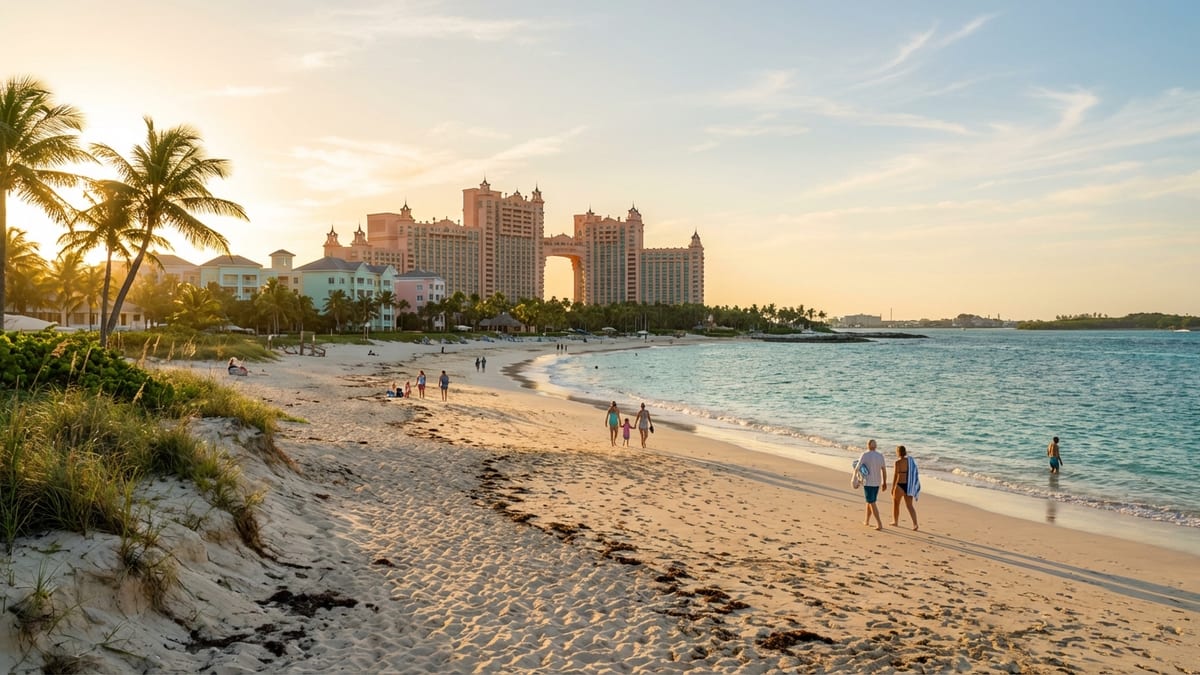
Paradise Island in the Bahamas has long been shorthand for the Caribbean escape of dreams. Picture pale gold sand shelving into clear turquoise water, pastel buildings framed by palms, and the striking pink towers of Atlantis rising above it all.
Thanks to its easy access from the United States, impressive resort infrastructure and classic Bahamian charm, this compact island next to Nassau has become one of the region’s most recognizable destinations. This guide explains where Paradise Island is, how it fits into the wider Bahamas, what to do once you arrive, and why it may deserve a place at the top of your travel list.
Where Paradise Island Is and How to Get There
Paradise Island sits just off the northern shore of New Providence Island in the Bahamas, separated from the capital city of Nassau by a sheltered harbor. Once known as Hog Island, it covers less than two square miles yet packs in beaches, marinas, residential neighborhoods and the huge Atlantis Paradise Island resort. Two arched bridges span Nassau Harbour and link the island directly to downtown Nassau, making it feel like an extension of the capital rather than a remote outpost.
For most travelers, the journey begins at Lynden Pindling International Airport on New Providence. This is one of the busiest airports in the Caribbean, with frequent direct flights from cities across the eastern and central United States, including Miami, Fort Lauderdale, Atlanta, New York and Charlotte, as well as service from Canada and Europe. From the airport, Paradise Island is typically a 30 to 45 minute transfer by taxi, private car or prearranged shuttle, depending on traffic through Nassau.
Arriving by sea is also common, especially for cruise passengers. Nassau is a major cruise port, and from the harbor it is only a short taxi ride over the bridge or a quick ferry transfer to Paradise Island. Private boaters can dock at Atlantis Marina, a well-equipped harbor that can accommodate mega-yachts, or at smaller marinas around the island. Whether you come by ship or plane, the key point is that Paradise Island is not remote in a logistical sense. Its proximity to major air and sea routes has been central to its development as a tourism powerhouse.
Once on the ground, getting around is relatively straightforward. Many visitors stay at resorts offering internal shuttles, and taxis are plentiful along the main hotel strip. The island is compact enough that confident walkers can traverse large sections on foot, especially between Atlantis, adjacent beaches and nearby dining and shopping areas. This ease of circulation reinforces the feeling of being in a self-contained vacation bubble, while downtown Nassau and the rest of New Providence remain only a short ride away if you want to explore further.
Understanding Paradise Island: More Than Just Atlantis
Although many people use the name Atlantis interchangeably with Paradise Island, the island is more than a single resort. The best-known landmark is indeed the sprawling Atlantis Paradise Island complex, which occupies a large section of the island’s north shore and harborside. The resort includes multiple hotel towers, the Aquaventure water park, a large casino, extensive marine habitats, and an array of restaurants, shops and entertainment venues. For many families, Atlantis alone can easily fill an entire vacation.
Beyond the resort boundaries, though, Paradise Island contains residential communities, smaller hotels and guesthouses, and stretches of beach that are not directly owned by Atlantis. The coastline on the north side faces the open Atlantic and offers a continuous run of sand and surf that carries on from the main resort beaches. To the south, toward Nassau Harbour, marinas and low-rise developments give way to views back across to the capital’s waterfront and cruise docks. For travelers, this split personality means that you can choose between the intense, theme-park-like energy of Atlantis or a quieter base on other parts of the island while still enjoying easy access to its facilities.
The island’s history also adds context. It evolved from an agricultural and relatively undeveloped landscape into a resort playground in the mid twentieth century, initially under different ownership and branding. Today it functions as a high-density tourism zone, with year-round visitors and a resident community that supports the hospitality industry. Understanding that Paradise Island is both a local neighborhood and an international destination helps explain its blend of Bahamian culture and global resort amenities.
For travelers deciding where to stay, one practical implication is that you should think in terms of zones rather than a simple resort name. The Atlantis complex alone contains multiple distinct hotels, while nearby properties and vacation rentals can offer a very different atmosphere. Proximity to the bridges, to the beach, or to the marina may matter more to your day-to-day experience than the island’s small dimensions would suggest.
Top Things to Do on Paradise Island
Paradise Island’s appeal lies in how many activities are packed into such a limited footprint. For many visitors, the starting point is the beach. The main strand along the north shore delivers the classic Bahamian scene of soft sand and clear, bright water. Conditions range from gentle lapping waves on calmer days to more energetic surf when Atlantic swells roll in, which can be fun for strong swimmers but may require caution for families with small children. Beach chairs, umbrellas, and watersports rentals are widely available in front of the larger resorts, while quieter sections remain less developed.
Water-based recreation extends well beyond simply swimming. Operators offer snorkeling trips to nearby reefs, boat excursions to neighboring cays, and fishing charters that depart from Paradise Island and Nassau marinas. The waters around New Providence are known for good visibility, especially in settled weather outside of stormy periods, which makes them appealing for beginner and intermediate snorkelers and divers. Even without leaving the island, many hotels feature multiple pools, some designed for laps and others for lounging with swim-up bars or shallower play areas for children.
The headline attraction within Atlantis is Aquaventure, a 141 acre water park that combines high-speed slides, river rides and family pools. Signature features like the near-vertical Leap of Faith slide, which passes through a clear tunnel in a shark-filled lagoon, have become some of the most recognizable images associated with the resort. Lazy rivers with rapids, multi-person raft rides and a web of smaller slides and splash zones mean you can easily spend an entire day rotating between adrenaline rushes and quieter water time. Access terms vary by where you are staying, so it is worth confirming whether park admission is bundled with your accommodation.
On dry land, entertainment options range widely. The resort complex hosts a large casino, a program of live music and special events, and a dedicated kids’ club with organized activities. Outside the resort, you can enjoy tennis facilities, a spa, and a championship golf course at Ocean Club Golf Course, which occupies a scenic stretch of the island’s eastern end and is known for sweeping ocean views and well maintained fairways. These amenities, combined with the beaches and marine activities, allow you to tailor your days to be as active or as relaxed as you wish.
Atlantis Paradise Island: Inside the Flagship Resort
Atlantis Paradise Island dominates the visual and experiential landscape of the island. The resort originally opened under a different guise in the late 1960s but evolved into its current Atlantis identity in the late 1990s. Today it stretches across hundreds of acres and encompasses multiple hotel towers, each catering to different budgets and styles of travel. The Royal is perhaps the most iconic building, instantly recognizable for the grand arch joining its two towers. The Coral and The Beach generally target families and value-focused guests, while The Cove and The Reef offer more upscale, suite-style accommodations, some with residential touches like kitchenettes.
Central to the Atlantis concept is the integration of marine life. The resort maintains one of the world’s largest open-air marine habitats, with lagoons and aquariums that house sharks, rays, tropical fish and other species. Many of these habitats are woven into the architecture, with viewing tunnels and open lagoons visible from walkways, lobbies and restaurants. Dolphin Cay, a dedicated marine area, serves as both a guest attraction and a base for conservation and rehabilitation work, with programs that allow visitors to interact with dolphins and sea lions under controlled conditions.
The casino at Atlantis is a major draw for adults, particularly those familiar with Las Vegas-style gaming environments. Spanning tens of thousands of square feet, it offers an extensive mix of table games and slot machines in a bright, high-energy setting that often stays active late into the night. Surrounding the casino are numerous bars, lounges and restaurants, so even non-gamblers can soak up the atmosphere with a drink or meal while others play. For nightlife, an on-site nightclub and rotating schedule of concerts and special performances provide options well past typical resort quiet hours.
It is entirely possible to spend several days without leaving the resort grounds, especially if you have children in tow. Atlantis operates organized kids’ programs, teen hangouts, a small movie theater and even a library, alongside the water park and pools. Shopping arcades feature international and Bahamian brands, from resort wear and jewelry to art and local crafts. This may appeal to travelers who prioritize convenience and variety, though those in search of quieter, more local experiences may want to balance resort time with explorations beyond the property.
Food, Drink and Nightlife on Paradise Island
Culinary options on Paradise Island are more extensive than its size suggests. Within Atlantis alone, there are dozens of restaurants and bars, ranging from casual poolside grills and coffee shops to high-end venues associated with internationally known chefs. Recent years have seen an emphasis on positioning the resort as a serious dining destination, with a mix of Caribbean flavors, contemporary American dishes, Italian cooking and Japanese cuisine among the highlights. For guests, this means you can sample a different style of meal each night without repeating venues.
Reservations are often recommended for the more sought-after restaurants, particularly during peak travel periods such as major holidays, school breaks and large event weeks. Menus typically blend imported ingredients with locally sourced seafood, including grouper, snapper and conch when available. Pricing reflects the resort setting and can be high by Caribbean standards, so budget-conscious travelers may choose to mix fine-dining evenings with simpler meals at casual spots or consider accommodations with kitchen facilities to allow for occasional self-catering.
Beyond the big-name restaurants, Paradise Island offers small cafes, bars and takeaway spots clustered around hotel lobbies, pool decks and the marina village. These venues are convenient for quick breakfasts, midday snacks and relaxed sundowners. For those eager to sample more local Bahamian food, including dishes like conch salad, cracked conch and peas and rice, a short taxi ride into Nassau opens up additional choices at independent restaurants and outdoor stalls. Combining meals on and off the island can give you a more rounded sense of Bahamian flavors.
Nightlife on Paradise Island reflects its resort orientation. Inside Atlantis, the casino and main bars form the late-night core, often complemented by live music, themed parties and special events featuring visiting performers. The energy level varies by season and day of the week, with weekends and holiday periods typically livelier than off-peak dates. For a more low-key evening, many guests opt for sunset cocktails at beach or harbor-view lounges, followed by a leisurely dinner and a stroll through the illuminated resort grounds before turning in. The island is not a party capital on the scale of some other Caribbean destinations, but it provides enough variety to keep most visitors entertained.
Day Trips, Culture and Exploring Beyond the Resort
While Paradise Island can feel like a self-sufficient world, venturing beyond its borders is one of the best ways to deepen your understanding of the Bahamas. Downtown Nassau lies just across the harbor and offers a compact urban core where colorful colonial buildings, churches and government offices sit alongside shops catering to visitors. The city’s museums, such as those focused on pirates or local history, deliver digestible introductions to the islands’ past, from colonial rule and piracy through independence and modern tourism.
Walking through Nassau’s streets, you will encounter a different pace and ambiance than on the resort island. Side streets and residential neighborhoods offer glimpses of everyday life, while markets and small eateries provide opportunities to try authentically Bahamian snacks and drinks. Guided city tours departing from Paradise Island or Nassau can help orient first-time visitors and help you navigate between key landmarks, especially if you are short on time or prefer not to manage logistics on your own.
Beyond the capital, organized day trips open up access to less developed beaches and nearby islands, often referred to locally as out islands. Excursions might include boating to secluded sandbars, snorkeling over coral reefs away from the crowds, or visiting marine parks where you can encounter turtles, rays and fish in their natural environments. Some tours operate fast powerboats, while others use slower vessels that emphasize the journey as part of the experience. Booking through your hotel or a reputable local operator is recommended, both for safety and to ensure that trips are operating on your chosen dates.
Returning to Paradise Island after a day out can help you appreciate the contrast between the curated resort experience and the broader social and ecological context of the Bahamas. Many travelers find that splitting their time between resort amenities and off-island exploration yields the most satisfying trip: mornings and evenings in the pools and restaurants, afternoons in historic districts, on remote beaches or on the water further afield.
Practical Tips: When to Go, Weather and Budgeting
Planning a visit to Paradise Island begins with choosing the right time of year. The Bahamas enjoy warm temperatures year-round, with daytime highs commonly ranging from the mid 70s to mid 80s Fahrenheit in winter and climbing higher in summer. The drier, slightly cooler season typically runs from late fall through spring, making the period from about December through April particularly popular with North American travelers looking to escape colder climates. During these months, hotel demand and prices tend to be higher, especially around Christmas, New Year and school vacations.
The Atlantic hurricane season officially runs from June 1 through November 30, and late summer and early fall can bring increased chances of storms and heavier rain. Many travelers still visit during these months and enjoy sunny days, but flexible plans and travel insurance that covers weather disruptions are advisable. In shoulder seasons, such as late April into May and again in early November, you may find a favorable balance of fewer crowds, somewhat lower prices and generally pleasant weather, though conditions can vary year by year.
From a budgeting standpoint, Paradise Island is not a low-cost destination. Accommodation rates at major resorts, dining in full-service restaurants and organized excursions all add up quickly. Prospective visitors should consider package deals that might bundle room, some meals and resort credits, and compare the total value rather than focusing solely on nightly room rates. Families or groups might find that suites or residential-style units with kitchenettes, while more expensive per night, can reduce overall spending by allowing for some in-room meals.
Other practical considerations include transportation and documentation. United States citizens typically travel to the Bahamas with a valid passport and must clear Bahamian immigration on arrival and U.S. customs and immigration on the return, in many cases pre-cleared in Nassau. Local currency is the Bahamian dollar, which is generally kept at parity with the U.S. dollar, and U.S. currency is widely accepted, which simplifies day-to-day spending. Tipping practices broadly align with North American norms, and many hotel and restaurant bills include a service charge, so checking your receipt before adding extra gratuity is wise.
Why Paradise Island Belongs on Your Shortlist
Paradise Island’s enduring popularity stems from a combination of convenience, visual impact and sheer variety of things to do. For travelers in the eastern United States in particular, the possibility of reaching a destination with clear Caribbean water and resort-scale amenities in only a few hours of flying time is a powerful draw. Once you arrive, the island’s compact layout and heavy concentration of services mean that you can transition almost immediately from airport or cruise ship to pool, beach or restaurant without the longer transfers that some more remote islands require.
The presence of Atlantis and its satellite facilities is both a defining strength and a factor to weigh carefully. For families, multigenerational groups, and visitors who enjoy large-scale resorts, the water park, marine habitats, kids’ clubs and entertainment infrastructure provide an enormous amount of built-in activity. For couples or solo travelers seeking quiet, the same concentration of development can feel intense. In that case, choosing accommodations at the more secluded ends of the resort spectrum or in independent properties elsewhere on the island can help strike a balance between access and tranquility.
Another argument in favor of Paradise Island is its role as a soft introduction to the Bahamas and the wider Caribbean. Many first-time visitors appreciate the combination of familiar brands and service standards with a distinct local culture, visible in everything from the accents and music to the food and art. Short breaks of three to five nights are easy to structure, yet the range of available activities means that a longer stay can also feel full and varied, especially if you weave in day trips to Nassau, neighboring islands or offshore reefs.
Ultimately, whether Paradise Island is the right choice depends on what you want from your time in the tropics. If your ideal getaway centers on white-sand beaches, warm seas, and the ability to have aquatic thrills, marine encounters, golf, spa treatments and upscale dining within a short walk or shuttle ride, it is hard to argue against including this Bahamian enclave on your shortlist.
The Takeaway
Paradise Island offers a specific and highly polished version of the Caribbean beach holiday. Its location just off Nassau, supported by strong air connections and a major cruise port, makes it particularly accessible for North American travelers. On the island itself, the presence of Atlantis and its associated amenities defines much of the experience, from water slides and marine habitats to casinos, restaurants and organized children’s programs. At the same time, the wider surroundings of Nassau, New Providence and nearby islands provide opportunities to encounter Bahamian culture and landscapes beyond the resort setting.
For families and groups seeking an all-in-one destination where logistics are simple and daily activity choices are plentiful, Paradise Island can be a compelling option. Couples and independent travelers may find equal enjoyment by choosing accommodations that fit their preferred pace and mixing resort time with forays into the capital and outlying cays. With thoughtful planning around season, budget and priorities, a trip to Paradise Island can deliver the warm seas, soft sand and laid-back atmosphere that define the Bahamas, supported by one of the Caribbean’s most extensive arrays of modern resort facilities.
FAQ
Q1: Where exactly is Paradise Island in the Bahamas?
Paradise Island is a small island just off the north coast of New Providence, the Bahamian island that is home to the capital city of Nassau. It sits across Nassau Harbour and is connected to the main island by two road bridges, making it quick and easy to reach from the airport and cruise port.
Q2: How do I get from the airport to Paradise Island?
Most visitors arrive at Lynden Pindling International Airport on New Providence. From there, it typically takes 30 to 45 minutes by taxi, private transfer or hotel shuttle to reach Paradise Island, depending on traffic through Nassau. You cross one of the bridges over Nassau Harbour, and many drivers are very familiar with the major hotels and resorts on the island.
Q3: Do I have to stay at Atlantis to enjoy Paradise Island?
No. While Atlantis is the largest resort on the island, there are other hotels, smaller resorts and vacation rentals on Paradise Island and in nearby Nassau. Many visitors stay outside Atlantis and still visit its restaurants, casino or other facilities, though access to areas like the Aquaventure water park is usually restricted to registered guests or those with a day pass.
Q4: What is the best time of year to visit Paradise Island?
The most popular time to visit is generally from December through April, when the weather is warm, humidity is moderate and the risk of storms is typically lower. This period coincides with peak season, so prices and crowds can be higher. Shoulder months such as late April, May and early November can offer a good balance of pleasant weather and somewhat lower demand, while summer and early fall can be more budget friendly but carry a higher risk of rain and tropical systems.
Q5: Is Paradise Island suitable for families with children?
Yes. Paradise Island and Atlantis in particular are designed with families in mind. Aquaventure features slides and pools for various age groups, there are kids’ clubs and teen-oriented spaces, and many restaurants and amenities are family friendly. Parents should still observe normal safety precautions around water and use life jackets or flotation devices for younger children where appropriate.
Q6: How expensive is a trip to Paradise Island?
Costs vary widely, but Paradise Island is generally considered a mid to high budget destination. Accommodation at major resorts, restaurant meals and organized excursions can be more expensive than in many mainland cities. Travelers can manage costs by visiting in shoulder seasons, monitoring package deals, mixing fine dining with casual meals, and considering rooms with kitchenettes to allow for some self-catering.
Q7: What should I pack for a Paradise Island vacation?
Light, breathable clothing, multiple swimsuits, sun protection such as reef-safe sunscreen, hats and sunglasses, and comfortable sandals or water shoes are essential. A light cover-up or casual evening wear works well for dinner at most restaurants, though a few high-end venues prefer slightly dressier attire. If you plan to play golf or tennis, bring appropriate shoes and clothing, and consider a light rain jacket if traveling during wetter months.
Q8: Is Paradise Island safe for tourists?
Paradise Island, particularly the resort and hotel zones, is generally regarded as safe, with visible security and well managed public areas. As with any destination, travelers should take standard precautions such as safeguarding valuables, being aware of their surroundings, and using licensed taxis or reputable transport services, especially at night or when traveling into less familiar parts of Nassau.
Q9: Do I need a car on Paradise Island?
Most visitors do not need a rental car. The island is compact, and many activities, beaches and restaurants are within walking distance or accessible by short taxi rides. If you plan to explore more of New Providence extensively and value maximum flexibility, you might consider renting a vehicle, but taxis, tours and transfers meet the needs of the majority of travelers.
Q10: Can I experience Bahamian culture if I stay on Paradise Island?
Yes, although the island itself is heavily oriented toward resort tourism. You can encounter Bahamian hospitality, food, art and music in hotels and at special events, but for a deeper experience it is worth heading into Nassau or joining excursions that visit local neighborhoods, markets and out islands. Combining time on Paradise Island with off-resort exploration provides a more complete picture of contemporary Bahamian life.