

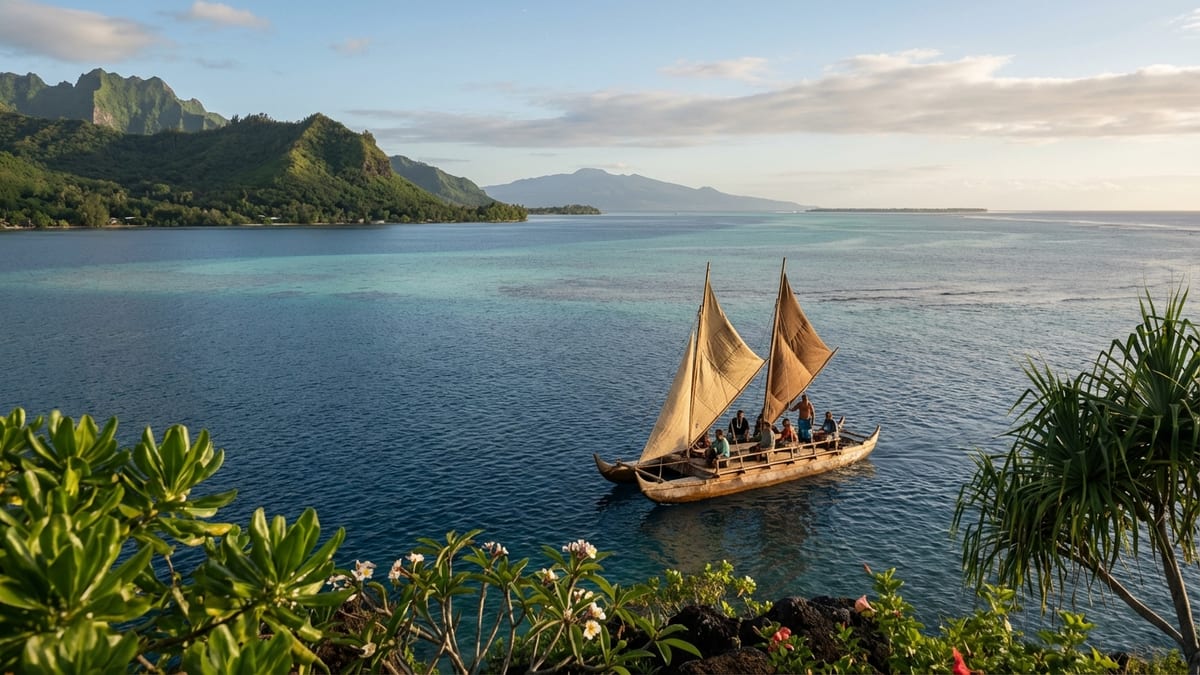
For many travelers, the word “Polynesia” conjures luminous lagoons, flower garlands and dancers moving to the beat of drums. Yet the region is far more complex than a postcard. It stretches across a vast triangle of the Pacific, linking Hawaii in the north, New Zealand in the southwest and Easter Island in the southeast.
Within that triangle lie thousands of islands and a web of cultures, languages and stories that long predate modern tourism. Deciding where to go can feel overwhelming. This guide unpacks the major island groups, what makes each distinct, and how to choose the Polynesian journey that fits your time, budget and travel style.
Understanding Polynesia: The Big Picture
Polynesia is a cultural region rather than a single country. It encompasses dozens of modern nations and territories, including Hawaii (a US state), French Polynesia (an overseas collectivity of France), Samoa and Tonga (independent states), plus American Samoa, the Cook Islands, Niue, Tokelau and others with varying ties to New Zealand or the United States. Despite political differences, these islands share roots in the same seafaring ancestors, closely related Austronesian languages and a deep connection to the ocean.
Geographically, the distances are immense. Flying from Honolulu to Tahiti takes roughly five and a half hours. From Tahiti to Rarotonga in the Cook Islands can be three hours or more. Many routes hub through larger gateways such as Honolulu, Papeete, Auckland, Nadi, Sydney or Los Angeles. This reality matters when you are planning an itinerary. Trying to “do Polynesia” in one short trip can lead to jet-lagged island-hopping and more time in airports than on beaches.
What unites the region is a shared heritage of navigation, oral storytelling, dance and communal life. What differs is how modernization, colonization and tourism have played out. Some islands are built up with resorts, cruise piers and shopping malls. Others remain gently developed or fiercely protective of tradition. When choosing where to go, it helps to think in themes: culture-first vs resort relaxation, soft adventure vs high-end honeymoon, family-friendly vs off-grid remoteness. Keeping these lenses in mind will make the diversity of Polynesia more navigable.
French Polynesia: Lagoons, Overwater Bungalows and Sacred Marae
French Polynesia is often what travelers picture first: thatched overwater bungalows perched above startlingly blue lagoons. The territory is spread across five main archipelagos, though most visitors concentrate on the Society Islands, where Tahiti, Moorea and Bora Bora sit within scenic flight or ferry hops of one another. Tahiti is the primary international gateway with the region’s busiest airport near Papeete, along with markets, food trucks and a concentration of services and medical care.
Tahiti itself offers more than an overnight stop. Inland, river valleys cut through volcanic peaks, with waterfalls, hiking trails and 4x4 excursions into lush interiors. Around the coast, you will find surf breaks, black-sand beaches and historical sites such as restored stone temple complexes known as marae. A short ferry or flight away, Moorea serves up classic South Seas landscapes of jagged peaks cradling wide bays, with snorkeling, dolphin and whale tours and laid-back guesthouses sharing space with a handful of resorts.
Farther out, Bora Bora lives up to its reputation as a luxury honeymoon favorite, with a wide turquoise lagoon ringed by motu islets and high-end resorts. Beyond the iconic trio, travelers in search of culture and history gravitate to islands such as Raiatea and Huahine. Raiatea, regarded in oral traditions as a spiritual homeland, preserves significant ceremonial sites that reveal the complexity of ancient Polynesian religion and regional voyaging networks. Huahine, quieter than Bora Bora, blends village life, archaeological remains and excellent lagoon excursions.
French Polynesia’s other archipelagos tempt specialists and repeat visitors. The Tuamotus offer world-class diving, with passes where sharks, rays and schools of pelagic fish ride the currents. The Marquesas, distant and dramatic, draw travelers interested in art, carving and wild mountain scenery more than beaches. When deciding whether French Polynesia is right for you, weigh the cost of flights and lodging against the exceptional natural setting and relative ease of combining several islands in one trip.
Hawaii: Accessible Polynesia with Big-Island Variety
Hawaii is both a deeply Polynesian place and one of the most accessible island destinations for travelers from North America and Asia. Regular non-stop flights connect Honolulu with many US and Canadian cities, and inter-island routes link Oahu to Maui, Kauai, Lanai, Molokai and the Island of Hawaii. While Hawaii is more developed than most of its South Pacific cousins, it maintains strong Native Hawaiian cultural revival movements, from language immersion programs to traditional canoe voyaging.
Oahu is the entry point for most visitors. Waikiki’s high-rise hotels, shopping streets and nightlife contrast with the island’s windward coast and rural North Shore, where surf culture, shrimp trucks and country towns still define the rhythm. For travelers who want urban conveniences plus day trips to cultural sites, Oahu can be enough. The Bishop Museum and cultural centers provide context on Hawaiian and wider Polynesian traditions, while historic sites around Honolulu and Pearl Harbor reflect a complex modern history.
The outer islands each offer a different spin on Polynesian landscapes. Maui blends resort beaches with the volcanic crater of Haleakala and the winding road to Hana with its waterfalls and coastal vistas. Kauai feels wilder and more rural, with canyons, sea cliffs and lush valleys that have starred in countless films. The Island of Hawaii, often called the Big Island, is geologically young, with active volcanic landscapes, high-altitude observatories and black or green sand beaches. Lanai and Molokai serve travelers seeking quiet and a more intimate sense of Hawaiian community life.
Hawaii suits first-time Polynesia travelers who want relatively straightforward logistics, a wide range of lodging from budget to luxury and strong infrastructure for families, surfers, hikers and food-focused visitors. It is also the most familiar-feeling corner of Polynesia for many US travelers, which can be either a comfort or a drawback depending on how far from home you wish to feel.
Samoa and American Samoa: Fa’a Samoa and Everyday Island Life
For a window into Polynesian community life with less emphasis on large-scale resorts, Samoa is a compelling option. Independent Samoa centers on the islands of Upolu and Savai’i, reachable via regional flights from gateways such as Auckland and Nadi. Neighboring American Samoa, an unincorporated US territory, spreads across several islands including Tutuila and the Manu’a group, with a more limited tourism industry but rich cultural continuity.
Samoa’s landscapes blend sandy coves with lava fields, waterfalls and rainforest. On Upolu, travelers base themselves near the capital Apia or in coastal villages with beach fales, simple open-sided huts where you sleep to the sound of waves. Natural attractions include ocean trenches where swimmers descend into deep turquoise pools, protected marine reserves for snorkeling and inland pools beneath cataracts. Savai’i offers a slower pace, blowholes that erupt when swells surge under volcanic rock and archaeological sites hinting at earlier chiefdoms.
What sets Samoa apart is the strength of fa’a Samoa, “the Samoan way.” Extended family networks, chiefly systems and church communities remain central. Visitors who stay in family-run guesthouses, attend a Sunday service or accept an invitation to a village event gain a closer look at how tradition and modernity intersect. Expectations around modest dress in villages, observing quiet times on Sundays and respecting local authority structures are important to understand before arrival.
American Samoa, reached mainly through flights from Hawaii or independent Samoa, offers dramatic peaks rising straight from the sea and coastal rainforests protected in a US national park. Facilities are modest and distances limited, which can appeal to travelers who value cultural immersion and nature over a long checklist of activities. Both Samoas suit visitors interested in authentic interaction and comfortable but unflashy accommodations rather than five-star luxury.
Tonga, Cook Islands and Beyond: Low-Key Escapes and Cultural Strongholds
In the southern arc of Polynesia, Tonga and the Cook Islands present two different models of small-island tourism. Tonga is a constitutional monarchy that retained independence rather than falling fully under colonial rule. Its main islands see relatively few visitors, which keeps the atmosphere low-key. The capital Nuku’alofa hosts markets and royal compounds, while the Vava’u group in the north has become known among sailors and seasonal whale watchers, with tours during regulated seasons offering the chance to observe or in some cases swim near migrating humpback whales under strict guidelines.
Life in Tonga moves slowly. Guesthouses and small resorts line sheltered bays; village churches and Sunday feasts dominate the social calendar. Travelers drawn here tend to value connection and ceremony over sleek amenities. As with Samoa, modest clothing in villages and sensitivity to religious practices and kava ceremonies are important. Sea conditions and limited domestic flights sometimes disrupt schedules, so flexibility is essential.
The Cook Islands, self-governing in free association with New Zealand, are more tourism-focused while still feeling intimate. Rarotonga, the main island, encircles a mountainous interior with a coral reef lagoon. A single road loops the coast, passing beachside accommodations, cafes, small shops and local churches where soaring harmonies spill out on Sunday mornings. A short flight away, Aitutaki’s lagoon is frequently listed among the most beautiful in the South Pacific, attracting honeymooners and photographers as well as travelers keen on kiteboarding and snorkeling.
Beyond these better-known names, scattered islands such as Niue, Tokelau and Tuvalu remain far off the mainstream tourism map, reached by infrequent flights or supply ships. These destinations are for committed travelers willing to navigate limited infrastructure and plan around sparse transport schedules. In return, they offer communities where outside visitors are still notable guests, and where stargazing, reef foraging and evenings spent in conversation remain central entertainments.
Cultural Traditions, Etiquette and Responsible Travel
Across Polynesia, culture is experienced as something lived rather than staged, even when performances are produced for visitors. Dance, music and tattooing hold deep significance. In Tahiti and other parts of French Polynesia, festival seasons bring competitions in drumming, dance and outrigger canoe racing that energize local pride. In Hawaii, hula is both an artistic practice and a vessel for history and genealogy. Tattoo, once suppressed under colonial regimes, has resurged as a powerful emblem of identity across many islands.
For travelers, attending a cultural show, joining a community kava evening or eating at a local food market can be a respectful entry point into these traditions. The key is to understand that you are a guest. Simple gestures such as removing shoes before entering private homes, dressing with modesty away from the beach and asking before photographing people or sacred sites go a long way toward building goodwill. On some islands, visiting marae or stone platforms requires particular care, including staying off altar stones and avoiding loud behavior.
Responsible travel also means recognizing the environmental fragility of small islands. Coral reefs suffer from warming seas and physical damage, while freshwater supplies and waste treatment systems can buckle under visitor pressure. Using reef-safe sunscreen, supporting operators who follow marine protection guidelines, minimizing single-use plastics and respecting fishing rules all contribute to long-term sustainability. Choosing locally owned accommodations and excursions keeps more tourism income within island communities.
Many Polynesian societies are grappling with outmigration, climate change and rising costs of living. Conversations with residents often reveal pride in heritage mingled with concern for the future. Taking time to listen, learn and support cultural centers, museums and community initiatives helps ensure that travel benefits rather than erodes the traditions that drew you there in the first place.
Practicalities: When to Go, Getting Around and Budgeting
Most of Polynesia lies in the tropics or subtropics, with warm temperatures year-round. The main seasonal differences center on rainfall, cyclone risk and peak travel periods tied to school holidays. In French Polynesia, the cooler, drier months typically run from May to October, which also aligns with high season for European and North American travelers. Similar patterns hold in the Cook Islands and parts of Samoa and Tonga. In Hawaii, weather is pleasant across the calendar, though winter brings bigger surf on north-facing coasts and price jumps around major holidays.
Major international routes connect Honolulu and Papeete with North America and Asia, while Auckland, Sydney, Brisbane and Nadi serve as Southern Hemisphere gateways onward to Samoa, Tonga and the Cook Islands. It is usually straightforward to combine two destinations with strong links, such as Hawaii and American Samoa, or French Polynesia and the Cook Islands, but far more time-consuming and expensive to bounce between distant corners of the triangle. Building your itinerary around one or two hubs will reduce transit time and jet lag.
Budgeting varies sharply by destination. Hawaii and French Polynesia trend toward higher costs, particularly for beachfront lodging and dining in resort areas. The Cook Islands, Samoa and Tonga can be more affordable, especially if you stay in guesthouses, self-cater occasionally and use local buses where they exist. Flights between islands often represent a major slice of total expenses, sometimes surpassing nightly accommodation rates. Booking early for high season and watching for airline sales can ease the burden.
Travel insurance that covers medical evacuation is prudent in a region where specialist care may only be available on certain islands or back on the mainland. Entry requirements differ by territory and passport, and can change, so travelers should check official government advisories and immigration resources before booking. Within islands, driving is a practical option in many places, but local road customs, narrow coastal routes and occasional livestock or pedestrians on the road call for patience and caution.
How to Choose Your Polynesian Destination
With so many islands spread across such immense distances, choosing where to go in Polynesia is ultimately a matter of matching your priorities with what each place does best. Start by clarifying your main goal. If you want a classic honeymoon of overwater villas, champagne on arrival and easy lagoon access, French Polynesia, especially Bora Bora and nearby islands, remains the archetypal choice. If you prefer a mix of beaches, hiking, restaurants and shopping without leaving US territory, Hawaii may be your ideal entry point.
For travelers craving cultural immersion and relational travel rather than resort polish, Samoa and Tonga stand out. Staying in family-owned beach fales in Samoa or guesthouses in Tongan villages brings you closer to daily routines, from fishing and weaving to Sunday feasts. The Cook Islands offer an appealing middle ground: accessible and well set up for tourism, yet small enough that you quickly recognize faces at local shops and lagoon tours. Those with more time, resources and interest in archaeology and remote landscapes might angle for the Marquesas or outer archipelagos of French Polynesia.
Consider logistics and flight patterns from your home country. From North America, it is usually simpler to reach Hawaii, Tahiti or American Samoa via established routes. From Australia and New Zealand, Samoa, Tonga, the Cook Islands and French Polynesia are more straightforward. Think too about your comfort zone in terms of infrastructure. Travelers anxious about healthcare access, language barriers or travel disruptions may want to start with better-connected hubs. Others may view the very remoteness of distant islands as part of their appeal.
Finally, reflect on your impact. Polynesian destinations differ in how many visitors they host and how prepared they are to absorb more. By choosing locally owned accommodations, traveling outside absolute peak weeks if possible and learning a few words of the local language, you make a contribution to the kind of tourism that helps these islands remain livable for future generations.
The Takeaway
Polynesia is not a single destination but a constellation of islands, each shaped by its own history, environment and relationship with the outside world. French Polynesia dazzles with lagoons and luxury, Hawaii delivers variety and accessibility, Samoa and Tonga protect powerful communal traditions, and the Cook Islands balance intimacy with visitor-friendly comfort. Small outliers dot the ocean beyond, waiting for the patient and the curious.
No matter where you land, the heart of Polynesia lies in the bond between people and ocean, in songs that carry genealogies across centuries and in the quiet moments when you look up to a sky still used for navigation. Choosing where to go is less about finding a single “best” island and more about deciding which stories you hope to encounter, and which you want to bring back home. With thoughtful planning and mindful travel, your Polynesian journey can move far beyond postcard views into genuine connection.
FAQ
Q1. How long should I plan for a trip to Polynesia?
For a single island group, such as Hawaii, French Polynesia or the Cook Islands, 7 to 10 days allows for recovery from jet lag and enough time to explore more than one area. If you hope to combine two separate regions, such as Samoa and Tonga, or Hawaii and Tahiti, aim for at least two weeks so you are not spending a disproportionate amount of your trip in transit.
Q2. Is Polynesia suitable for budget travelers?
Yes, but destination choice matters. French Polynesia and Hawaii can be expensive, especially in resort zones, though there are guesthouses and midrange options. Samoa, Tonga and the Cook Islands generally offer better value, particularly if you stay in family-run accommodations, use local transport and eat at markets or small cafes rather than hotel restaurants.
Q3. Do I need to speak the local language?
English and French are widely used across Polynesia alongside Indigenous languages. In Hawaii, English is dominant, with Hawaiian increasingly visible in signage and schools. In French Polynesia, French and Tahitian are common; in Samoa and Tonga, local languages and English are both widely spoken. Learning a few greetings and polite phrases in the local tongue is appreciated and can open doors.
Q4. When is the best time of year to visit?
Generally, the drier, cooler months from around May to October are considered ideal for many Polynesian destinations, bringing more stable weather and comfortable temperatures. However, this is also high season, so prices and crowds rise. Shoulder periods just before or after high season can offer a good balance of cost and conditions, though there is always some variability in tropical climates.
Q5. How easy is it to travel between different Polynesian islands?
Travel within a single archipelago, such as between Tahiti, Moorea and Bora Bora, or among the Hawaiian Islands, is relatively straightforward via domestic flights or ferries where available. Traveling between distant groups, such as from Hawaii to the Cook Islands, usually requires transiting through major hubs and can be costly. It is wise to design your itinerary around one main region rather than trying to crisscross the entire Pacific.
Q6. Are overwater bungalows available everywhere in Polynesia?
No. Overwater bungalows are most strongly associated with French Polynesia, where they originated and remain concentrated around islands such as Bora Bora, Moorea and Taha’a. A few other destinations have built similar accommodations, but they are not typical in places like Samoa or Tonga, where lodging tends more toward beach fales, guesthouses and smaller resorts.
Q7. What should I pack for a Polynesian trip?
Lightweight clothing, a long-sleeved layer for evenings, a good sun hat, reef-safe sunscreen, sturdy sandals or water shoes and a light rain jacket are essentials. Modest outfits that cover shoulders and knees are useful when visiting villages or attending church services. If you plan to snorkel frequently, consider bringing your own mask and snorkel for comfort and hygiene, even though many operators provide gear.
Q8. Is it safe to swim and snorkel in Polynesian waters?
In general, swimming and snorkeling in designated areas with lifeguards or reputable tour operators is safe and a highlight of any Polynesian trip. However, currents, surf and tides can be strong, particularly outside protected lagoons. Always heed local advice, respect warning signs, avoid standing on coral and be cautious around marine life. Non-swimmers should use flotation devices and stick to shallow, calm waters.
Q9. How can I be a respectful visitor to Polynesian communities?
Dress modestly away from the beach, ask permission before entering villages, participating in ceremonies or photographing people, and follow local guidance about sacred places. Observe quiet times on Sundays where that is customary, support local artisans and small businesses and be open to learning from hosts about their customs and expectations. A mindset of humility and curiosity is more important than perfect etiquette.
Q10. Can I visit multiple Polynesian countries on a cruise?
Cruises in the South Pacific often link several island groups, such as French Polynesia and the Cook Islands, or include stops in Samoa and Tonga. These itineraries offer a way to sample multiple cultures and landscapes with consistent accommodation and transport. The trade-off is limited time ashore in each port. If a particular island group truly captures your imagination during a cruise, consider returning on a dedicated land-based trip to explore it in depth.