

At the northern tip of Vancouver Island, where paved roads surrender to rainforest and ocean swell, Port Hardy stands as a small town with an outsized role.
This working harbour is the end of the island’s main highway, the departure point for the Inside Passage ferry, and the launch pad for remote beaches, grizzly bear estuaries, and culturally rich First Nations communities.
For travellers who want British Columbia at its wildest rather than most polished, Port Hardy is the natural place to begin.
Understanding Port Hardy and Its Northern Edge Appeal
Port Hardy sits on the traditional territories of the Kwaguʼł, Gwaʼsala-ʼNakwaxdaʼxw and Quatsino First Nations, a fact that shapes the town’s character as much as its geography. With a population of only a few thousand, it feels intimate and unhurried, yet it serves as the primary service hub for a vast sweep of coastal wilderness dotted with logging camps, fishing resorts and tiny settlements. Totem poles, big houses and Indigenous artwork are visible around town and in nearby Fort Rupert, underscoring the region’s deep cultural roots.
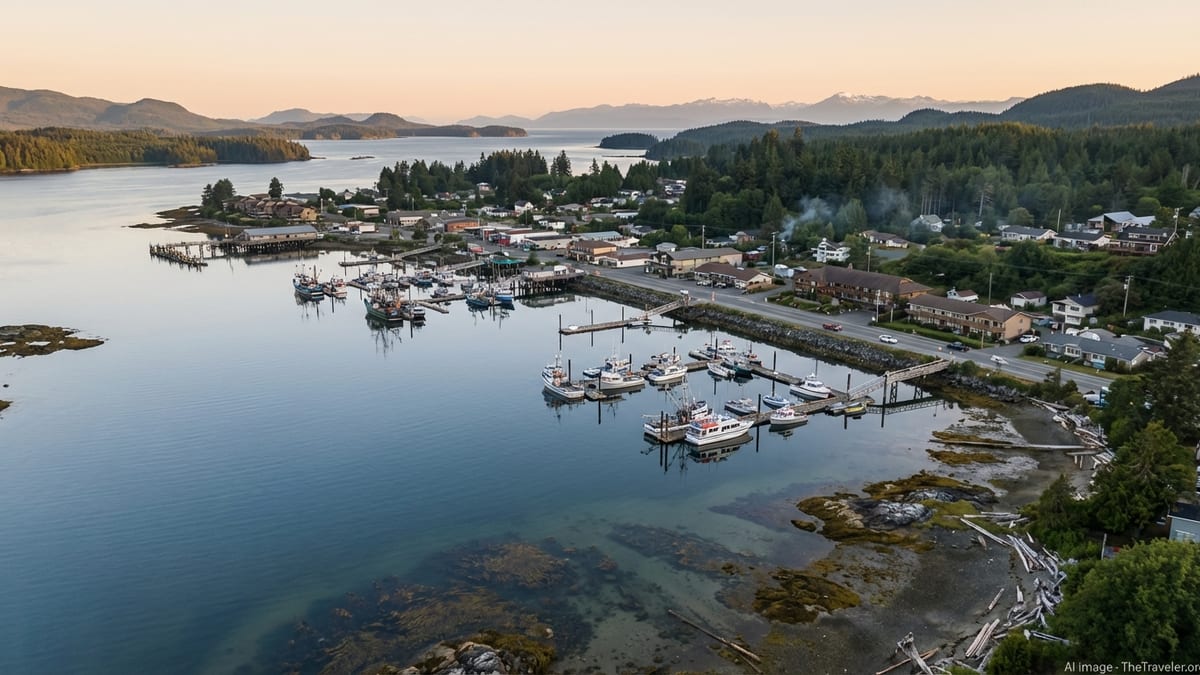
Unlike the resort-focused communities of southern Vancouver Island, Port Hardy leans into its reputation as rugged and resilient. Visitors come here less for manicured promenades and more for stormy shorelines, kelp-fringed coves and real working boats in the harbour. You will likely share the waterfront with commercial fishers, ferry crews, seasonal guides and local families out walking at dusk, which lends the town a grounded, lived-in atmosphere.
Its location at the northern terminus of Highway 19 makes Port Hardy a gateway in several senses. It is the final major town before the road peters out into gravel tracks toward Cape Scott, Raft Cove and other remote parks. It is also one of the key departure points for the Inside Passage ferry north toward Prince Rupert and the Central Coast, linking road travel with a long and scenic sea route through British Columbia’s fjords.
For travellers, that gateway status means Port Hardy can work both as a base and as a transition point. Some visitors stay several nights, using the town as a launch pad for day trips and wildlife tours. Others are in for just a night on either side of the Inside Passage sailing. Either way, understanding how Port Hardy anchors the top end of Vancouver Island will help you structure your time and appreciate what makes it different from the island’s more familiar southern destinations.
Getting to Port Hardy and Getting Oriented
Reaching Port Hardy is straightforward but involves a commitment to distance. By road, it lies roughly a full day’s drive from Victoria or Vancouver when you factor in the ferry across the Strait of Georgia. Highway 19 is paved the entire way from Nanaimo north, with most services thinning out after Campbell River. Fuel is still available in communities like Sayward, Woss and Port McNeill, but the gaps between stations grow longer, so it is wise to top up before pushing on.
For those short on time, Port Hardy Airport, known by the code YZT, provides regional air links. Pacific Coastal Airlines operates scheduled flights primarily connecting Port Hardy with Vancouver, with onward connections to other cities. Flight schedules vary by season, and routes beyond Vancouver often involve a connection rather than a direct hop, so it is best to check current timetables and allow buffer time if you are meeting a ferry or tour.
Once in town, orientation is simple. The compact downtown follows the curve of the waterfront, with accommodations, small shops and restaurants loosely clustered around the harbour. A short drive south leads to residential areas and access points for local trails and beaches, while the Bear Cove ferry terminal for Inside Passage sailings lies a brief drive east of town. Signage for both the terminal and key attractions such as the Quatse Salmon Stewardship Centre is clear, though a paper map or offline navigation remains useful as mobile coverage can thin out on backroads.
Port Hardy’s climate is characteristically coastal: cool, damp and changeable. Even in summer, mornings can dawn grey and misty before clearing to bright sun and then closing in again with showers. Winter brings heavy rains, strong winds and relatively mild temperatures compared with inland Canada, but conditions can still feel harsh on exposed headlands. Layered clothing, waterproof outerwear and a willingness to adapt plans to weather will serve you well.
The Inside Passage: Port Hardy’s Legendary Sea Route
One of Port Hardy’s biggest draws is its role as the southern terminus for the Inside Passage ferry, a long coastal route threading between Vancouver Island and the mainland up to Prince Rupert. For many travellers, this voyage is an alternative to a conventional cruise, combining the practicality of transport with hours of fjord-like scenery. Sailings typically depart early in the morning from Bear Cove, about a 10 to 15 minute drive from town, and run for most of the day, often around 15 to 16 hours depending on conditions and schedule.
Because the ferry operates something closer to a long-distance marine highway than a tourist cruise, planning ahead is essential. Vehicle spaces, especially for RVs, can book out well in advance during the peak summer months. Passenger-only tickets are usually easier to secure, but all travellers should arrive at the terminal well before departure, with identification readily available. The early check-in window can mean a pre-dawn wake-up, so many visitors arrange their Port Hardy stay specifically around the sailing date.
On board, the experience is relaxed but basic compared with a dedicated cruise ship. Expect cafeteria-style dining, lounge seating and open decks that invite you outside when wildlife comes into view. The scenery is the star: forested slopes plunging into narrow channels, the possibility of whales, porpoises and sea birds, and small light stations or isolated villages sliding past. Weather can be variable, and much of the route feels genuinely remote, so warm layers and windproof outerwear make time on deck far more comfortable.
If you are travelling with a tight itinerary, remember that ferry operations are subject to coastal weather, including fog and strong winds, particularly during shoulder seasons. While major disruptions are not the norm, prudent planning includes leaving some flexibility on either end of your sailing. Spending an extra day in Port Hardy before or after the Inside Passage crossing can turn logistical padding into an opportunity to explore the town and its surroundings more deeply.
Wildlife, Water and Wilderness Experiences
Port Hardy’s setting at the junction of coastal rainforest, rich marine channels and salmon-bearing rivers makes it a natural hub for wildlife experiences. Local operators offer boat-based tours that may focus on whales, sea otters, sea lions and marine birds, while others head further afield into inlets where grizzly bears forage on estuary flats. These tours generally run from late spring into early autumn, with peak viewing windows aligning with salmon runs and calmer sea conditions.
Whale watching from Port Hardy and nearby communities gives visitors a chance to see humpback whales feeding, transient orcas hunting, and Dall’s porpoises slicing through the water. Guides typically combine sightings with context about marine ecology and the conservation challenges facing coastal species. Tours may last several hours and operate in variable sea states, so motion sickness precautions are worth considering if you are prone to seasickness.
Inland and along the shore, the region’s rivers and estuaries support black bears and, in certain mainland inlets reached by boat, grizzly bears. Specialist bear-viewing operators base themselves in or transit through Port Hardy, often running multi-day trips that combine boat transport, floating lodges and guided viewing platforms. These experiences are tightly regulated to minimize disturbance to the animals, and reputable operators will emphasize safety briefings and respectful distances as part of the experience.
For those content to explore on their own, the network of provincial parks around northern Vancouver Island offers a more self-directed wilderness immersion. Marble River Provincial Park to the south protects river corridors important to steelhead and waterfowl and offers hiking and cycling trails. Even closer to the open Pacific, parks such as Raft Cove and Cape Scott reward visitors with remote sandy beaches, surf and dense forest. Access usually involves a combination of logging roads and hiking, so a realistic assessment of your skills, time and equipment is crucial.
On Land: Hiking, Beaches and Day Trips from Town
While the sea looms large in Port Hardy’s identity, some of its most rewarding experiences lie on footpaths and beaches within a short drive of town. Local trails thread through second-growth and pockets of old-growth forest, along riverbanks and out to headlands with sweeping coastal views. Surfaces range from gravel paths suitable for families to muddy, root-tangled tracks that feel genuinely wild, particularly after heavy rain.
Storey’s Beach, south of town, is one of the most accessible stretches of sand in the area. At low tide, broad swathes of hard-packed sand are exposed, ideal for long, contemplative walks with views across Queen Charlotte Strait. On calm days, the shoreline feels gentle and domesticated, but storms remind visitors that this remains a wild coast, with driftwood, seaweed and changing patterns of sand marking each tide cycle.
Day trips further afield unveil the breadth of northern Vancouver Island. To the west, Cape Scott Provincial Park has achieved almost mythic status among hikers for its combination of coastal rainforest, isolated beaches and remnants of early 20th-century settlements. Many visitors tackle portions of the trail network as long day hikes to destinations such as San Josef Bay, while experienced backpackers commit to multi-day routes including the North Coast Trail. To the south, communities such as Port McNeill, Sointula, Alert Bay and Telegraph Cove can all be reached within a few hours’ drive and ferry combinations, each offering its own blend of history, wildlife viewing and small-town character.
Because logging roads are common conduits to trailheads on the island’s north and west coasts, planning is important. Some routes are rough, potholed and active with industrial traffic during weekdays. Rental car contracts may restrict travel on unpaved roads, and signage can be minimal. Visitors should carry a spare tire, drive cautiously, and always let someone know their route and expected return time when heading into remoter areas.
Cultural Connections and Local Life
Any meaningful visit to Port Hardy involves engaging, even briefly, with the Indigenous cultures that have shaped this region for thousands of years. Totem poles, big houses and Indigenous-designed public art appear prominently around town and in nearby communities, reflecting both historic presence and contemporary resilience. Community events, cultural centres and guided tours, when available, provide opportunities to learn about traditions, governance, art and the continuing work of language and cultural revitalization.
One accessible entry point to this cultural landscape is the area around Fort Rupert, a short drive from Port Hardy. Historically associated with the Hudson’s Bay Company and Kwakwakaʼwakw peoples, it remains an important community and cultural centre. Visitors should be mindful that these are living communities rather than open-air museums. Respecting local protocols, seeking permission before photographing people or ceremonial spaces and heeding any posted signage about access are all part of travelling responsibly.
Back in Port Hardy itself, local life follows the rhythms of fishing seasons, ferry schedules and school terms more than tourist timetables. Cafes open early for shift workers and boat crews; grocery stores and hardware shops service both residents and passing travellers. For visitors, that means amenities are present but not always extended into late evenings, especially outside the main summer season. Planning meals and errands earlier in the day is wise, as is checking opening hours in advance for smaller businesses.
Community events, from markets to festivals, punctuate the calendar, though specific dates and programming vary year by year. If your visit coincides with a local celebration, it can be a vivid window into the town’s social fabric. Even on quieter days, taking time to linger on the waterfront, chat with staff at the visitor centre or stop into galleries and shops featuring local artisans can deepen your understanding of Port Hardy beyond its role as a mere waypoint.
Where to Stay, Eat and Stock Up
Port Hardy’s accommodations reflect its role as both a staging point and a base for longer stays. You will find a mix of hotels, motels, inns, waterfront lodges, campgrounds and RV parks. Some properties cater primarily to ferry passengers and fishing parties, offering early check-outs and gear storage, while others position themselves as comfortable retreats for travellers exploring the wider region. Advance bookings are strongly recommended for summer, particularly on nights bracketing Inside Passage sailings.
Campers and RV travellers have several options around town and within a short driving radius. Municipal and private campgrounds often provide basic amenities such as showers, hookups and laundry, and they can serve as convenient launch points for day hikes and fishing. Further afield, provincial park campgrounds and backcountry sites tend to be more rustic, sometimes offering only pit toilets and bear caches. In all cases, adhering to posted regulations and practising strict food storage in bear country are essential.
The town’s dining scene is modest but satisfying, grounded in fresh seafood, hearty pub-style fare and simple cafes. Depending on the season and day of the week, you may find options ranging from harbour-view restaurants to food trucks and bakeries. Hours can be limited, particularly in the shoulder and off seasons, so it is helpful to keep a flexible mindset and perhaps carry snacks or basic provisions in case your preferred spot is closed.
For self-caterers, Port Hardy’s supermarkets, liquor stores and specialty shops provide all the essentials needed for road trips and backcountry excursions. Prices can be slightly higher than in larger southern centres, reflecting transport costs and lower volumes, but the trade-off is convenience at the edge of the wilderness. Stocking up here before heading to more remote destinations such as Cape Scott or Raft Cove can save time and mitigate the risk of finding limited or no supplies closer to trailheads.
Practical Tips for Safe and Responsible Travel
Travel in and around Port Hardy requires a bit more forethought than a weekend in a larger city, and that is part of its appeal. Weather can change quickly, distances between services are relatively long and many experiences take place in remote or semi-remote settings. Basic preparedness goes a long way toward ensuring that your trip remains memorable for the right reasons.
First, treat communications and navigation as resources, not guarantees. Mobile coverage improves year by year but still drops out entirely along many logging roads, coastal inlets and even some main highway stretches. Download offline maps, carry paper backups when possible and let someone know your plans if heading into isolated areas. A simple vehicle kit including a spare tire, tire repair tools, a flashlight and extra water is well worth assembling.
Second, respect the area’s wildlife as both a draw and a responsibility. This is bear country, with both black bears and, on the mainland coast, grizzly bears present. Store food securely, never leave garbage accessible and follow guidance from local operators and park authorities about safe viewing distances and behaviour. In marine environments, choose tour companies that adhere to voluntary or regulatory guidelines governing how close vessels can approach whales and other animals.
Finally, approach your time in Port Hardy with flexibility. Ferries may adjust schedules, trails can close temporarily due to storm damage or maintenance, and businesses sometimes change hours outside the peak visitor season. Building slack into your itinerary, planning alternative activities for rainy days and keeping expectations attuned to the realities of a working coastal town will make your experience smoother and more rewarding.
The Takeaway
Port Hardy is not a resort town designed to smooth every edge of the wild coast. Instead, it is a community that lives with the ocean and the forest up close, offering travellers a chance to share that proximity for a few days. As the gateway to northern Vancouver Island and the Inside Passage, it excels as both a logistical hub and a destination rich in its own right, with beaches, trails, wildlife tours and cultural encounters packed into and around its modest footprint.
Whether you arrive with a car full of camping gear, roll off a regional flight at YZT or pull into town after days exploring the island’s backroads, Port Hardy rewards curiosity and respect. Walk its waterfront in the soft light of a long summer evening, learn a little of the First Nations histories that long predate modern maps, and watch ferries slip away toward the north. In doing so, you will understand why, for many, this small harbour marks not the end of the road, but the beginning of a much larger journey.
FAQ
Q1. When is the best time of year to visit Port Hardy?
The most popular time to visit is from late spring through early autumn, roughly May to September, when days are longer, seas are generally calmer and most tours and services operate at full capacity. Shoulder seasons can be quieter and atmospheric, but you should expect more rain, cooler temperatures and a reduced schedule of activities.
Q2. How many days should I plan to stay in Port Hardy?
If you are simply connecting with the Inside Passage ferry, one or two nights may be enough. To experience local hikes, wildlife tours and nearby communities, plan at least three to four days. Travellers interested in multi-day treks or extended bear-viewing trips often allocate a full week in the region.
Q3. Do I need a car to explore Port Hardy and the surrounding area?
A car is highly useful for accessing beaches, trailheads and neighbouring communities, as public transit options are limited and distances between points of interest can be significant. Within the town itself, many amenities are walkable, but a vehicle greatly increases your flexibility for day trips and backroad adventures.
Q4. Is Port Hardy a good destination for families?
Yes, provided families are comfortable with a more nature-focused, low-key style of travel. Children often enjoy beachcombing, short hikes, salmon hatchery visits and boat tours tailored to wildlife viewing. Parents should plan around variable weather, pack appropriate clothing and be realistic about drive times and boat trip durations.
Q5. What should I pack for a trip to Port Hardy?
Layered clothing, a reliable waterproof jacket, sturdy walking or hiking shoes and a warm hat are essential in most seasons. Add quick-drying pants, gloves during cooler months, and a small daypack for excursions. Even in summer, evenings on the water or on exposed headlands can feel chilly, so extra warmth is rarely wasted.
Q6. Are there medical and emergency services in Port Hardy?
Port Hardy has basic medical and emergency services suitable for a small town, including first responders and access to regional health facilities. For serious conditions, patients may be transferred to larger centres. Travellers with specific medical needs should bring necessary medications, copies of prescriptions and any critical documentation, as supplies can be limited.
Q7. Can I visit Port Hardy without booking everything in advance?
In the quieter months, it is sometimes possible to find accommodation and activities at short notice. However, during the peak summer season and around Inside Passage ferry dates, advance reservations for lodging, vehicle ferry spaces and specialized tours are strongly recommended to avoid disappointment.
Q8. What kind of wildlife might I see around Port Hardy?
Depending on the season and your activities, you may see humpback and orca whales, sea lions, seals, sea otters, bald eagles and a variety of seabirds. On land and near rivers, black bears are relatively common, while grizzly bears are typically seen on guided tours to specific mainland inlets rather than in town itself.
Q9. Is Port Hardy suitable as a base for hiking Cape Scott and the North Coast Trail?
Yes. Many hikers use Port Hardy as a provisioning and staging point before driving west toward trailheads. The town’s grocery stores, gear shops and accommodations make it a convenient place to organize food, equipment and shuttles, though you should still plan carefully for trail conditions and transport logistics.
Q10. How accessible is Port Hardy for travellers with limited mobility?
Accessibility varies. Some hotels, restaurants and waterfront viewpoints are suitable for visitors with limited mobility, while many trails, beaches and backcountry sites involve uneven terrain, stairs or soft sand. When booking accommodation or tours, communicate your specific needs clearly so providers can advise on the most appropriate options.