

Ermou Street is the commercial heart of Athens, a lively pedestrian avenue that runs between Syntagma Square and Monastiraki and pulls in everyone from office workers on their lunch break to travelers ticking off their shopping list in a single afternoon.
Here, global fashion names sit next to Greek brands, local shoe labels, beauty chains, and a scattering of side-street boutiques, while nearby lanes and adjoining markets take you from polished flagship stores to souvenir stalls laden with Greek-made goods. This guide walks you end to end along Ermou and its surroundings, focusing on brands, local stores, and souvenirs so you can plan your time and your budget with confidence.
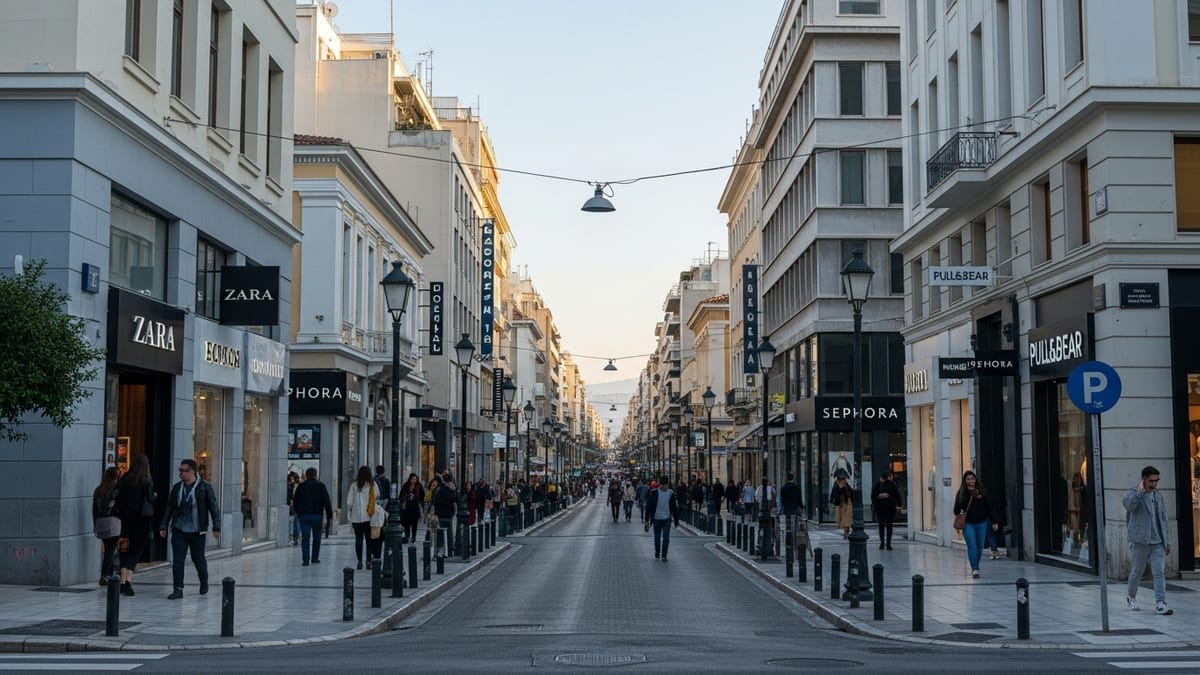
Understanding Ermou Street and Its Neighborhoods
Ermou Street stretches for roughly 1.5 kilometers from the lower edge of Syntagma Square down to the Monastiraki district, almost entirely pedestrian along the central section. It is one of the most heavily trafficked shopping streets in Greece, and its mix of mid-range fashion, shoes, and cosmetics makes it the default place Athenians send visitors who ask where to shop. The atmosphere is urban and energetic, with buskers, street-food carts, and a steady stream of shoppers at almost any time of day.
At the upper end near Syntagma, Ermou feels closer to a European high street lined with big-name fashion brands and department-store entrances. As you walk down toward Monastiraki, the vibe softens slightly and side streets lead off into older parts of the city, where small independent shops and traditional cafes start to appear. This transition is what makes Ermou such a useful base: you can step from a well-known international label directly into a side alley full of local designers or walk a few minutes to buy classic Greek souvenirs.
The surrounding areas matter almost as much as the street itself. To the north and south, a grid of smaller roads holds bead and craft-supply stores, leather workshops, and jewelry ateliers that cater more to locals than to tourists. Continuing beyond the bottom of Ermou brings you into the Monastiraki flea market, with its vintage finds, antiques, and souvenir stands. To the east, Syntagma and the streets around the big department stores give you a more polished experience, while the Plaka district, a short walk away, offers souvenir shops in a more historic setting beneath the Acropolis.
For a first visit, it helps to think of Ermou as a spine, with different “shopping zones” along it. The Syntagma section is for recognizable brands and department stores, the central stretch around Kapnikarea Church blends local and international labels, and the lower end toward Monastiraki becomes a gateway to markets, thrift, and souvenirs. Understanding this flow allows you to decide whether you are here to refresh your wardrobe, look for Greek-made fashion, or concentrate on gifts and mementos.
Key International Brands and Greek Fashion Chains
One of Ermou Street’s biggest strengths is the sheer concentration of fashion and footwear stores. International high-street names such as Zara, H&M, Pull & Bear, Bershka, Stradivarius, and Mango all maintain large stores along or just off Ermou, making it easy to update travel wardrobes or pick up seasonal pieces without hunting across the city. Many of these stores follow the usual European sale calendar, with major markdowns in January to February and July to August, which can be especially helpful if your visit coincides with those periods.
Beauty and cosmetics are equally well represented. Multibrand beauty stores, including Greek chains like Hondos Center and global names such as Sephora, stock everything from luxury fragrances and skin care to mid-range makeup and Greek beauty products based on olive oil or local botanicals. These can double as lightweight souvenirs, and the big stores on or near Ermou often carry exclusive sets or travel sizes that are easy to carry home. Staff in these outlets are used to travelers and generally speak English well, which helps if you want advice on local brands.
Greek fashion chains are another reason to spend time on Ermou. Popular domestic labels like Attrattivo, Celestino, Toi & Moi, and other mid-market brands offer women’s clothing that combines European trends with Greek styling and sizing. Prices are usually comparable to international high-street brands, but the designs are not as widely distributed outside Greece, making them more distinctive as additions to your wardrobe. For men, several Greek menswear chains and multi-brand stores stock shirts, casualwear, and smart-casual pieces that work well both on holiday and back home.
If you prefer everything under one roof, keep in mind that large department stores and multi-level fashion emporiums are within a few minutes’ walk of Ermou around the Syntagma area. They host both international designer labels and premium Greek brands, often with dedicated corners for Greek-made accessories, jewelry, and resort wear. Even if you are focused on street-level shopping, it is worth stepping inside for a quick look at their Greek designer sections, where you may find higher-quality linen clothing or more refined sandals than on the main strip.
Local Shoes, Accessories and Everyday Greek Style
Shoes are one of Ermou Street’s fortes, and local brands hold their own alongside international names. Greek shoe labels such as Migato, Mourtzi, and Tsakiris Mallas have strong presences in and around Ermou, known for fashionable yet relatively affordable footwear that ranges from classic leather sandals to heels, boots, and contemporary sneakers. Because these are Greek brands, sizing and designs tend to reflect local tastes and climate, with plenty of summer-ready options and an emphasis on leather.
For many visitors, a pair of Greek sandals is the ultimate practical souvenir. While the most traditional, handmade designs cluster in nearby Plaka and Monastiraki, you can still find a wide assortment of leather sandals along or just off Ermou, particularly during the warmer months. Look for well-stitched soles, real leather uppers, and made-in-Greece labeling. Prices can vary significantly, so it is worth comparing a few stores before committing. Some shops will adjust straps or punch extra holes on the spot, which can be very helpful if you are between sizes.
Accessories and everyday Greek style are easy to explore in the side streets. Small boutiques and local chains stock bags, belts, scarves, costume jewelry, and sunglasses at various price points. Sunglasses, in particular, are a popular buy given Greece’s bright light; both international and Greek eyewear brands are available, from budget-friendly labels to upscale optical stores. When shopping for accessories, pay attention to the materials: leather goods from reputable Greek makers can be excellent value, while mass-produced items in tourist-heavy areas may not be built to last.
Ermou and its surroundings also host numerous bead and craft-supply shops, especially as you move closer to Monastiraki. These tiny stores carry strings of beads, findings, and decorative elements that locals use to create jewelry, religious charms, or komboloi worry beads. Even if you are not a crafter, browsing these shops can be fascinating and you may pick up ready-made bracelets or necklaces with traditional motifs at modest prices. This is an area where bargaining is limited, but you can sometimes get a small discount if you buy several pieces.
Souvenir Hunting: From Ermou to Monastiraki and Plaka
Purely touristy souvenirs are not the focus on Ermou itself, which leans more toward everyday shopping for locals. However, the street’s lower end spills directly into Monastiraki, one of Athens’ classic souvenir and flea-market districts, and the Plaka area is only a short walk away. This makes Ermou a perfect starting point for a combined day of fashion and gift hunting. You can try on clothes and shoes in the morning, then drift into the markets in search of keepsakes as the afternoon light softens.
In Monastiraki, souvenir shops cluster along Ifestou Street and the lanes around Avissinias Square. You will find an almost overwhelming array of items: replica statues of ancient gods, evil-eye charms, olive-wood carvings, traditional backgammon sets, and musical instruments such as bouzoukis and small hand drums. Prices and quality can vary widely from one stall to the next, so it is wise to walk the whole street before making decisions, especially for higher-ticket items. On Sundays, the area turns livelier as antique dealers and collectors spread furniture, vintage objects, and art across the square.
Pandrossou Street, running off Monastiraki Square, is another dense stretch of souvenir retailers. Here the emphasis is on classic travel mementos such as T-shirts with Greek motifs, caps, bags, fridge magnets, and small statuettes. Interspersed with these are shops selling handmade olive-wood kitchen utensils, modern interpretations of ancient jewelry, and Greek musical instruments. While many items are mass-produced, you can still find artisan pieces if you look beyond the first row of displays and ask about the origin of particular products.
Plaka, slightly uphill under the Acropolis, offers a somewhat different take on souvenir shopping. Its narrow streets are lined with stores selling ceramics, painted icons, embroidered textiles, leather sandals, and specialty foods like honey, olive oil, and herbs. Prices in Plaka may run a bit higher than in Monastiraki for very similar items, but the setting is picturesque and some boutiques curate more design-focused merchandise such as contemporary jewelry or modern ceramics inspired by ancient shapes. Combining Ermou with a wander through Plaka in the cooler evening hours can balance serious shopping with relaxed sightseeing.
Greek Products to Look For and Where to Find Them
Beyond the obvious T-shirts and keychains, Athens is an excellent place to buy Greek-made products that reflect the country’s craftsmanship and natural resources. Olive oil and olive-derived goods are among the most popular. While large supermarkets carry good-value bottles, smaller delicatessens and specialty shops near Ermou and in nearby streets around Athinas and Evripidou often stock region-specific oils, flavored varieties, and beautifully packaged gift sets. Ask about labeling and origin; extra-virgin oil from regions like Kalamata or Crete is often highlighted.
Natural beauty products and soaps are another strong category. Greek brands frequently use ingredients such as olive oil, honey, mastic, and mountain herbs, blending them into soaps, creams, and shampoos that feel both local and practical. Large beauty chains on Ermou carry a mix of international and Greek lines, while smaller apothecary-style shops and pharmacies in the area may focus more heavily on domestic labels. Travel-sized sets make easy gifts, and they usually comply with carry-on liquid limits.
For edible souvenirs beyond oil, look for honey, herbs, teas, and sweets. Shops along nearby Athinas Street and the central market area sell vacuum-packed herbs, spice blends, and dried mountain tea that can be transported easily. Many long-running family businesses in this zone can explain the origins of their products and recommend blends for cooking or wellness. When buying food, keep airline rules in mind and consider whether items need special packaging or documentation to enter your home country.
Handcrafted objects, from ceramic bowls and plates to jewelry and textiles, are more scattered but rewarding to seek out. Small workshops in the lanes off Ermou and in Monastiraki and Plaka produce or curate pieces that go beyond standard tourist stock. Simple silver bracelets with Greek-key motifs, hand-painted ceramic cups, or embroidered cushion covers can serve as lasting reminders of your trip. While prices for one-of-a-kind items may be higher, you are paying for originality and, often, for direct contact with the maker.
Practical Tips: Opening Hours, Sales and How to Navigate
Shopping hours in central Athens follow a pattern that combines traditional Greek schedules with modern continuous hours. On Ermou and in the commercial triangle around it, most larger stores open from around 09:00 or 10:00 in the morning and stay open until 21:00 on weekdays, with shorter hours on Saturdays, often closing around early evening. Smaller independent shops may still follow a split schedule on some days, closing in the mid-afternoon and reopening in the early evening, although this is less strict in the busy tourist and commercial core.
Sunday trading is more limited. In the main city, most non-tourist shops close on Sundays, but in the central tourist zones, including the heart of Ermou and the adjacent markets, a significant number of stores are allowed to open every Sunday from roughly May to October and on specific Sundays linked to official sales periods or holidays. During the Christmas and New Year season, hours are often extended into the evening and more shops trade on Sundays. If Sunday shopping is essential for your trip, check recent local guidance shortly before you travel, as regulations and practice can evolve.
Greece has two main regulated sales periods. Winter sales typically run from the second Monday in January through the end of February, and summer sales from the second Monday in July until late August. During these weeks, discounts in Ermou’s fashion and shoe stores can be substantial, particularly as you approach the end of the period. There are also additional promotional events such as Black Friday, when chains and department stores often run aggressive price cuts, and mid-season promotions in spring and autumn. Even outside formal sales, look for racks labeled with discounts at the back of stores.
Getting to Ermou is straightforward. Syntagma and Monastiraki metro stations sit at either end of the main shopping stretch, connecting you to Athens’ wider network and the airport line via transfers. The area is highly walkable, with cobbled pedestrian sections and frequent cross streets. As with any busy urban shopping district, keep an eye on your belongings, especially in crowds and around street performances. Most shops accept major credit and debit cards, and Greek authorities have encouraged card use widely, but it is still useful to carry some cash for small souvenirs, street snacks, and markets.
Budgeting, Etiquette and Shopping Like a Local
Prices on Ermou are broadly comparable to other European capitals for international brands and slightly lower for many Greek chains, though this will depend on exchange rates at the time of your visit. It can be helpful to set a rough budget for clothing, souvenirs, and specialty food items before you begin, especially if you plan to combine high-street shopping with artisan purchases in Monastiraki and Plaka. Keep in mind luggage space and airline baggage limits when eyeing bulkier items like ceramics or wooden objects.
Bargaining etiquette varies by context. In fixed-price fashion chains and department stores on Ermou, haggling is not done. In Monastiraki’s flea market and some tourist-oriented souvenir shops, gentle negotiation is more acceptable, particularly if you are buying several items. Approach it politely and with realistic expectations; shaving a modest percentage off the quoted total is more common than dramatic price drops. If a price feels too high and the seller does not move, you can simply thank them and walk away. Often you will find similar goods a few doors down.
Tax-free shopping can reduce costs for visitors from outside the European Union. Many larger stores on or near Ermou participate in refund schemes once your purchases exceed a certain minimum amount in a single store on the same day. Look for signs mentioning tax refund services and ask staff at the checkout for forms and instructions. You will typically need to present your passport and have receipts stamped at the airport when you leave the EU, so allow extra time on departure if you plan to claim.
To shop more like a local, branch out beyond the most obvious storefronts. Step into side-street shoe shops that are busy with Athenians, visit bead and craft-supply stores even if you are only browsing, and try smaller bakeries or cafes instead of only the big chains when you take a break. Locals often time their major clothing purchases to coincide with the January–February and July–August sales, and they tend to know which streets hold better value than the main tourist corridors. Observing where Athenians actually shop can be as instructive as any written guide.
The Takeaway
Ermou Street offers one of the most efficient and varied shopping experiences in Athens, combining high-street fashion, Greek brands, and easy access to markets and souvenir districts. In a compact area that you can cross on foot in under half an hour, you gain access to international labels, local shoe stores, beauty chains, craft suppliers, and the flea-market treasures of Monastiraki. Add in the historic backdrop of central Athens and the nearby lanes of Plaka, and you have a setting that blends practical errands with the pleasure of discovery.
By understanding how the street is laid out, what kinds of products cluster where, and how local habits around shopping hours and sales work, you can use your time here to best effect. Plan your visit around the days and times when more shops are open, keep an eye on seasonal sales if you are in town during winter or summer, and leave space in your luggage for the Greek-made goods that catch your eye. Whether you are after a tailored blazer from a familiar brand, a pair of Greek leather sandals, or a bottle of olive oil and a handful of handmade beads, Ermou and its neighboring streets are well placed to deliver.
FAQ
Q1. Where exactly is Ermou Street in Athens and how do I get there?
Ermou Street runs between Syntagma Square and Monastiraki Square in central Athens. You can reach it easily by metro, getting off at either Syntagma station at the upper end or Monastiraki station at the lower end, and then following the signs or crowds to the pedestrian shopping avenue.
Q2. What are typical opening hours for shops on Ermou Street?
Most larger shops on Ermou open around 09:00 or 10:00 and stay open until about 21:00 from Monday to Friday, with shorter hours on Saturday, often closing in the early evening. Smaller independent shops may observe a midday break on some weekdays, especially outside the peak tourist season, but in the central stretch you will usually find a wide range of stores open throughout the day.
Q3. Are shops on Ermou Street open on Sundays?
Sunday opening is more limited, but in the central tourist and commercial area many shops are permitted to open every Sunday from roughly May to October and on designated Sundays during official sales periods and the festive season. Outside these times, expect a quieter scene, with some chains and most souvenir-oriented shops in nearby Monastiraki and Plaka more likely to trade than smaller local boutiques.
Q4. What are the best things to buy on Ermou Street?
Ermou is ideal for fashion, shoes, and beauty products. International high-street brands sit beside Greek clothing and shoe labels, including local chains known for leather sandals and contemporary footwear. Large cosmetics and beauty stores carry both global and Greek products, while nearby streets and markets are better if you want classic souvenirs, handcrafted items, or specialty foods.
Q5. Can I find authentic Greek souvenirs directly on Ermou Street?
Ermou itself focuses more on everyday shopping than on classic tourist souvenirs, though you may see some Greek-made accessories and gift sets. For a deeper selection of souvenirs such as olive-wood carvings, icons, worry beads, and replica statues, walk down to Monastiraki and its flea market or continue into Plaka, where souvenir shops and artisan workshops are concentrated.
Q6. Is bargaining acceptable in Ermou’s shops and nearby markets?
In fixed-price fashion chains, department stores, and most beauty shops on Ermou, prices are non-negotiable. In the Monastiraki flea market and some souvenir shops, polite bargaining is more accepted, especially if you are buying multiple items. You can ask whether there is any flexibility on price, but keep your expectations realistic and do not feel pressured to buy if you are not comfortable.
Q7. When are the main sales seasons in Athens, and how do they affect Ermou?
Greece’s main sale periods usually run from the second Monday in January through the end of February for winter sales, and from the second Monday in July until late August for summer sales. During these times, Ermou’s fashion, shoe, and accessory stores often offer significant discounts, especially as the sales draw to a close, making these months particularly good for big-ticket purchases.
Q8. Is it better to buy Greek sandals and leather goods on Ermou or in the markets?
For fashionable, quality-controlled shoes and sandals from established Greek brands, Ermou and its surrounding streets are a strong choice. If you are searching for more traditional, handmade designs or artisan leather pieces, you may prefer workshops and small stores in Monastiraki and Plaka. Many travelers combine both, picking up everyday footwear on Ermou and more distinctive artisanal pieces in the markets.
Q9. Do shops on Ermou Street accept credit cards and offer tax-free shopping?
Yes, most shops on and around Ermou accept major credit and debit cards, and card use is standard practice in Greece. Many larger stores participate in tax-free shopping schemes for visitors from outside the European Union, provided you reach the minimum purchase amount in a single store on the same day. Ask at the till for tax-free forms and remember that you will need to complete the refund process when you leave the EU.
Q10. Is Ermou Street safe for tourists, and are there any precautions I should take?
Ermou is generally safe and busy at most hours, but as in any crowded urban shopping area you should be mindful of your belongings. Keep bags zipped, avoid carrying all your valuables in one place, and be cautious in dense crowds or when watching street performances. At night, stick to well-lit main routes and use the metro or licensed taxis if you are returning to accommodation farther away.