

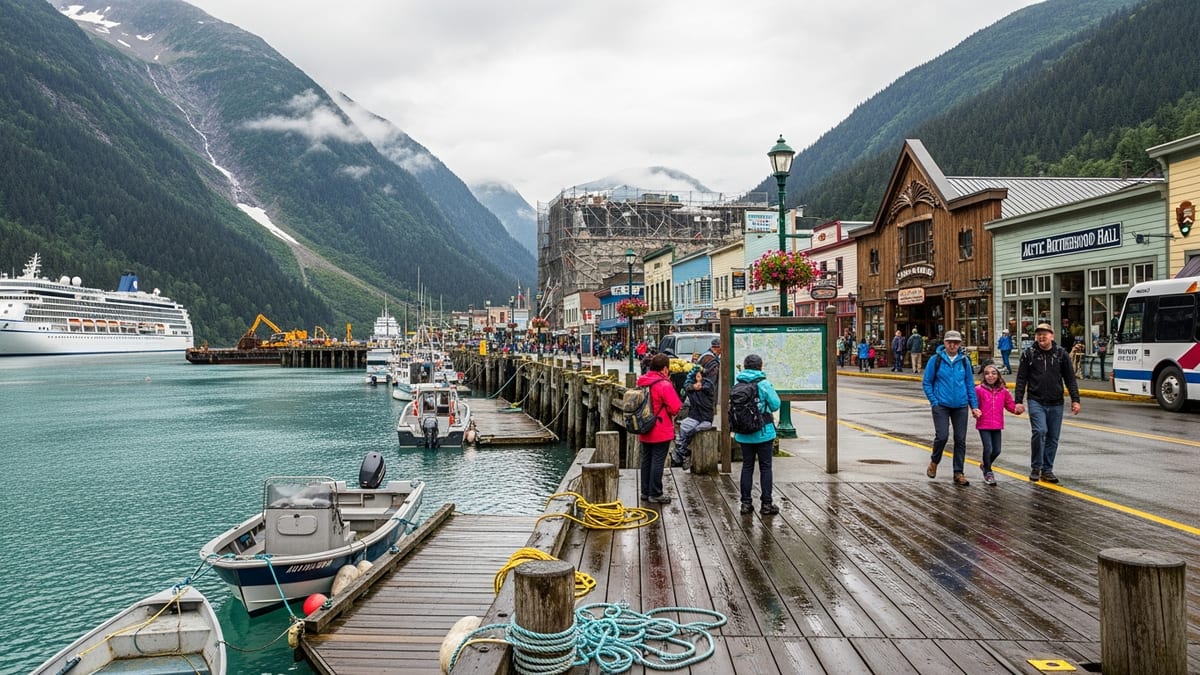
Skagway is one of Alaska’s most evocative little towns, where snowcapped peaks rise abruptly above a narrow fjord and false-fronted wooden buildings still evoke the Klondike Gold Rush. It is also one of the busiest cruise ports in the state, welcoming hundreds of thousands of visitors each summer.
Whether you arrive by ship, ferry or road, Skagway rewards those who slow down, look beyond the souvenir storefronts and take time to understand its history, landscape and practical realities. This guide covers what to see and do, how the port works today, and what you should know before you go.
Understanding Skagway: Setting, Seasons and Crowd Patterns
Skagway sits at the northern end of the Inside Passage, where Lynn Canal tapers into a steep valley leading toward the Canadian border and the Yukon. The town itself is small and flat, hemmed in by mountains and water, which makes it highly walkable yet also vulnerable to natural hazards such as rockslides. This geography shaped everything from the original gold rush routes over the mountains to today’s port layout and trail network. Visitors experience a surprising blend of frontier ambience and major tourism infrastructure packed into just a few square blocks.
Most visitors arrive between early May and late September, with peak cruise traffic typically in June, July and August. On the busiest days, several large ships can be in port and the population swells far beyond the town’s year-round residents. That means lively streets, busy tour departures and popular photo spots that can feel crowded midday. Shoulder-season visits in May and late September bring fewer ships, lower tour demand and sometimes better availability for independent travelers, albeit with cooler temperatures and a greater chance of rain or overcast skies.
Weather in Skagway is variable even in high summer. Expect cool mornings and evenings, daytime highs that might hover in the 50s or low 60s Fahrenheit, and occasional hot spells in mid-summer. Rain showers roll in quickly, and even when the town is dry, the White Pass summit and nearby glaciers can be foggy or windy. Layering is essential: bring a waterproof outer shell, a warm mid-layer such as fleece or wool, and sturdy walking shoes with good tread for wet boardwalks and uneven trails.
Because Skagway depends heavily on cruise revenue, the town’s rhythm closely follows the ship calendar. Many shops and seasonal tour operators shut down outside the cruise season, and some lodging and dining options are limited in winter. If you are planning an independent trip by ferry or road, confirm what is open for your intended dates and review the latest cruise arrival schedule to understand how crowded town may be during your stay.
Getting There and Getting Around
For most travelers, Skagway is a port of call on an Inside Passage cruise itinerary. Ships usually dock at one of several piers that line the waterfront. In recent years, rockslide activity above the Railroad Dock has prompted ongoing mitigation work and operational adjustments, so docking positions and tendering arrangements can change during the season. Cruise lines and local authorities coordinate daily to determine where each ship will berth or if passengers will be tendered ashore using smaller boats, and on some days shuttle buses are used to move passengers from the ship to town.
If you prefer to arrive independently, the Alaska Marine Highway state ferry system links Skagway with Juneau, Haines, other Southeast Alaska communities and Bellingham in Washington. Ferries carry foot passengers and vehicles, including RVs, which makes Skagway a key gateway for overland travel into the Yukon and interior Alaska via the Klondike Highway. The drive from Whitehorse, Yukon to Skagway is particularly scenic, crossing high tundra, lakes and the White Pass area before descending dramatically to sea level.
Once you land in Skagway, getting around is straightforward. The docks are roughly three quarters of a mile from the downtown historic district. Many visitors simply walk along the flat, paved route that follows the harbor and small boat basin into town. On rainy days or for those with mobility concerns, the municipal SMART bus shuttle runs loops between the docks, visitor center and key downtown stops during the cruise season. Taxi availability is limited, and rideshare services are not a dependable option, so do not rely on being able to hail a car at the last minute.
Within Skagway itself, plan to explore on foot. The downtown grid is compact, and most key attractions are within a 10- to 15-minute walk of the visitor center. Sidewalks are a mix of pavement and historic wooden boardwalks. The boardwalks add charm but can be slick in wet weather and uneven in spots, so watch your step. For those wanting to go farther afield, several local outfitters offer bike and scooter rentals, and tour operators provide minibus or van transportation to points such as the Klondike Highway viewpoints, Dyea and the Gold Rush Cemetery.
Top Things to See and Do in Skagway
Skagway’s biggest draw is the combination of Gold Rush history and spectacular mountain scenery, and you can experience both in a day if you plan well. Even cruise passengers with limited port time can walk off the ship and straight into a national historical park district, ride a narrow-gauge railway into the mountains, or hike to a quiet lake above town. Independent travelers with multiple days can add remote valley drives, tidal flats, longer trails and time to linger in museums and local businesses.
Start your visit at the Skagway Visitor Center, housed in the ornate Arctic Brotherhood Hall on Broadway. The building itself, clad in thousands of pieces of driftwood, is one of the most photographed facades in Alaska and a good orientation point. Inside, staff can provide maps, daily updates on hiking conditions, advice on trail closures or wildlife alerts, and brochures for local tours. During the cruise season, rangers from Klondike Gold Rush National Historical Park often lead short walks and talks from the visitor center area.
Klondike Gold Rush National Historical Park anchors the downtown experience. Many of the preserved false-front buildings belong to the park and house exhibits, historic saloons, a visitor center and restored offices that tell the story of the 1898 rush north to the Yukon. You might stroll Broadway to peek into restored storefronts, join a ranger-led history walk, or step inside the park museum to see artifacts, maps and photographs from the era when Skagway was a rough frontier hub with a notorious reputation. The park also oversees remote trail corridors, including the Chilkoot Trail, which starts near Dyea.
Another must-see is the waterfront itself. Walk out toward the small boat harbor to watch fishing vessels, tour boats and kayaks come and go, and look back at the line of colorful buildings against the backdrop of steep hillsides. On clear days, the surrounding peaks frame the town like a natural amphitheater, while passing cruise ships add a sense of scale. If you time it right, early morning and late evening light can be especially dramatic, with long shadows and alpenglow on the ridges.
Iconic Excursions: Trains, Trails and Scenic Drives
The White Pass and Yukon Route Railway is Skagway’s signature excursion. Built during the Klondike Gold Rush and reopened for tourism service in the late 20th century, this narrow-gauge railroad climbs from sea level in Skagway to the White Pass summit and beyond, tracing the route once used by prospectors and pack trains. Modern excursions typically operate as roundtrip scenic rides with commentary about gold rush history, engineering feats and visible trail remnants across rugged terrain. Trains cross high trestles, pass through tunnels and traverse ledges that offer sweeping views of the gorge, waterfalls and glaciers.
Most cruise lines sell White Pass rail excursions that depart right from near the docks or the central depot, and there are also independent tickets available through the railway and local agents. It is wise to reserve in advance during the peak months, particularly for the most popular summit runs. Weather at higher elevations can differ sharply from conditions in town, so bring extra layers and a windproof shell even on seemingly warm days. Trains generally run from late spring through early autumn, with schedules varying by month and day of the week.
For active visitors, Skagway offers a network of trails that range from short walks to full-day treks. The Lower Dewey Lake trail is one of the most accessible, beginning near downtown and climbing via a series of switchbacks to a forested lake that feels far removed from cruise crowds. The elevation gain can be steep in places, but the distance is manageable for most reasonably fit hikers, and you are rewarded with lakeshore paths and viewpoints over town and the harbor. Wear proper footwear, carry water and give yourself time to descend safely, especially if rain has made the roots and rocks slippery.
Scenic drives broaden your sense of the region. The Klondike Highway heads north from Skagway, rising past waterfalls and canyon walls to the high alpine country near White Pass. Many tour operators run minibus or motorcoach trips up this highway, often combining it with partial rail segments or photo stops at lakes and border viewpoints. Another popular outing leads to the ruins and tidal flats near Dyea, the once-bustling rival port to Skagway at the start of the Chilkoot Trail. Today, Dyea is quiet, with ghost town remnants, a small cemetery and opportunities to spot eagles, bears and intertidal life in a more tranquil setting.
Culture, Food and Everyday Life in Skagway
Despite its small size and seasonal nature, Skagway has developed a lively cultural and culinary scene shaped by both residents and summer workers from around the world. Along Broadway and neighboring streets, you will find galleries showcasing local and regional artists, shops featuring Alaska Native and First Nations crafts, and businesses that have learned to balance visitor demand with a sense of authenticity. While there are plenty of generic souvenir outlets, you can also seek out smaller shops that specialize in locally produced items such as carved wood, beadwork, photography and jewelry using regional materials.
Food in Skagway strongly reflects its coastal Alaska setting. Seafood is a highlight, with many restaurants and casual waterfront spots featuring halibut, salmon, crab and chowders. Grab a bowl of rich fish stew on a chilly day or try lightly battered halibut with local beer. Street-side stands and small eateries serve more portable Alaskan staples such as reindeer sausage topped with grilled onions. Another local favorite is fry bread dusted with cinnamon sugar, often sold from a bakery window where visitors line up to watch it emerge hot from the fryer.
Skagway also has a history of saloons and performances dating back to the gold rush, and some of that spirit persists in modern entertainment. The long-running Days of ’98 Show dramatizes the life and death of the infamous outlaw Soapy Smith with a mix of song, dance and storytelling. Various pubs and breweries offer live music nights during the height of the season, along with regional ales that sometimes incorporate Alaskan ingredients such as spruce tips. Check local posting boards or ask at the visitor center for current performance schedules, since offerings can shift from year to year.
For a deeper sense of daily life, try to step off Broadway for a bit. Side streets reveal modest homes, community spaces and the infrastructure that supports a tourism economy in an isolated environment. You may pass the local school, small clinics and service yards that keep ferries, roads and utilities functioning through harsh winters. Taking a few minutes to wander beyond the main drag can help you see Skagway not only as a stage set for visitors but as a year-round home for people who have chosen to live at the end of a fjord, surrounded by mountains and history.
Practical Tips, Safety and Current Port Realities
Because of its steep surrounding slopes and heavy precipitation, Skagway has been dealing with active rockslide zones above parts of the waterfront, particularly near the Railroad Dock. Local authorities and engineers continue to work on both short-term and long-term mitigation plans. These efforts can affect where ships can safely dock, whether certain berths are open, and how passengers move between vessels and town. On some days, you may need to board shuttle buses at the dock, on others you might tender to the small boat harbor, and occasionally walking routes in certain zones may be temporarily closed.
For visitors, the main takeaway is to be prepared for flexible logistics. Listen closely to announcements from your cruise line or ferry crew regarding tendering, meeting points for tours and disembarkation timing. Follow all posted signs and instructions from port staff about restricted areas along the waterfront. While it can be tempting to wander wherever the best photo angles appear, certain sections are off-limits for good reason. Rockslide work can also create noise and visible construction on the hillside, especially in coming seasons as mitigation projects progress, but these efforts are part of keeping both residents and visitors safe.
General safety considerations are similar to other Southeast Alaska towns. Hiking trails near Skagway pass through bear country, and it is possible to encounter black bears, especially near salmon streams, berry patches and the Dyea area. Make noise while hiking, travel in small groups when possible and follow guidance from the visitor center or rangers about recent wildlife activity. Keep a respectful distance from all animals, and never approach or feed them. On slick boardwalks and docks, walk rather than run, especially when surfaces are wet or crowded with other visitors.
In terms of services, Skagway has basic medical facilities for initial care, as well as pharmacies and general stores that stock common travel items. Cellular coverage is present but can be slow or congested on heavy ship days, and roaming rules may differ if your device picks up Canadian networks along the nearby border. Carry a small amount of cash for tips or small purchases, though most businesses accept major credit cards. If you are traveling independently, book accommodations well in advance for peak summer months, as room supply in this tiny town is limited relative to demand.
Planning Your Time: Day Trips vs Longer Stays
How you structure your visit to Skagway largely depends on whether you are arriving by cruise ship for a single day or planning an overnight stay. Cruise passengers may have anywhere from four to twelve hours in port, depending on the itinerary. In that window, it is possible to combine one major excursion with some relaxed exploring of downtown. A classic day might pair a morning White Pass train ride with an afternoon history walk and leisurely shopping along Broadway, or a scenic highway tour with a short hike to Lower Dewey Lake or Yakutania Point.
If you have only a half-day, prioritize. Visitors keen on history might focus on the Klondike Gold Rush National Historical Park buildings, a ranger-led tour and perhaps a visit to the Gold Rush Cemetery and nearby Reid Falls via a shuttle or bike. Outdoor enthusiasts could skip some of the formal exhibits and head straight for a moderate hike, keeping a close eye on the clock. In either case, factor in time to return to the ship or ferry, understanding that port operations such as tendering or shuttling can extend the time needed to get back aboard.
Travelers staying overnight gain a different perspective on Skagway. Evenings after the ships depart are quieter, with fewer people on the streets and more opportunities to talk with locals, linger over dinner or catch a later show. Early mornings can be particularly peaceful, ideal for uncrowded photos, birdwatching along the waterfront or a quick jog before the day’s first excursion departures. With multiple days, you can also arrange more ambitious adventures, such as full-day hiking, extended Dyea exploration, or combined rail and highway trips that reach deep into alpine country or across the border to Carcross and beyond.
When planning, consult the latest visitor guide produced by the municipality’s visitor department for a current snapshot of lodging, tours and restaurant options. Because individual operators’ offerings and schedules evolve each season, it is wise to reconfirm times and inclusions shortly before you travel. Pay close attention to cancellation policies, particularly for independently booked tours that may be affected by late ship arrivals or weather-related changes. Skagway rewards those who build some flexibility into their day while securing the key experiences most important to them.
The Takeaway
Skagway manages the rare feat of being both a major cruise hub and a place where the texture of real history is still visible on every block. The same narrow valley that once funneled tens of thousands of hopeful prospectors toward the Yukon now channels modern visitors along docks, boardwalks and mountain passes. Understanding its geography, weather and evolving port conditions will help you make the most of your time, whether you are stepping off a ship for a few hours or driving down from the Yukon for a longer stay.
Arrive with layered clothing, comfortable shoes and a willingness to adapt to last-minute logistical changes caused by rockslide mitigation or weather. Prioritize one or two cornerstone experiences, such as the White Pass railway, a hike above town, or an in-depth dive into Klondike Gold Rush stories, and leave room for unplanned moments along the waterfront or in a local café. Above all, remember that behind the boomtown facades and seasonal bustle is a small community working year-round to keep this remote corner of Alaska welcoming and safe.
If you travel thoughtfully, Skagway offers more than a quick port stop. It becomes a vivid chapter in your understanding of Alaska: a reminder of human ambition, the power of landscapes and the ongoing balancing act between preserving history, embracing tourism and living with the forces of nature.
FAQ
Q1. When is the best time of year to visit Skagway?
Peak season runs from early May through late September, with the warmest temperatures and the most tours typically available in June, July and August. May and late September can be less crowded and sometimes more affordable, but you should expect cooler weather and a higher chance of rain or overcast conditions.
Q2. How long do I need in Skagway to see the main sights?
Cruise passengers with a full day in port can experience a signature excursion such as the White Pass train along with time to walk Broadway and visit the national historical park. Independent travelers who stay two or three nights can add hikes, scenic drives, Dyea, evening shows and quieter moments in town, gaining a deeper feel for the community.
Q3. Is Skagway walkable from the cruise docks?
Yes. The main historic district is roughly three quarters of a mile from the docks and connected by a flat, paved route along the waterfront. Many visitors walk into town when weather and operations allow, while others use the municipal shuttle. At times, due to safety measures or tender operations, you may be directed to use shuttles from certain berths, so follow local instructions.
Q4. What should I wear and pack for a day in Skagway?
Dress in layers that you can add or remove as conditions change. A waterproof jacket, warm mid-layer, comfortable walking shoes with good traction and a hat are essential. Even in summer, mornings and evenings can be cool, and conditions at higher elevations on the White Pass can be significantly colder and windier than in town.
Q5. Is the White Pass and Yukon Route train worth it?
For many visitors, the White Pass train is a highlight of their entire Alaska trip. The route combines dramatic mountain scenery, engineering feats and detailed narration about the Klondike Gold Rush. It is especially appealing if you prefer to sit and take in views rather than hike, and it can be a good option in less-than-ideal weather since you are sheltered in the cars.
Q6. Can I explore Skagway on my own without booking a tour?
Yes, Skagway is very manageable for independent exploration. You can walk the historic district, visit park exhibits, hike nearby trails such as Lower Dewey Lake or Yakutania Point, and stroll the waterfront without joining a group. However, some experiences, like combined train and highway excursions or guided visits to farther-flung areas, are easiest to arrange through local tour companies.
Q7. Are there any safety issues I should be aware of?
The main considerations are slippery surfaces in wet weather, active rockslide mitigation zones along parts of the waterfront and the possibility of encountering bears on certain trails. Pay attention to signage, obey restricted-area notices, wear appropriate footwear, and seek current trail and wildlife information from the visitor center or park staff before heading out.
Q8. What kind of wildlife might I see in and around Skagway?
In town and along the waterfront, you may spot bald eagles, seabirds and occasionally seals or porpoises in the water. On trails or in the Dyea area, there is a chance of seeing black bears, especially near salmon streams and berry patches. Always observe wildlife from a safe distance and never attempt to approach or feed animals.
Q9. How far is Skagway from the Yukon, and can I visit Canada on a day trip?
The Canadian border at White Pass is roughly a 15-mile drive from Skagway along the Klondike Highway, and popular viewpoints and communities in the Yukon, such as Carcross, are reachable on organized tours or self-drive trips. If you plan to cross the border, bring proper identification and check current entry requirements and documentation rules for both Canada and the United States before you travel.
Q10. Are there services like ATMs, pharmacies and medical care in Skagway?
Skagway has basic services including ATMs, small grocery and general stores, a pharmacy and medical facilities capable of handling routine issues and many minor emergencies. Serious cases may require transfer to larger centers. It is still wise to bring any prescription medications you need, have travel insurance in place and carry a small kit with personal essentials for day trips and hikes.