

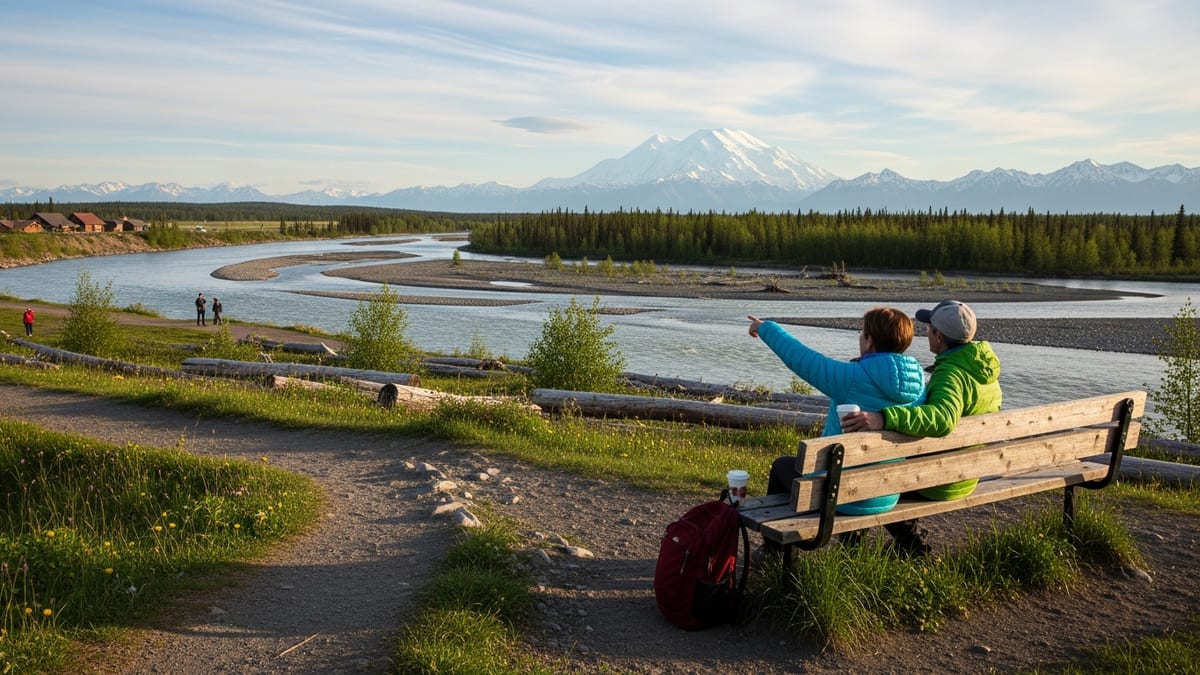
Talkeetna is one of Alaska’s most charismatic small towns, a place where the pavement ends and the wilderness begins. Set at the confluence of three glacial rivers with an unobstructed view of Denali on clear days, it blends frontier history, an outdoor-adventure hub, and a surprisingly creative food and arts scene. Whether you are here for a quick stop between Anchorage and Denali National Park or planning a multi-day stay, Talkeetna rewards visitors who slow down and explore beyond the postcard view.
Orientation: Where Talkeetna Is and Why It Matters
Talkeetna sits roughly 115 miles north of Anchorage along the Parks Highway, then 14 miles down the Talkeetna Spur Road. It is technically a small community in the Matanuska–Susitna Borough, but it punches far above its weight as the main staging town for Denali climbers and a popular base for flightseeing tours into the Alaska Range. Its location at the junction of the Susitna, Chulitna, and Talkeetna rivers made it a traditional gathering point and later a supply town for trappers, miners, and homesteaders.
Today, Talkeetna’s compact historic core is easy to walk in under 10 minutes from end to end, yet the surrounding area stretches into forest, wetlands, and mountains that feel endless. You will hear people refer to “town” and “the Spur,” meaning the main highway that leads back to Anchorage and north to Denali. The Talkeetna Airport is a short distance from downtown and is central to many activities, especially flightseeing.
Talkeetna’s importance comes from this combination of access and remoteness. It is far enough from Anchorage that the night skies can blaze with stars and aurora, yet close enough that it makes a manageable side trip or long weekend. It is one of the few places where you can arrive by road or rail in the morning, fly past Denali’s summit in the afternoon, and still be back in town in time for a local beer and live music.
As you plan, keep in mind that Talkeetna is both a destination and a gateway. You can base here for Denali flightseeing, river trips, hiking in nearby Denali State Park, winter dog sledding and ski touring, or simply soak up the easygoing atmosphere of an Alaskan small town that still feels authentic and lived-in.
Getting There and Getting Around
Most visitors reach Talkeetna from Anchorage. By car, the drive takes about two and a half hours in good conditions. You follow the Glenn Highway out of the city, then turn onto the Parks Highway, which threads through forest, past lakes, and occasionally offers views of Denali if the weather cooperates. The Talkeetna Spur Road is paved and generally well maintained, but in winter you should expect snow and ice and allow extra time.
If you prefer not to drive, both the Alaska Railroad and seasonal motorcoach services connect Anchorage and Talkeetna. The railroad’s Denali Star route typically runs between mid-May and mid-September, making the three-hour journey from Anchorage with glass-dome cars available on some services. The Park Connection Motorcoach and other operators usually offer summer transfers between Anchorage, Talkeetna, Denali, and sometimes Seward, providing a straightforward way to include Talkeetna in a broader Alaska itinerary.
For those traveling from Fairbanks or Denali National Park, Talkeetna is roughly a three-hour drive south from the park entrance and about four and a half hours south by train. Many itineraries include Talkeetna as a one- or two-night stop either on the way to Denali or as a return stop heading back to Anchorage, which helps break up the travel and gives you time for a flightseeing tour or river trip.
Once in Talkeetna, park your car and walk. The historic downtown is compact, with most shops, cafes, bars, and tour check-in offices clustered along Main Street and side streets. Local lodges often run shuttles to and from the train depot or airport. Taxis and small shuttle services operate on a limited basis to reach lodgings out of town, trailheads, or the Talkeetna Lakes recreation area. There is no formal public transit, so if you are staying outside the core without a car, confirm in advance how you will get to your tours and back.
When to Visit: Seasons, Weather, and Daylight
Talkeetna is truly a four-season destination, but what you see and do varies enormously with the time of year. Summer brings long days, peak hiking and river seasons, and the greatest range of tours. Winter offers northern lights potential, dog sledding, and a quieter, more intimate version of town. Shoulder seasons in spring and fall are transitional, with some services scaled back, but they come with fewer crowds and often better prices.
From roughly mid-May to early September, Talkeetna hums with visitors. Daylight stretches well into the late evening, and around the solstice in June you will experience only a few hours of semi-darkness. Expect daytime highs in the 60s to low 70s Fahrenheit on average in July and August, though rain and cooler temperatures are always possible. This is the main season for flightseeing with glacier landings, jet boat tours, hiking in Talkeetna Lakes Park or Denali State Park, and river fishing.
Winter, typically November through March, is cold and often snowy, with temperatures commonly dipping below freezing and occasionally far lower. The payoff is a chance to experience Talkeetna with frosted trees, crisp air, and the soft light of short days. This is the time to try dog sledding, snowmobiling, cross-country skiing, and winter flightseeing routes that focus on the southern Alaska Range. Clear winter nights also provide your best chance to see the northern lights, although displays are never guaranteed.
Spring and fall can be underappreciated. April and early May bring longer days, melting snow, and returning birds, while late September and early October often deliver brilliant fall colors and fewer visitors. Flightseeing still operates, though schedule and routes can shift with shoulder-season conditions. Some restaurants and small businesses may reduce hours or close temporarily in these shoulder periods, so check ahead, but you will experience Talkeetna in a more local rhythm.
Top Things to Do in and Around Talkeetna
Talkeetna’s reputation is anchored by two marquee experiences: Denali flightseeing and river adventures. Around those, you can weave in hiking, local history, breweries and birch syrup tastings, ziplining, and wildlife encounters. Even with just a full day and night, you can enjoy a satisfying cross-section of what the town offers.
Flightseeing into the Alaska Range is often the highlight of a visit. Operators based out of Talkeetna Airport run year-round tours, weather permitting, that take you into the heart of Denali National Park and the surrounding mountains. Many include the option to land on a glacier in spring and summer, giving you the surreal experience of standing on snow and ice deep in the range, surrounded by peaks and silence. Routes and prices vary from shorter scenic flights to extended tours that trace multiple faces of Denali and nearby peaks such as Mount Foraker and Mount Hunter.
On the water, you can choose between leisurely jet boat excursions, rafting, and guided fishing trips. Jet boat tours typically travel up the braided Susitna and Talkeetna river systems, combining views of the Alaska Range with stops to interpret local ecology, Indigenous history, and early settler life. Rafting runs from gentle floats suitable for families to more adventurous whitewater on certain stretches. Fishing charters target salmon runs from late spring through fall, along with resident species like rainbow trout and Arctic grayling, often on less-crowded sections of river than some of Alaska’s more famous angling destinations.
For something different, consider a zipline canopy tour through the boreal forest with views back to the Alaska Range, or a visit to a local reindeer farm where you can learn about these animals and their place in Alaskan culture and small-scale agriculture. Biking has become increasingly popular in Talkeetna, with rental shops offering everything from casual cruisers for exploring town to fat-tire and electric-assist bikes for trail riding or heli-biking experiences that take you into surrounding hills before you descend back toward the valley.
Exploring Town: Historic Core, Culture, and Food
Talkeetna’s charm lives along its short stretch of Main Street, where historic log buildings house bakeries, roadhouses, art galleries, gear shops, and lively bars. Much of the town’s early development dates back to the construction of the Alaska Railroad in the early 20th century, and the feel of a rail and aviation outpost still lingers in the architecture and layout. Wander slowly, read the historic plaques, and imagine the days when riverboats, bush planes, and trains were the only reliable ways in or out.
You will quickly notice how aviation and climbing permeate local culture. Bulletin boards and café walls often feature notes from guides and climbers, seasonal job postings, and flyers for avalanche safety clinics or mountain film nights. The Talkeetna Historical Society operates a small museum in a former schoolhouse that outlines the town’s past and its role in Denali mountaineering. The original grass-and-gravel airstrip near the village center is on the National Register of Historic Places, a reminder of how critical bush flying has been to the region.
The food scene in Talkeetna surprises many first-time visitors. Classic roadhouses and cafes serve hearty breakfasts with sourdough pancakes, big omelets, and generous cinnamon rolls, while newer spots offer espresso, vegetarian options, and creative baking. For lunch and dinner, you will find pubs with burgers and fresh salmon, pizzerias, food trucks or seasonal stands, and dining rooms that highlight local fish, game, and produce when available. Expect a casual atmosphere almost everywhere, with hiking boots and fleece perfectly acceptable at dinner.
Talkeetna is also home to a well-regarded brewery and distillery complex where you can sample Alaskan craft beer, cider, mead, and spirits, often with views of forest and, on clear days, the distant mountains. Just outside town, a birch syrup operation offers tours and tastings, demonstrating how sap is harvested from local birch groves and reduced into a uniquely northern sweetener used in syrups, candies, and sauces. Together, these food and drink stops give you a taste of how local businesses lean into the surrounding landscape for both identity and ingredients.
Outdoor Adventures: Trails, Lakes, and Denali State Park
Even if you are not an extreme adventurer, Talkeetna makes it easy to step into the outdoors on your own terms. One of the most accessible options is Talkeetna Lakes Park, a short drive or bike ride from town. A network of well-marked trails loops around small lakes and through mixed forest, offering chances to spot moose, beavers, waterfowl, and, in the right seasons, migratory birds. In summer, you can hike or trail run here; in winter, locals use the same corridors for cross-country skiing, snowshoeing, and fat biking.
The confluence of the three rivers by Talkeetna provides another natural focal point. Talkeetna Riverfront Park at the edge of downtown overlooks the broad Susitna River and, on days when Denali is “out,” delivers one of the most striking views in Alaska: the entire massif rising above the tree line and the low foothills. Simple footpaths along the bank give you a chance for quiet reflection between the day’s activities, and in summer you may find local artisans set up nearby.
Just south of Talkeetna along the Parks Highway lies Denali State Park, a separate entity from Denali National Park but equally rich in views and trail access. The Kesugi Ridge and Byers Lake areas are especially popular with hikers, offering both day hikes and multi-day backpacking possibilities with sweeping vistas of the Alaska Range on clear days. Many guide services out of Talkeetna lead hikes or heli-hiking trips onto alpine tundra ridges where wildflowers bloom in early summer and blueberries ripen later in the season.
For more experienced backcountry travelers, the wider Talkeetna Mountains host glaciers, high passes, and remote valleys that draw backpackers, skiers, and climbers. These kinds of trips require solid navigation and safety skills, or the support of local guides. Even if your ambitions are modest, spending a day walking through boreal forest and along lakes near Talkeetna will leave you with a deeper sense of Alaska’s scale and subtle beauty beyond its iconic peaks.
Winter in Talkeetna: Aurora, Snow, and Quiet
In winter, Talkeetna transforms into a snow-covered village under a big Alaskan sky. Tourism slows relative to summer, but the town does not close down. Instead, it shifts focus. Locals embrace snowsports, frozen rivers, and long nights, and a growing number of visitors come specifically for winter experiences and the chance to see the northern lights.
Dog sledding is among the most memorable winter activities. Kennels in the Talkeetna area offer tours where you can meet the dogs, learn about mushing, and ride through the forest on a sled led by a professional musher. Some operations will even let you try standing on the runners under close supervision. Snowmobiling is another mainstay, with guided tours exploring river corridors, frozen lakes, and hill country. For quieter outings, cross-country ski trails fan out from town and Talkeetna Lakes Park, and fat bike rentals let you explore packed-snow routes.
Winter flightseeing focuses more on the southern Alaska Range and nearby glaciers, as deep snow and weather patterns change access compared to summer. Many operators run a specific winter itinerary that may be shorter than summer glacier-landing tours but no less scenic, with low golden light and dramatic shadows playing across icefalls and ridges. As always, departures depend heavily on weather conditions, with flexibility important for anyone planning a flight during this season.
Talkeetna’s northern latitude and relatively dark surroundings give it good aurora potential on clear nights from roughly late August through early April. Optimal viewing is always a matter of timing, weather, and solar activity, but winter visitors increase their chances simply by staying several nights, keeping an eye on local forecasts, and getting away from bright lights when skies are promising. Even without aurora, standing along the river or near the airstrip on a crisp night under stars and the faint glow of snow is unforgettable.
Practical Planning: Lodging, Costs, and Safety
Talkeetna offers a range of accommodations, from historic roadhouses and in-town inns to cozy cabins, bed-and-breakfasts, and small lodges in the surrounding forest. In peak summer season, rooms in the walkable downtown area book up well in advance, especially on weekends and around major events. If staying downtown is a priority, reserve early. Lodges outside the core often provide a more secluded, wooded setting and may include shuttle service, breakfasts, or on-site activities.
Prices in Talkeetna reflect its remote logistics and popularity. Expect lodging to cost more than in many comparably sized towns in the lower 48 states, and restaurant meals to be somewhat higher than in Anchorage, particularly for fresh seafood and specialty dishes. Major tours, especially flightseeing, are significant investments but are considered by many travelers as once-in-a-lifetime experiences. To manage costs, mix big-ticket adventures with free or low-cost activities like hiking, exploring town, and enjoying river views.
Safety in and around Talkeetna is largely about common-sense wilderness awareness. When hiking, carry bear spray if you are comfortable using it, make noise on trails, and learn basic bear-encounter protocols. Stay on marked paths where possible, particularly in wetlands and along riverbanks where footing can be unstable. If you are fishing or spending time on the rivers, understand currents and cold-water risks, and always wear a properly fitted life jacket when on boats.
Weather can change quickly at any time of year, so dress in layers and carry extra warm clothing, even on short outings. Summer travelers should plan for rain and pack a waterproof outer layer, hat, gloves, and insect repellent, as mosquitoes can be vigorous in certain conditions. In winter, high-quality insulated boots, windproof outerwear, and proper head and hand protection are essential. For anything involving aircraft or remote travel, listen carefully to operator briefings and remember that weather cancellations are a sign of a company prioritizing safety, not a failure of planning.
The Takeaway
Talkeetna distills many of Alaska’s most compelling qualities into one accessible, highly walkable town. It sits at the junction of powerful rivers with Denali floating on the horizon, yet its soul resides in small details: a steaming cup of coffee in a century-old roadhouse, a pilot sketching your flight route on a map before you board, a local musician playing on a summer evening as the sky finally edges toward dusk.
Come for the marquee adventures like flightseeing and river trips, but leave space for unstructured hours. Wander Main Street, talk with guides and shopkeepers, linger at the riverfront, and follow a side trail into the woods. With a bit of planning around season, transportation, and weather, Talkeetna can be a highlight of any Alaska journey, a place where you feel both the scale of the wild and the warmth of a community built at its edge.
FAQ
Q1. How many days should I spend in Talkeetna?
Most travelers are well served with one to three nights. A single overnight allows time for a flightseeing tour and a walk around town, while two or three nights give you flexibility for weather-dependent activities, hiking, and a river trip or winter excursions.
Q2. Do I need a car, or can I rely on train and shuttles?
You can visit Talkeetna without a car by using the Alaska Railroad or motorcoach services and arranging local shuttles through your lodging or tour operators. However, a car offers more flexibility to reach trailheads, Denali State Park, and out-of-town cabins on your own schedule.
Q3. Is Talkeetna a good base for visiting Denali National Park itself?
Talkeetna is an excellent base for Denali flightseeing, but it is about a three-hour drive from the main park entrance. Many visitors spend a night or two in Talkeetna for flightseeing and river activities, then continue north to stay closer to the national park for bus tours and hiking inside the park.
Q4. What is the best time of year to see Denali from Talkeetna?
Denali can appear in any month, but clear views are more common during late spring and early fall when weather patterns can be slightly more stable. Even in peak summer, the mountain can remain shrouded for days, so consider staying at least two nights and plan flexible activities that do not depend entirely on a clear summit.
Q5. Can I see the northern lights in Talkeetna?
Yes, Talkeetna’s latitude and relatively dark surroundings make it a good location for aurora viewing from roughly late August through early April. Your chances improve with multiple nights, clear skies, and some patience, as aurora displays are naturally unpredictable.
Q6. Are tours and restaurants open year-round?
Some are, but operations shift with the seasons. Flightseeing, certain inns, and a core of local restaurants typically remain open through winter, while many river-based tours and some seasonal eateries run mainly from late spring through early fall. Always check current schedules before traveling in shoulder seasons or winter.
Q7. Is Talkeetna family-friendly?
Yes, Talkeetna works very well for families. Downtown is compact and walkable, many tours welcome children, and activities such as gentle river floats, short hikes in Talkeetna Lakes Park, visiting a reindeer farm, and exploring the small museum are all suitable for kids with appropriate supervision.
Q8. How far in advance should I book flightseeing and lodging?
For peak summer visits, it is wise to reserve lodging several months ahead, especially if you want to stay downtown or in popular cabins and lodges. Flightseeing tours can sell out during busy weeks, so booking in advance is recommended, though you may still find last-minute openings in shoulder seasons or on less busy days.
Q9. What should I pack for a summer visit?
Pack layers, including a base layer, warm mid-layer, and waterproof shell, along with a warm hat and gloves even in midsummer. Sturdy walking shoes or light hiking boots, insect repellent, sunscreen, and a small daypack are useful. Casual, practical clothing is the norm in town and on tours.
Q10. Is Talkeetna a good place to experience “real” Alaska, not just tourism?
Talkeetna is both a visitor hub and a lived-in community. While tourism is a major part of the economy, you will be sharing cafes, trails, and rivers with year-round residents, seasonal guides, pilots, and climbers. If you step beyond Main Street’s storefronts, take local trails, and spend time in gathering spots, you will get a sincere glimpse of everyday life at the edge of the Alaska wilderness.