

The British Virgin Islands combine turquoise seas, steady trade winds and a famously laid-back vibe into one of the Caribbean’s most alluring archipelagos.
Whether you are sailing between secluded anchorages, wading through the granite boulders of The Baths, or sipping a Painkiller on Jost Van Dyke, this British overseas territory rewards both first-time visitors and seasoned island-hoppers.
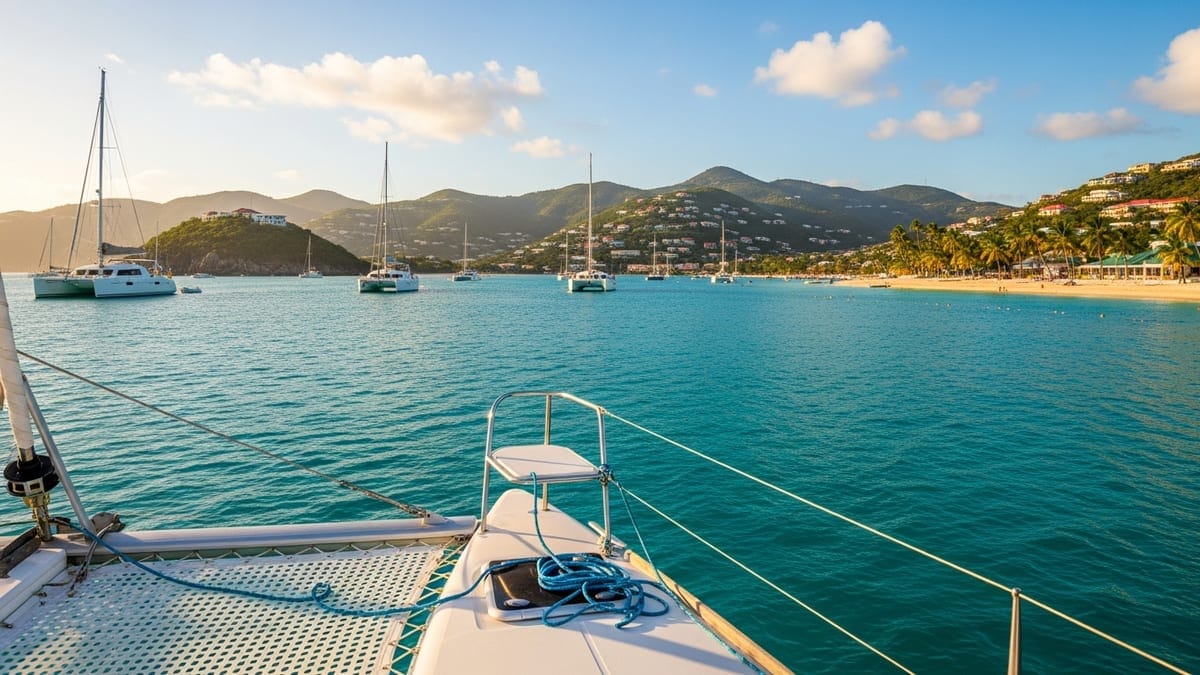
Orientation: Getting to Know the British Virgin Islands
The British Virgin Islands, often shortened to BVI, consist of more than 50 islands, cays and islets in the northeastern Caribbean, just east of the US Virgin Islands and north of the Leeward Islands. Only around 16 of these are inhabited, with Tortola, Virgin Gorda, Anegada and Jost Van Dyke forming the core of most visitors’ itineraries.
The islands are mountainous and lush, ringed by coral reefs and white-sand beaches, except for Anegada, which is a low-lying coral atoll known for its vast horseshoe reef and shallow turquoise flats.
Road Town on Tortola is the capital and the hub for government services, marinas, inter-island ferries and provisioning. Many visitors arrive as part of a sailing charter, using the sheltered Sir Francis Drake Channel as a watery highway.
Others stay in boutique hotels and villas, joining day sails and boat excursions to nearby islands. English is the official language and the US dollar is the official currency, which simplifies travel for American visitors in particular.
In terms of climate, the BVI enjoy warm temperatures year-round, typically hovering in the low to mid-80s Fahrenheit (around 28 to 30 degrees Celsius) with cooling trade winds. Rainfall is generally moderate, with the driest months in late winter and early spring and the wettest months from September to November.
The islands sit within the Atlantic hurricane belt, with the official hurricane season running from June through November, so timing your visit is an important consideration.
Culturally, the BVI blend Caribbean traditions with British influences. You will encounter calypso and reggae at festivals, roadside food stands serving rotis and fresh fish, alongside a governance and legal framework aligned with the United Kingdom.
Tourism and financial services drive the economy, and post-hurricane reconstruction over the past decade has brought a mix of restored favorites and new properties to the islands’ hospitality scene.
When to Go: Seasons, Weather and Crowds
For many travelers, the sweet spot for a BVI vacation falls between December and April. These months bring relatively dry weather, comfortable humidity and reliable sunshine, with sea temperatures typically in the upper 70s to low 80s Fahrenheit.
This is also peak season, so you can expect higher room rates, busier anchorages and restaurants that require advance reservations. The upside is a lively atmosphere, full ferry schedules and the broadest choice of open hotels, charters and excursions.
The shoulder periods in November and May are increasingly popular. Conditions are usually similar to high season, but with fewer visitors and more attractive prices on accommodations and yacht charters.
Winds are steady for sailing, beaches and snorkeling spots feel a little less crowded, and you will often find better last-minute availability. If you have flexibility, many seasoned Caribbean travelers consider these shoulder months the best overall value.
The months from June to October bring warmer temperatures, higher humidity and an increased chance of showers, particularly in September and October when rainfall peaks. This period overlaps with Atlantic hurricane season, which officially runs from June 1 to November 30.
While major storms remain relatively infrequent on any given date, the risk is real and travel plans can be disrupted. Some hotels, restaurants and charter companies close for maintenance or risk management in September and early October, so options may narrow in those weeks, even as deals become more attractive.
If you are considering a summer or early autumn trip, it is wise to purchase comprehensive travel insurance that includes hurricane coverage and to monitor forecasts as your departure nears.
On the positive side, you will likely encounter quieter beaches, easier mooring availability and significant savings compared with the winter peak. For those who prioritize solitude and lower costs and are comfortable with a bit more weather uncertainty, this off-peak period can be rewarding.
Entry Requirements, Health and Practical Essentials
Entry rules for the British Virgin Islands vary depending on your nationality, but many travelers, including citizens of the United States, Canada, the United Kingdom and several European countries, can usually visit visa-free for short stays.
Immigration officers typically grant an initial stay of up to one month on arrival, with possible extensions for those who wish to remain longer. Passports must be valid at least for the duration of your stay, and visitors should ensure that any passport reported lost or stolen is replaced before travel, as such documents can lead to denied entry.
As of early 2025, the territory is rolling out an online embarkation card system for arriving travelers. This digital form, to be completed within a set window before arrival, is designed to streamline border processes and may eventually replace paper arrival cards.
Requirements can shift, so travelers should always confirm current details with official BVI government sources or their airline or ferry operator in the weeks before departure. Regardless of your route, you will need to clear BVI immigration and customs, even if you come from the nearby US Virgin Islands.
On arrival, visitors are charged an environmental and tourism levy, typically collected at ports of entry. Departure taxes are also in place, with different rates for air and ferry departures; these fees are often bundled into airline tickets but may be collected separately when leaving by ferry, so having some cash on hand is advisable.
Customs regulations prohibit the export of certain marine items, shells and corals, and there are specific protocols for importing plants, animals and significant amounts of currency.
From a health standpoint, most standard Caribbean travel recommendations apply. Tap water quality varies, so many visitors opt for bottled or filtered water. Sun exposure is intense throughout the year, and reef-safe sunscreen, hats, light long sleeves and hydration are essential. Travelers should review routine vaccinations and consider any region-specific guidance from health authorities prior to departure.
Medical facilities on Tortola and the larger islands can address common issues and emergencies, but those with complex health conditions may wish to purchase evacuation coverage as part of their insurance plan, especially if going on remote sailing itineraries.
Top Islands and Must-See Highlights
Tortola, the largest island, serves as the gateway to the BVI and deserves time in its own right. Road Town’s harbor is lined with marinas, shops and restaurants, while the interior’s steep hills offer sweeping views over the Sir Francis Drake Channel.
Beaches such as Cane Garden Bay and Brewers Bay draw day-trippers and cruisers, with calm waters ideal for swimming and paddleboarding. The island also has some of the best infrastructure for provisioning, from supermarkets to specialty shops, which is key if you are setting off on a yacht charter.
Virgin Gorda, a short ferry ride from Tortola, is one of the crown jewels of the archipelago. The Baths National Park on the island’s southwestern tip features massive granite boulders stacked along the shoreline, forming grottoes, tide pools and narrow passages flooded by clear seawater.
Marked trails and rope-assist sections lead visitors through this otherworldly landscape between the beaches of The Baths and Devil’s Bay. Facilities including restrooms and lockers help manage crowds and protect the environment, and conditions are monitored closely, with warnings and swimming limits enforced during periods of strong swells.
Anegada offers a striking contrast to the high, green peaks of Tortola and Virgin Gorda. This coral atoll is almost flat, fringed by some of the Caribbean’s most extensive barrier reefs. Shallow waters teem with bonefish, lobster and sea turtles, making it a favorite for anglers and snorkelers.
Loblolly Bay and Cow Wreck Beach deliver long stretches of sand with a castaway feel, and the island’s annual lobster festival has become a highlight on the BVI calendar. Because of its encircling reef, Anegada requires attentive navigation; charter companies may restrict access for less experienced skippers or require a local pilot.
Jost Van Dyke, though small, looms large in the BVI’s social lore. Its sheltered bays host some of the region’s most storied beach bars, where live music, rum punches and the iconic Painkiller cocktail flow into the night.
White Bay and Great Harbour are popular anchorages, and the atmosphere ranges from relaxed family-friendly afternoons to festive New Year’s Eve celebrations that attract boats from across the Caribbean. Away from the main strips, you will find quieter corners, short hikes and smaller beach bars that reveal a more tranquil side of the island.
Nature, Beaches and On-the-Water Adventures
The BVI are best experienced on and under the water. Sailors are drawn by the combination of reliable trade winds, short distances between islands and sheltered anchorages.
The Sir Francis Drake Channel allows relatively gentle passages between Tortola, Norman Island, Cooper Island, Peter Island and Virgin Gorda, while more adventurous skippers may head further afield to Anegada when weather and charter permissions allow. Bareboat charters, skippered yachts and fully crewed luxury catamarans all operate here, along with day sails for those based ashore.
Snorkeling and diving are outstanding throughout the territory, with visibility often exceeding 60 feet and water temperatures remaining comfortable year-round. Coral gardens, seagrass beds and rocky outcrops support hawksbill and green turtles, rays, reef fish and occasional nurse sharks.
The wreck of the RMS Rhone near Salt Island is one of the Caribbean’s most celebrated dive sites, accessible to certified divers on organized trips. Many shallower reefs off Norman Island, Cooper Island and along Virgin Gorda’s coastline are easily explored by snorkelers, who can join boat tours or swim in from select beaches when conditions are calm.
Beaches in the BVI vary from broad and lively to tiny and secluded. Cane Garden Bay on Tortola is known for its sweeping curve of sand backed by bars and small guesthouses, while Smuggler’s Cove, accessible via a rough road, offers a quieter setting with good snorkeling close to shore.
On Virgin Gorda, Savannah Bay and Mahoe Bay provide classic Caribbean scenery with clear shallows and minimal development. Anegada’s north shore beaches, especially Loblolly Bay, feel expansive and often nearly empty, rewarding those who make the longer journey.
Kayaking, paddleboarding and kitesurfing are increasingly available, particularly in sheltered lagoons and along sandy coastlines. Mangrove-lined inlets provide peaceful paddling routes where you can spot juvenile fish, birds and the subtle changes in the coastal ecosystem.
On land, hiking options include trails in Sage Mountain National Park on Tortola, where remnants of rain forest and cooler higher-elevation air provide a welcome contrast to the coast. Shorter walks around The Baths and various coastal viewpoints complement the island-hopping experience without requiring technical skills.
Culture, Cuisine and Local Life
Beyond its beaches and bays, the British Virgin Islands offer a window into a distinctive Caribbean culture shaped by centuries of seafaring, agriculture and colonial history. Annual festivals and public holidays bring music, parades and pageantry to the streets, particularly around the Emancipation Festival on Tortola in late summer.
Live bands, calypso competitions, food fairs and cultural performances animate the islands, and visitors are typically welcomed to join the celebrations with respect for local customs.
Cuisine revolves around fresh seafood, locally grown produce and Afro-Caribbean, European and broader international influences. You will find dishes such as grilled or curried fish, stewed chicken, conch fritters and roti filled with vegetables or meat.
Anegada’s spiny lobster has earned a devoted following, celebrated in an annual festival where restaurants across the island design special menus. Simple beachfront grills sit alongside more refined dining rooms in villas and boutique resorts, giving travelers a wide range of options for both casual lunches and special-occasion dinners.
Rum holds pride of place behind many bars, often in the form of local and regional blends used in punches and classic Caribbean cocktails. The Painkiller, a mix of dark rum, coconut, pineapple and orange juices topped with grated nutmeg, is closely associated with the BVI and especially Jost Van Dyke.
While nightlife tends to cluster in a few well-known venues on Jost Van Dyke and in parts of Tortola, most islands maintain a relaxed, early-to-bed rhythm, particularly away from major holidays and regattas.
Visitors who take time to explore beyond the main tourist circuits can support small businesses and gain a deeper sense of place. This might mean buying crafts from local artisans, taking a cooking class, or visiting smaller, family-run restaurants and guesthouses.
Respectful behavior, from modest dress away from the beach to polite greetings when entering shops, is appreciated. Environmental respect is equally important, as many residents see themselves as custodians of a fragile, beautiful ecosystem that underpins both daily life and the tourism economy.
Getting There, Getting Around and Where to Stay
Most international visitors reach the BVI via connecting flights through regional hubs such as San Juan, St. Thomas or other Caribbean gateways, then continue to Tortola’s Terrance B. Lettsome International Airport on Beef Island. Another common approach is to fly into the US Virgin Islands and take a ferry across to Tortola or Virgin Gorda, clearing BVI immigration upon arrival.
Ferry schedules are generally frequent in high season, with additional routes operating between major islands, though services may be reduced during the quietest months or in adverse weather.
Once in the BVI, inter-island travel is usually by ferry, water taxi or private boat. Public ferries connect Tortola with Virgin Gorda, Jost Van Dyke and Anegada, though departure times can change seasonally and some routes operate only on certain days of the week.
For those on yacht charters, the boat effectively becomes both accommodation and transportation, making it easy to adjust routes based on wind, weather and personal preferences. On land, rental cars are widely available on Tortola and Virgin Gorda, and taxis can be arranged through hotels, marinas and taxi stands.
Accommodation options have expanded and diversified following reconstruction and redevelopment in the years after major hurricanes. You will find upscale resorts with full-service amenities, intimate boutique hotels, hillside villas with private pools and self-catering apartments.
Many properties emphasize sustainability and low-impact design, incorporating solar power, rainwater collection and native landscaping. On smaller islands, lodging may consist of a few beachside cottages or a single resort, which can offer a particularly serene, all-encompassing experience.
Prices vary considerably by season, location and style of accommodation. Peak winter months generally carry the highest rates, while shoulder and low seasons often bring discounts and packages that include meals, excursions or charter elements.
Early booking is important around major holidays, regattas and festivals, when both beds and boat berths can sell out. Travelers looking for value might consider staying on less expensive islands or choosing self-catering options, then splurging selectively on memorable experiences such as a private day sail or special dinner.
Responsible Travel, Safety and Sustainability
The British Virgin Islands’ natural beauty is central to their appeal, but it is also delicate. Coral reefs are vulnerable to warming seas, pollution and physical damage, while mangroves and seagrass beds protect shorelines and provide nurseries for marine life.
Travelers can help by using reef-safe sunscreen, avoiding contact with coral when snorkeling or diving, and following local guidelines on anchoring and mooring. Many popular bays provide mooring buoys to prevent anchor damage, and national park regulations govern access to sensitive sites on land and sea.
Hurricane resilience and climate adaptation are ongoing concerns across the territory. Buildings, marinas and infrastructure have been rebuilt or reinforced to withstand stronger storms, and emergency protocols are in place to guide residents and visitors when severe weather threatens.
Travelers visiting between June and November should pay close attention to forecast updates and any advisories from local authorities or accommodation providers. Flexible booking policies and solid travel insurance offer additional security, particularly for those planning extended stays or yacht charters during the more volatile months.
Personal safety in the BVI is generally good, with lower crime rates than many urban areas, but standard travel precautions remain advisable. This includes safeguarding valuables, especially in busy tourism zones and on beaches, locking hotel rooms and charter cabins, and using reputable, licensed taxi and boat operators.
At sea, wearing life jackets when recommended, adhering to local boating rules, and respecting red-flag or closure notices at beaches, including places like The Baths when swells are high, are crucial for avoiding accidents.
Supporting local communities can also be part of a responsible travel strategy. Choosing locally owned accommodations, dining in restaurants that source regional ingredients, booking tours with resident guides and buying crafts directly from artisans help ensure that more tourism revenue stays within the islands.
Being mindful of water and electricity use, especially on smaller islands and boats where resources are limited, contributes to long-term sustainability and keeps this exceptional cruising ground and beach destination thriving for future visitors.
The Takeaway
The British Virgin Islands offer an enticing balance of accessibility and seclusion, with enough infrastructure to make travel smooth yet ample pockets of quiet coves, empty beaches and low-key villages.
From the boulder mazes of The Baths to the broad horizons of Anegada, from sunset sails off Tortola to barefoot evenings on Jost Van Dyke, the archipelago rewards those who love the sea and appreciate a slower pace of life. Thoughtful planning around seasons, entry requirements and logistics will allow you to maximize your time in the sun and minimize surprises.
Whether you come as part of a flotilla, on a week-long charter, or for a land-based stay that hops between ferries and beach bars, the key is to embrace the rhythm of the islands. Leave room in your schedule for spontaneous swims, lingering conversations with locals and unplanned detours to that inviting bay just around the headland.
With respect for the environment and local culture, your visit can be both memorable and low impact, ensuring that the British Virgin Islands remain a bucket-list destination for generations to come.
FAQ
Q1: Do I need a visa to visit the British Virgin Islands?
Many travelers, including citizens of the United States, Canada, the United Kingdom and several European countries, can typically enter the BVI visa-free for short tourist stays. Immigration officers usually issue an entry stamp on arrival, often valid for up to one month, with possible extensions. Requirements differ by nationality and can change, so always verify current rules with official BVI authorities before you travel.
Q2: What is the best time of year to visit the BVI?
The most popular time is from December to April, when the weather is generally drier and less humid, and trade winds are steady. Shoulder months such as November and May offer similar conditions with fewer crowds and better prices. June through October is warmer, wetter and overlaps with hurricane season, but also brings lower rates and quieter beaches for those comfortable with some weather risk.
Q3: How do I get to the British Virgin Islands?
Most visitors fly into regional hubs such as San Juan or the US Virgin Islands, then connect by plane or ferry to Tortola’s airport or ferry terminals. Another common option is to fly into St. Thomas and take a ferry to Tortola, Virgin Gorda or other islands, clearing BVI immigration at the ferry port. Schedules and routes vary by season, so check current timetables when planning your trip.
Q4: Is it safe to travel in the BVI?
The BVI are generally considered a safe destination, with relatively low levels of violent crime affecting tourists. As with any travel, you should take normal precautions, such as securing valuables, being aware of your surroundings, and using reputable transport and tour providers. On the water, follow local safety guidelines, wear life jackets when advised and heed beach warnings about currents or strong swells.
Q5: What currency is used, and are credit cards widely accepted?
The official currency of the British Virgin Islands is the US dollar. Credit and debit cards are widely accepted at hotels, larger restaurants and many shops, particularly on Tortola and Virgin Gorda. Smaller establishments, beach bars and taxis may prefer or require cash, so carrying some small bills is recommended, especially when visiting more remote islands.
Q6: Do I need to rent a car, or can I rely on taxis and ferries?
Whether you rent a car depends on your plans and comfort with driving on the left on hilly, winding roads. On Tortola and Virgin Gorda, having a rental car offers flexibility to explore beaches and viewpoints at your own pace. However, many visitors manage with a combination of taxis, hotel shuttles and ferries, particularly if they are staying in one main area or spending most time on the water.
Q7: Is the BVI suitable for families with children?
Yes, the BVI can be very family-friendly, with calm bays ideal for swimming, snorkeling and paddleboarding, and many accommodations that welcome children. Families should consider properties with easy beach access and kid-friendly amenities, and take care with sun exposure and hydration. Boat-based trips can be wonderful for older children comfortable on the water, while shorter day sails may suit younger kids better than full-week charters.
Q8: What should I pack for a trip to the BVI?
Lightweight, breathable clothing, swimsuits, cover-ups, sandals, comfortable walking shoes and a hat are essential. Bring reef-safe sunscreen, sunglasses and a reusable water bottle. A light rain jacket is useful, especially in the wetter months, and a dry bag can protect electronics on boat trips. If you plan to snorkel frequently, consider bringing your own mask and snorkel for comfort and fit, even though many operators provide gear.
Q9: Are there any special customs or etiquette I should know?
Politeness and greetings are important in everyday interactions. Saying “good morning” or “good afternoon” when entering small shops or speaking with locals is appreciated. Modest dress is expected in towns and villages, so beachwear is best kept to the shoreline and pools. Respect for the marine environment, including not touching coral or disturbing wildlife, is strongly encouraged and sometimes codified by local regulations.
Q10: How much should I budget for a trip to the British Virgin Islands?
The BVI are generally a mid to high-cost destination, with prices reflecting the islands’ remoteness and import dependence. Costs vary widely depending on travel season, accommodation type and whether you charter a yacht. Budget travelers can save by visiting in shoulder or low season, choosing self-catering lodging and using ferries instead of private boats. Those seeking luxury villas or crewed yachts should plan for substantially higher daily expenses, especially in peak winter months.