

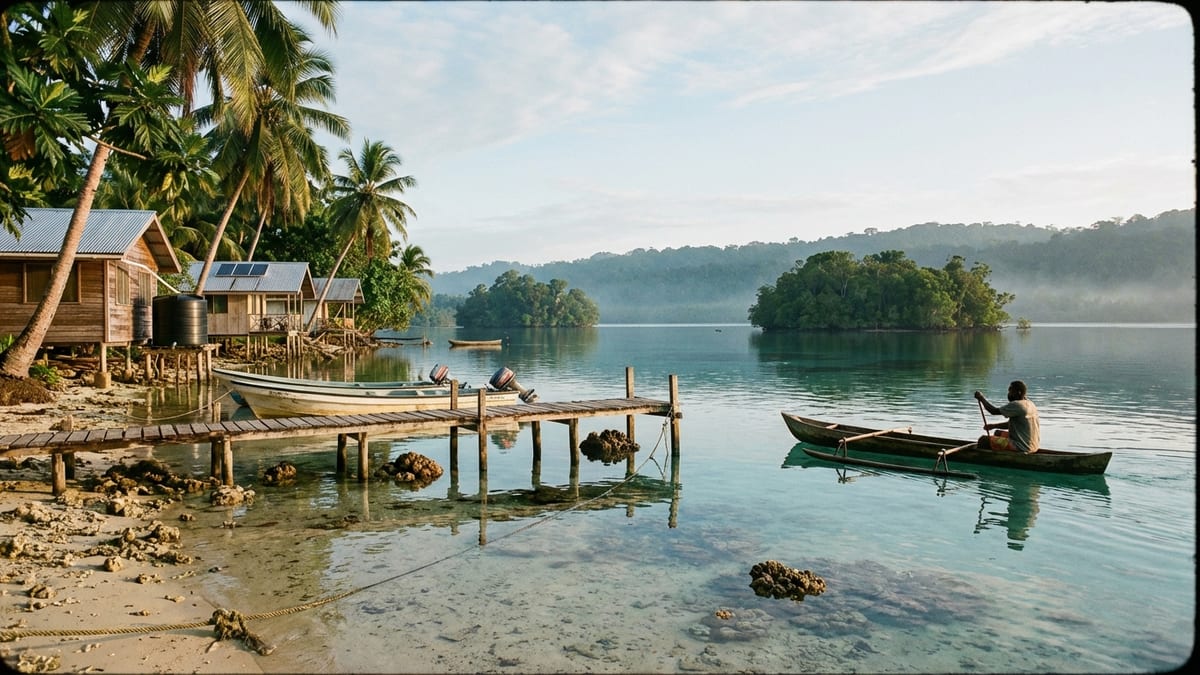
The Solomon Islands remain one of the South Pacific’s least developed tourism destinations, which is precisely what makes them so compelling. Spread across almost 1,000 islands and coral atolls, this archipelago offers world-class diving, empty surf breaks, rainforest-cloaked mountains and a living Melanesian culture that has changed little in generations.
Planning a trip here does take more work than to better-known neighbors like Fiji, but for travelers seeking raw beauty and genuine encounters, the rewards are exceptional. This guide brings together the latest information on where to go, what to see and how to organize a safe and satisfying journey in 2026.
Understanding the Solomon Islands
The Solomon Islands lie to the east of Papua New Guinea and northwest of Vanuatu, occupying a vast slice of the South Pacific. Only a fraction of the roughly 990 islands are inhabited. The capital Honiara is on Guadalcanal, which became globally known as a major battleground in the Second World War. Today, most visitors use Honiara as a transit hub before hopping onward to remote lagoons and outer islands.
This is an overwhelmingly rural country where subsistence agriculture and coastal fishing are still the backbone of daily life. English is the official language, but Solomon Islands Pijin is the lingua franca, and most communities speak their own local languages as well. Christianity is widespread, yet traditional customs and clan structures continue to guide village life.
Tourism here is small-scale and locally owned. Instead of big-brand resorts, you are more likely to stay in simple eco-lodges or village guesthouses that run on solar power, with rainwater tanks and patchy Wi-Fi. This low-impact footprint means the reefs, rainforests and beaches remain remarkably intact, but it also means you must travel with patience and realistic expectations of comfort and connectivity.
The country uses the Solomon Islands dollar, and cash is still king outside Honiara. ATMs are available in the capital and a few main towns but cannot be relied on in outer provinces. Mobile coverage and data are improving but remain intermittent away from major population centers. In many places, the natural rhythm of the day is set by the tides and the rising and setting sun rather than by a packed tourist schedule.
When to Go and Climate Considerations
The Solomon Islands have a tropical maritime climate, with warm temperatures throughout the year. Afternoon highs typically sit in the high 80s Fahrenheit, and humidity is consistently high. There is no sharp distinction between a cool and hot season, but there are drier and wetter periods that can influence your plans, especially if you hope to dive, surf or trek.
Broadly speaking, the drier, more settled weather runs from around May to October. This period is considered the most reliable time for general travel, with slightly cooler temperatures, less rainfall and clearer water visibility for diving and snorkeling. Trade winds can make some sea crossings choppy, but inter-island transport is generally more predictable, and there is usually less mud on jungle trails.
The wet season usually stretches from November through April, coinciding with the South Pacific cyclone season. Tropical lows and occasional cyclones can bring very heavy rain, rough seas and localized flooding. The Solomon Islands Meteorological Service issues seasonal cyclone outlooks and regular updates when systems are active. If you travel at this time of year you should build extra buffer days into your itinerary, monitor local weather reports and be prepared for flight or boat disruptions.
Even in the drier months, short but intense downpours are common, and conditions can vary significantly between islands. For divers and snorkelers, visibility often peaks toward the tail end of the drier season when runoff from rivers is lower. Surfers usually find the most consistent swells between about November and April, but remote surf breaks often require local knowledge, good boats and flexible timing.
Entry, Health and Safety in 2026
Entry requirements for the Solomon Islands have eased significantly since the strictest phase of the pandemic. As of early 2026, visitors from many countries, including the United States, the United Kingdom, most European Union states and much of the Pacific, can enter without a visa arranged in advance for stays of up to 30 days. Eligible travelers are granted a visitor permit on arrival provided they have a passport with at least six months’ validity, proof of onward or return travel and evidence of sufficient funds.
The country has dropped pre-departure PCR testing requirements for COVID-19, but travelers may still be asked to show proof of full vaccination according to current government policy. Certain health-related entry conditions remain: arrivals from yellow fever risk countries must carry a yellow fever vaccination certificate, and travelers from specified measles-affected countries may be required to show evidence of measles vaccination completed at least 15 days before arrival. Requirements can change, so it is important to confirm them with an official source shortly before travel.
Health risks in the Solomon Islands warrant serious attention. Malaria is endemic in many areas, and dengue fever, Zika and chikungunya are present. Protecting yourself against mosquito bites is crucial: use repellent containing DEET or other proven active ingredients, sleep under nets where provided, and choose accommodation with screened windows where possible. Many visitors also take antimalarial medication on medical advice before arriving. Safe drinking water is not guaranteed outside larger hotels; portable water filters, purification tablets or reliance on bottled water are common strategies.
Medical facilities are limited. Honiara has the national referral hospital and some private clinics, but equipment and supplies can be basic compared with what visitors are used to. In outer provinces, health posts often have only rudimentary services. Comprehensive travel insurance that covers medical evacuation is therefore essential. In the event of a serious accident or illness, evacuation to Australia or another regional hub may be the only viable option.
In terms of personal security, foreign governments currently advise exercising normal safety precautions in most of the country, with a higher degree of caution recommended in parts of Honiara due to petty crime, occasional unrest and the presence of unexploded World War II ordnance in certain areas. Common-sense measures apply: avoid walking alone at night, secure valuables, be cautious in poorly lit or isolated areas and steer clear of political demonstrations, which can flare up quickly. Before any hiking or diving around historic battle sites, ask local operators about UXO risks and never touch suspicious metallic objects on land or underwater.
Key Regions and Islands to Visit
Most trips begin in Honiara, the capital on Guadalcanal. While not a conventional tourist city, Honiara offers a window onto contemporary Solomon Islands life and an important historical landscape. War memorials and relics from the Guadalcanal Campaign, bustling open-air markets and coastal villages just outside town can fill a couple of days before or after journeys to more remote provinces.
To the west, the Western Province is the country’s premier tourism region. Gizo, Munda and the Marovo and Vonavona lagoons offer some of the best diving and snorkeling in the Pacific, with healthy reefs, steep drop-offs, wrecks and manta cleaning stations. Here you will find small eco-resorts on tiny islands, village-run guesthouses and homestays where you can kayak between coral gardens, fish with local crews and experience customary life at a gentle pace.
Marovo Lagoon in particular is often described as one of the largest saltwater lagoons on Earth. Its intricate maze of islands and reefs is home to master woodcarvers, traditional fishing communities and superb marine biodiversity. Many lodges here are only accessible by boat and operate with strong sustainability principles, offering solar power, local food and low guest numbers.
Beyond the Western Province, Malaita is known for its striking coastal plains, highland interiors and lagoon communities built on artificial islands, such as those in Langa Langa Lagoon. It is a deeply traditional region where kastom (customary practices) is strongly observed. Santa Isabel offers excellent trekking along its backbone ridge, while Makira, Choiseul and the remote Temotu Province reward truly adventurous travelers with empty beaches, birdlife and a strong sense of cultural continuity. Travel in these regions is logistically challenging and often requires careful coordination with local guides and boat operators.
Experiences: Diving, WWII History and Culture
Diving is one of the biggest draws to the Solomon Islands. Warm water, relatively low tourist numbers and abundant marine life make for uncrowded dive sites. Wreck divers are particularly spoiled: aircraft, ships and landing craft from World War II rest within recreational depths around Guadalcanal, Tulagi, Gizo and Munda. Many of these sites are covered in coral growth and home to schooling fish, turtles and reef sharks.
Beyond wrecks, divers can explore drop-offs with soft corals and sea fans, seamounts where pelagics patrol, and calm coral gardens ideal for macro photography. Visibility can be superb outside periods of heavy rain. Most dedicated dive operations are based in the Western Province and Central Province, and some small liveaboard-style experiences are possible, though this remains a niche, low-volume destination.
For history enthusiasts, the islands are an open-air museum of the Pacific War. On Guadalcanal, battlefield tours visit Henderson Field, Bloody Ridge and coastal sites where US and Japanese forces clashed. In the waters around Savo Island and Iron Bottom Sound, many naval vessels that sank during fierce engagements remain on the seabed. Operators in Honiara, Tulagi and Gizo can arrange both land and sea excursions that combine historical interpretation with snorkeling or diving.
Cultural experiences are central to any visit. Village stays allow travelers to see, and in some cases participate in, traditional gardening, fishing, carving and ceremonies. Many communities still build houses from sago palm and bamboo, paddle wooden canoes and pass knowledge through story and song. Guests are typically welcomed warmly, but respect for local protocols is vital. Dressing modestly, asking permission before photographing people or shrines, and observing taboos such as restrictions on certain sites or forests help maintain good relations.
Festivals and local events vary between provinces but can include church gatherings, independence celebrations and community feasts where dancing and panpipe music take center stage. These occasions are rarely scheduled with international visitors in mind, so attending them is often a matter of good timing, local connections and a willingness to adjust your plans.
Practical Planning: Transport, Money and Connectivity
Getting to the Solomon Islands usually involves flying into Honiara International Airport. The national carrier, Solomon Airlines, operates international routes connecting Honiara with Australia, Fiji and Vanuatu, and links to other destinations are often handled via codeshare agreements. Schedules can change and flights may not operate daily, so aligning international connections with onward domestic legs requires careful checking and preferably a night in Honiara as a buffer.
Domestic travel is primarily by small aircraft and fast boats. Solomon Airlines and other operators service routes to provincial airstrips such as Gizo, Munda, Auki and Kirakira. Seats are limited, and baggage allowances can be tight, especially on smaller planes. Delays and cancellations due to weather or operational issues are not uncommon, so flexible itineraries and good communication with your accommodation providers are essential.
Boat travel runs from organized fast launches used by lodges to public open-deck boats that handle cargo and passengers between villages. The latter can be slow, crowded and exposed, particularly in rough weather, but they are also a lifeline for many island communities. Wherever possible, travelers should use reputable operators, carry dry bags for electronics and valuables and always wear life jackets when provided.
Cash management is a vital part of planning. The Solomon Islands dollar is the only widely accepted currency. ATMs and card facilities exist in Honiara and a few larger towns, but they cannot be relied on in outer islands, where most businesses deal exclusively in cash. It is wise to carry enough local currency from the capital to cover lodgings, meals, boat transfers and incidentals for the periods you will be away from major centers. Some higher-end lodges can process card payments or bank transfers, but you should always confirm in advance.
Connectivity is improving but remains limited. Mobile networks cover Honiara and many main towns, but signal strength drops quickly in remote areas, and mobile data speeds can be slow and expensive. Many eco-lodges operate without Wi-Fi or only switch it on for short windows. You should not rely on being constantly reachable. Satellite communications may be used by some operators for safety. Sharing your itinerary and expected communication gaps with family or friends at home is sensible.
Accommodation, Costs and Responsible Travel
Accommodation options in the Solomon Islands range from modest hotels in Honiara to family-run guesthouses and intimate eco-resorts in outer islands. In the capital, business-focused hotels and simple motels cater to government workers, aid staff and visiting professionals as much as to tourists. Facilities typically include air conditioning and on-site dining, but standards may differ from what you find in larger tourism economies.
In provincial areas, accommodation is more characterful and often more basic. Beachfront lodges may offer comfortable bungalows with fans, mosquito nets and ocean views, but power could be limited to certain hours when generators or solar systems run. Bathrooms may be shared and hot water is not guaranteed everywhere. Village stays can involve sleeping on simple mattresses under mosquito nets and bathing in bucket showers or nearby rivers. For many travelers, these experiences are a highlight, but you should be prepared for limited privacy and a very close connection with your hosts’ daily routines.
Costs in the Solomon Islands are generally higher than in Southeast Asia but can be comparable to or slightly below some South Pacific neighbors, especially once you consider the personalized nature of many stays. Inter-island flights, boat charters and imported goods push up overall expenses. On the other hand, package rates at lodges often include meals, boat transfers and some activities, which can provide good value. Budget-conscious travelers willing to use public boats, stay in basic guesthouses and self-cater where possible can manage on a moderate daily budget, while those seeking comfort and guided diving or fishing will need to allocate more.
Responsible travel here is not just an ethical choice; it is a practical necessity for preserving the fragile environments and cultures that visitors come to experience. Simple steps make a real difference. Travel with refillable water bottles and avoid single-use plastics, as waste management infrastructure is limited. Dress modestly away from tourist beaches and respect local norms, particularly in villages and around churches. Ask before entering customary land or reefs, and understand that chiefs or clan leaders may expect a token contribution for access to certain sites or fishing grounds.
Supporting locally owned businesses, guides and craftspeople spreads the benefits of tourism. Buying woodcarvings, shell jewelry or woven handicrafts directly from artisans helps maintain skills that have been passed down through generations. At the same time, avoid purchasing items made from endangered species, coral or turtle shell, and never buy war relics, which may be dangerous and whose removal can be culturally or legally sensitive.
The Takeaway
The Solomon Islands are not a destination for travelers seeking polished resorts, packed nightlife or seamless infrastructure. They suit those who can embrace unpredictability, accept lower levels of comfort and value direct connections with people and place over curated experiences. In return, you gain access to one of the Pacific’s most unspoiled marine environments, vivid living cultures and a palpable sense of history both ancient and modern.
Planning ahead is vital: organize flights with room for delays, confirm accommodation and transfers well in advance, and prepare physically and mentally for hot, humid conditions and occasional rough seas. Prioritize health precautions, carry adequate travel insurance and remain aware of local safety advice in Honiara and around wartime sites. Approached with respect and flexibility, the Solomon Islands offer the sort of journey that stays with you long after you have left its blue lagoons and forested ridges behind.
FAQ
Q1: Do I need a visa to visit the Solomon Islands as a tourist?
Most travelers from countries such as the United States, the United Kingdom, much of Europe and several Pacific nations do not need to arrange a visa in advance for short tourist visits. If you meet basic entry conditions, including holding a passport valid for at least six months and proof of onward travel, you are typically granted a visitor permit on arrival for up to 30 days. Always check the latest requirements with official immigration or foreign affairs sources before departure.
Q2: Is it safe to travel in the Solomon Islands?
Most visits are trouble-free, but you should stay alert, particularly in Honiara, where petty crime and occasional unrest can occur. Take standard precautions such as avoiding walking alone at night, keeping valuables out of sight and steering clear of demonstrations or political gatherings. In outer islands, crime rates are generally lower, but medical and emergency services are limited, so good preparation and insurance are essential.
Q3: What health risks should I be aware of?
Malaria and dengue fever are present in the Solomon Islands, and other mosquito-borne illnesses such as Zika and chikungunya have been reported. Safe drinking water cannot be assumed outside larger hotels. Travelers should seek medical advice well before departure about vaccinations, antimalarial medication and other precautions, and take steps to avoid mosquito bites and food- and water-borne illnesses throughout their stay.
Q4: When is the best time of year to visit?
The most popular period for travel is from about May to October, when conditions are generally drier and slightly cooler, and visibility for diving and snorkeling is often better. The wet season, from November to April, brings heavier rainfall and the risk of tropical cyclones, which can disrupt flights and boat services. Travelers visiting in the wet season should allow extra time in their itineraries and monitor local weather updates closely.
Q5: How do I get around between the islands?
Most long-distance travel is by domestic flights and fast boats. Solomon Airlines operates routes from Honiara to provincial airstrips in places like Gizo, Munda and Auki. From there, small boats connect to nearby islands and lodges. In some areas, public boats carry passengers and cargo between villages, though services can be irregular and basic. Wherever possible you should coordinate travel with your accommodation or a trusted local operator and remain flexible in case of delays.
Q6: What kind of accommodation can I expect?
In Honiara you will find hotels and guesthouses that cater to both business and leisure travelers, usually with air conditioning and on-site restaurants. Outside the capital, options range from simple village guesthouses and homestays to small eco-resorts on their own islands. Many rely on solar power, have limited hot water and offer set-menu meals based on local produce. Luxury in the conventional sense is rare, but the settings and hospitality can be exceptional.
Q7: Is the Solomon Islands a good destination for diving and snorkeling?
Yes. The Solomon Islands are renowned among experienced divers for their combination of healthy reefs, abundant marine life and numerous World War II wrecks. Visibility can be excellent outside periods of heavy rain, and dive sites are generally uncrowded. Snorkelers can access superb coral gardens close to many island lodges. Because the country is remote and safety standards vary, choosing reputable operators and ensuring your travel insurance covers diving is very important.
Q8: What should I pack for a trip?
Light, breathable clothing suited to a hot, humid climate is essential, along with a waterproof jacket for sudden downpours. Modest attire is appreciated in villages and towns. Bring strong insect repellent, sunscreen, a hat, reef-safe swimwear, any prescription medications, a basic first-aid kit and a dry bag for boat journeys. A headlamp, spare batteries and a travel water filter or purification tablets are also useful in areas with limited electricity and uncertain water quality.
Q9: How much does it cost to travel there?
Costs vary widely with style of travel. International flights can be a significant expense, and domestic flights and boat transfers add to the total. Small eco-lodges may charge moderate to high nightly rates that often include meals and some activities, while village guesthouses are more budget-friendly but basic. Because imported goods are expensive and logistical costs are high, many travelers find overall expenses comparable to or slightly below other South Pacific destinations, rather than to cheaper regions like Southeast Asia.
Q10: Is it suitable for families or first-time visitors to the Pacific?
The Solomon Islands can be rewarding for adventurous families with older children who are comfortable with basic conditions and long travel days. However, medical facilities, safety infrastructure and child-focused services are limited, so it may not be ideal for very young children or for travelers who prioritize convenience. First-time visitors to the Pacific who are flexible, prepared and realistic about infrastructure can have an exceptional experience, but those seeking an easy, resort-style holiday may prefer a more developed destination.