

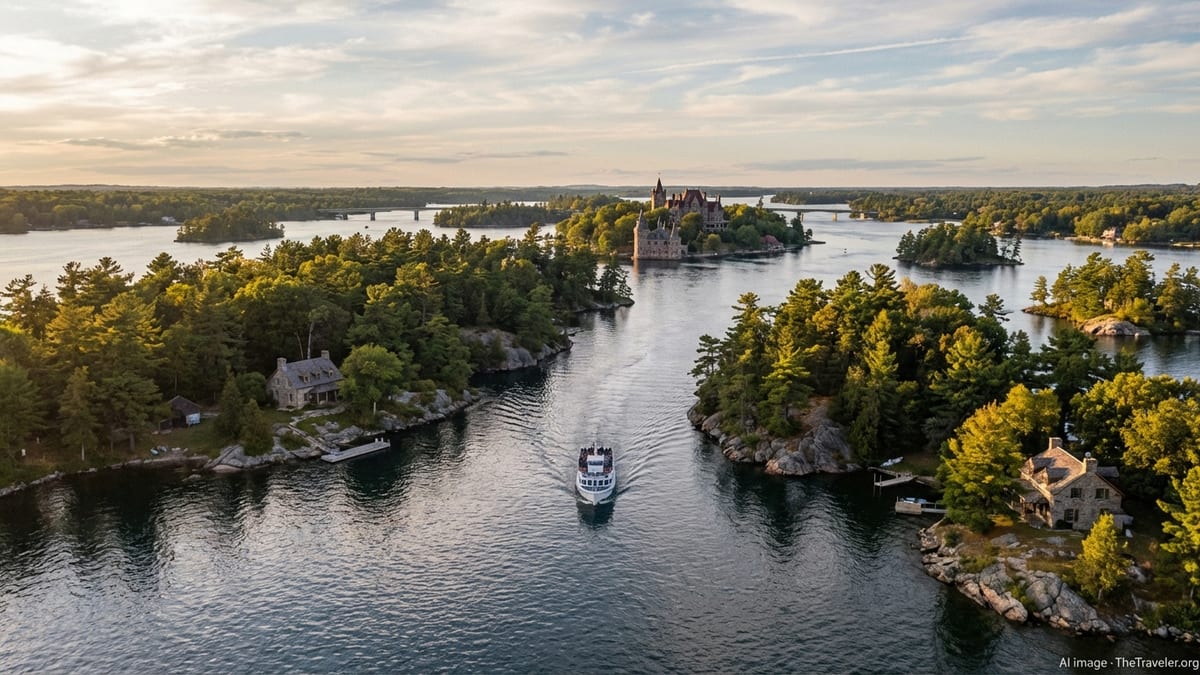
Straddling the border between northern New York and southeastern Ontario, the Thousand Islands region is a maze of forested islets, lighthouses, and grand summer homes scattered across the St. Lawrence River.
It is a place best discovered from the water, where tour boats thread through narrow channels, glide past cliffside cottages, and pause at the towers of storybook castles. From scenic cruises and island-hopping itineraries to panoramic viewpoints and practical travel tips, this guide will help you plan a memorable Thousand Islands escape.
Getting Oriented in the Thousand Islands
The Thousand Islands stretch for roughly 50 miles along the St. Lawrence River where Lake Ontario spills toward the Atlantic, with about 1,800 islands shared between Canada and the United States. On the U.S. side, Alexandria Bay and Clayton in New York are key gateways, while Gananoque, Ivy Lea, Rockport, and Brockville anchor the Canadian shore. Each community offers its own mix of marinas, cruise piers, waterfront restaurants, and riverfront parks, so you can choose a base that fits your style and schedule.
Although the region feels remote and relaxed, it is surprisingly accessible. From the U.S. side, Interstate 81 leads directly to the Thousand Islands Bridge, while Highway 401 parallels the river on the Canadian side with well-signed exits for Gananoque, Thousand Islands Parkway, and Brockville. Many visitors arrive for a day trip from cities like Kingston, Ottawa, Syracuse, or Watertown, but the area also rewards a long weekend or more, especially if you plan to tour castles and take multiple cruises.
Seasonality is important when planning a visit. Most scenic cruises, castle tours, and observation towers operate from roughly mid-May through mid-October, with peak activity in July and August when the weather is warmest and daylight lingers into the evening. Spring and fall bring fewer crowds, cooler temperatures, and vivid shoreline colors, particularly when the maples turn red and gold in late September and early October.
Because the river is an international boundary, it is wise to decide early whether you want to stay on one side or cross between Canada and the United States. Many cruises operate entirely within one country, while others include stops that require passports and brief border formalities. With some forward planning, you can easily design an itinerary that combines both shores, multiple islands, and several standout viewpoints.
Classic Cruises and How to Choose the Right One
River cruises are the signature Thousand Islands experience, and there is a wide range of options, from one-hour sightseeing loops to full-day excursions that link multiple castles and lighthouses. Canadian operators in Rockport, Gananoque, and Ivy Lea offer narrated cruises that weave among small islands, Millionaire’s Row mansions, and key landmarks such as Boldt Castle, Singer Castle, and Zavikon Island. U.S. tour companies based in Alexandria Bay and Clayton run similar itineraries, often with flexible departure times that make them easy to slot into a road trip.
Short scenic cruises of about one hour are ideal if you are pressed for time or traveling with young children. These outings usually stay close to the departure port while still providing classic views of tree-topped islands, rustic boathouses, and the soaring Thousand Islands International Bridge. Commentary tends to cover regional history, geology, and local folklore, giving you a helpful orientation to the area without committing an entire day.
Longer cruises of two to three hours are better if you want a deeper immersion and closer views of castles and lighthouses. Some of these remain non-stop, circling Heart Island and Dark Island to showcase Boldt Castle and Singer Castle from the water. Others include a stop to disembark for a castle tour or riverside walk. On select days, full-day “two-castle” cruises link both castles in one itinerary, sometimes including lunch on board. These comprehensive trips are popular and often require advance reservations, particularly in midsummer and on holiday weekends.
When choosing a cruise, consider departure time, length, whether the tour crosses the border, and how many stops are included. Morning sailings can offer softer light and calmer water, while late afternoon or sunset departures showcase the warm glow of the river at day’s end. If you are sensitive to sun or wind, look for vessels with both open decks and enclosed cabins so you can move between vantage points. For more independent exploration, some marinas and outfitters rent kayaks, canoes, or small motorboats, though you should be confident in your navigation skills and aware of shipping channels and currents before setting out.
Boldt Castle: The Heart Island Icon
Boldt Castle is the most famous landmark in the Thousand Islands, rising from Heart Island just off Alexandria Bay. Commissioned in the early 1900s by hotelier George Boldt as a tribute to his wife, the château-style mansion was left unfinished after her sudden death. Decades later, restoration work transformed the once-abandoned shell into a major seasonal attraction, with furnished rooms, riverside terraces, and carefully maintained grounds that draw visitors from around the world.
The castle is accessible only by water, either via tour boats or water taxis from both the U.S. and Canadian sides, as well as private craft. Once on Heart Island, you can follow self-guided routes through several levels of the mansion, from the grand ground floor with its sweeping staircase and ballroom-like spaces to upper stories that combine restored rooms with exhibits on Gilded Age life and the island’s history. Outbuildings such as the Power House and Alster Tower add to the sense of a self-contained summer estate set amid the river.
Visiting from Canada involves an extra step: Heart Island functions as a U.S. port of entry, so travelers arriving from Canadian departure points must carry passports or approved identification and clear border formalities on arrival. The process is generally straightforward but adds a few minutes to the visit, so it is wise to factor that into your timing. From the U.S. side, the logistics are simpler, but all visitors should confirm operating dates and daily hours before planning a trip, as Boldt Castle opens seasonally and weather can affect early- or late-season schedules.
Allow at least two to three hours on Heart Island to comfortably tour the castle, wander the gardens, and pause at viewpoints overlooking the shipping channel. Comfortable footwear is useful, as paths and walkways extend across the island, and you will likely be climbing stairs inside the mansion. Photography is permitted for personal use, and there are ample chances to capture views framed by stone arches, riverside pergolas, and the distant span of the Thousand Islands Bridge.
Singer Castle and Other Storybook Sites
Downriver from Alexandria Bay, Singer Castle on Dark Island offers a very different, more intimate castle experience. Built in the early 20th century as a hunting lodge and summer retreat for Frederick Bourne, an executive with the Singer Sewing Machine Company, this fortresslike stone residence features turrets, battlements, and secret passageways woven throughout the building. Approached from the water, it resembles a compact European stronghold transplanted to the St. Lawrence.
Unlike the largely self-guided format at Boldt, Singer Castle is visited on guided tours, typically lasting around 45 minutes. Small groups move through several levels of the house, exploring rooms furnished with period decor, seeing the entrances to hidden corridors, and hearing stories that blend social history with a hint of mystery. Because of the number of steps and the layout of the historic building, tours involve some stair climbing, and strollers are generally not allowed inside, so travelers with mobility concerns should check current accessibility details when planning a visit.
Singer Castle is reachable through dedicated castle cruises, shuttles from nearby harbors, and private boats that tie up at island docks. A limited number of guests can even book an overnight stay in an on-site suite, turning the visit into a once-in-a-lifetime experience, though these arrangements usually need to be made well in advance. As with Boldt Castle, the season typically runs from late spring through early fall, with specific operating days that can vary toward the start and end of the season.
Beyond the two headline castles, several other historic and scenic sites add depth to an island-hopping itinerary. Rock Island Lighthouse, situated near Clayton, invites visitors to dock and climb to river views that encompass passing freighters and sailboats. Small islands such as Deer Island remain largely undeveloped, offering glimpses of dense shoreline forest and secluded coves, while the palatial homes of Millionaire’s Row stand as reminders of the era when the Thousand Islands were a summer playground for industrial magnates and social elites.
Panoramic Viewpoints and Scenic Drives
Although the Thousand Islands are best appreciated from the water, there are several superb land-based viewpoints that deserve a place on any itinerary. One of the most striking is the observation tower located on Hill Island on the Canadian side, which rises several hundred feet above the St. Lawrence River. On clear days, its viewing platforms offer sweeping panoramas over the maze of islands, bridges, and shipping channels, providing a bird’s-eye perspective that helps you understand the region’s quirky geography.
Along the Canadian shore, the Thousand Islands Parkway between Gananoque and Brockville is an exceptionally scenic drive, with frequent pullouts, picnic spots, and access points to the river. Cyclists often ride the parallel recreational trail, which runs close to the water in many sections and offers peaceful views of islands and passing boats. On the U.S. side, vantage points around Alexandria Bay, Clayton, and Wellesley Island State Park include small overlooks, marinas, and riverside trails where you can watch tour boats cruise past and catch sunsets reflected across the channel.
Nature-oriented travelers should not overlook the Minna Anthony Common Nature Center on Wellesley Island, where a network of trails traverses mixed forest, rocky shoreline, and wetlands. Several routes provide views across inlets and channels dotted with small islands and waterfowl, while exhibits in the nature center highlight local ecology and wildlife. The setting offers a quieter, more contemplative counterpoint to the bustle of cruise docks and castle tour groups.
Whether you explore by car, bicycle, or on foot, plan to build in time simply to sit by the water and take in the river’s moods. Early mornings can be glassy and still, with mist rising from the surface, while late afternoons often bring more boat traffic and sparkling light. Sunset, especially when viewed from an elevated lookout or open shoreline, can layer the islands in silhouettes of deep blue, purple, and gold.
Planning Your Trip: Seasons, Logistics, and Practical Tips
Most visitors experience the Thousand Islands between late spring and early fall, when cruise schedules are robust and daytime temperatures are comfortable. June and September often strike a balance between good weather and moderate crowds, while July and August bring a festival-like atmosphere, particularly in Alexandria Bay and Gananoque where waterfront patios and marinas hum with activity. In the shoulder seasons, some attractions operate on reduced hours or weekends only, so it is wise to confirm opening dates for castles, towers, and nature centers before finalizing plans.
Because the river forms an international border, travel logistics can be slightly more complex than in a typical lake district. If your cruise or castle visit involves crossing from one country to the other, you will need valid passports or approved identification for each traveler, including children, and should be prepared for brief customs and immigration checks. Some tours stay entirely within one country’s waters, avoiding formalities while still delivering classic views of the islands and key landmarks, which may appeal to travelers who prefer simpler arrangements.
Lodging options range from riverfront hotels and family-run motels to cottages, campgrounds, and a handful of upscale inns. On the U.S. side, Alexandria Bay and Clayton offer the broadest choices near castle tours and museums, while Gananoque and the communities along the Thousand Islands Parkway provide convenient bases on the Canadian shore. Summer weekends and holidays can see high demand, especially during regional events, so advance reservations are advisable.
When packing, think in layers. Even on warm days, temperatures on the water can feel cooler than on shore, and sudden weather changes are not uncommon. Light jackets or sweaters, sun protection, and comfortable walking shoes make castle tours and scenic stops more enjoyable. If you plan to photograph the landscape, consider bringing a lens with a moderate zoom to capture both wide panoramas and details such as lighthouses, bridges, and distant islands. Binoculars can also enhance your experience, allowing you to spot wildlife and read the names on passing freighters.
Beyond the Water: Culture, Food, and Family Activities
Although cruises and castles dominate most itineraries, the Thousand Islands region offers a variety of cultural and family-friendly attractions on shore. In Clayton, the Antique Boat Museum showcases wooden runabouts, classic launches, and other historic vessels associated with the river’s boating heritage, often including indoor and outdoor exhibits that appeal to all ages. On the Canadian side, waterfront museums in towns like Gananoque highlight local history, shipbuilding, and the evolution of tourism in the archipelago.
Food and drink have become an increasingly prominent part of the Thousand Islands experience. Winery tasting rooms near Alexandria Bay and along the Canadian shore pour regional wines, often in settings that look out over vineyards or river valleys. Casual dockside restaurants serve local fish, classic North American comfort food, and, in some places, versions of the famous Thousand Island dressing that was named for the region. Ice cream stands and coffee shops cluster near marinas, making it easy to pair an afternoon walk with a treat.
For families, the combination of boat rides, castles, and light outdoor activities is inherently appealing. Many cruises narrate stories of bootleggers, river pilots, and eccentric island owners, adding a sense of adventure that younger travelers enjoy. Short hikes at nature centers, beach days at riverside parks, and simple activities like skipping stones or watching freighters pass under the bridge help balance time spent in more structured attractions.
Rainy days can be handled by shifting focus to indoor stops such as museums, visitor centers, and select castle interiors, many of which are at least partially sheltered. However, river conditions and visibility can influence whether certain cruises run, particularly in heavy fog or storms, so flexibility is helpful. Checking forecasts the day before a scheduled cruise and having a backup plan on shore can ensure your trip remains enjoyable even if the weather does not fully cooperate.
The Takeaway
The Thousand Islands deliver a rare blend of natural beauty, layered history, and easygoing river culture. Cruises provide shifting perspectives on forested islets and stone castles, while observation towers, scenic drives, and shoreline trails reveal how richly varied the landscape is when viewed from land. Whether you are stepping into the grand hall of Boldt Castle, tracing the hidden passageways of Singer Castle, or watching the sunset from a quiet riverside park, the region rewards those who slow down and let the river set the pace.
With thoughtful planning around seasons, borders, and cruise options, it is possible to craft an itinerary that feels both relaxed and full of discovery. Choose one community as a base or build a route that links several harbors on both sides of the border, and you will find that each vantage point reveals a slightly different Thousand Islands. However you explore it, this storied stretch of the St. Lawrence is likely to linger in your memory long after you leave its channels behind.
FAQ
Q1. When is the best time of year to visit the Thousand Islands?
The main season runs from roughly mid-May to mid-October, when cruises and castles operate, with July and August being the busiest and warmest months.
Q2. Do I need a passport to take a Thousand Islands cruise?
You need a passport or approved identification only if your cruise or castle visit involves crossing between Canada and the United States or landing in the other country.
Q3. How long should I plan for a Thousand Islands trip?
A full weekend allows time for at least one cruise, a castle tour, and some shoreline exploration, while three to four days support a more relaxed, multi-base itinerary.
Q4. Can I visit both Boldt Castle and Singer Castle in one day?
Yes, select full-day cruises and carefully planned private-boat itineraries can include both castles in a single day, although it makes for a fairly full schedule.
Q5. Are cruises and castles suitable for young children?
Most standard sightseeing cruises and castle visits are family-friendly, though parents should be prepared for stairs, uneven surfaces, and the need for supervision near water.
Q6. Is the Thousand Islands region accessible for travelers with limited mobility?
Accessibility varies by operator and site, but some cruises, visitor centers, and attractions feature ramps, step-free areas, and accessible facilities; always confirm details in advance.
Q7. Can I explore the islands by kayak or canoe?
Yes, many outfitters rent paddling gear, and quieter channels can be rewarding, but you should be cautious of currents, weather changes, and boat traffic before venturing out.
Q8. What should I wear or bring for a Thousand Islands cruise?
Layered clothing, a light jacket, sun protection, comfortable walking shoes, and a camera or binoculars will help you stay comfortable and make the most of the views.
Q9. Are there good options for budget travelers?
Budget-conscious visitors can choose shorter cruises, stay in motels or campgrounds, and focus on free or low-cost viewpoints, trails, and riverfront parks along the shore.
Q10. Do cruises and attractions run in bad weather?
Light rain often does not stop operations, but heavy storms, fog, or strong winds can lead to delays or cancellations, so it is wise to check conditions on the day of your visit.