

Victoria, the oceanfront capital of British Columbia on the southern tip of Vancouver Island, blends Indigenous heritage, British colonial history, and spectacular Pacific scenery.
With its mild climate, walkable harbourfront, and easy access to wild coastline, this compact city rewards slow exploration, from historic streets and stately gardens to whale-filled waters and forest-fringed trails.
Victoria in Context: Where the Pacific Meets a Historic Capital
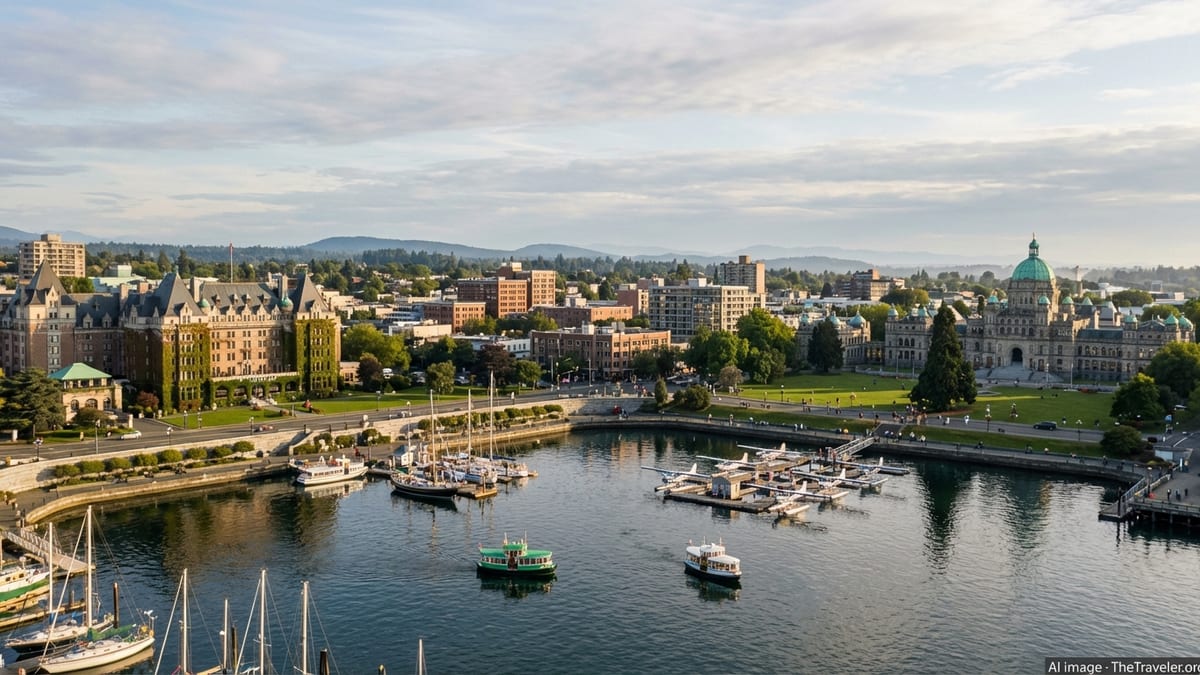
Victoria sits on the southern tip of Vancouver Island, looking out across the Strait of Juan de Fuca toward Washington State. Sheltered by mountains and warmed by Pacific air, it enjoys some of the mildest weather in Canada. Spring arrives early, gardens bloom for much of the year, and locals are outside in almost every season, walking the waterfront or paddling across the sheltered harbour. Visitors arriving by ferry, floatplane, or cruise ship are greeted by a skyline that is low-rise but distinctive, framed by the copper-domed Parliament Buildings and the turreted Fairmont Empress hotel.
The city is part of the traditional territories of Coast Salish peoples, including the Lekwungen-speaking Songhees and Esquimalt Nations, who have lived along this coastline for thousands of years. That deep history is written into place names, carved poles, and a living cultural presence that is increasingly visible in galleries, public art, and guided experiences. At the same time, Victoria’s reputation as a “British” city is still evident in its afternoon teas, heritage architecture, and manicured parks. Modern Victoria is more diverse and contemporary than its genteel image suggests, but the layered past is one of its defining appeals.
For travelers, Victoria works well as both a long weekend city break and a base for deeper exploration of Vancouver Island. Within minutes of downtown you can be walking a rocky headland trail, watching a pod of orcas breach in the Salish Sea, or wandering the famous Butchart Gardens. The city’s compact scale makes it easy to skip the car entirely, using ferries, bikes, and your own two feet to move between historic streets, coastal viewpoints, and vibrant neighbourhoods.
From Lekwungen Lands to Capital City: A Brief History
Long before Victoria became the capital of British Columbia, this sheltered harbour and surrounding coastline supported thriving Indigenous communities. The Lekwungen people, now represented primarily by the Songhees and Esquimalt Nations, maintained villages, clam gardens, and seasonal camps around what is now Victoria Harbour and nearby bays. Shell middens, rock art, and oral histories speak to a complex relationship with the land and sea that continues today. Place names are slowly being restored, and some sites now feature interpretive signage acknowledging this deeper story.
European presence intensified in the mid-19th century when the Hudson’s Bay Company established Fort Victoria in 1843 as a fur trading post and supply base. Its location was strategic: close to shipping routes, yet sheltered, and well-positioned as a gateway to the interior. The gold rushes of the 1850s and 1860s turned the settlement into a bustling port as prospectors and merchants passed through on their way to the Fraser River and Cariboo goldfields. Many stayed, building businesses and homes that laid out the bones of the present-day downtown.
In 1868, one year after the colony of British Columbia was created, Victoria was named its capital. When the province joined Confederation in 1871, that status was confirmed. The stately British Columbia Parliament Buildings, completed in the 1890s, were intended to showcase the confidence of a young province. The grand Fairmont Empress hotel soon followed, catering to rail and steamship travelers and cementing Victoria’s image as an elegant, if somewhat old-fashioned, outpost of the British Empire.
Victoria’s history is also marked by stories of adaptation and change. The Indigenous communities that first occupied this land have faced displacement, disease, and government policies that sought to suppress language and culture, yet their presence endures and is increasingly central to how Victoria understands itself. The city has also evolved from a government and navy town into a more diversified hub of tourism, education, and technology, while still preserving much of its historic core. Walking Victoria today is in many ways walking through these overlapping eras.
Coastal Beauty: Harbours, Headlands, and Island Views
Victoria’s coastline is one of its greatest assets, offering a mix of sheltered harbour, pebbled beaches, and rocky headlands that feel surprisingly wild for a provincial capital. The Inner Harbour is the city’s postcard view, a natural inlet whose calm waters are animated by small ferries, water taxis, kayaks, and floatplanes landing and taking off throughout the day. Strolling the harbour walkway, you pass street performers, public art, and flower beds, with constant views of boats, distant hills, and the stately outline of the Parliament Buildings.
Beyond the Inner Harbour, the coast quickly becomes more rugged. A short drive or bike ride west brings you to the Dallas Road waterfront, where a seaside path follows the edge of cliffs and grasslands. Here, the Strait of Juan de Fuca feels broad and open, and on clear days the snow-capped Olympic Mountains in Washington State rise on the horizon. Winds can be strong and waves dramatic, especially in winter, but it is a favourite place for locals to walk dogs, fly kites, and watch for marine life. Staircases lead down to cobbled beaches where driftwood piles up after storms.
To the east, smaller bays and coves offer quieter scenes. Oak Bay and Cadboro Bay have sandy beaches, sheltered waters, and family-friendly parks, with views of the Gulf Islands and, sometimes, Mount Baker in the distance. Kayakers and paddleboarders set out from these points to explore small islets and marine parks. Birdlife is abundant year-round, from gulls and cormorants to seasonal shorebirds, while seals often pop their heads above the waves just offshore.
Wildlife encounters are a significant part of Victoria’s coastal identity. Boat tours departing from the harbour venture into the Salish Sea in search of orcas, humpback whales, porpoises, and sea lions. While no sighting can be guaranteed, the combination of open water, forested islands, and marine mammals is a powerful reminder that even a small capital city here is embedded within a rich coastal ecosystem.
Iconic Landmarks and City Highlights
Many of Victoria’s most recognizable landmarks are clustered around the Inner Harbour, making it easy to see several in a single walking circuit. On one side of the water stand the British Columbia Parliament Buildings, with their stone façades, domes, and statues. Visitors can usually join guided or self-guided tours during the day, gaining a sense of the province’s political life and examining ornate interiors filled with murals and stained glass. The lawns in front are a favourite gathering space for locals, demonstrations, and festivals.
Facing the Legislature is the Fairmont Empress, one of Canada’s grand railway hotels and still a symbol of Victoria’s long connection to tourism. Even if you are not staying there, stepping into the lobby or booking afternoon tea offers a glimpse of a bygone era of travel, updated for contemporary tastes. Just beyond, the causeway along the harbour is home to buskers, First Nations artists, and seasonal markets, particularly lively in summer evenings when the buildings are lit and the waterfront glows.
A short walk away, the Royal BC Museum explores the natural and human history of the province, including the stories of First Nations, the development of coastal communities, and the region’s ecosystems, from coastal rainforests to high alpine. Its galleries, educational programs, and rotating exhibitions make it one of the city’s cultural anchors. Nearby Thunderbird Park features historic and contemporary totem poles, highlighting the artistry of Indigenous carvers from across the coast.
Beyond this central cluster, other highlights round out the city experience. The narrow streets of Old Town, including the brick and stone buildings around Johnson Street and Market Square, preserve the atmosphere of Victoria’s 19th-century boom years. Chinatown, among the oldest in Canada, is compact but atmospheric, with heritage façades, shops, and the famously narrow Fan Tan Alley. Beacon Hill Park spreads out toward the sea with ponds, flower beds, open lawns, and wooded paths, connecting downtown to the Dallas Road waterfront and offering multiple vantage points for sunset over the strait.
Gardens, Green Spaces, and Victoria’s Year-Round Bloom
Victoria’s long-standing reputation as the “Garden City” is not just a marketing line. The mild climate encourages year-round planting, and both public spaces and private homes take full advantage. Even in winter, you will see blooming plants and green lawns, while spring brings an explosion of cherry blossoms that transform residential streets and downtown avenues into pastel tunnels. City parks feature carefully tended flowerbeds, while hanging baskets of flowers appear throughout the core in warmer months.
The best-known expression of this gardening tradition is Butchart Gardens, located a short drive north of Victoria in Brentwood Bay. Originally developed in the early 20th century in the site of a former limestone quarry, the gardens now cover more than twenty hectares of themed spaces, including the iconic Sunken Garden, a vibrant Rose Garden, a tranquil Japanese Garden, and an Italian Garden. Seasonal plantings mean there is something to see at almost any time of year, from spring bulbs and summer blooms to autumn foliage and winter light displays.
Within the city, Beacon Hill Park functions as Victoria’s green heart. This large, varied space features manicured lawns, duck ponds, woodlands, and viewpoints toward the Olympic Mountains. Walking paths thread through groves of Garry oak, an ecosystem unique to this part of the Pacific Northwest, while resident peacocks and songbirds provide flashes of colour and sound. The park’s southern edge meets the sea, where bluffs and coastal grasses blend the cultivated with the wild.
Smaller neighbourhood parks, community gardens, and seaside viewpoints round out Victoria’s green network. From the hilltop vistas of Mount Tolmie and Mount Douglas to the cultivated beds around the Legislature and Empress, there are few better cities for travelers who enjoy slow walks, outdoor picnics, and photography. Even a brief visit in almost any season will likely feature some combination of blossoms, evergreens, and sea views, often within the same frame.
Neighbourhoods, Food, and Cultural Life
Despite its modest size, Victoria offers a range of neighbourhoods, each with its own atmosphere. Downtown is the busiest, with heritage brick buildings housing boutiques, bookstores, cafés, and restaurants that range from casual brunch spots to contemporary fine dining. Side streets around Lower Johnson Street and Bastion Square are especially appealing for their preserved façades and pedestrian-friendly scale. The city’s Chinatown, with its ornate gate, narrow lanes, and long history, contributes distinctive shops, markets, and eateries.
Just across the Johnson Street bridge, the former industrial area of Vic West and the Inner Harbour’s north shore have seen a wave of redevelopment, with waterfront paths, residential buildings, and new dining options. The Galloping Goose Trail, a multi-use path that follows an old railway line, connects this area to downtown and beyond, giving cyclists and walkers a safe route through the urban core and out to more rural landscapes. Along the way, repurposed warehouses and modern cafés reflect Victoria’s ongoing evolution.
Food and drink are central to the city’s appeal. The surrounding region’s farms, fisheries, and wineries supply ingredients for restaurants that highlight seasonal, local produce and Pacific seafood. Victoria has a strong café culture, with independent coffee shops scattered through downtown and residential districts alike. It also plays a notable role in the craft beer scene, with several breweries and brewpubs in and around the core. Many offer tasting flights, patios, and menus that showcase regional specialties.
Victoria’s cultural calendar stretches across the year, with music festivals, film events, and community celebrations. The summer season is especially busy, when outdoor concerts, markets, and performances fill public spaces, and the harbour hosts everything from sailing regattas to fireworks displays. Smaller venues support a lively local arts scene, with live music, theatre, and galleries adding depth beyond the better-known tourist draws.
Exploring the Region: Day Trips and Outdoor Adventures
One of Victoria’s strengths as a base is how quickly you can transition from urban streets to rural landscapes. Within an hour’s drive, the Saanich Peninsula offers rolling farmland, coastal inlets, and forested hills. Here you can visit farm stands, wineries, and attractions such as Butchart Gardens or elevated forest walkways that provide sweeping views of Saanich Inlet and the Gulf Islands. Coastal pullouts and small parks offer opportunities to spot marine birds and, occasionally, whales from shore.
To the west, the coastline becomes wilder. While the full expanse of Vancouver Island’s outer coast requires more time, even shorter excursions from Victoria reveal wave-battered shores, mossy forests, and rocky beaches strewn with driftwood. Numerous regional and provincial parks protect stretches of shoreline, lakes, and trail networks suitable for everything from gentle family walks to more ambitious hikes. The climate is often damp in cooler months, so good footwear and layers are essential, but the reward is a landscape of towering evergreens, ferns, and the constant presence of the sea.
On the water itself, kayaking and paddleboarding are popular around sheltered bays, inlets, and the harbour’s quieter corners. Organized tours are widely available and are recommended for visitors unfamiliar with local currents and marine conditions. Whale-watching excursions typically operate from spring through autumn, heading out into the Salish Sea in search of resident and transient orcas, along with humpback and gray whales in season. Operators increasingly emphasize respectful wildlife viewing and the ecological context of these charismatic animals.
For those looking to explore farther afield, Victoria functions as a transportation hub, with ferries and small planes connecting to the Gulf Islands, mainland British Columbia, and Washington State. Each of these destinations offers its own mix of nature, history, and culture, but many travelers find that even a short stay centered in Victoria, with a few well-chosen outings, provides a satisfying taste of the wider region.
The Takeaway
Victoria, BC, rewards travelers who value atmosphere as much as attractions. Its layered history, from Indigenous roots to colonial capital to contemporary coastal city, is visible in streetscapes, museums, and living cultures. At the same time, the surrounding landscape of harbours, islands, and forests ensures that the Pacific is never far from view. Whether you are drawn by its famous gardens, waterfront landmarks, food and drink, or the promise of spotting whales against a backdrop of distant mountains, Victoria offers a blend of experiences that feel both relaxed and memorable.
Planning a visit here is less about checking off a long list of must-sees and more about allowing time for slow walks, harbour sunsets, and conversations in cafés or on park benches. A day might include touring the Parliament Buildings, wandering through Chinatown, lingering in Beacon Hill Park, then watching the sky shift colours over the Strait of Juan de Fuca. With its compact size and welcoming pace, Victoria invites you to settle in, look closer, and let the city and coast reveal themselves at their own gentle rhythm.
FAQ
Q1. When is the best time of year to visit Victoria, BC?
The most popular period is late spring through early autumn, roughly May to September, when days are longer, gardens are in full bloom, and outdoor events are frequent. Winter is cooler and wetter, but temperatures are generally milder than much of Canada, and the city remains very walkable.
Q2. How many days do I need to see Victoria’s main highlights?
A two to three day stay is usually enough to explore the Inner Harbour, visit the Royal BC Museum, stroll Beacon Hill Park, experience downtown and Chinatown, and take a side trip to Butchart Gardens. Longer stays allow time for whale watching, coastal hikes, and additional regional excursions.
Q3. Do I need a car to get around Victoria?
Downtown Victoria and the Inner Harbour are compact and very walkable, with local buses, taxis, and rideshares available. Many visitors rely on public transport or organized tours for outings to places like Butchart Gardens or nearby parks, and only rent a car if they plan to explore further afield on Vancouver Island.
Q4. Is Victoria a good destination for families?
Yes. The city’s manageable size, parks, waterfront walks, and attractions such as gardens, museums, and beaches make it well-suited to families. Many activities, from harbour ferries to easy coastal trails, work for a wide range of ages, and the atmosphere is generally relaxed and safe.
Q5. What should I pack for a trip to Victoria?
Layers are essential, as coastal weather can change quickly. A light waterproof jacket, comfortable walking shoes, and an extra layer for cooler evenings are useful year-round. In summer, sun protection is important, while in cooler months, a warm hat and gloves can make outdoor walks more comfortable.
Q6. Can I see whales from Victoria?
Whale-watching tours operate seasonally from Victoria’s harbour and nearby marinas, with chances to see orcas, humpback whales, and other marine life. Occasional sightings are possible from shore at certain viewpoints, but boat tours significantly improve the likelihood of seeing whales in the wider Salish Sea.
Q7. How accessible is Victoria for travelers with mobility concerns?
The central harbour area, many sidewalks, and several major attractions have accessible routes and facilities, although some historic buildings and older streets can present challenges. It is advisable to check specific accessibility details with attractions, accommodations, and tour operators in advance to ensure a comfortable visit.
Q8. Are there opportunities to learn about Indigenous culture in Victoria?
Yes. The Royal BC Museum, public art, and guided experiences offer insights into the region’s First Nations history and contemporary culture. Some tours and cultural centres highlight Indigenous perspectives, and you will see totem poles, carvings, and interpretive signs acknowledging traditional territories around the city.
Q9. Is Victoria an expensive place to visit?
Costs can be moderate to high, particularly for accommodation in peak summer months. However, many of Victoria’s pleasures, such as harbour walks, coastal viewpoints, and parks, are free, and there is a range of dining options from budget-friendly cafés to high-end restaurants. Visiting in shoulder seasons can help keep expenses in check.
Q10. How do I get to Victoria from Vancouver or Seattle?
Common options include passenger and vehicle ferries from the Vancouver area, passenger ferries and seasonal services from Washington State, and short flights by plane or seaplane. Travel times vary depending on the route, but the journeys themselves often provide scenic views of islands, waterways, and coastal mountains.