

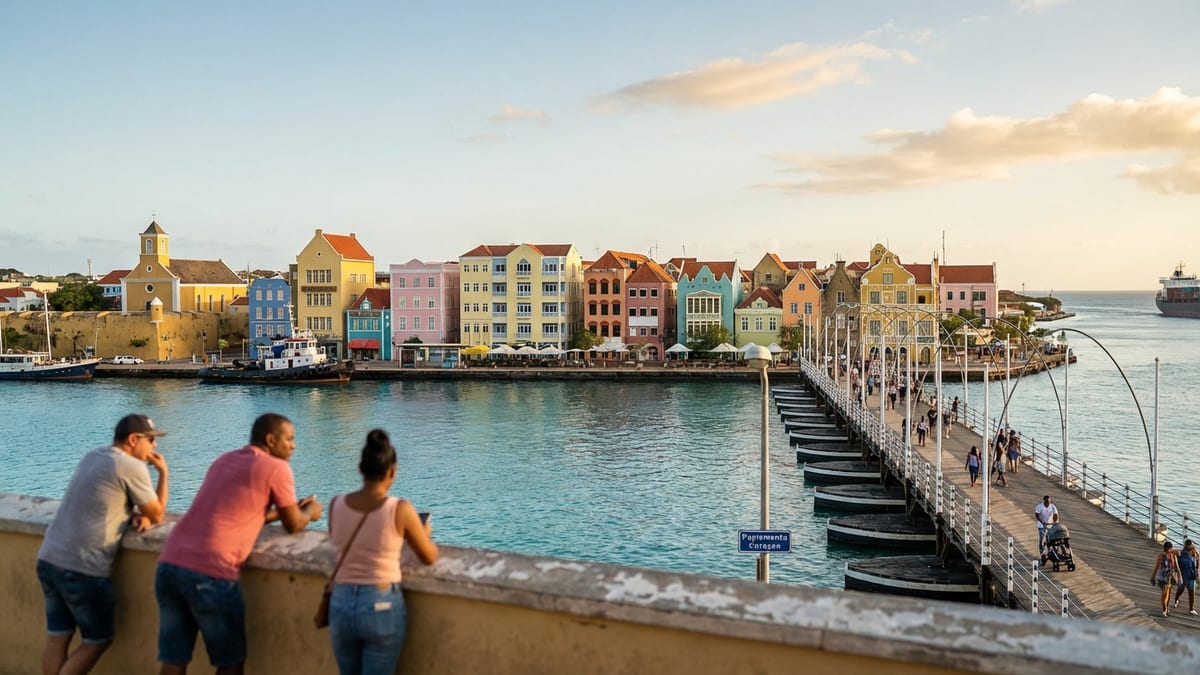
Willemstad, the colorful capital of Curaçao, is one of the Caribbean’s most distinctive small cities, blending Dutch colonial architecture with Afro-Caribbean culture, hidden beaches with a working harbor, and a relaxed island rhythm with a cosmopolitan dining and nightlife scene.
As the historic city center and its port are recognized as a UNESCO World Heritage Site, visitors can expect a compact, walkable core packed with characterful neighborhoods, vivid street art and shoreline promenades, framed by turquoise water and golden light. This guide explores the main districts, essential sights and the practical realities of visiting, so you can arrive knowing exactly what to expect in this unique corner of the former Dutch Caribbean.
Getting Oriented: How Willemstad Fits Together
At first glance on a map, Willemstad can look like a jumble of peninsulas and inlets, but on the ground the city is surprisingly easy to navigate. The historic center is divided by St. Anna Bay, the deep natural harbor that has shaped Curaçao’s fortunes for centuries. On the eastern side of the bay lies Punda and the adjacent Scharloo and Pietermaai districts, while the western side is home to Otrobanda and the waterfront fortifications. Together these neighborhoods form the UNESCO-listed core that most visitors picture when they think of Willemstad’s pastel waterfront.
The iconic Queen Emma Bridge, a floating pedestrian pontoon that swings open to let ships pass, serves as the main link between Punda and Otrobanda and is one of the city’s defining experiences. When the bridge is open, free passenger ferries shuttle pedestrians back and forth, keeping the two halves of downtown closely connected. From either shore, streets radiate inland into low-rise residential areas, with suburbs and resort zones stretching east toward Mambo and Jan Thiel beaches and north toward Hato and the island’s rugged interior.
Willemstad is not a large city by global standards, and the historic center can comfortably be explored on foot in a day, though its atmospheric streets reward slower wandering. Many visitors stay in the waterfront districts themselves; others base at beach resorts a short drive away and come into the city for dining, shopping and culture. Understanding the character of each neighborhood will help you decide where to sleep, where to stroll and where to seek out local life beyond the postcard-perfect skyline.
Neighborhoods of Willemstad: Personality by the Bay
Punda is Willemstad’s oldest neighborhood and the one with the most familiar face, thanks to the row of gabled, sherbet-colored houses along the Handelskade waterfront. Historically this was the colonial commercial center, and it remains dense with shops, cafes and offices. Narrow side streets shelter small boutiques, ice cream parlors and shaded courtyards, while plazas such as Plaza Wilhelmina and Plaza Piar host events and evening gatherings. Punda also concentrates many of the city’s synagogues, churches and museums, making it a natural base for first-time visitors.
Across the water, Otrobanda literally means “the other side” in Papiamentu, the island’s creole language, and for many years it was seen as a more working-class and local quarter. Today it remains lived-in and authentic, but a surge of reinvestment has transformed parts of Otrobanda into one of Willemstad’s most compelling areas. Restored townhouses now house boutique hotels and intimate guesthouses, while the Rif Fort and nearby waterfront have been converted into a shopping and dining complex that still preserves historic stone walls and cannon placements. In the backstreets, murals, corner bars and small eateries preserve a neighborhood feeling that many visitors find more relaxed than Punda.
To the north of Punda, Scharloo was historically a prosperous residential district, home to wealthy merchant families who built ornate villas in exuberant pastel hues. Some of these mansions have been restored to serve as government offices, creative studios and cultural spaces, and the area has steadily gained attention as a hub of street art and design. Wandering Scharloo’s streets offers a glimpse of late nineteenth and early twentieth century Curaçaoan elegance, while large-scale murals turn otherwise quiet corners into open-air galleries.
Immediately east of Scharloo and Punda, Pietermaai has undergone one of the most dramatic transformations in Willemstad. Once somewhat run-down, this seafront strip of townhouses is now a fashionable neighborhood where restored terraces house boutique hotels, cocktail bars and intimate restaurants. Waves crash on rocky edges below, lending a wild feel even as the district has become one of the island’s culinary and nightlife centers. Pietermaai’s atmosphere is particularly appealing for travelers seeking characterful accommodation within walking distance of downtown but with a slightly more bohemian edge.
Essential Sights and Cultural Highlights
Willemstad’s historic heart is best absorbed on foot, starting with the Handelskade harborfront in Punda. Here, Dutch-style gabled houses painted in vivid blues, yellows and pinks line the water, their facades reflected in the bay. This is the city’s most photographed scene, especially at golden hour when light softens the edges of the architecture and the Queen Emma Bridge slides open to let tankers and cruise ships into the harbor. Nearby, the Fort Amsterdam complex houses government offices and a seventeenth-century church with cannon damage still visible in its exterior wall, a reminder of centuries of maritime tussles.
A short walk inland brings you to the Mikvé Israel-Emanuel Synagogue, widely regarded as the oldest synagogue in continuous use in the Americas. Its sand-covered floor and simple, elegant interior tell a story of Jewish merchants who helped shape Curaçao’s trading networks. The synagogue’s adjoining museum further explores this community’s role in the island’s economic and cultural life. Elsewhere in Punda, the floating market area brings a different dimension: when operating, boats from nearby Venezuela and local vendors cluster along the water selling fresh produce and fish, creating one of the city’s most atmospheric informal markets.
Across the bay in Otrobanda, the Kurá Hulanda Museum offers one of the Caribbean’s most in-depth examinations of the transatlantic slave trade and its impact on the region. Housed in restored buildings near the former slave auction site, its exhibits trace the brutal history of enslavement while also highlighting the resilience and cultural contributions of African-descended communities throughout the Americas. Visiting can be emotionally heavy, but it offers essential context for understanding Curaçao’s complex past and its multicultural present.
For sweeping views, Fort Nassau stands on a hill overlooking Willemstad and the harbor, originally constructed in the late eighteenth century as part of the island’s defensive network. Today it houses a restaurant, but even if you do not dine, the elevated vantage point gives a striking perspective on the city’s layout, especially at sunset when the pastel facades begin to glow. Combined with the lower coastal fortifications such as Rif Fort, Fort Nassau offers a physical thread through centuries of maritime history and modern-day reinvention.
Beyond the Center: Beaches, Nature and Day Trips
Although Willemstad is a capital city, it remains very much a Caribbean island environment, and you are never far from the sea. Just a short drive east of Punda, Seaquarium Beach, sometimes called Mambo Beach, functions as a lively urban beach zone. A sandy strip fronts calm water suitable for swimming, and a cluster of beach clubs, bars and restaurants lines the shore, with music and nightlife most evenings. Access typically involves a small fee, but in return you get amenities such as loungers, restrooms and showers, making it popular with both visitors and local families.
Further along the coast, resorts and residential enclaves extend toward Jan Thiel, where manicured beach clubs and protected bays create a more resort-like feel. Many travelers choose to stay in these areas and visit Willemstad as a day or evening outing, but it is equally possible to do the reverse: base yourself in the city and take day trips to beaches by rental car or taxi. To the northwest, the coastline grows wilder, and while those beaches are outside the city limits, they are still close enough for a full-day excursion combining snorkeling, cliffside views and small roadside eateries.
Inland from Willemstad, the Hato Caves near the island’s main airport are another worthwhile excursion. These coral limestone caves, accessible via guided tours, reveal stalactites, underground chambers and petroglyphs attributed to the island’s original Arawak inhabitants. The site’s history includes periods when escaped enslaved people used the caves as refuge, adding another layer of significance. Visiting Hato Caves pairs well with a drive through the cactus-dotted interior, where you can glimpse Curaçao’s arid landscapes and traditional country houses, or “landhuizen.”
Art lovers may also consider a visit to the Blue Bay Sculpture Garden on the outskirts of Willemstad. Set within a coastal resort area, the garden brings together works by local and international artists in an outdoor setting near a historic plantation house. Combining this with a swim at Blue Bay Beach offers a balance of culture and Caribbean relaxation. With the island’s compact size, it is possible to weave beaches, cultural sites and city strolls into a single itinerary without long travel times.
Practicalities: Safety, Transport and Money
For most travelers, Willemstad feels relaxed and approachable. Current travel advisories from major governments rate Curaçao at their lowest or near-lowest alert levels, advising normal precautions typical of any international trip. Violent crime linked to drug trafficking exists on the island but is rarely directed at visitors, and the central tourist areas of Willemstad are generally considered safe, especially during daylight and early evening hours. The main risk for visitors is opportunistic petty theft, particularly in crowded areas, on beaches and in parked vehicles.
Practical safety advice goes a long way: avoid leaving valuables in rental cars, especially at remote beach parking lots; keep bags closed and within reach in busy markets or during events; and favor well-lit, populated streets at night rather than quiet back alleys. It is wise to take registered taxis at night if you are staying outside the immediate downtown area or if you are unfamiliar with the streets. Local police maintain a visible presence in central Willemstad, and emergency services are reachable via 911, with English commonly spoken in tourist zones.
Getting around Willemstad and its surroundings usually involves a mix of walking and driving. Within Punda, Otrobanda, Scharloo and Pietermaai, you can cover most distances on foot, though heat and humidity can be intense midday. Public minibuses and larger buses operate around the city and out to suburbs and beaches, departing from central terminals, but schedules are not always intuitive. Many visitors find renting a car more convenient to explore the broader island, and foreign licenses such as those from the United States and most European countries are generally accepted. Driving is on the right-hand side, roads are mostly paved and in reasonable condition, and distances are short, although signage can occasionally be sparse.
In terms of money, the official currency is the Netherlands Antillean guilder, sometimes called the florin, but U.S. dollars are widely accepted in Willemstad’s shops, restaurants and taxis. Prices may be displayed in either currency, and change is often given in guilders, so be sure you understand which currency you are being charged in before paying. Credit cards are broadly accepted in hotels, larger restaurants and retail outlets, but carrying some cash is helpful for small purchases, market stalls, local buses and tips. ATMs are available in the central districts, though it is sensible to withdraw during business hours and store larger sums securely at your accommodation.
Culture, Language and Everyday Etiquette
One of Willemstad’s particular strengths as a destination lies in its layered culture. Papiamentu, the local creole, blends elements of Portuguese, Spanish, Dutch and African languages, and hearing it spoken on the street reflects the island’s long history as a trading crossroads. Most residents are comfortably multilingual, shifting between Papiamentu, Dutch, English and Spanish. For visitors, this means communication is rarely a challenge, especially in tourism-facing businesses, though learning a few Papiamentu phrases is appreciated and often sparks a warm response.
Religion and community play visible roles in daily life. The city is home to Catholic churches, Protestant congregations, synagogues and smaller independent churches. You may hear church bells or see processions and community events connected to religious holidays. The Queen of the Most Holy Rosary Cathedral in Pietermaai, sometimes called Pietermaai Cathedral, stands out for its ocher facade and impressive interior. Visitors are usually welcome outside of service times, provided they dress respectfully and keep voices low, recognizing that it remains an active house of worship.
In terms of etiquette, Willemstad balances European-influenced formality with Caribbean informality. Greetings matter: a simple “bon dia” (good morning) or “bon tardi” (good afternoon) when entering a small shop or approaching a service counter goes a long way. Casual resort wear is common in tourist areas, but swimwear is best kept to beaches and pools rather than the streets of downtown. Tipping practices are similar to North American norms; around 10 to 15 percent in restaurants and small tips for taxis and porters are customary, unless service charges are already included.
Music and food are integral to the city’s identity. On certain evenings, especially during weekly events such as downtown street celebrations in Punda, live bands, DJs and dance performances animate plazas and waterfront terraces. Local cuisine blends Caribbean ingredients with Dutch and Latin American influences, so do not miss dishes like stewed goat, cactus soup, pastechi pastries and fresh seafood. Street food stalls and informal eateries offer a chance to eat alongside residents rather than only in hotel restaurants, revealing an everyday side of Willemstad that many visitors find memorable.
Choosing Where to Stay and When to Visit
Where you base yourself in or around Willemstad will shape your experience. Staying in Punda places you directly inside the historic grid, ideal if you want to step outside to cobbled streets, plazas and harbor views. These accommodations range from small hotels in historic buildings to modern properties near the waterfront. Otrobanda, on the opposite shore, offers similarly convenient access to the main sights while often feeling a touch more local and residential just a few blocks inland; it also offers quick access to the Kurá Hulanda area and the redeveloped Rif Fort waterfront.
Pietermaai has become a favorite for travelers seeking a blend of urban atmosphere and intimate, design-forward lodging. Renovated townhouses hold boutique hotels and apartments that look onto courtyards, plunge pools and the open sea, and the neighborhood’s dining and nightlife options mean you can often walk to dinner or a late-night bar without needing a car. Scharloo, while less dense with accommodations, is steadily seeing more guesthouses and creative spaces open in restored mansions, appealing to travelers who appreciate architecture, art and a quieter overnight environment.
Resort-style stays are more common a short drive away along the coast, especially near Seaquarium Beach, Mambo Beach and Jan Thiel. These options suit travelers who prioritize direct beach access and on-site facilities such as pools, spas and kids’ clubs, and are comfortable taking taxis or rental cars into Willemstad for sightseeing. Because Curaçao lies outside the main Atlantic hurricane belt, the island sees relatively stable weather year-round, with a drier climate than many Caribbean destinations. The busiest months tend to align with North American and European winter holidays, when temperatures hover in the upper 70s to mid-80s Fahrenheit and trade winds provide pleasant breezes.
Shoulder seasons can offer fewer crowds and slightly lower accommodation rates while maintaining generally good weather. One factor to bear in mind is cruise ship traffic: on some days, multiple large vessels dock in or near Willemstad, bringing an influx of day-trippers that can make the central streets and main photo spots feel more crowded. Checking port schedules and timing your visits to major sights either earlier in the morning or later in the afternoon can help you experience a more relaxed side of the city.
The Takeaway
Willemstad stands apart among Caribbean capitals for the way its historic architecture, active harbor and everyday local life coexist in a compact, walkable setting. Visitors can expect a city that feels layered rather than manufactured, where pastel waterfront facades front a working port, and where stories of colonial trade, enslavement and migration are increasingly acknowledged in museums, public art and community initiatives. Safe and easygoing for most travelers, it rewards those who linger beyond a quick photo stop, taking time to talk with residents, sample neighborhood eateries and explore side streets away from the main postcard views.
Whether you stay in the core districts of Punda, Otrobanda, Scharloo or Pietermaai or at one of the nearby beach enclaves, Willemstad is best approached as both a base and a destination in its own right. Use the city as a springboard to beaches, caves and sculpture gardens, but also allow space for simple pleasures such as watching the Queen Emma Bridge swing open, listening to Papiamentu conversations drift from a cafe terrace, or tracing the fading paint of a historic townhouse. In doing so, you will come away with a deeper sense of Curaçao’s character and the enduring appeal of this colorful small capital at the edge of the Caribbean Sea.
FAQ
Q1. Is Willemstad safe for tourists?
Willemstad is generally considered safe for visitors, particularly in the main tourist areas of Punda, Otrobanda, Scharloo and Pietermaai. Most issues involve petty theft such as bag snatching or vehicle break-ins rather than violent crime. As in any city, it is sensible to keep valuables out of sight, avoid poorly lit or isolated areas at night and use registered taxis after dark if you are unfamiliar with the neighborhood.
Q2. Do I need a car to explore Willemstad?
You can comfortably explore the historic center on foot, using the Queen Emma Bridge or ferry to move between Punda and Otrobanda. However, if you plan to visit beaches beyond Seaquarium or Jan Thiel, or want flexibility for day trips to sites like Hato Caves or more remote coves, renting a car is very convenient. Public buses exist but are less predictable, and taxis can add up over several days.
Q3. What currency is used, and are U.S. dollars accepted?
The official currency is the Netherlands Antillean guilder, but U.S. dollars are widely accepted in Willemstad’s shops, restaurants and hotels. Prices may be listed in either currency, so double-check which one applies before paying. Credit and debit cards are commonly used, though carrying some cash is useful for small purchases, local buses and tips.
Q4. When is the best time of year to visit Willemstad?
Willemstad enjoys warm weather year-round, with relatively low hurricane risk compared to many Caribbean destinations. The most popular period is during the northern hemisphere winter from roughly December through March, when temperatures are warm but not overly hot and trade winds keep conditions comfortable. Shoulder seasons outside major holiday periods can offer fewer crowds and potentially better room rates while maintaining pleasant weather.
Q5. Which neighborhood should I stay in for a first visit?
For first-time visitors who want to be in the historic heart of the city, Punda and Otrobanda are excellent choices, offering easy access to key sights, shops and harbor views. If you prefer a slightly trendier, more boutique atmosphere with strong dining and nightlife options, Pietermaai is very appealing. Travelers prioritizing beach access and resort facilities may opt to stay near Seaquarium Beach or Jan Thiel and visit Willemstad as a regular outing.
Q6. Is the tap water in Willemstad safe to drink?
Curaçao is known for its high-quality desalinated drinking water, and tap water in Willemstad is generally considered safe to drink. Many locals and visitors drink it directly from the tap. If you have a sensitive stomach or prefer to be cautious, you can opt for bottled water, but most travelers find no issue with the local supply.
Q7. What language is spoken in Willemstad, and will I manage with English?
Papiamentu is the most commonly spoken local language, and Dutch is the official language of government and education, but English is widely understood and used in tourism, retail and hospitality. Many residents also speak Spanish. Visitors who know only English typically have little difficulty communicating in hotels, restaurants and major attractions.
Q8. Are there dress codes for visiting religious or cultural sites?
While Willemstad is generally relaxed in terms of dress, modest clothing is recommended when visiting churches, synagogues and other religious or memorial sites. This usually means covering shoulders and avoiding very short shorts or beachwear. In everyday city life, resort-casual clothing is standard, but it is best to keep swimwear for beaches and pools rather than downtown streets.
Q9. How crowded does Willemstad get on cruise ship days?
On days when multiple cruise ships are in port, the most photogenic parts of Punda and Otrobanda, especially around the Queen Emma Bridge, Handelskade and Rif Fort, can become noticeably busier. Shops and cafes may fill quickly during mid-morning and early afternoon. If your schedule is flexible, plan your city walks for early morning, late afternoon or evenings on those days to enjoy a more relaxed atmosphere.
Q10. Can I use Willemstad as a base to explore the rest of Curaçao?
Yes, Willemstad makes an excellent base, especially if you rent a car. The island is compact, and you can reach many of the best-known western beaches, inland hiking areas and coastal viewpoints in under an hour’s drive. This allows you to combine the cultural and dining benefits of staying in or near the capital with easy day trips to nature-focused parts of the island.