

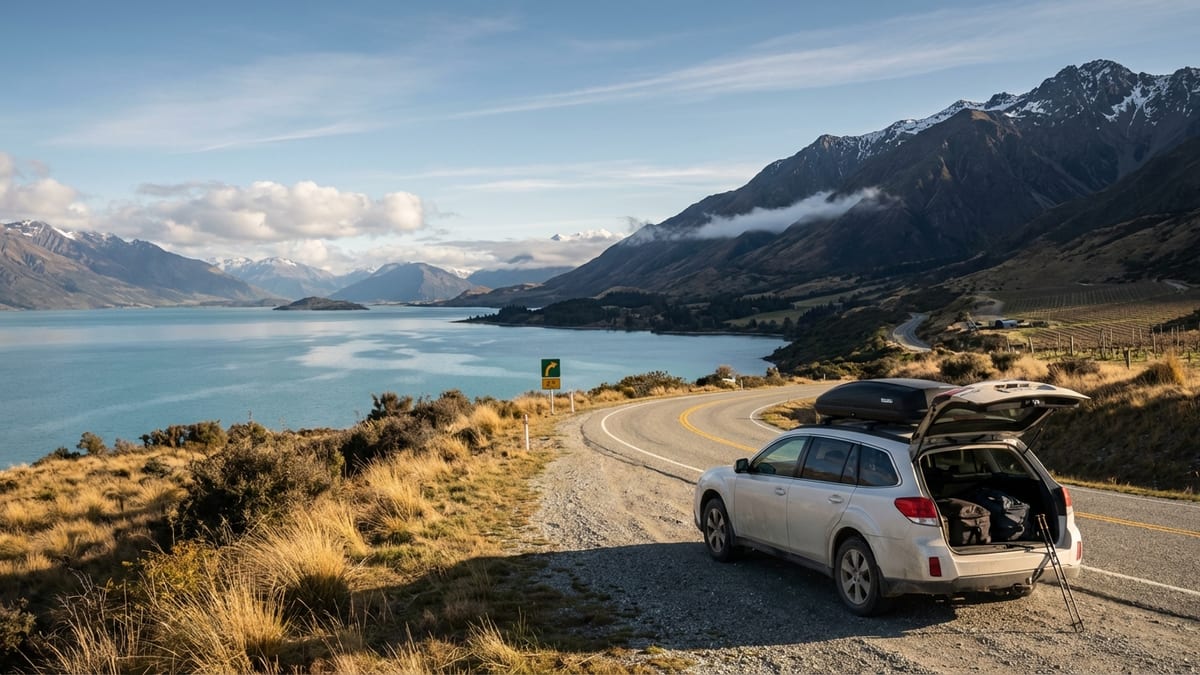
New Zealand is one of those rare destinations that lives up to its postcard reputation. Snow capped peaks, subtropical beaches, Maori culture, world class wine, and some of the best road trips on the planet are all packed into two slender islands at the bottom of the South Pacific.
Planning a trip here, however, can feel overwhelming. Distances are longer than they look, weather is changeable, and demand for the most popular experiences is high. This guide brings together the latest practical information and on the ground insight to help you decide where to go, what to see, and how to build an itinerary that fits your time, budget and travel style.
Understanding New Zealand: North vs South Island
First time visitors quickly discover that New Zealand is really two very different trips in one. The North Island is more populous and culturally dense, home to the capital Wellington, the country’s largest city Auckland, and the Maori heartlands of Northland and the central plateau. Volcanic landscapes dominate its interior, from the steaming craters and mud pools of Rotorua to the volcanic peaks of Tongariro National Park. The South Island, by contrast, is sparsely populated and defined by big scenery: the Southern Alps, glacier carved valleys, fjords, and wide braided rivers. Many travelers end up favoring one island over the other, but the most rewarding itineraries find a balance between them.
For visitors interested in food, wine and culture layered onto accessible nature, the North Island is often the best starting point. Auckland’s harbor side neighborhoods, Waiheke Island vineyards, and the museum and cafe culture of Wellington can anchor a trip that also includes geothermal experiences, Maori cultural encounters in Rotorua, and coastal time in the Bay of Islands or Coromandel Peninsula. The South Island appeals strongly to hikers, photographers and road trippers. Queenstown is the country’s adventure capital, close to Milford Sound, Wanaka, and major ski fields, while the West Coast is a wild corridor of rainforest, glaciers and storm lashed beaches.
If you have 10 to 14 days, you will need to be selective. Many travelers choose to focus primarily on one island and add a shorter segment on the other via domestic flight or ferry connection. With three weeks or more, it becomes realistic to travel by road from Auckland to Queenstown with time to pause in key regions. What you skip is as important as what you include. Attempting to “do” New Zealand from tip to tail in a single short trip usually results in long days of driving and surface level experiences.
Seasonality also shapes how the two islands feel. Summer from December to February brings warm temperatures, long daylight hours and the busiest crowds, particularly in coastal and alpine hotspots. Shoulder seasons in spring and autumn can be ideal for combining both islands, with fewer visitors and generally mild conditions. Winter transforms much of the South Island into a snow destination, and the North Island’s geothermal areas and cities take on a quieter, more local feel.
Regional Highlights: Where to Go on Each Island
Auckland is the primary international gateway and worth at least a day or two at the start or end of a trip. Its identity is tied to the sea, with harbors on both coasts, ferry linked islands, and volcanic cones rising behind the skyline. Neighborhoods like Ponsonby and Britomart offer contemporary New Zealand dining and shopping, while short ferry rides open up the beaches and vineyards of Waiheke Island or the volcanic landscape of Rangitoto. For many travelers, Auckland is also a useful hub for picking up a rental car and stocking up before heading further afield.
Just a few hours north, the Bay of Islands and Northland offer a softer, subtropical side of New Zealand. This region is dotted with sheltered bays, islands, and historic settlements such as Waitangi, a key site in the country’s founding story. It is an excellent place for sailing trips, dolphin watching cruises, and coastal walking. East of Auckland, the Coromandel Peninsula and the Bay of Plenty serve up golden beaches, forested ranges and laid back towns that make for classic summer holiday stops, particularly for self drivers.
In the center of the North Island, Rotorua and Taupo form one of the country’s most distinctive landscapes. Here the earth hisses and steams through geysers, hot pools and geothermal parks, while nearby forests and lakes provide easy access to biking and walking trails. Rotorua is also a major center for Maori cultural experiences, from traditional performances to contemporary art and storytelling. South of Taupo, Tongariro National Park offers one of New Zealand’s most renowned day hikes across an active volcanic plateau, although weather and conditions must always be checked in advance.
On the South Island, Queenstown and nearby Wanaka act as the primary bases for exploring the Southern Alps. Queenstown in particular is packed with adventure outfitters offering everything from jet boating and bungy jumping to guided hikes and wine tours. From here, many travelers route to Fiordland National Park, where day and overnight cruises on Milford Sound and Doubtful Sound reveal waterfalls, sheer cliffs and, often, curious seals and dolphins. To the east, the Mackenzie Country and Aoraki Mount Cook region provide some of the country’s best stargazing and alpine scenery accessible by short walks.
Iconic Landscapes and Experiences Not to Miss
New Zealand’s Department of Conservation manages an extensive network of tracks and huts, and at the center of this system are the Great Walks. These multiday trails and one river journey are curated for their outstanding scenery and environmental significance. They range from the rainforest and coastline of the Abel Tasman Coast Track to the alpine ridges of the Kepler and Routeburn tracks and the waterfall lined Milford Track. Recent updates from the Department of Conservation show that demand for the 2025–2026 Great Walks season remains very high, with online bookings for popular routes like the Milford Track opening on specific days in May and selling out quickly in peak periods.
Alongside the headline hikes, New Zealand’s fjords are among its most recognizable images. Milford Sound is reachable by road from Te Anau and Queenstown, and visitors can take short cruises, kayaking trips, or even scenic flights over the surrounding peaks. Doubtful Sound is less accessible, requiring a combination of boat and bus transfers, but rewards that extra effort with a quieter, more remote feel. Weather is famously unpredictable in Fiordland, with heavy rainfall common throughout the year, yet low cloud and falling water transform the cliffs into a dramatic curtain of temporary waterfalls.
Glacier country on the South Island’s West Coast offers another unique landscape. Fox Glacier and Franz Josef Glacier descend into temperate rainforest, creating an unusual contrast of ice and lush tree ferns. Independent walking routes now stop well short of the glacier faces for safety reasons, so many visitors book guided heli hikes or scenic flights if they wish to access the ice itself. Continuing north, Pancake Rocks at Punakaiki, the wild beaches near Hokitika, and the coastal road towards Nelson showcase the rugged charm of this region.
Wine and food are increasingly central to the New Zealand experience. Marlborough at the top of the South Island is synonymous with sauvignon blanc and offers accessible cellar doors close to Blenheim and Picton. Central Otago around Queenstown and Cromwell is known for pinot noir landscapes of vineyard rows threaded between schist hills. On the North Island, Hawke’s Bay and Wairarapa combine excellent wineries with cycling routes and art deco or boutique townscapes. Adding a day or two of slow travel in a wine region can provide a welcome counterpoint to more physically demanding hiking or driving days.
Entry Requirements, Visas and Practical Planning
As of early 2026, most visitors from visa waiver countries, including the United States, need to secure a New Zealand Electronic Travel Authority before boarding a flight or cruise to New Zealand. Official guidance notes that NZeTA processing can take up to 72 hours, so it should be requested several days before departure rather than at the last minute. For many travelers, the International Visitor Conservation and Tourism Levy is collected at the same time as the NZeTA, contributing to the upkeep of the country’s natural and visitor infrastructure.
New Zealand no longer requires proof of COVID 19 vaccination or pre departure testing for entry, although airlines may apply their own rules. Government travel advisories and immigration authorities emphasize that your passport must be valid for at least three months beyond your intended departure date and in good condition, with sufficient blank pages for entry stamps. In addition, all travelers are now required to complete a New Zealand Traveller Declaration shortly before arriving, submitting customs, immigration and biosecurity information either online or via a paper form available for those who cannot access the digital version.
For citizens of some neighboring countries, requirements can be lighter. Australian citizens, for example, generally do not need a visa or NZeTA to visit New Zealand, though they must still meet standard entry conditions and complete declaration processes. Travelers with existing New Zealand visas, such as work or student visas, typically do not need an NZeTA either, but should verify current rules directly with Immigration New Zealand before departure. Entry requirements and processing times can change, so it is wise to check official sources again in the weeks leading up to your trip.
Given the cost of medical services and the fact that foreign health insurance and programs such as U.S. Medicare are not accepted in New Zealand, comprehensive travel insurance with medical coverage is strongly recommended. Many policies now also include provisions for trip interruption, missed connections and rental vehicle excess coverage, all of which can be useful in a country where weather related disruptions and long distances are part of the travel reality. Keep digital and paper copies of your insurance details, passport and NZeTA confirmation, and consider storing them securely online so they can be accessed if needed.
Getting Around: Transport, Driving and Domestic Flights
New Zealand is well set up for independent travelers, but terrain and infrastructure mean that getting around takes planning. The most flexible option is to rent a car or campervan, allowing you to reach smaller towns, trailheads and scenic stops at your own pace. Remember that driving is on the left, roads are often narrow and winding, and distances that look short on a map can translate into long hours behind the wheel. It is important to build realistic travel days into your itinerary, especially on routes such as Queenstown to Milford Sound or along the West Coast between Greymouth, Franz Josef and Wanaka.
For those who prefer not to drive, a network of intercity buses and coach operators links major centers and many tourist hubs. While some backpacker specific hop on hop off passes have become less prominent in recent years, flexible bus tickets and scheduled services still offer an alternative to self drive travel. Domestic flights are another practical tool. Frequent services connect Auckland, Wellington, Christchurch and Queenstown, and smaller airlines serve regional airports like Napier, Nelson, Dunedin and Rotorua. Combining flights with local car rental can significantly reduce transit days and increase time on the ground.
Ferry services link the North and South Islands across Cook Strait, connecting Wellington with Picton. Many travelers choose to cross with their rental vehicle, using the ferry journey as a scenic interlude rather than an interruption. Schedules can be affected by weather and occasional maintenance work, so it is wise to check for changes close to your departure and to avoid overly tight onward connections. Trains play a limited but scenic role in New Zealand’s transport mix, with routes such as the TranzAlpine between Christchurch and Greymouth offering a memorable way to experience the Southern Alps without driving.
Whichever transport mode you choose, factor in New Zealand’s strict approach to road safety. Driving after long haul flights is strongly discouraged and fatigue is a major contributor to accidents involving visitors. Rental companies increasingly provide orientation materials about local road rules, single lane bridges, and the need to carry snow chains in alpine regions in winter. Allowing extra time for refueling, photo stops and meal breaks will not only increase safety but also make your journey feel more like part of the trip than a chore between destinations.
When to Go and How Long to Stay
The best time to visit New Zealand depends heavily on your interests and tolerance for crowds and weather variability. Summer, from December through February, is peak season. School holidays, higher accommodation prices and fully booked activities are common, yet this is also when beaches are at their warmest, days are long, and most hiking tracks are fully open. If your focus is on coastal relaxation, Great Walks, and social energy in towns and resorts, summer remains a compelling choice as long as you book key elements well in advance.
Shoulder seasons in late spring (October and November) and early autumn (March and April) increasingly appeal to international visitors. Temperatures are often mild, many outdoor activities are operating, and there is more space on popular tracks and cruises. Autumn in particular brings golden light and color to regions like Central Otago and Hawke’s Bay, making it appealing for photographers and wine travelers. Weather can be more changeable, so building flexibility into your schedule for alternative activities on rainy or windy days is wise.
Winter, from June to August, transforms the South Island into a snow destination centered on Queenstown, Wanaka and the ski fields near Christchurch. Days are shorter and some high alpine roads or hiking routes may be closed or require special equipment, but prices outside of ski hubs can be lower and crowds fewer. The North Island’s geothermal regions and cities can feel pleasantly uncrowded in winter, and hot pools, cultural experiences and indoor attractions become more prominent in itineraries. Winter is also a good time to secure bookings for future season Great Walks, as the Department of Conservation typically releases hut and campsite availability for the upcoming July to June season in May and June.
In terms of trip length, a week allows for a focused look at one region such as Queenstown and Fiordland, Auckland and Northland, or Rotorua and the central plateau. Ten days to two weeks opens up the classic loop combinations such as Auckland to Rotorua and Taupo, then on to Wellington, or Christchurch to Queenstown via the West Coast and Mount Cook. Three weeks or more is ideal for those wishing to string together multiple regions and experiences without rushing. Given the investment of time and money involved in reaching New Zealand from many parts of the world, staying a little longer often yields disproportionate rewards.
Building a Smart Itinerary
A well designed New Zealand itinerary starts with honest reflection about your travel style. If you enjoy slow mornings, frequent coffee stops and unplanned detours down side roads, packing in too many overnight stops will leave you exhausted. As a rule of thumb, try to base yourself for at least two or three nights in major hubs such as Queenstown, Rotorua, Wellington or Nelson, using them as gateways to surrounding day trips. Interspersing longer stays with one night stopovers on transit routes keeps the journey varied without constant packing and unpacking.
Think in terms of regional clusters rather than individual attractions. For example, the combination of Rotorua, Taupo and Tongariro National Park creates a geothermal and volcanic themed segment that can easily fill four to six days. On the South Island, grouping Nelson and Abel Tasman with the Marlborough Sounds provides a coastal and wine focused section. Elsewhere, Te Anau, Milford Sound and the Catlins can be woven into a southern loop that differs in character from the alpine central spine around Wanaka and Mount Cook.
Weather resilience is another key principle. Many of New Zealand’s headline activities, from crossing Tongariro Alpine Crossing to cruising Milford Sound, are exposed to conditions that can lead to postponements or cancellations. When planning, avoid locking such experiences into your final day in a region whenever possible. Giving yourself a second potential day to attempt a key hike or boat trip increases the chances of success. Having a list of lower impact backup activities in each location, such as museums, short walks, or wine tastings, keeps spirits high when clouds roll in.
Finally, be realistic about costs and booking requirements. Recent seasons have seen strong demand for Great Walks and high profile attractions, with booking windows for some hikes opening in May and many popular dates filling quickly. Smaller lodges, boutique stays and high demand holiday parks in regions like Queenstown, Wanaka and Abel Tasman also often sell out months in advance for summer. Securing your key accommodation, rental vehicle and any must do activities before departure, then allowing some flexibility around meals and minor excursions, tends to strike a good balance between spontaneity and peace of mind.
Outdoor Safety, Culture and Responsible Travel
New Zealand’s landscapes can lull visitors into underestimating risks. Tracks described as “easy” or “intermediate” may still involve exposure, rapidly changing weather and river crossings. Before setting out, check the latest alerts and conditions from local visitor centers or the Department of Conservation. Carry appropriate clothing layers, rain gear, food, water and navigation tools, even for day walks. In alpine areas, particularly during shoulder seasons and winter, snow, ice and avalanche risk are real considerations. Guided trips or local advice are invaluable if you are uncertain about your skills or equipment.
The country’s strict biosecurity and conservation ethic is evident from the moment you arrive. Shoe cleaning stations, declarations about food and plant material, and checks by customs officers are all part of protecting fragile ecosystems from invasive pests and diseases. Once in the country, following the principles of leaving no trace, respecting track closures, and using designated campsites and toilets makes a tangible difference. Visitor levies and hut fees help fund maintenance and preservation; attempting to bypass payment erodes the very experiences that draw visitors in the first place.
Engaging with Maori culture can be one of the most memorable aspects of a trip to New Zealand. From marae based experiences and kapa haka performances to contemporary Maori led tours of significant landscapes, opportunities exist across both islands. When visiting cultural sites, including thermal areas and historic pa sites, show respect for local protocols, signage and any tapu (sacred) zones. Taking the time to learn key words in te reo Maori, such as “kia ora” for hello and “whanau” for family, deepens understanding and connection.
Responsible travel also means acknowledging the impact of tourism on small communities and natural spaces. Choosing locally owned accommodations and operators, traveling outside peak dates where possible, and being conscious of noise and behavior in rural and residential areas all help distribute the benefits and reduce pressure. In practical terms, this can be as simple as refilling water bottles instead of buying single use plastic, driving considerately on narrow roads, and supporting regional businesses rather than concentrating all your spending in a few well known hubs.
The Takeaway
New Zealand rewards travelers who plan thoughtfully yet remain open to surprise. The country’s compact size masks a remarkable diversity of landscapes, from geothermal fields and volcanic plateaus to fjords, glaciers, vineyards and surf beaches. No single itinerary can capture it all, and accepting that truth is liberating. Focus instead on building a trip around a few key themes or regions that resonate with you, allowing space for detours, weather driven changes and moments of serendipity along the way.
Staying informed about current entry requirements, transport options and booking timelines helps you secure the experiences that matter most, whether that is a coveted bunk on a Great Walk, a table at a vineyard restaurant, or a cabin on a Milford Sound overnight cruise. Balancing those anchors with unstructured time in small towns and along scenic byways brings out the quieter side of New Zealand that locals cherish.
Above all, traveling in New Zealand is an invitation to slow down, to walk more, to look closely, and to connect. With preparation, respect for the land and its people, and a flexible mindset, your journey through Aotearoa can feel less like a checklist and more like a story unfolding day by day, shaped as much by the unexpected conversations and changing skies as by the iconic sights you came to see.
FAQ
Q1: Do I need a visa or NZeTA to visit New Zealand as a U.S. citizen?
Most U.S. citizens visiting New Zealand for tourism need a New Zealand Electronic Travel Authority obtained before travel, rather than a traditional visa, provided their stay and purpose meet visa waiver conditions.
Q2: How far in advance should I book Great Walks like the Milford or Routeburn Track?
For peak season dates between October and April, it is wise to be ready to book as soon as the Department of Conservation opens the online booking system in May, since the most popular routes and dates can sell out within hours.
Q3: Is it better to rent a car or rely on buses and tours?
Renting a car or campervan offers the greatest flexibility for exploring smaller towns and trailheads, while buses, shuttles and tours work well for travelers uncomfortable with left side driving or who prefer to focus on a few major hubs.
Q4: How many days do I need to see both the North and South Islands?
To experience highlights on both islands without constant rushing, at least three weeks is recommended; with 10 to 14 days, most travelers are better off focusing on one island and adding a short visit to a key destination on the other.
Q5: What is the best time of year to visit for hiking?
Late spring through early autumn, roughly from October to April, provides the most reliable conditions for hiking, though alpine tracks require careful attention to weather forecasts and winter conditions can linger at higher elevations.
Q6: Can I visit Milford Sound as a day trip from Queenstown?
Yes, but it makes for a long day, often 12 to 13 hours round trip by road; many visitors choose to stay overnight in Te Anau or join a coach or small group tour to reduce driving stress and enjoy the scenery.
Q7: Is New Zealand expensive to visit?
New Zealand can feel costly due to accommodation, rental vehicle and activity prices, but costs can be managed by traveling in shoulder seasons, mixing hotel stays with holiday parks or self catering options, and prioritizing a few major paid experiences.
Q8: How safe is New Zealand for independent travelers?
New Zealand is generally very safe in terms of crime, and solo and independent travelers are common; the greater risks relate to outdoor activities and driving, so following local safety advice and road rules is essential.
Q9: Do I need special equipment for day hikes?
For most popular day hikes, sturdy footwear, layered clothing, waterproof outerwear, sun protection, sufficient water and snacks are sufficient, but longer or more remote routes may require additional gear and experience.
Q10: Is it necessary to tip in New Zealand?
Tipping is not compulsory and service staff are generally paid higher base wages than in some other countries, but rounding up a bill or leaving a modest tip in restaurants, bars or on tours for exceptional service is appreciated.