

More news on this day
From glassy Highland lochs to wild Welsh headlands and misty English moors, a new generation of scenic train journeys is reshaping how visitors experience the United Kingdom by rail in 2026.
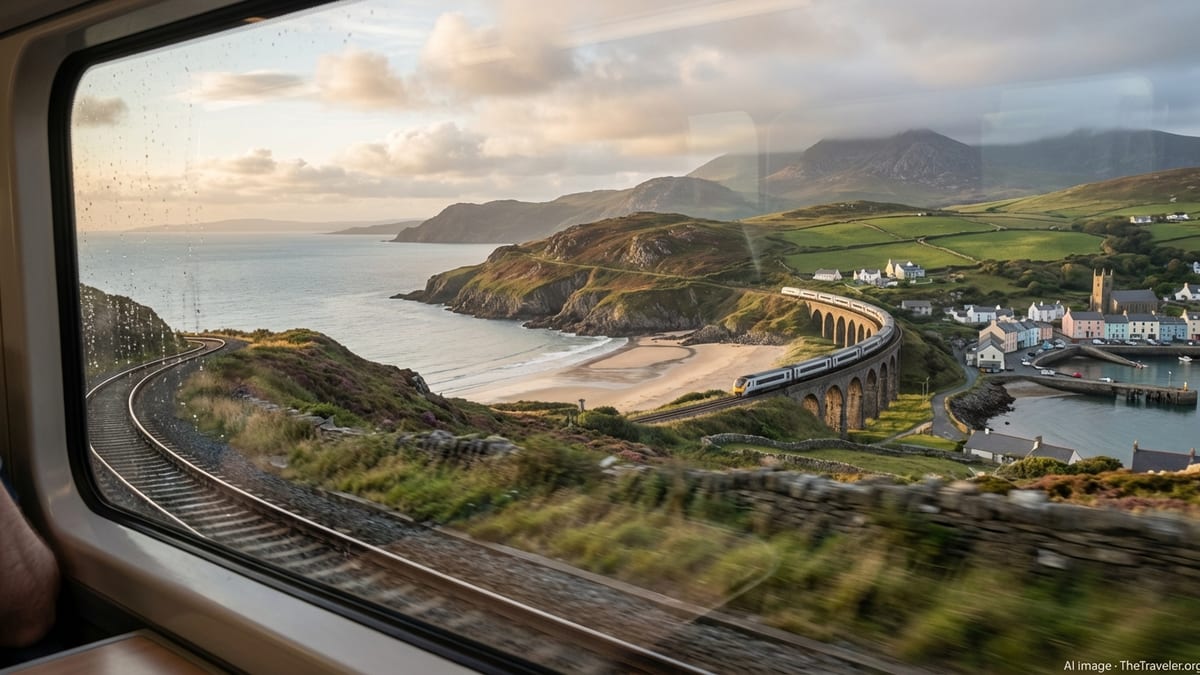
Scotland’s Highlands Ride a New Wave of Rail Tourism
Scotland’s railways are entering a pivotal year, with new and upgraded services positioning the Highlands as a standout destination for slow, scenic travel. Sleeper operator Caledonian Sleeper, nationalised in 2023, is preparing a major timetable change for early 2026 that adds a long-anticipated stop at Birmingham International on its Highlander route from London to Aberdeen, Fort William and Inverness. The move is designed to open up easier access to Scotland’s mountain landscapes for travellers from England’s Midlands while reinforcing the sleeper’s role as a rolling hotel for adventure seekers.
Alongside the sleepers, low-cost operator Lumo is planning a spring 2026 launch of a new service between London Euston and Stirling, giving budget-conscious visitors a high-speed gateway to central Scotland. The route, expected to run up to five times daily, will plug the historic city and its castle-topped crag directly into the English capital, while intermediate towns receive direct London trains for the first time. Industry observers say the service could make Stirling and the surrounding Trossachs an easy add-on to classic Edinburgh itineraries.
Infrastructure projects are also reshaping how travellers reach the Highlands. The long-running A9 dualling scheme between Perth and Inverness is edging forward, but tourism bodies continue to steer visitors toward the parallel rail route as a lower-carbon alternative with sweeping views over the Cairngorms. With new stations such as Balgray, now under construction near Glasgow’s southern fringes, and enhancements on lines feeding into the Highlands, rail advocates argue that visitors can increasingly stitch together ambitious, car-free Scottish itineraries.
Luxury rail is adding yet another dimension. Belmond’s Britannic Explorer sleeper, launched in 2025, is extending its portfolio of multi-night journeys out of London that feature time in the Lake District and along the Welsh and English coasts. Its presence, tour operators say, is raising the profile of rail-based touring at the very top of the market, while heritage lines such as the West Highland routes and Jacobite-style steam excursions continue to draw travellers seeking cinematic views without the premium price tag.
Wales Pairs Rugged Rail Landscapes With ‘Rail to Trail’ Adventures
In Wales, rail operators and government are leaning into the country’s image as a land of mountains and sea by tightly linking trains with epic walking routes. Transport for Wales’ ongoing “Rail to Trail” campaign, refreshed in August 2025, actively encourages visitors to use the rail network as a launchpad for exploring the 1,400‑kilometre Wales Coast Path and other long-distance trails. Stations from Flint in the north to Tenby in the west are being promoted as trailheads, with marketing built around linear walks that begin and end at different platforms.
Tourism officials say the strategy is helping to reposition Wales’ scenic routes such as the Cambrian Coast Line and the Conwy Valley Line as more than just pretty rides. By highlighting how trains connect directly to cliff paths, estuary boardwalks and remote coves, they hope to attract hikers, cyclists and families interested in low-impact, car-free days out. The Cambrian Coast, running beside sweeping beaches and estuaries between Machynlleth and Pwllheli, has seen particular attention, with rover tickets making it easier to hop on and off for short walks and seaside stops.
Iconic mountain railways remain central to the Welsh offer. The Snowdon Mountain Railway, which climbs from Llanberis towards the summit of Wales’ highest peak, continues to draw more than 100,000 passengers a year, underscoring appetite for dramatic, high-altitude journeys. Further south, narrow-gauge heritage lines such as the Talyllyn and Ffestiniog railways weave through deep valleys, waterfalls and slate country, often linking with mainline services to create seamless, all-rail days out from cities such as Cardiff and Shrewsbury.
Looking ahead, the Welsh Government’s multibillion-pound “metro” plans for south Wales promise more frequent services and better connections between Cardiff, the Valleys and the coast. While much of the attention has focused on commuting, tourism bodies expect these improvements to make it easier for visitors to combine urban stays with forays into Brecon Beacons uplands and the seascapes of the Glamorgan and Gower coasts, all without the need to hire a car.
England’s Classic Scenic Lines Gain Fresh Momentum
Across England, some of the country’s most storied lines are enjoying renewed visibility as travellers seek slower, more sustainable ways to cross the landscape. The Settle–Carlisle line, famed for its stone viaducts and Pennine views, continues to top many lists of Britain’s finest rail journeys. Operators report strong demand for both regular services and occasional steam-hauled specials over the Ribblehead Viaduct, particularly during shoulder seasons when walkers use the line to access long-distance routes such as the Pennine Way.
Elsewhere, heritage railways are expanding their appeal beyond rail enthusiasts. The North Yorkshire Moors Railway, which runs across heather moorland between Pickering and Whitby, has been collaborating with local tourism boards to market rail-and-hike itineraries tied to the North York Moors National Park and the Cleveland Way coastal path. In the south, the Cotswold Line and branch routes into Devon and Cornwall offer rolling views of limestone villages, river valleys and Atlantic-backed farmland, and are increasingly highlighted by regional tourism agencies as alternatives to congested roads.
New and upgraded infrastructure is quietly reshaping the map. In the north-east, the phased reopening of the Northumberland Line to passenger services, with new stations coming online between 2024 and 2026, is giving visitors rail access to previously overlooked stretches of the North Sea coast. Combined with schemes such as England’s emerging National River Walks, including the planned Mersey Valley Way, rail-connected trails are gaining political as well as public backing.
At the same time, low-cost long-distance operators are enlarging the pool of potential passengers. Lumo’s expansion from its original London–Edinburgh service to routes reaching Glasgow and, from 2026, deeper into Scotland, is being closely watched by English destination marketers along the East Coast Main Line. Cheaper, simpler fares, they argue, could persuade more visitors to treat trains not just as a way to get from city to city, but as a key part of the holiday experience itself.
Rising Demand Meets Sustainability and Capacity Challenges
The surge of interest in scenic rail travel comes as governments across the UK promote trains as a lower-carbon alternative to road and air. Tourism boards in Scotland, Wales and England are increasingly foregrounding emissions savings alongside images of lochs, castles and coastlines, presenting rail itineraries as both aspirational and climate-conscious. For international visitors weighing internal flights against rail journeys, particularly between London and the Highlands, these messages are becoming more prominent in marketing materials.
However, the renaissance is not without strain. In Scotland, the Caledonian Sleeper has faced criticism over punctuality since nationalisation, with compensation payouts rising as services struggled with weather and infrastructure-related delays. Passenger advocates warn that reliability will be crucial if overnight trains are to retain their status as a premium gateway to iconic landscapes such as Ben Nevis, Rannoch Moor and the Cairngorms.
Capacity is another concern. Popular routes, especially at weekends and during school holidays, are already seeing busy services, with some heritage railways regularly selling out advance tickets for steam-hauled trips. Industry figures say investment in rolling stock, passing loops and station facilities will be essential if the network is to handle more tourists without compromising the journeys’ relaxed, unhurried character that travellers increasingly seek.
Despite the challenges, rail experts and tourism operators broadly agree that 2026 and the years beyond represent a rare opportunity. With new routes coming online, upgraded sleeper and budget services, and tighter integration between trains and trails, the UK’s railways are positioned to offer some of Europe’s most compelling scenic journeys. For travellers willing to swap the motorway for the main line, Scotland, Wales and England are promising views that, quite literally, unfold with every curve of the track.