

Zakynthos is the kind of island that reshapes how you think about beaches. Here the coastline folds into vertiginous limestone cliffs, luminous coves and long, low arcs of sand where endangered sea turtles still come to nest. The most photographed spot, Navagio or Shipwreck Beach, is currently off limits at sea level, but the island offers a constellation of other bays and inlets that more than justify the journey.
From the wild, fjord-like rocks of Porto Limnionas to the soft sands of Gerakas inside the National Marine Park, this guide explores the signature shores of Zakynthos and what you need to know before you go.
Understanding Zakynthos’ Coastline and Seasons
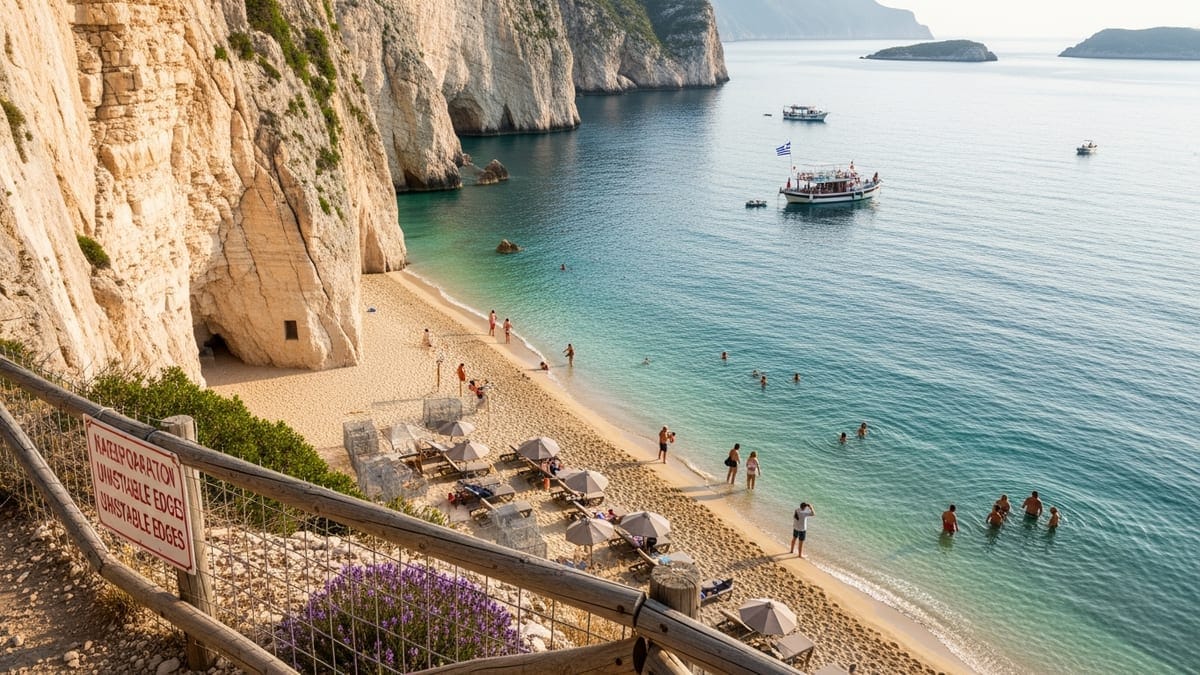
Zakynthos lies in the Ionian Sea off Greece’s west coast, a short ferry hop from the Peloponnese and a popular flight destination from across Europe in summer. The island’s western flank drops steeply into deep water with dramatic cliffs and hidden coves, while the east and south cradle gentler bays, resort villages and shallow shelves ideal for families. This split personality means you can mix wild viewpoints and boat-access coves with easy-going swimming beaches in a single trip.
The beach season typically runs from late May to early October, with July and August bringing the highest temperatures, busiest crowds and most frequent boat departures. Shoulder months such as June and September combine warm seas with more space on the sand and fewer queues on winding coastal roads. Spring and late autumn have a quieter, more local feel, but some beach bars, boat tours and facilities may be closed, so advance checks are sensible.
Zakynthos is also a protected habitat for the loggerhead sea turtle. The southern bay around Laganas, including Gerakas, Kalamaki and Marathonisi, is part of the National Marine Park, where strict rules on access, noise, lighting and beach furniture apply. Visitors are very welcome, but the protection framework shapes when you can visit, where you may place a towel and how long you can remain on some nesting beaches. Planning ahead with these regulations in mind helps ensure your visit supports the island’s fragile ecosystems as well as its tourism economy.
Navagio (Shipwreck Beach): Iconic Viewpoint, Restricted Access
Navagio, often called Shipwreck Beach, is the image that put Zakynthos on postcards and social feeds worldwide. A crescent of white pebbles enclosed by vertical cliffs and electric-blue water, it is home to the rusting hull of the MV Panagiotis, which ran aground in the early 1980s and has been slowly weathering ever since. Historically, visitors would arrive by boat, jump into the shallow surf and wander between the shipwreck and the cliff walls in a scene that felt almost theatrical in its unreality.
That era is on pause. Following landslides in 2018 and again in September 2022 after an offshore earthquake, Greek authorities have repeatedly tightened safety measures. Recent ministerial decisions, based on recommendations from the national earthquake protection agency, prohibit boats from approaching or anchoring within the cove and ban swimming and landing on the beach. Land access from the cliffs above is also restricted, with visitors required to keep a safe distance from the rim. These rules remained in force through the 2024 summer season and any traveller heading to Zakynthos should check the latest guidance before planning a visit that assumes sea-level access.
None of this diminishes the power of Navagio’s viewpoint experience. The clifftop lookouts above the bay, reached by road from the village of Anafonitria, offer some of the most unforgettable panoramas in the Ionian. A fenced viewing platform near the parking area delivers the classic elevated shot, while unofficial paths snake along the cliff line to more isolated vantage points. Extreme caution is essential: rock edges can be unstable, and high winds or crowds increase the risk. Staying behind barriers and following signage is not only a legal requirement but also an obvious safety step.
Boat operators, long reliant on the draw of Shipwreck Beach, have adapted by offering cruises that sail parallel to the cliffs and pause at safe distances for photographs. Many combine distant views of Navagio with swimming stops in nearby coves and the famed Blue Caves along the northern coast. If you book such a tour, clarify what is and is not included: current regulations generally mean you will not be able to disembark onto Navagio itself, and time near the cove may be strictly limited.
Porto Limnionas: Wild Swimming on the West Coast
On the island’s rugged west, Porto Limnionas feels like a natural amphitheatre carved out of the cliffs. There is no broad sweep of sand here; instead, limestone walls step down into a narrow, deep inlet of startlingly clear, turquoise water. It is less a conventional beach than a natural swimming pool, popular with snorkellers, cliff-jumpers and travellers who prefer rocky drama to beach umbrellas.
Reaching Porto Limnionas involves a drive along twisting rural roads, usually from the central village of Agios Leon or via the broader route from Zakynthos Town. The road descends toward a cluster of buildings above the cove, including a tavern with terraces overlooking the water. From there, stone steps and concrete platforms allow access to the rocks and the sea. There are ladders at key points for climbing out, but the water shelves quickly and can become deep within a few strokes, so it suits confident swimmers more than toddlers or anyone unsteady on their feet.
What Porto Limnionas lacks in sand it makes up for in underwater scenery. Mask and snorkel reveal caves, overhangs and schools of fish, with shafts of light piercing the depths in mid-afternoon. The surrounding cliffs invite small-scale jumps where the water is deep and calm, though any leap should be preceded by a careful check of depth and submerged rocks. In high summer the area can become busy, with loungers and umbrellas on the flat rocks and cars lining the approach road. Arriving early in the day or toward late afternoon helps secure parking and a place by the water.
Facilities at Porto Limnionas are limited but sufficient for a half or full day. The main tavern offers meals, drinks and restrooms, and often rents sunbeds on the terraces. There are no lifeguards, and shade on the rocks is minimal, so strong sun protection and reef-safe sunscreen are essential. Wind and swell from the open sea can affect conditions; on days when the water is rough, local staff may advise against swimming far from shore or into the caves.
Gerakas: Soft Sands Inside the Marine Park
At the southern tip of Zakynthos, Gerakas is the kind of sweeping, golden bay that seems made for long days in the sun. Yet it is also one of the most important nesting sites for loggerhead sea turtles in the Mediterranean. Protected by the National Marine Park of Zakynthos, the beach combines accessible, family-friendly shallows with strict rules designed to safeguard both turtles and the fragile coastal landscape.
The drive to Gerakas leads through the Vasilikos peninsula, with pine-framed views and clusters of small hotels, villas and tavernas. The final stretch ends at a parking area above the bay; from there a gently sloping path leads down to the sand. There are no motorized water sports, which keeps the atmosphere notably calmer than busier resort beaches. A section of the central beach is typically organized with sunbeds and umbrellas, while other stretches remain more natural, especially near the turtle nesting zones marked with protective cages and signs.
Visitor numbers to Gerakas are controlled during the main season. A kiosk near the entrance monitors how many people enter and may limit the total at peak times, with a maximum stay per visit often set around three hours. Access is usually allowed only between early morning and sunset, with the beach closed at night to minimize disturbance to nesting adults and emerging hatchlings. Activities are restricted to the strip close to the water’s edge. Towels, umbrellas and beach furniture must remain within a few meters of the sea to avoid compressing nests further up the sand.
The water at Gerakas is shallow for a good distance and warms quickly in summer, making it ideal for families and less confident swimmers. Even so, visitors are asked to stay alert for turtles and to keep a respectful distance if one surfaces nearby. Using dim lighting in nearby accommodation at night, avoiding flash photography on the beach and never handling hatchlings are all part of responsible travel here. Just behind the shore, the Zante Turtle Center provides exhibits, guidance on best practices and a deeper insight into how tourism and conservation intersect in this corner of the Ionian.
Laganas Bay, Kalamaki and Family-Friendly Sands
Northwest of Gerakas, the long curve of Laganas Bay forms the mainstream heart of Zakynthos’ beach scene. Laganas itself is a dense strip of bars, hotels and clubs that has long attracted a younger crowd. The sand here is broad and the water shallow, but the atmosphere in high season can be intense and nightlife oriented. For travellers seeking a quieter base with similar beach conditions, nearby Kalamaki and the eastern stretches of Laganas Bay offer a softer, more family-focused feel.
Kalamaki sits within the National Marine Park and shares its beach with nesting turtles. This leads to a tone that balances tourism with conservation. Sunbeds are available in designated areas, but heavy regulation keeps motorized sports to a minimum and requires beach furniture to be removed at night. The sand is fine and golden, and the sea remains knee-deep for a considerable distance, which is ideal for children and casual swimmers.
Further along the bay, the tiny island of Marathonisi rises green from the water, its own beaches part of the protected nesting network. Boat trips from Laganas and Kalamaki cruise along the coastline in search of turtles and make swimming stops near Marathonisi’s sheltered coves. Regulations typically forbid landing on certain parts of the island or walking beyond specific zones, particularly where nests are concentrated. Booking with operators who explicitly follow marine park rules helps ensure that your excursion contributes to, rather than undermines, local conservation efforts.
Across Laganas Bay, from dawn restrictions on access to bans on vehicles and horses on the sand, the rule of thumb is simple: look for and follow signage, give any marked nest or turtle a wide berth and keep your beach activity close to the waterline. These guidelines preserve the qualities that draw visitors in the first place, ensuring that shallow, clear seas and soft sands remain a safe nursery for both wildlife and holiday memories.
Other Notable Beaches: Porto Roxa, Banana, Tsilivi and Beyond
While Navagio, Porto Limnionas and Gerakas often occupy the spotlight, Zakynthos’ shoreline is studded with additional coves and bays that are well worth exploring. On the west coast near Porto Limnionas, Porto Roxa offers another rocky inlet framed by cliffs and platforms. Sunbeds on concrete terraces above the water, ladders into the sea and a handful of tavernas create a simple but atmospheric place to swim and linger over a meal. The water is deep and clear, so again it suits comfortable swimmers and snorkellers rather than toddlers.
On the opposite side of the island, the Vasilikos peninsula hosts a run of sandy beaches collectively known for their relaxed ambiance and good facilities. Banana Beach is one of the largest, with a deep belt of sand, organized sunbed zones and more in the way of beach bars and water sports than the marine park zones allow. It is popular with groups and families who want a full day on the sand with food and services close at hand. Nearby Porto Zoro and St Nicholas Beach offer variations on the theme, with different mixes of bars, quiet corners and shallow bays.
Farther north, Tsilivi is a well-established resort area with a long, gently curving beach that transitions from busy organized sectors to quieter stretches at its wings. The water is typically calm and shallow, and a broad choice of accommodations lines the road just behind the sand. For travellers who want a classic beach holiday environment with tavernas, shops and activities within walking distance, Tsilivi makes a pragmatic base, especially outside the peak of July and August when it can become crowded.
Smaller spots round out the picture. Makris Gialos and Xigia on the northeast coast offer shingle beaches beneath cliffs, with vivid sea colors and a more intimate feel. Xigia is known for its sublimely milky water, scented with natural sulfur from underwater springs, which some visitors find therapeutic. Boat rentals from various east coast villages let you explore hidden coves at your own pace, provided you are comfortable with basic seamanship and remain outside restricted marine park zones.
Planning Your Beach Days: Transport, Safety and Sustainability
How you move around Zakynthos will shape your beach experience. Public buses connect major resorts with Zakynthos Town and some beaches, but services can be infrequent and seasonal. Many visitors opt to rent a car or scooter for maximum flexibility, which makes reaching remote west-coast spots such as Porto Limnionas and Porto Roxa far easier. Roads are generally paved but can be narrow, winding and busy with seasonal traffic. Defensive driving, especially at night and on cliffside stretches, is essential.
Boat trips are a defining part of the island experience, whether to view Navagio from a distance, swim in the Blue Caves or circle Marathonisi. Tours depart from multiple ports including Agios Nikolaos, Porto Vromi, Zakynthos Town and various resort beaches. When comparing options, look beyond headline stops and pay attention to group size, adherence to safety standards and explicit commitments to follow marine park and coastal regulations. Smaller, locally owned operators often offer more flexible itineraries and a lower environmental footprint.
Beach safety on Zakynthos follows common Mediterranean patterns: strong sun from late morning to mid-afternoon, occasional swell or sudden depth changes and, on some west-facing cliffs, reflected heat and limited shade. Many main beaches have lifeguards during high season, but remote coves rarely do. Footwear helps on rocky entries, and reef-safe sunscreen is recommended to reduce impact on marine life. Wherever you swim, obey flags and local advice, particularly in places like Porto Limnionas where depth and currents can be deceptive.
Sustainable behavior is especially crucial given the presence of sea turtles and the erosion-prone nature of certain cliffs. That means packing out all litter, using established paths to avoid trampling vegetation, keeping noise low on nesting beaches and never using lights on the sand at night. Supporting local conservation centers, whether by visiting their exhibits or contributing to donation boxes, channels part of your holiday budget into preserving the very landscapes you have come to enjoy.
The Takeaway
Zakynthos is more than a single famous cove. While Navagio’s sands remain off limits for safety reasons, the wider island offers a suite of beaches that together tell a richer story: rocky fjords carved into the west coast at Porto Limnionas, long sheltered arcs of sand where loggerhead turtles still nest at Gerakas and Kalamaki, and easy-going resort bays that capture the simple pleasures of a Greek seaside holiday. Each shore has its own rhythm, shaped by geology, local communities and environmental rules.
If you arrive prepared for current restrictions, willing to respect marine park regulations and open to exploring beyond the iconic shipwreck, Zakynthos rewards you with some of the clearest waters and most evocative coastal scenery in the Ionian Sea. The island’s future as a beach destination will depend on balancing visitor numbers with the needs of its fragile ecosystems. Travellers who choose tour operators carefully, leave only footprints on the sand and treat turtles and cliffs with respect help tip that balance in the right direction.
FAQ
Q1. Can I currently visit Navagio (Shipwreck) Beach and swim there?
As of the most recent regulations, access to Navagio at sea level is highly restricted. Boats are generally prohibited from approaching or anchoring within the main cove, and swimming or landing on the beach is not allowed due to landslide risk. Clifftop viewpoints remain accessible with safety limits in place, but travellers should always confirm the latest rules before visiting.
Q2. Is Porto Limnionas suitable for children and non-swimmers?
Porto Limnionas is primarily a rocky inlet with deep water and no gradual sandy entry, so it is best suited to confident swimmers. Families with young children or non-swimmers may find it challenging, as there is limited shallow water and no lifeguard presence. For gentle paddling and play, beaches such as Gerakas, Kalamaki or Tsilivi are more appropriate.
Q3. Do I need a car to explore Zakynthos’ beaches?
Public buses connect some major points, but schedules can be sparse, especially outside peak season. A car provides the greatest flexibility, particularly for reaching west-coast spots like Porto Limnionas, Porto Roxa and remote viewpoints. Scooters and quad bikes are also common, though they require careful driving on winding roads.
Q4. What are the main rules on turtle nesting beaches like Gerakas?
On nesting beaches, access is typically limited to daytime hours, and visitors must keep towels, umbrellas and sunbeds within a few meters of the waterline. Walking or placing items higher up the sand is discouraged because nests are buried there. Night access is usually prohibited, and people are asked to keep noise low, avoid bright lights and never touch nests or hatchlings.
Q5. When is the best time of year to visit Zakynthos for beach holidays?
June and September offer an excellent balance of warm weather, swimmable seas and fewer crowds. July and August deliver peak heat and the liveliest atmosphere, but also the highest prices and busiest beaches. May and October can be pleasant shoulder months, though not all tourist services operate at full capacity.
Q6. Are there quiet beaches away from the party scene in Laganas?
Yes. While Laganas itself is known for nightlife, nearby Kalamaki, the Vasilikos peninsula (including Gerakas and Banana Beach) and northern resorts such as Tsilivi or smaller coves like Makris Gialos offer more relaxed atmospheres. Choosing accommodation in these areas lets you enjoy calmer evenings while still being able to visit livelier zones by taxi or car.
Q7. Can I see turtles while swimming or on boat trips?
It is possible but never guaranteed. Turtles often surface near nesting beaches in Laganas Bay, and some boat tours focus on turtle spotting. If you encounter one, keep a respectful distance, do not attempt to touch or chase it and remain quiet. Responsible operators will follow guidelines that minimize disturbance to wildlife.
Q8. What should I pack for beach days on Zakynthos?
Essentials include strong sun protection, a hat, reusable water bottle, reef-safe sunscreen, and light footwear for rocky areas. A mask and snorkel greatly enhance swims at spots like Porto Limnionas or Porto Roxa. A small dry bag helps keep electronics safe on boat trips, and a lightweight cover-up is useful when visiting tavernas from the beach.
Q9. Are there lifeguards on Zakynthos beaches?
Some of the larger, more organized beaches such as parts of Laganas, Tsilivi or Banana Beach may have lifeguards during the main summer season. However, many smaller coves and wilder spots, including Porto Limnionas, typically do not. It is wise to assume you are swimming at your own risk and to be extra cautious in unfamiliar conditions.
Q10. How can I make my beach visit more environmentally friendly?
Simple actions have a big impact: avoid single-use plastics, take all rubbish with you, use refillable bottles, choose reef-safe sunscreen, stay on marked paths and support local conservation groups. On nesting beaches, follow all posted rules, keep away from nests and turtles, and avoid visiting the sand after dark. Conscious choices help keep Zakynthos’ beaches beautiful and viable for future generations and wildlife alike.