

More news on this day
Global travel is on the brink of another transformation as UNESCO and UN Tourism deepen cooperation on sustainable, culture-led and data-smart tourism policies that are expected to reshape how and where people travel from 2026 and beyond.
Get the latest news straight to your inbox!
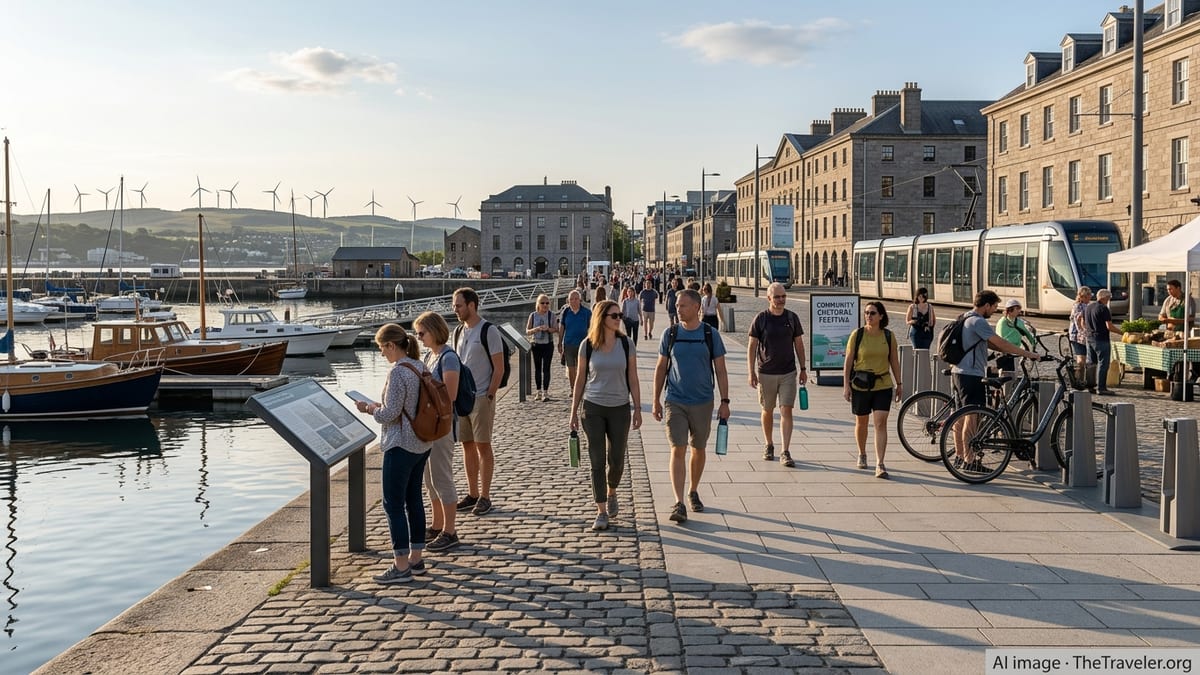
A Powerful UN Alliance Targets the Future of Tourism
Publicly available information shows that UNESCO and UN Tourism, the rebranded United Nations World Tourism Organization, are aligning more closely around a shared agenda that links tourism growth with climate action, cultural protection and community benefits. While cooperation between the two bodies is not new, recent programmes indicate a shift from broad declarations toward concrete, tested initiatives that can be scaled globally in the second half of this decade.
This comes as international arrivals approach and in some regions surpass pre-pandemic levels, reviving concerns about overtourism, pressure on World Heritage sites and rising emissions from travel. Policy papers and joint activities now frame tourism not only as an economic engine, but as a tool for resilient cities, rural development and heritage safeguarding, provided growth is managed with strict sustainability criteria.
According to recent UN documents, the sector is also preparing for the United Nations’ International Year of Sustainable and Resilient Tourism, proclaimed for 2027, which creates a clear political horizon for countries and destinations to align new projects, regulations and funding. Work undertaken in 2024 and 2025 is expected to supply the models, data and case studies that will inform how travelers experience destinations in 2026 and beyond.
Urban “Lab Cities” Aim to Turn Culture into a Climate Ally
One of the clearest signals of this new direction is the growing focus on cities as laboratories for culture-driven sustainable tourism. In 2025, UNESCO, working with UN Tourism and UN-Habitat, launched a series of “Urban Solutions” at an international forum in Wuhan, China, a member of the UNESCO Creative Cities Network. The initiative outlines practical guidance for city leaders on how to use cultural districts, historic neighborhoods and creative industries to drive tourism that is both low-carbon and locally rooted.
The guidance emphasizes aligning tourism planning with public transport, housing and climate resilience so that visitor flows do not displace residents or strain urban infrastructure. Case studies highlight tools such as heritage-sensitive zoning, night-time cultural programming spread across multiple districts and ticketing systems that cap numbers at fragile sites while steering visitors toward lesser-known areas.
By 2026, participating cities are expected to have piloted new regulations and digital management tools, from real-time crowd monitoring around heritage landmarks to incentives for carbon-light mobility like walking routes and cycling corridors. Travel industry observers say these experiments could soon influence how tour operators design city breaks and how booking platforms recommend urban itineraries.
Heritage Sites Become Testing Grounds for Low-Impact Adventures
World Heritage and geopark destinations are emerging as early testing grounds for the tighter partnership between culture and tourism agencies. Recent UNESCO documentation highlights a three-year programme in Mongolia that uses cultural and geological heritage to reposition tourism around smaller groups, longer stays and local value chains, supported by both public and private partners. The project timeline, running through 2027, aligns with the wider UN push on sustainable tourism.
Similar heritage-based initiatives in Latin America and other regions are experimenting with visitor caps, advance booking systems and more rigorous impact measurement at popular sites. Reports describe training for local guides on climate risks, carrying capacity and interpretation skills that encourage visitors to respect local customs and natural limits, as well as community-run guesthouses and craft cooperatives positioned as preferred options for travelers.
Observers note that such models, if scaled, could redefine what “bucket-list” travel looks like in the coming years. Instead of rapid-fire sightseeing at overcrowded landmarks, itineraries may feature smaller groups accessing sensitive landscapes with certified guides, dynamic pricing that rewards off-peak travel and bundled experiences that pair headline sites with lesser-known cultural villages or conservation areas.
Digital Tools Promise Smarter, Fairer Visitor Flows
Alongside heritage-focused projects, UN-linked research and pilot schemes are turning to data and artificial intelligence to tackle overtourism and spread benefits more evenly. Academic work and policy experiments associated with the Tourism 4.0 concept are exploring how real-time analytics, geolocation data and recommendation systems can steer travelers away from saturated hotspots toward under-visited neighborhoods, secondary cities and rural communities.
Concept trials described in recent studies propose recommendation engines that weight not only personal preferences and popularity, but also sustainability indicators such as congestion levels, local air quality and community readiness. In practice, this could mean that by 2026 a traveler searching for a weekend escape might see suggestions that prioritize destinations with available capacity, robust local benefits and lower environmental pressure.
UNESCO and UN Tourism are also backing improved measurement frameworks for tourism’s economic, social and environmental impacts, making it easier for governments to regulate based on evidence rather than visitor counts alone. As these metrics gain traction, travel providers could face stronger incentives to report on emissions, cultural impact and community partnerships, while travelers may increasingly encounter sustainability scores alongside price and star ratings.
What Travelers Can Expect from 2026 Onward
For travelers, the growing alignment between UNESCO and UN Tourism is likely to translate into a mix of visible and behind-the-scenes changes over the next several years. Booking systems may display clearer information about crowding, local regulations and site sensitivity, and some popular attractions could require timed-entry reservations as standard, even outside peak seasons.
More destinations are expected to foreground their cultural narratives, from intangible heritage such as food traditions and festivals to contemporary creative scenes, in part drawing on frameworks developed through the UNESCO Creative Cities Network and similar programmes. This may result in itineraries that combine major monuments with local workshops, community events and nature-based excursions designed with conservation goals in mind.
Travel analysts suggest that as the 2027 International Year of Sustainable and Resilient Tourism approaches, the accumulated effect of joint UN projects will shape both policy and traveler expectations. For many trip planners, especially younger and climate-conscious visitors, “eco-friendly adventures” could soon be less a niche label and more the default setting, with preserved wonders and smarter tourism design built into the core experience rather than sold as an optional extra.