

More news on this day
China’s UnionPay and travel technology giant Amadeus have unveiled a strategic payments partnership that they say will make booking and paying for flights easier, safer and more familiar for Chinese and Asia-based travelers flying with airlines around the world.
Get the latest news straight to your inbox!
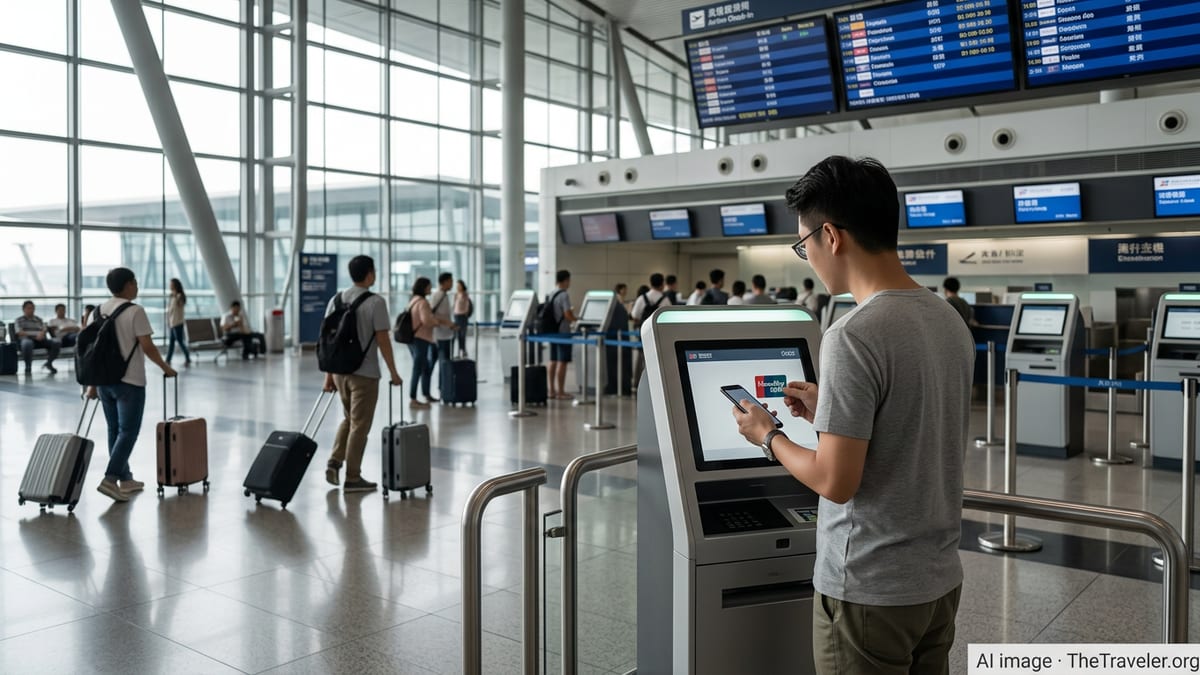
A New Payments Powerhouse in the Skies
The agreement brings together UnionPay’s massive cardholder network with Amadeus’s global airline distribution and payments infrastructure, positioning the two companies as a formidable force in the fast-growing travel fintech space. For airlines, it promises a streamlined way to accept UnionPay cards and related digital payment methods across direct channels and partner agencies, with less complexity and lower operational friction.
UnionPay, which is accepted in the majority of markets popular with Chinese travelers, has long been a key bridge for cross-border spending by tourists and business passengers. By integrating its capabilities into Amadeus’s payments stack, carriers using Amadeus technology will be able to offer UnionPay as a more native, embedded option at checkout, reducing the need for workarounds or separate integrations in each country.
For travelers, the collaboration is designed to bring a more consistent, familiar payment experience whenever they buy air tickets, whether on an airline’s website, through a mobile app or via a travel agency connected to Amadeus. It aligns with a broader shift in aviation, where payment choice, security and local relevance are becoming just as important as fares and schedules in winning over customers.
What the Partnership Means for Global Travelers
The headline benefit for passengers is wider, more seamless acceptance of UnionPay when purchasing flights with international airlines. Chinese tourists booking a European carrier, for example, should increasingly see UnionPay cards, virtual cards or mobile solutions appear by default at checkout, quoted directly in their home currency or a transparent exchange rate.
Travelers are also likely to encounter fewer payment failures linked to cross-border routing or security checks. With UnionPay’s network and Amadeus’s payments engine better aligned, authorisation flows can be optimised for airline transactions, reducing the frustration of declined bookings, duplicated charges or the need to call a bank in the middle of a purchase.
In destination markets, the tie-up fits into a larger pattern of UnionPay expanding its footprint across hotels, duty free stores, restaurants and transport providers. As more airlines embrace UnionPay via Amadeus, the card brand’s role as a “travel companion” from booking through to in-trip spending is expected to strengthen, especially for first-time outbound travelers who may be wary of using unfamiliar cards or payment apps overseas.
Airlines Target Lower Costs and Higher Conversion
For airlines, payments are no longer a back-office utility but a strategic lever that affects revenue, costs and customer loyalty. By tapping into UnionPay through Amadeus, carriers hope to see higher conversion rates at checkout, particularly from Asia-based customers who might otherwise abandon a booking if their preferred payment option is missing.
The collaboration is also expected to help airlines better manage the cost of accepting payments. UnionPay’s domestic routing and Amadeus’s ability to optimise acquiring relationships can allow carriers to steer transactions in ways that reduce scheme and processing fees, while still keeping risk under control. For an industry operating on thin margins, even small percentage savings on high-value air tickets can be meaningful.
Operationally, the integration should simplify how airlines onboard and maintain payment methods across markets. Instead of building one-off links to local processors or maintaining separate systems for UnionPay in different regions, carriers can leverage Amadeus’s platform as a single hub, with UnionPay embedded as a standard, scalable option. That frees up internal teams to focus on customer experience and ancillary revenue rather than technical plumbing.
Security, Compliance and the Rise of Travel Fintech
The deal underscores how security and regulatory compliance are becoming central to travel payments. Airlines must comply with data protection rules, strong customer authentication and local regulations in both the country of ticket sale and the traveler’s home market. Working through Amadeus gives UnionPay transactions access to fraud controls, tokenisation tools and risk analytics tailored to airline use cases.
UnionPay, for its part, brings its own layers of network security, risk monitoring and dispute management, refined over years of handling cross-border card payments. The combination is intended to give both travelers and airlines more confidence that large-ticket transactions, such as premium cabin bookings or complex itineraries, can be processed securely without excessive friction.
More broadly, the partnership highlights how travel is becoming a focal point for innovation in payments. As passenger volumes recover and new markets open, airlines are partnering with specialist fintech and payment providers to solve pain points from chargebacks to currency volatility. UnionPay’s move to embed itself more deeply in airline flows via Amadeus shows how global schemes are adapting to a world where travel bookings are increasingly digital, mobile and cross-border by default.
Looking Ahead to a More Localized Checkout Experience
While concrete roll-out timelines and the full list of participating airlines have yet to be detailed, industry observers expect the integration work to begin with carriers that already rely heavily on Amadeus for both distribution and payments. Over time, more airlines and online travel agencies are likely to activate UnionPay within their booking flows as a standard part of their payment mix.
In practice, passengers can expect to see more localized payment pages tailored to their country, language and preferred methods, with UnionPay presented on equal footing with international card brands and digital wallets. This localization is particularly important for younger travelers, who are more likely to abandon a transaction if the checkout does not feel trusted, transparent or mobile-friendly.
As travel demand from China and other Asian markets continues to rebound, the UnionPay–Amadeus collaboration positions both companies to capture a larger share of that spending, while offering airlines new tools to modernise their financial backbone. For global travelers, the biggest change may simply be that paying for flights becomes one less thing to worry about when planning an international trip.