

More news on this day
Asia-Pacific travelers who prefer to pay with UnionPay cards will find it easier to book flights globally following a new integration that brings UnionPay card acceptance into the Amadeus Travel Platform, expanding payment options across airline websites, travel agencies, and other indirect sales channels.
Get the latest news straight to your inbox!
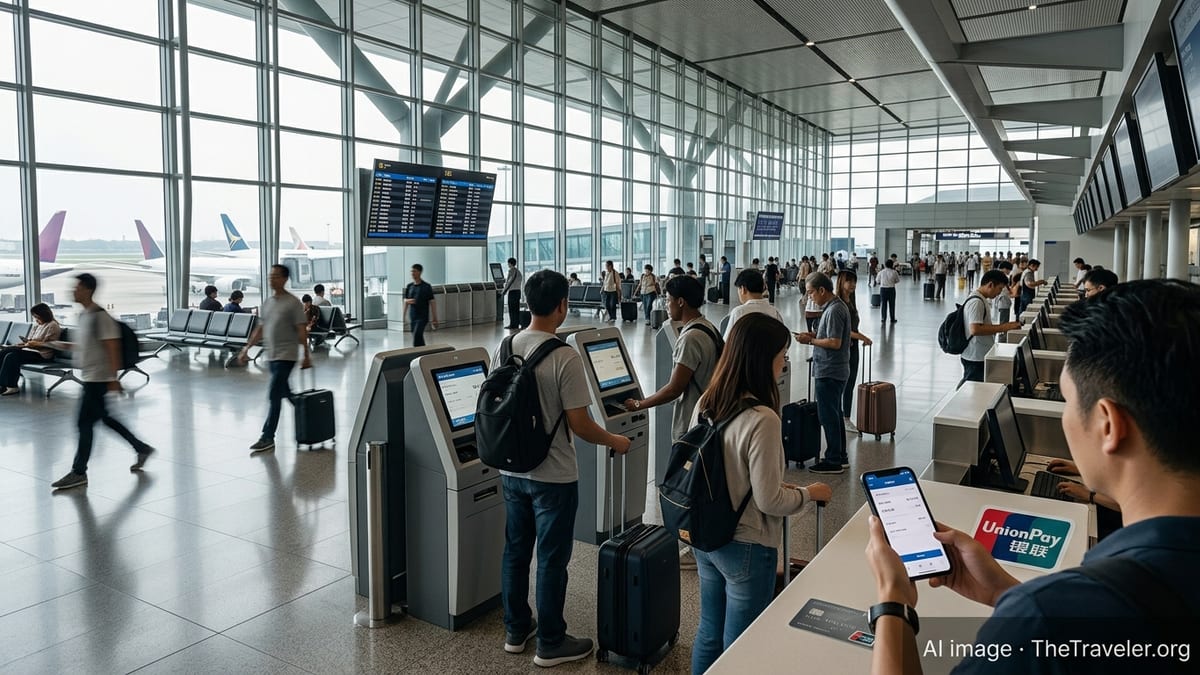
What the New UnionPay–Amadeus Tie-Up Actually Changes
According to recent industry announcements, UnionPay cards are now being integrated more deeply into the underlying payment systems that power the Amadeus Travel Platform. Publicly available information indicates that travel providers connected to Amadeus will be able to accept UnionPay cards not only through their own e-commerce websites but also via indirect channels such as travel agencies that book through Amadeus.
This shift is significant because Amadeus serves as a core distribution and payment engine for many airlines, online travel agencies, and corporate travel management companies. By embedding UnionPay into these systems, cardholders in Asia-Pacific gain a more predictable and consistent payment option when buying flights, rather than relying on a patchwork of airline-specific integrations.
The move builds on UnionPay’s broader push into global travel, with its cards already usable across more than 180 markets for cross-border transactions. For Amadeus-linked travel brands, adding UnionPay acceptance helps capture demand from a large and increasingly mobile customer base across China and the wider Asia-Pacific region.
For travelers, the most visible change is at checkout: where Amadeus powers booking flows, UnionPay is expected to appear more often alongside other major card schemes when it is supported by the airline or agency.
How Asia-Pacific Travelers Can Use UnionPay to Book Flights
For individual travelers, the integration does not require any special steps beyond holding a valid UnionPay card and booking through a participating airline or travel seller connected to Amadeus. When UnionPay acceptance is enabled, the card brand should appear among the payment options at the final stage of booking.
Travelers typically choose their flights as usual, proceed to the payment page, and select UnionPay where it is offered. The process then follows familiar card-payment flows, with redirection in some cases to a secure UnionPay page for authentication, depending on the airline or agency’s configuration and local regulatory requirements.
Because the new arrangement applies across both direct and indirect channels, travelers may encounter UnionPay acceptance on multiple fronts. This can include airline-branded websites, online travel agencies using Amadeus technology in the background, and corporate travel tools provided by travel management companies. However, acceptance still depends on each travel provider activating UnionPay within their Amadeus-powered payment setup.
Asia-Pacific cardholders planning complex itineraries or multi-airline journeys may benefit most, as the Amadeus platform is commonly used for global and interline bookings. When UnionPay is consistently offered along these chains, it reduces the need to switch to another card or payment method mid-journey.
Benefits for Cross-Border Travel and Dynamic Itineraries
The expanded UnionPay integration is particularly relevant for cross-border travel from Asia-Pacific, where cardholders often face friction when attempting to pay in foreign currencies or through international gateways. Public information on UnionPay’s global network shows that its cards are already widely used for aviation, accommodation, and shopping in popular destinations, and the Amadeus connection helps align online flight purchases with that on-the-ground acceptance profile.
For travelers booking multi-stop or long-haul routes that pass through Europe, the Americas, or the Middle East, the ability to use a familiar UnionPay card at the time of ticket purchase can simplify budgeting and reduce uncertainty. It also helps align airline payments with other UnionPay-based expenses such as hotels, duty-free shopping, and ground transport, where UnionPay already maintains a strong presence.
The integration may also support last-minute itinerary changes, as Amadeus is widely used for ticket reissues, schedule changes, and ancillary sales. When UnionPay is configured as an accepted card, travelers may be able to rely on the same card for additional payments such as seat upgrades, baggage, or date changes, depending on how each airline or agency applies the payment option.
For frequent travelers from China, Southeast Asia, and other Asia-Pacific markets, this greater continuity of payment experience can make international trip planning more straightforward, particularly when managing family travel or group bookings that involve higher transaction values.
Where and When Travelers Will See the Impact
The practical impact of the UnionPay–Amadeus connection will arrive gradually as airlines and travel intermediaries activate the capability in their systems. Reports indicate that the integration makes UnionPay available within the Amadeus Travel Platform, but each travel provider still determines which card schemes to display and in which markets.
Travelers are most likely to see UnionPay acceptance first with airlines and agencies that already serve substantial outbound demand from Mainland China and other Asia-Pacific economies. These travel brands are often the earliest adopters of payment methods that resonate with their core customer base, especially as regional travel rebounds and carriers compete for higher-spending international passengers.
Given Amadeus’s footprint, UnionPay may appear not only on national flag carriers but also on regional airlines, low-cost carriers, and online travel sites that rely on Amadeus for inventory and payment orchestration. However, acceptance can vary by departure country, currency, and even specific sales channel, so travelers should still verify that UnionPay appears as an option at checkout before relying on it as their sole payment method.
Over time, the integration has the potential to normalize UnionPay’s presence alongside other global card brands within the Amadeus environment, particularly across Asia-Pacific routes and destinations favored by Chinese and regional outbound travelers.
Practical Tips and Considerations for UnionPay Cardholders
Asia-Pacific travelers intending to use UnionPay for flights booked through Amadeus-connected providers may want to take a few practical steps before purchasing tickets. Checking with the card issuer about cross-border transaction limits, foreign-currency fees, and online security settings can reduce the risk of authorization issues at checkout.
It can also be helpful to confirm that the UnionPay card is enabled for online and international use, as some issuers apply additional controls when cards are used outside the home market. Keeping contact details updated with the bank helps ensure that any one-time passwords or verification messages are delivered promptly during the payment process.
Because UnionPay cards are widely accepted across airlines and other travel categories, travelers may choose to centralize trip-related spending on a single UnionPay card when possible. This can simplify expense tracking and may allow cardholders to take advantage of issuer-specific rewards, promotions, or travel-related benefits targeted at cross-border spending.
Finally, although the Amadeus integration broadens UnionPay’s reach, acceptance is not yet universal. Carrying a backup payment method, especially when booking time-sensitive or high-value itineraries, remains a sensible precaution until airlines and agencies across all markets fully embed UnionPay into their payment flows.