

More news on this day
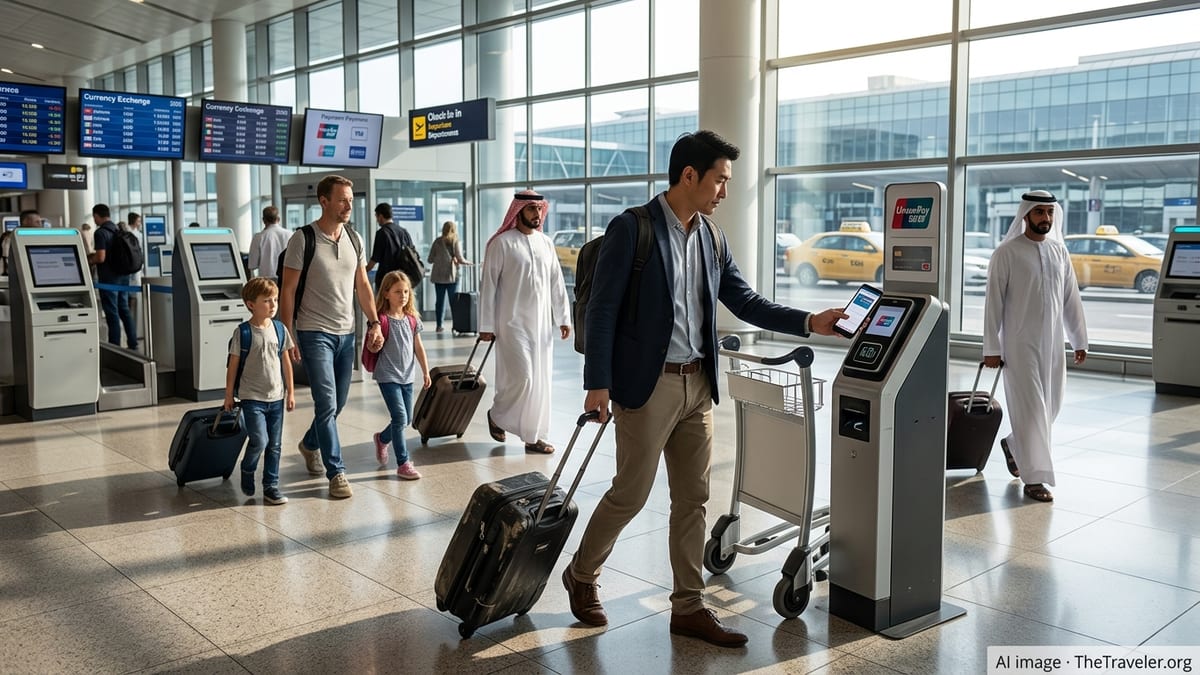
UnionPay is accelerating its global expansion in 2026, knitting together card acceptance, mobile wallets and QR code links in ways that are reshaping how international travelers pay on the road.
Get the latest news straight to your inbox!
A Global Network Built Around the Modern Traveler
UnionPay has spent the past few years building what publicly available information describes as one of the broadest payment networks serving outbound and inbound travelers. Its cards are now accepted in more than 180 countries and regions outside mainland China, with particularly dense coverage in popular tourism markets across Asia-Pacific, Europe and North America. For travelers, this reach means a UnionPay card or UnionPay-linked wallet can increasingly be used for everyday purchases, not just at luxury retailers or duty-free counters.
Recent corporate disclosures and media coverage highlight that UnionPay’s strategy is to move beyond simple point-of-sale card acceptance into a mix of contactless, QR and in-app payments. This approach aligns with how younger travelers in particular expect to pay abroad, using the same phones and apps they rely on at home. The result is a layered network where a plastic card, a virtual card in a digital wallet and a QR-based mobile app can all tap into the same UnionPay rails.
For destinations looking to attract visitors from China and from other UnionPay-heavy markets, this expanding network is becoming a selling point. Tourism boards in Europe and emerging destinations in Central and Eastern Europe have publicly highlighted UnionPay partnerships as part of their efforts to make shopping, dining and transport more seamless for foreign guests.
QR Code Interoperability and Wallet Partnerships
One of the most notable shifts for travelers in 2026 is the way UnionPay is linking its cards to popular local wallets. According to company announcements, more than 170 overseas QR wallets across around 30 countries are now connected to UnionPay’s network, allowing users to pay at UnionPay QR merchants without opening a local bank account. This is particularly visible in Southeast Asia, where cross-border QR initiatives in Malaysia, Thailand and Vietnam are being tied into UnionPay’s infrastructure.
A high-profile example is the collaboration between UnionPay International and Weixin Pay in mainland China. Public information shows that 25 international wallets, including apps from Hong Kong, Thailand, South Korea and Malaysia, are now able to scan Weixin Pay merchant QR codes while routing the transaction over UnionPay. For tourists, that means the same wallet used for everyday spending at home can often be used in Chinese cities for everything from street food to museum tickets, as long as it is linked to a UnionPay card.
In Malaysia, UnionPay’s tie-up with the national payments network PayNet connects UnionPay’s QR ecosystem with the widely used DuitNow QR standard. This allows UnionPay users from China to pay at a large base of Malaysian merchants and paves the way for Malaysian wallets to be used at UnionPay QR merchants globally. Such reciprocal arrangements are turning QR interoperability into a practical tool for cross-border tourism rather than a purely domestic convenience.
For travelers, the practical takeaway is that a UnionPay-branded card in a compatible mobile wallet can increasingly act as a bridge between different national QR schemes. Before departure, it is becoming important to check whether a home wallet supports UnionPay abroad and whether local QR codes in the destination are part of UnionPay’s linked network.
From Airports to Metro Gates: Everyday Use Cases Expand
UnionPay’s expansion is no longer focused solely on high-end retail. Recent partnerships show a deliberate push into public transport, small merchants and daily spending categories that matter most to visitors once they land. In late 2025, for example, UnionPay partnered with acquirer Getnet to extend card and contactless acceptance across Spain and Portugal, with a clear emphasis on metro systems, buses, regional trains, shared bikes and parking. Reports on the deal indicate that these integrations are intended to support rising visitor flows from Asia by allowing UnionPay cardholders to tap through European transport turnstiles in much the same way they would at home.
Across Asia, similar patterns are emerging around city transport, convenience stores and quick-service restaurants. In markets such as Hong Kong, South Korea and Thailand, promotional campaigns highlighted in trade coverage link UnionPay QR payments to instant discounts or cashback on everyday purchases. For travelers, this means UnionPay is present not only at department stores and hotel front desks but also at kiosks, coffee chains and ride-hailing apps.
The growth of contactless and tokenized payments also matters for security and convenience. Many UnionPay cards can now be added to mobile wallets on mainstream smartphones, letting travelers avoid exposing physical cards in crowded locations. Where terminals accept international contactless standards, a UnionPay card loaded into a device can often be used with a simple tap, blending into local payment habits with minimal friction.
Tax Refunds, Tourism Campaigns and Value-Added Services
UnionPay’s role for travelers goes beyond point-of-sale payments to include services that tie directly into tourism incentives. The company has long promoted tax refund partnerships with global operators, particularly in Europe, where visitors can claim back value-added tax on eligible purchases when departing the region. While the underlying tax rules are set by governments, UnionPay co-branded refund services allow eligible shoppers to have refunds processed back to UnionPay cards, which can simplify settlement and foreign exchange for frequent travelers.
Changes in tax refund thresholds in destinations popular with Chinese tourists, including policy shifts in mainland China and parts of East Asia, intersect with these card-based services. As authorities lower minimum spending requirements or roll out digital refund platforms at busy shopping districts, UnionPay is positioning its network as one of the default rails over which money is returned. This gives the brand visibility not just at the moment of purchase but again when travelers receive refunds weeks or months later.
Marketing campaigns are reinforcing this functional role. In 2024 and 2025, UnionPay launched seasonal global promotions with merchants in Hong Kong, South Korea, Thailand, Australia, New Zealand and the United States, offering cardholders discounts or cashback on cross-border spending. Publicly available reports suggest that similar initiatives are expected to continue into 2026 as international tourism recovers, effectively turning UnionPay cards and wallets into loyalty tools that reward cardholders for using them overseas.
In some destinations, UnionPay-branded travel cards and co-branded products tailored to inbound visitors are also emerging. These offerings often combine payment functions with targeted perks around shopping, dining and attractions, mirroring products already seen in major Asian cities but gradually appearing in new markets.
Practical Tips for Using UnionPay Abroad in 2026
For travelers planning trips in 2026, the practical implications of UnionPay’s expansion can be distilled into a few key points. First, UnionPay card acceptance is now widespread in many tourism hubs, but coverage still varies by country and by merchant category. Large retailers, hotel chains and airports are more likely to accept UnionPay than small independent shops, so it remains sensible to carry a backup card on a different network for emergencies.
Second, mobile wallets have become central to UnionPay’s cross-border strategy. Travelers should check whether their home-region wallet supports UnionPay-linked QR payments in the destination, particularly for trips to mainland China and Southeast Asia. Where QR interoperability exists, paying with a familiar app can be as straightforward as scanning a merchant code, often with the added benefit of local-language receipts and transaction histories.
Third, UnionPay’s growing presence in public transport and local services means it is increasingly realistic to use a single UnionPay card or wallet throughout an entire journey, from airport transfers to hotel check-in and daily commuting. However, travelers should still confirm acceptance on local transit operator sites or at ticket counters, since rollouts across networks can be phased and coverage may vary by city or line.
Finally, those planning significant shopping should review tax refund options linked to UnionPay ahead of time, including any requirements to present physical cards at refund counters or to use particular operators. With refund systems in Europe and parts of Asia moving toward more digital, immediate models, having a UnionPay card or wallet recognized by partner operators can streamline the process and reduce the need for cash payouts in unfamiliar currencies.