

More news on this day
Passengers flying from London Stansted Airport in the coming weeks are being advised to brace for potential disruption, after the Unite union warned that planned strike action by key contracted staff could lead to delays at security, check-in and boarding gates.
Get the latest news straight to your inbox!
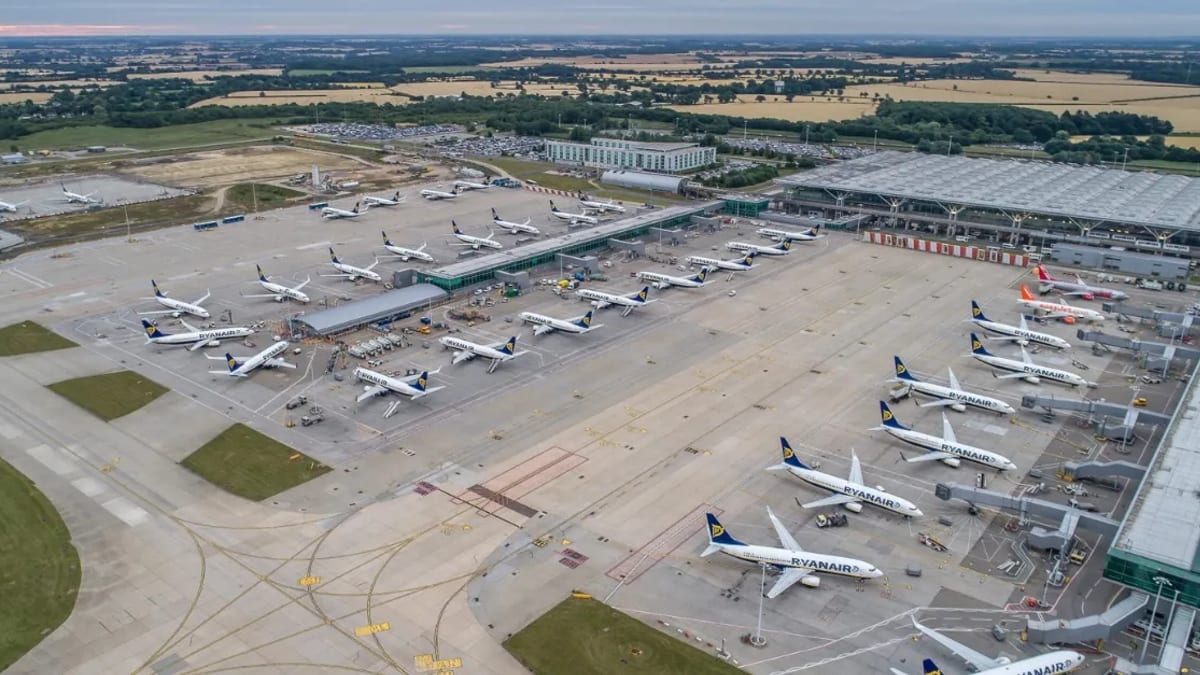
Workers at key Stansted contractors vote for walkouts
According to recent reports, Unite has confirmed that groups of workers employed by several major contractors at London Stansted have backed industrial action in disputes centred on pay, staffing levels and working conditions. The affected roles are understood to include security officers, cleaning staff and passenger assistance teams, all of whom play a critical part in keeping the airport’s day-to-day operation running smoothly.
Publicly available information indicates that the ballots returned strong majorities in favour of strikes, reflecting rising frustration over wages that union representatives argue have not kept pace with living costs. The disputes also draw attention to the increasing reliance on outsourced companies at UK airports, where employees often operate on separate pay and conditions from directly employed airport staff.
Unite has framed the proposed walkouts as a response to what it describes as inadequate offers in negotiations, saying workers are seeking improved basic pay rates and more predictable scheduling. Airport operators and contractors have not publicly disclosed detailed counterproposals, but previous disputes in the sector suggest any settlement is likely to involve a mix of pay adjustments and commitments on staffing levels.
The planned action would come at a time when Stansted is handling a high volume of leisure and short-haul European traffic, making any staffing shortfall particularly visible in queues at security checkpoints and boarding gates.
Warning of flight delays and longer queues for passengers
Unite has warned that, if the strikes go ahead as currently proposed, passengers could face notable disruption to their journeys through Stansted. Potential impacts highlighted in union statements and industry commentary include slower processing at security, knock-on effects at check-in and boarding, and the risk of delays to departing flights where ground operations are understaffed.
While there have been no indications that the airport will close or that a full shutdown of services is likely, experience from previous industrial disputes at other UK and European hubs suggests that even partial staffing reductions can result in longer waiting times, missed connections and late departures. Travellers connecting to early morning flights, when both passenger volumes and staffing demands peak, may be particularly exposed.
Recent performance data and travel commentary have already placed Stansted among the UK airports where delays are more common at busy periods, particularly around holiday weekends. Additional pressure from strike action could further strain an operation that relies on tight turnaround times for a concentrated schedule of low-cost carriers.
Airport management and contracted firms typically seek to mitigate disruption during strikes by redeploying managers, using overtime and adjusting rosters. However, such measures are rarely able to fully absorb the impact of sustained walkouts when large groups of specialist staff are involved.
Planned strike dates align with busy travel periods
Published coverage indicates that the initial phases of industrial action are scheduled to fall across several days that coincide with high passenger demand, including weekends and school holiday periods. This timing is common in aviation labour disputes, where unions aim to maximise leverage by targeting dates when disruption will be most visible to airlines and management.
At Stansted, which functions as a major base for low-cost and leisure-focused carriers, peak travel windows can see terminals and departure lounges operating close to capacity. On such days, even modest slowdowns at security or boarding can cascade into delays across multiple flights, particularly when aircraft operate on tight turnarounds.
Industry analysts note that if early strike dates proceed and cause significant disruption, there is potential for subsequent phases of action to be escalated or extended if no agreement is reached. Conversely, if negotiations progress, parts of the planned programme could be suspended at short notice, a pattern seen in other recent airport disputes across Europe.
Passengers travelling around the announced strike windows are therefore being advised by travel agents and consumer groups to monitor their flight status regularly, as airlines may make late schedule adjustments or deploy contingency plans in response to staffing forecasts.
Negotiations and the prospect of last-minute deals
Despite the strong mandate for industrial action, union and employer positions are not considered fixed. In similar disputes at other UK airports, intensive talks in the days leading up to strike dates have sometimes resulted in improved pay offers and the suspension of walkouts, at least temporarily.
Public information so far suggests both sides remain some distance apart, with Unite arguing that current offers do not adequately address rising costs for workers, and companies careful to manage wage bills in a competitive airport services market. However, the risk of reputational damage and operational disruption provides an incentive for all parties to seek compromise before the most impactful strike days.
Observers point out that any deal is likely to involve incremental pay increases combined with potential changes to shift patterns or allowances. The complexity of multi-employer environments, where different contractors may face separate ballots and disputes, can also prolong the process and result in staggered settlements.
Until more detail emerges from ongoing talks, the outlook for travellers remains uncertain. Travel industry commentators suggest that the situation could evolve rapidly, with announcements on postponements or revised strike plans potentially coming at short notice.
What travellers using Stansted should do now
Travel guidance based on recent strike-affected periods at other European airports suggests that passengers due to fly from Stansted around the planned action dates should take a cautious approach to their journeys. Arriving earlier than usual, allowing extra time for security and check-in, and limiting checked baggage where possible can all help reduce the risk of missing a departure if queues build unexpectedly.
Airlines typically advise customers to ensure their contact details are up to date in booking records so that any schedule changes or rebooking options can be communicated quickly. Many carriers also provide real-time updates through mobile apps and social media channels, which can be crucial if same-day adjustments are made in response to staffing levels.
Travel insurance policies vary in how they treat disruption linked to strikes, so travellers are being encouraged by consumer advocates to review their cover closely. Some policies may offer limited benefits for delays or additional accommodation costs, while others exclude industrial action entirely or impose specific notification requirements.
For now, publicly available information emphasises that flights remain scheduled to operate, and that both unions and employers are continuing to engage in dialogue. However, with Unite warning that disruption at Stansted is a real possibility, travellers planning to pass through the Essex hub in the coming weeks are being urged to stay informed and build flexibility into their plans.