

More news on this day
A United Airlines Boeing 787-9 Dreamliner operating Flight 2127 from Los Angeles to Newark was forced into a dramatic emergency landing back at Los Angeles International Airport on March 2 after flames were reported from one of its engines, jolting passenger confidence and sending fresh shockwaves through an already jittery American travel industry.
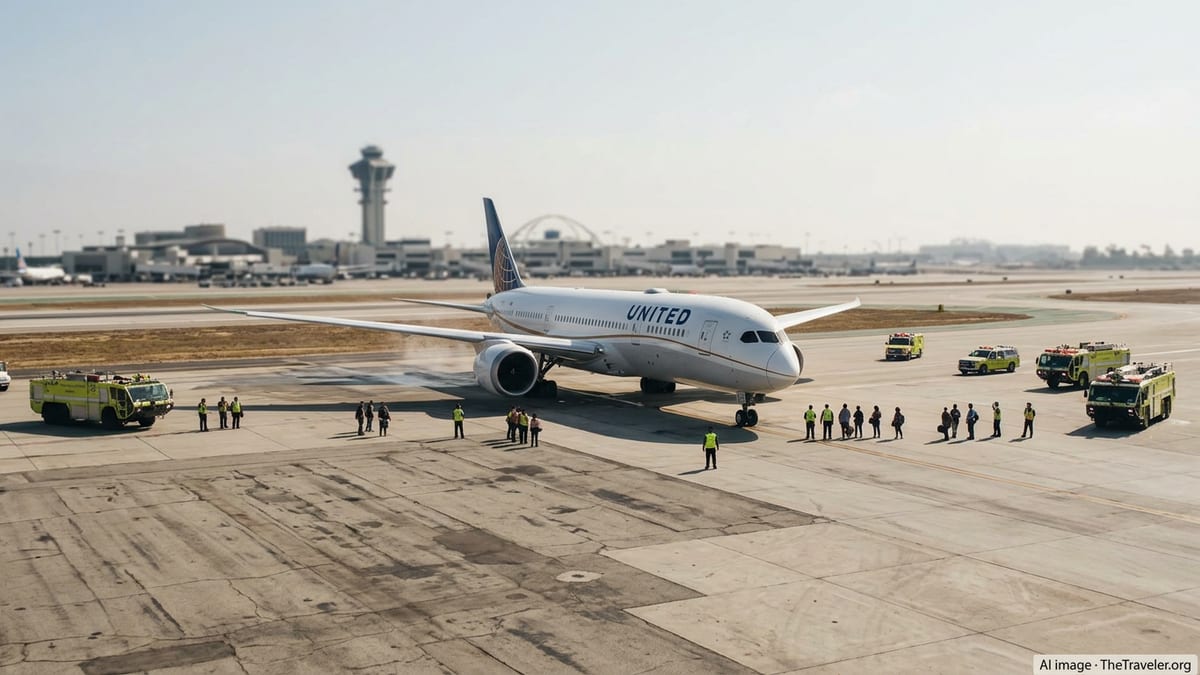
Engine Fire Forces Swift Return to Los Angeles
United Flight 2127 departed Los Angeles for Newark late Sunday morning with 256 passengers and 12 crew on board when, less than an hour into the flight, crew members reported flames and smoke from the aircraft’s left engine. The Boeing 787-9, a long-haul widebody central to United’s coast-to-coast and international network, began turning back toward Los Angeles shortly after 11 a.m. before landing safely around 11:20 a.m.
Fire crews and airport emergency services met the jet on the runway, where passengers were ordered to evacuate using emergency slides on the taxiway. Local officials said the fire was quickly contained after landing, and federal regulators have opened a formal investigation into the apparent engine failure.
While United said there were no serious injuries, at least one passenger reported a minor cut while evacuating down the slide. Several travelers described a tense but orderly evacuation, with cabin crew coordinating the exit as firefighters surrounded the aircraft.
In a brief statement, United apologized to customers for the disruption and said it was arranging alternate flights to the New York area. The airline added that the Dreamliner involved has been taken out of service pending a detailed inspection.
FAA Scrutiny Deepens Amid String of High-Profile Incidents
The emergency landing comes as the Federal Aviation Administration faces mounting questions over the reliability of U.S. commercial fleets and the oversight of aircraft manufacturers and operators. In recent months, multiple airlines have reported smoke, suspected fires or mechanical malfunctions that forced aircraft to turn back shortly after takeoff or divert en route.
Safety experts stress that the system worked as designed in the case of Flight 2127: the crew declared an emergency, returned to the departure airport, and all passengers walked away. Still, the optics of a widebody jet evacuating on slides at a major U.S. hub have reinforced anxieties among travelers already attuned to every aviation headline.
Analysts note that the Boeing 787 family has a strong overall safety record, with redundant systems and composite structures designed for long-haul operations. However, the incident adds to a wider narrative of unease around Boeing-branded aircraft after a series of separate events across different models, increasing pressure on regulators and airlines to demonstrate rigorous maintenance and transparent communication.
The FAA has said it will examine maintenance records, engine performance data and cockpit voice recordings from Flight 2127, while aviation investigators will interview the pilots and crew about their decision-making timeline from the first sign of trouble to touchdown in Los Angeles.
Traveler Confidence Tested at the Start of a Busy Season
The scare aboard Flight 2127 could not come at a more sensitive moment for the U.S. travel sector. Airlines, hotels and destinations have been counting on robust spring and summer demand, fueled by resilient consumer spending and strong corporate travel bookings. Any perception that flying has become riskier threatens to disrupt those expectations.
Booking platforms and travel advisers reported a spike in customer inquiries within hours of the emergency landing, with many callers asking whether certain aircraft types or specific routes should be avoided. While few immediate cancellations were reported, agents say nervous flyers are increasingly requesting additional information on aircraft models, safety records and contingency plans.
Industry consultants point out that most travelers ultimately keep their plans, even after headline-making scares. However, they warn that repeated high-profile incidents, even when nonfatal, can create a drag on demand, pushing some consumers toward closer-to-home vacations or alternative modes of transport on short-haul routes.
Airlines now face the delicate task of reassuring customers without appearing defensive. United has emphasized that serious incidents remain extremely rare, while promising full cooperation with investigators and reiterating its commitment to rigorous inspection and maintenance programs.
Marriott, Hilton and Major Hotel Brands Watch for Ripple Effects
Large hotel groups, including Marriott International and Hilton, are closely watching the fallout from United Flight 2127 for any sign that booking patterns could shift. Both companies maintain extensive footprints in key air gateway cities such as Los Angeles and New York, where airport-adjacent and downtown properties rely heavily on a steady stream of business and leisure arrivals.
In the immediate aftermath of the incident, hotels near Los Angeles International Airport saw a modest uptick in same-day bookings as displaced passengers sought overnight accommodation and rebooking windows tightened. Travel managers say that, depending on aircraft inspections and schedule disruptions, similar demand could ripple to hotels around Newark and other United hubs.
Executives at large hotel chains are preparing for scenarios in which aviation jitters translate into softer advance bookings, particularly for last-minute conferences and corporate travel tied to the financial and media sectors concentrated around the New York metropolitan area. Revenue managers are monitoring cancellation rates and pacing data, ready to adjust pricing or promote flexible cancellation policies if travelers hesitate to commit.
For now, both Marriott and Hilton are emphasizing flexibility and reassurance, reminding guests of generous change policies and loyalty program protections that allow travelers to shift dates or destinations if their flight plans are disrupted or if they decide to delay long-haul trips.
Airlines, Airports and Hotels Coordinate on Crisis Response
The emergency return of Flight 2127 has also highlighted the increasingly intertwined crisis planning between airlines, airports and hospitality providers. When a major diversion or evacuation occurs, hundreds of passengers can suddenly require accommodation, meals and onward travel coordination, often stretching local infrastructure and service capacity.
At Los Angeles International Airport, airport authorities, United ground staff and nearby hotels worked together to manage the immediate needs of Flight 2127’s passengers, from transportation to temporary lodging. Travel insurance providers and corporate travel departments stepped in to assist stranded business travelers with rebookings and policy documentation.
Crisis-management specialists say incidents like this are prompting airlines and hotel chains to refine joint playbooks that anticipate everything from mass re-accommodation to mental health support for shaken passengers. They argue that consistent communication, clear empathy and practical assistance in the hours after an emergency are critical not just for customer care, but for restoring broader public confidence in travel.
As investigators pore over technical data from the Boeing 787-9 and regulators weigh any necessary directives, the U.S. travel industry is bracing for another round of scrutiny. For millions of Americans set to fly in the coming months, the images of a widebody jet surrounded by fire trucks in Los Angeles will linger, even as airlines and hotels urge travelers to trust in a system that, despite its high-profile scares, remains statistically among the safest ways to move across the country.