

More news on this day
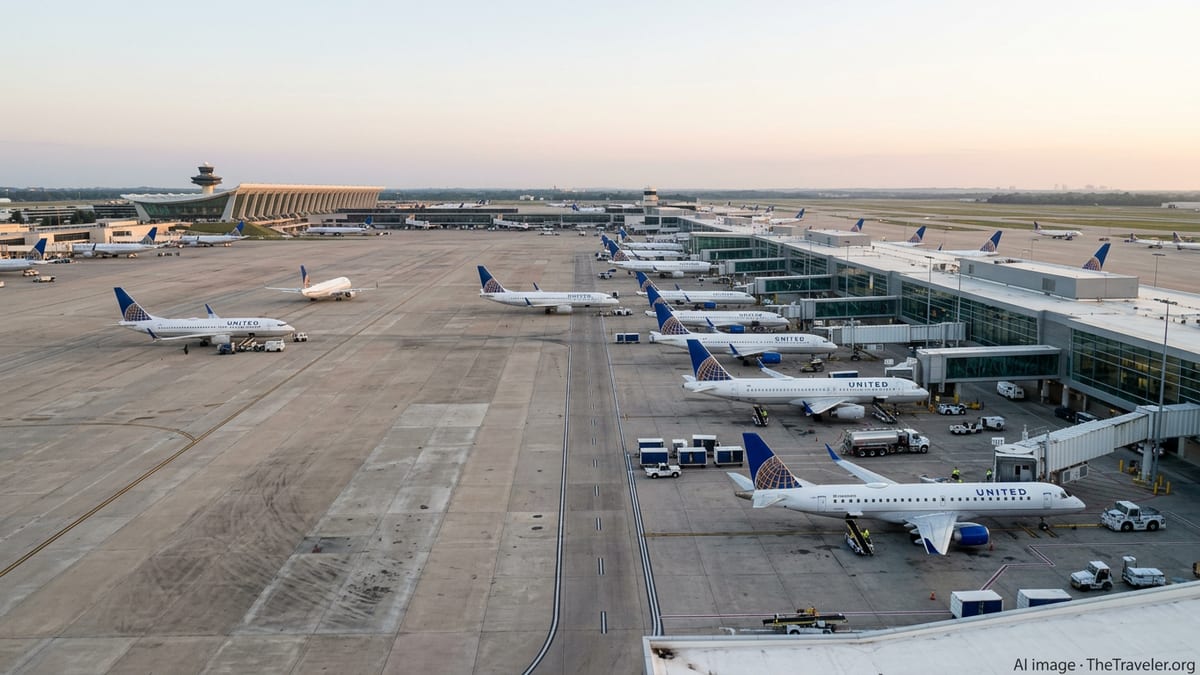
United Airlines is set to significantly expand its East Coast and Gulf Coast hubs, securing 36 additional gates at Washington Dulles International Airport and Houston George Bush Intercontinental Airport in a multi‑billion‑dollar capacity push aligned with rising post‑pandemic demand.
Get the latest news straight to your inbox!
Major Gate Expansion Anchors United’s Hub Strategy
The new gates at Washington Dulles International Airport and Houston George Bush Intercontinental Airport form the backbone of United’s latest hub expansion, aimed at giving the carrier more room to grow at two of its most strategically important airports. Dulles, the airline’s primary transatlantic gateway on the U.S. East Coast, and Houston, its largest hub in the central and southern United States, both saw record or near‑record passenger volumes in 2024 and 2025, tightening gate availability during peak periods.
At Dulles, the additional gates are tied to the phased introduction of a new concourse designed to replace aging C and D facilities and to add more contact gates for mainline and larger regional aircraft. The new building, planned with multiple expansion phases, is intended to reduce the airport’s reliance on hard stands and bus operations and to streamline international transfers.
In Houston, the gate gains are being delivered through United’s long‑running redevelopment of Terminal B, a program that includes expanded concourses, larger hold rooms and upgraded gate infrastructure capable of handling bigger regional jets and narrow‑body aircraft. The combined effect at both hubs will be a step‑change in how many flights United can stage, especially at banked connecting peaks.
While the total of 36 new gates will phase in over several years, the carrier is already signaling that the additional capacity will underpin future schedule growth to domestic business markets, sun‑belt leisure destinations and long‑haul international routes.
Houston’s Terminal B Overhaul Drives Capacity Gains
Houston’s George Bush Intercontinental Airport is at the center of one of United’s largest ground investments, a multibillion‑dollar Terminal B Transformation that reshapes the concourse footprint and substantially increases the number of United‑controlled gates. The project replaces tightly packed regional clusters with modern gate positions designed for larger aircraft and faster turn times.
Plans for the rebuilt complex envision a high‑capacity north concourse and a reconfigured south side, together delivering dozens of next‑generation gate positions. Within this footprint, United is securing a significant share of the 36 new gates it will add across its two hubs, enabling it to upgauge aircraft on key routes and add more peak‑day departures without the bottlenecks that have long plagued the existing Terminal B layout.
The Houston work also aligns with the airport’s broader traffic growth, including new and expanded international services that rely on United’s hub for connectivity. With passenger counts at Bush Intercontinental surpassing pre‑pandemic levels, additional gate space gives the airline a buffer against weather disruptions and operational constraints that often cascade across its network.
United’s Houston expansion is further supported by new check‑in, baggage and security facilities that are designed to keep throughput in step with the gate count. Together, they are expected to lift the number of customers the hub can handle on peak travel days by double‑digit percentages compared with 2023, giving the carrier headroom to grow in Texas and the broader Gulf region.
New Dulles Concourse Positions United for Transatlantic Growth
At Washington Dulles, United’s gate expansion is being realized through a new concourse project that will initially add a wave of modern gates and then extend in a subsequent phase. The first phase focuses on replacing some of the most infrastructure‑constrained legacy facilities, providing additional contact gates with dual jet bridges and flexible layouts that can handle both wide‑body and narrow‑body aircraft.
The long‑planned Dulles concourse has been framed by airport officials as critical to accommodating future international and domestic growth, particularly for United and its Star Alliance partners. By securing a significant portion of the 36 new gates there, United is effectively locking in its role as the dominant carrier at the airport and ensuring room for future long‑haul launches.
For travelers, the new gates are expected to translate into more direct domestic connections into the Dulles hub and a broader bank of transatlantic departures during the afternoon and evening peaks. The design emphasizes shorter walking distances, more natural light and expanded seating and concessions, addressing long‑standing complaints about crowding and dated interiors in the existing concourses.
Construction phasing at Dulles is being coordinated around United’s operating schedule, with some temporary bussing and train adjustments during the build‑out. Once fully opened, the new facilities are expected to reduce congestion and improve on‑time performance, particularly during summer thunderstorms that have historically forced extensive gate juggling.
Network, Fleet and Passenger Experience Impacts
The additional 36 gates at Dulles and Houston give United more structural flexibility across its fleet, particularly as it continues to take delivery of newer narrow‑body aircraft. More gate positions that can handle upgauged regional jets and mainline planes allow the carrier to shift away from smaller 50‑seat aircraft and concentrate capacity into fewer, larger departures.
This shift supports United’s stated strategy of boosting premium seating and high‑yield capacity from its core hubs. With more capable gates, the airline can schedule larger aircraft on business‑heavy routes from Washington to key domestic and European cities, and from Houston to major energy, industrial and Latin American markets, without running into the hard limits that gate scarcity previously imposed.
On the passenger side, the gate expansion dovetails with a broader refresh of clubs, concessions and customer amenities at both airports. New and enlarged United Club spaces, more electrical outlets and workspaces at gate areas, and updated wayfinding are all part of the redevelopment programs tied to the additional gates. For connecting travelers, this means less time on remote stands and buses and more time in climate‑controlled concourses tailored to longer dwell times.
Operationally, the increased gate count should also help United manage irregular operations by giving schedulers more options to park aircraft, swap equipment and re‑bank flights during disruptions. That resilience is particularly important at Houston, where weather can rapidly impact large swaths of the schedule, and at Dulles, where busy transatlantic banks leave little margin for delay when gate inventories are tight.
Timeline and Competitive Landscape
The rollout of United’s 36 new gates at Washington Dulles and Houston Bush Intercontinental will occur in stages, aligned with construction milestones at each airport. Early elements of the Houston Terminal B redevelopment have already come online, with additional concourse segments and gates due to open as interior fit‑out and systems testing are completed. At Dulles, initial new gates tied to the emerging concourse structure are expected to open first, followed by subsequent expansion phases that will add more positions.
These projects arrive at a moment when major U.S. carriers are racing to solidify their hub positions and capture returning demand. Delta and American have invested heavily in core airports such as New York, Los Angeles and Dallas, focusing on terminal upgrades and consolidated gate leases. United’s Dulles and Houston programs are its answer in the Washington and Gulf Coast markets, reinforcing its status as the primary network carrier in both regions.
By securing the 36 additional gates across the two airports, United not only gains room to grow schedules but also strengthens its negotiating position for future airport development. Long‑term gate access is a critical bargaining chip in hub cities, influencing everything from alliance partnerships to which new international carriers can secure optimal arrival and departure times.
For travelers, the competitive effect will likely manifest in more nonstop options, greater schedule frequency on key routes and a visible upgrade in the look and feel of terminals that many frequent flyers have long criticized. As the new gates come online and construction barriers come down, Dulles and Houston are poised to play an even more central role in United’s global network.