

More news on this day
United Airlines is preparing a major international expansion centered on its Newark Liberty International Airport hub, with new or expanded links to Bari, Split, Santiago de Compostela, Glasgow, Seoul, Reykjavik and Tel Aviv planned across the airline’s 2026 schedule.
Get the latest news straight to your inbox!
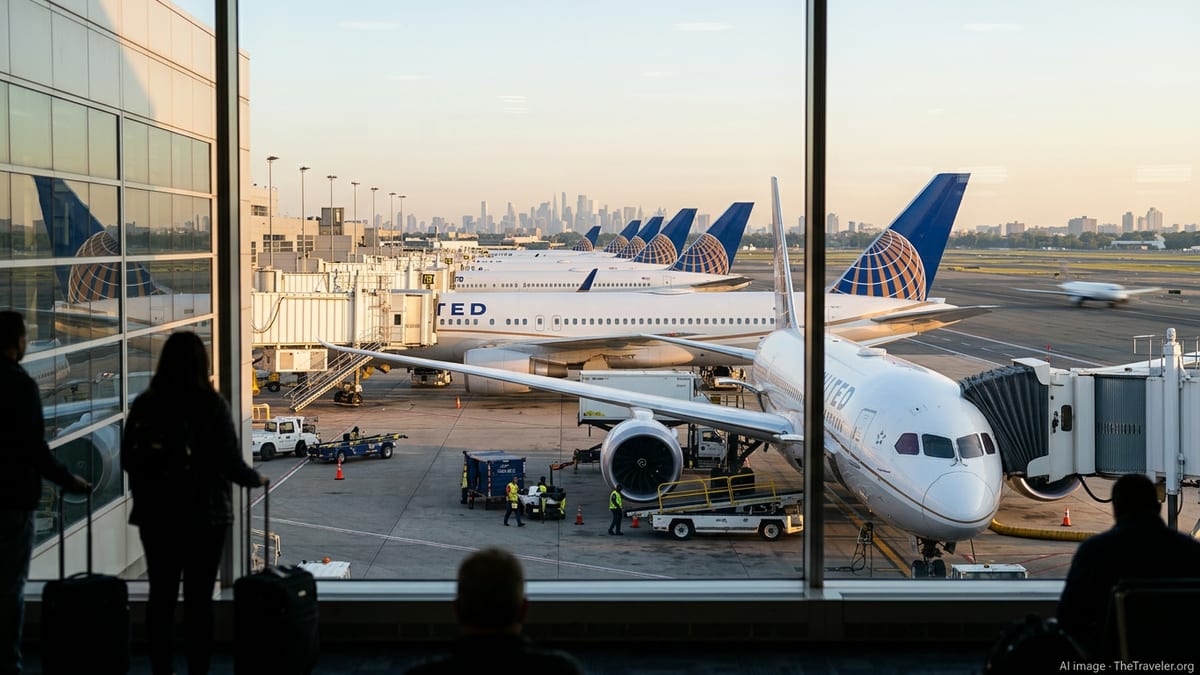
Ambitious Transatlantic Growth From Newark
Publicly available schedule information shows that United intends to introduce four new nonstop European destinations from Newark in 2026: Bari in Italy, Split in Croatia, Glasgow in Scotland and Santiago de Compostela in Spain. These additions position the carrier as the only United States airline offering nonstop service from Newark to each of these cities, reinforcing its strategy of targeting secondary European markets with growing leisure demand.
The new routes are planned as part of the airline’s summer 2026 transatlantic program, which industry coverage indicates will grow to 46 destinations across Europe. The services from Newark are scheduled as seasonal summer operations, with flights beginning in late April and May, aligning with peak travel demand to the Mediterranean and northern Europe.
Reports on the expansion note that the four cities have seen rising interest among North American travelers seeking alternatives to crowded European gateways. By adding nonstop service from a major East Coast hub, United aims to capture both origin-and-destination traffic from the New York metropolitan area and connecting passengers from across its domestic network.
Aviation analysts commenting on the plans have highlighted that United is leveraging both widebody and narrowbody aircraft for the new links, using long-range single-aisle jets where demand profiles and airport constraints favor smaller-gauge operations while deploying larger aircraft on routes expected to attract higher volumes.
Secondary European Cities Move Into the Spotlight
Bari and Split give United a deeper presence on the Adriatic coast, an area that has rapidly emerged as a favored summer destination for North American travelers. Bari serves as a gateway to Italy’s Puglia region, known for whitewashed hill towns and coastal resorts, while Split provides access to Croatia’s Dalmatian coast and popular nearby islands. Travel industry reports indicate steady growth in transatlantic demand to both regions in recent years.
Glasgow, one of Scotland’s largest cities, strengthens United’s position in the United Kingdom market beyond London and Edinburgh. After several years without nonstop service by a United States carrier, the planned Newark link is expected to restore a direct connection that appeals to both leisure visitors and those traveling to the city’s business and cultural centers.
Santiago de Compostela, the capital of Spain’s Galicia region, stands out as the most niche of the four new European routes. Known as the traditional endpoint of the Camino de Santiago pilgrimage routes, the city has historically seen relatively limited direct long-haul service. According to airline schedule trackers, United would become the first United States carrier to offer nonstop flights from the U.S. to Santiago de Compostela, positioning Newark as a convenient gateway for travelers heading to northern Spain.
By adding these four cities at once, United further differentiates its Atlantic network from competitors that remain more heavily focused on primary hubs such as London, Paris and Frankfurt. Industry observers say this approach reflects a broader shift toward serving underpenetrated destinations where even moderate volumes can sustain profitable seasonal service when combined with connecting traffic.
Newark to Seoul and Increased Tel Aviv Capacity
Beyond Europe, United’s 2026 plans call for a new year-round daily connection between Newark and Seoul Incheon, using Boeing 787-9 aircraft. According to published coverage, this service is scheduled to begin in early September 2026 and will make United the only United States airline operating nonstop flights from the New York area to South Korea’s capital.
The new Seoul route is expected to complement United’s existing San Francisco to Seoul services and expand its reach in the North Asia market. By basing the flights at Newark, the airline can feed traffic from across its East Coast and Midwest hubs, while tapping strong demand from the large Korean diaspora and corporate travel segments in the New York region.
United is also preparing a further build-up of Tel Aviv capacity from Newark. Schedule details shared in airline and travel trade reports indicate that from late March 2026 the carrier plans to add a third Newark to Tel Aviv frequency, increasing the operation to 18 weekly flights. This follows the resumption and ramp-up of Tel Aviv services from Chicago and Washington in 2025.
The expanded Tel Aviv schedule underscores the strategic importance of Israel in United’s international portfolio. Industry analyses note that the airline has consistently been among the largest foreign carriers in the Tel Aviv market, and the additional Newark frequency suggests confidence in long-term demand despite recent regional volatility.
Reykjavik and Washington Join the Network Story
While Newark is the focal point of the 2026 expansion, the broader plan also includes a new transatlantic route from Washington Dulles International Airport to Reykjavik. According to route announcements summarized in aviation publications, daily service on this link is scheduled to begin in May 2026, adding another option to Iceland from the United States capital region.
This Washington to Reykjavik route will operate alongside United’s existing services to Iceland from Chicago and Newark, consolidating the carrier’s presence in a market that has become popular for short-haul international getaways and stopover tourism. The timing in late spring positions the route to capture the Iceland summer season, when demand for outdoor and nature-focused travel is highest.
Although the Reykjavik flight originates from Washington rather than Newark, it forms part of the same wave of announcements that includes the four new European destinations, the Newark to Seoul launch and the added Tel Aviv capacity. Collectively, these changes signal an emphasis on expanding United’s reach on both sides of the North Atlantic while reinforcing its East Coast hubs.
Travel analysts suggest that the combined effect of the new Newark and Washington services will be to create more one-stop options between secondary cities in the United States and emerging destinations in Europe and Asia. By routing passengers through Newark or Dulles, United can funnel demand efficiently while offering a broader range of end points.
Strategic Positioning and Competitive Context
Industry commentary on the expansion points to several strategic drivers. First, United appears to be capitalizing on available long-haul aircraft and slots at Newark, its primary New York area hub, following operational improvements and infrastructure investments at the airport. Second, the airline is further entrenching its role as a leading transatlantic carrier by serving cities where competition from other United States airlines is limited or nonexistent.
Market data cited in aviation analyses suggest that many of the newly announced cities, including Bari, Split and Santiago de Compostela, have shown sustained passenger growth from the United States in recent summers, even without nonstop flights. Direct service from Newark is expected to reduce total journey times and make these destinations more accessible to a broader range of travelers.
At the same time, the introduction of Newark to Seoul and the ramp-up of Newark to Tel Aviv frequencies broaden United’s portfolio beyond leisure-oriented European routes. Together with the Washington to Reykjavik service, these moves indicate a balanced focus on both premium business markets and high-potential tourism destinations.
As airlines across the Atlantic adjust their networks in response to changing demand patterns, United’s planned 2026 schedule suggests a willingness to experiment with new city pairs while maintaining a strong emphasis on its Newark hub. For travelers in the New York region and beyond, the forthcoming links to Bari, Split, Santiago de Compostela, Glasgow, Seoul, Reykjavik and Tel Aviv point to a wider array of nonstop and one-stop options in the years ahead.