

More news on this day
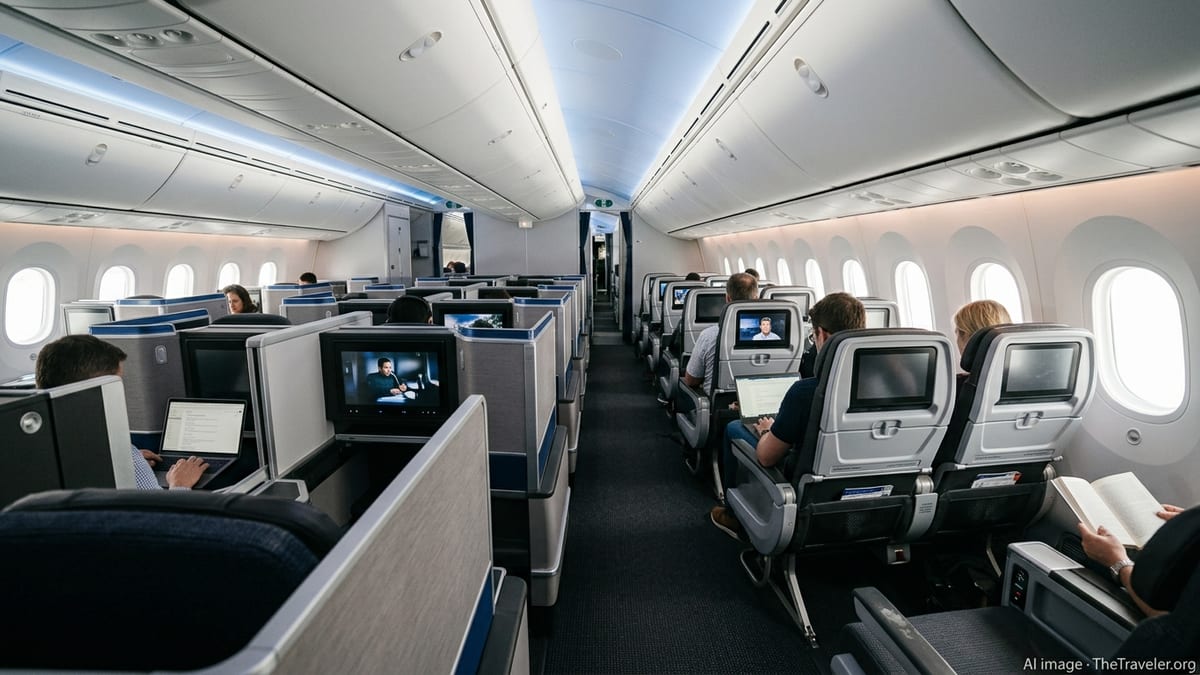
United Airlines is accelerating a multi‑year push into high‑end cabins, unveiling new business class suites and significantly larger premium economy sections that are set to reshape how travelers experience long‑haul flights and how global tourism routes develop from 2026 onward.
Get the latest news straight to your inbox!
Premium Cabin Expansion at the Heart of United’s Strategy
Publicly available information shows that United is committing to one of the most premium‑heavy widebody configurations among U.S. carriers as it takes delivery of a new batch of Boeing 787‑9 Dreamliners from late 2025. Industry analyses describe an “Elevated” interior concept that increases the share of seats dedicated to business class and premium economy while slightly reducing standard economy capacity. This shift mirrors broader demand trends, with premium cabins growing faster than the overall market as travelers show a greater willingness to pay for space and comfort on long‑haul journeys.
Reports indicate that these new 787‑9s will introduce United’s updated Polaris business cabin across two sections, featuring lie‑flat seats with all‑aisle access, sliding privacy doors and upgraded personal storage. Compared with existing United widebodies, the new layout adds more business class seats overall, supporting higher revenue per flight while targeting corporate travelers and high‑spend leisure passengers.
The premium push extends beyond business class. Documentation shared with employees and investor commentary show that United Premium Plus, the carrier’s premium economy product, will see its largest cabin yet on the new Dreamliners. The new configuration increases Premium Plus seating from just over 20 seats on current 787‑9s to the mid‑30s, a substantial expansion designed to capture travelers who want more comfort than standard economy without the price of a full business class ticket.
These moves form part of a broader “premiumization” strategy that United has been signaling for several years, alongside investments in airport lounges, inflight connectivity and onboard dining. The goal is to position the airline competitively on lucrative long‑haul routes where high‑yield travelers increasingly expect privacy, technology and personalized service as standard.
Inside Polaris Studio and the New Business Class Experience
A centerpiece of the expansion is Polaris Studio, an enhanced subset of Polaris seats planned for the first rows of the business cabin on the new 787‑9s. According to product briefings and airline communications reviewed by industry outlets, these suites are approximately a quarter larger than standard Polaris seats and integrate several features that blur the line between traditional business and first class.
Polaris Studio suites are expected to include a dedicated ottoman that can double as companion seating, allowing a second passenger to dine or work face‑to‑face during cruise. The seats are designed with full‑height privacy doors, additional counter space, wireless charging, and extra storage for personal items. Each suite will also feature one of the largest seatback screens offered by a U.S. airline in business class, using 4K technology and Bluetooth connectivity so passengers can pair their own headphones.
The main Polaris cabin is also being upgraded as part of the Elevated interior. New lie‑flat suites will offer sliding doors, enhanced mood lighting and digital seat controls intended to simplify recline and bed‑mode adjustments. Industry coverage notes that the seating layout combines reverse herringbone and herringbone patterns, balancing privacy for solo travelers with options that work better for couples or colleagues seated together.
Beyond hardware, United has linked the new seats with refreshed soft‑product elements on select long‑haul flights, including expanded multi‑course dining, upgraded amenity kits and an increased focus on sleep‑friendly service routines. The result, analysts suggest, is a business class product aimed at competing more directly with leading transatlantic and transpacific carriers at a time when premium demand on these routes is particularly strong.
Premium Plus Grows as Travelers Trade Up
United’s decision to significantly grow its Premium Plus cabin on the upcoming Dreamliners reflects an emerging middle ground in long‑haul travel. Premium economy has become one of the fastest‑expanding cabin types globally, appealing to leisure travelers on once‑in‑a‑lifetime trips and to cost‑conscious business travelers whose companies cap spending below business class.
Published configuration details for the Elevated 787‑9 interior show Premium Plus increasing to around 35 seats in a 2‑3‑2 layout, up from just over 20 seats in the current design. This higher density of premium economy seats suggests United expects sustained demand from travelers who prioritize extra legroom, wider seats and upgraded dining without moving all the way to Polaris pricing.
Onboard, the latest generation of Premium Plus seats is reported to feature larger high‑definition screens, leg and foot rests, greater recline and enhanced power options, including USB‑C charging. While not lie‑flat, the seats are intended to support productive work and more restful sleep on overnight sectors, especially on the airline’s longest routes linking North America with Asia and the South Pacific.
Travel analysts point out that a larger Premium Plus cabin also gives United more flexibility in managing upgrades and revenue optimization. With more seats available in the middle tier, the airline can sell paid upgrades, accommodate frequent‑flyer benefits and still protect inventory in Polaris, balancing load factors across three long‑haul cabin types.
Network Growth and Tourism Impact from 2026
The premium seating expansion is closely tied to United’s long‑haul growth plans. Investor presentations and route announcements indicate that the new 787‑9s with Elevated interiors are scheduled to begin international service in 2026, initially on high‑profile routes from San Francisco to key global hubs such as Singapore and London.
By pairing new premium‑dense aircraft with strategic gateway airports, United aims to capture a larger share of high‑spend travelers in sectors like technology, finance and life sciences, all of which maintain strong ties to the San Francisco Bay Area. Tourism boards and local hospitality sectors are watching closely, as more premium capacity can translate into higher‑value visitors who stay longer and spend more on hotels, dining and experiences.
United has also been expanding and upgrading its lounge footprint at major hubs, including large next‑generation United Club locations in cities such as Denver, with further developments planned in Houston and San Francisco. These lounges are designed to support the increased number of premium customers arriving early to work, dine or relax before long‑haul departures, reinforcing the end‑to‑end nature of the carrier’s premium strategy.
Industry observers note that as United deploys more premium‑heavy aircraft across the Atlantic and Pacific, competitive responses from other global airlines are likely. This could lead to a new phase of cabin innovation, with benefits cascading not only to business travelers but also to the tourism economies that depend on reliable, high‑quality long‑haul air links.
What Travelers Need to Know When Booking
For travelers, the rapid rollout of new premium seating will make careful aircraft and cabin selection more important from 2026 onward. Reports indicate that not all 787‑9s or other long‑haul aircraft in United’s fleet will immediately feature the Elevated interior, so passengers seeking the latest Polaris Studio suites or the expanded Premium Plus cabin will need to pay close attention to aircraft types and seat maps during booking.
Travel experts advise checking whether a given long‑haul flight is scheduled on a 787‑9 configured with the new interiors, as these aircraft will offer the most comprehensive set of upgrades, from suite‑style business seats to enlarged premium economy sections and updated in‑flight entertainment. Because fleet refits and deliveries are staged over several years, the same route may alternate between older and newer cabins depending on schedule and season.
Passenger feedback shared in public forums already suggests strong interest in the new premium products, with many travelers weighing whether to trade up from standard economy on key trips once the expanded cabins enter service. As the first Elevated 787‑9s join the network in 2026 and additional aircraft follow through 2027, the range of options for long‑haul comfort on United is set to broaden significantly.
For the broader travel and tourism sector, the airline’s investment in premium seating signals confidence that demand for high‑quality, experience‑driven travel will remain resilient. As routes gain more lie‑flat business seats and roomier premium economy rows, destinations linked by United’s long‑haul network may see a fresh wave of visitors opting to arrive better rested and more willing to explore.