

More news on this day
A routine departure from Newark Liberty International Airport turned into an unexpected security scare this week when a single bullet was discovered in the overhead bin of a United Airlines Boeing 737 preparing to depart for Miami, prompting authorities to declare the aircraft a crime scene and delaying passengers for nearly three hours.
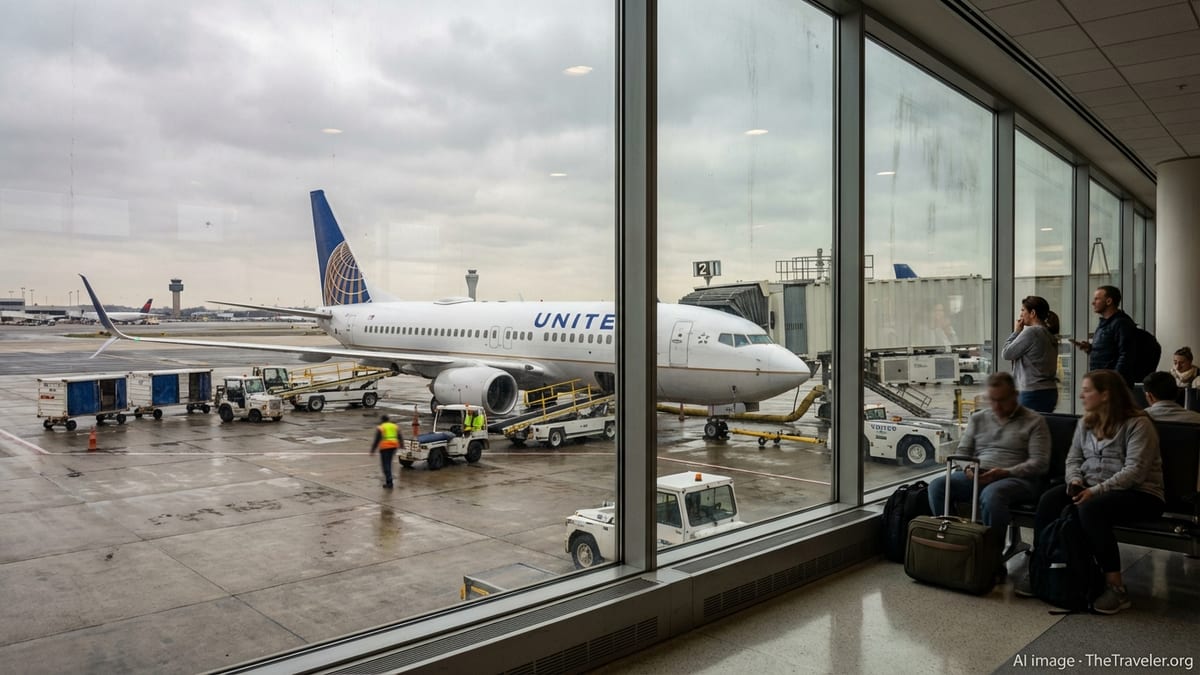
Discovery on the Tarmac at Newark
The incident unfolded on Tuesday, February 17, when United Airlines Flight 1511, operated by a Boeing 737 registered as N37456, was preparing to depart Newark Liberty International Airport for Miami International Airport. The flight was scheduled to leave at 2:07 p.m. local time, a peak midafternoon departure on a busy corridor linking the New York metropolitan area with South Florida.
During final preparations, a crew member or passenger reportedly alerted staff to a single bullet spotted inside an overhead storage bin. The item was immediately identified as live ammunition, triggering a halt to the boarding process and a rapid escalation to airport and federal authorities. Within minutes, the aircraft was taken out of regular operation and the jetway area secured.
Port Authority Police officers were dispatched to the gate, and the bullet was confiscated as potential evidence. With the discovery occurring before pushback from the gate, all activity around the aircraft shifted from standard turnaround procedures to a tightly controlled security response led by law enforcement and aviation security specialists.
Aircraft Declared a Crime Scene
Authorities quickly declared the Boeing 737 a crime scene, a designation that dramatically changed how the situation was handled. Instead of simply removing the ammunition and proceeding with departure, police and security teams treated the aircraft as potential evidence in a possible firearms or security violation.
Declaring a commercial jet a crime scene is a rare but not unprecedented step in U.S. aviation. It effectively freezes the aircraft in place while law enforcement conducts a methodical search and documents the cabin environment. Access is restricted to authorized personnel, and routine airline operations such as cleaning, catering, and baggage loading are suspended until investigators give clearance.
For passengers on Flight 1511, the designation meant that their aircraft would not be going anywhere until a full sweep was completed and authorities were satisfied there was no broader threat. The investigation extended beyond the single bullet to include checks for any additional ammunition, firearms, or suspicious items that might have been concealed elsewhere in the cabin.
Security Sweep and Hours-Long Delay
What followed was an intensive security sweep of the cabin, galleys, and lavatories, reportedly conducted by a combination of airline security teams, Port Authority Police, and federal partners. Every overhead bin was opened and inspected, seat rows were examined, and compartments were checked as officers worked through the aircraft row by row.
Passengers had to wait while the investigation unfolded. Some were held in the gate area, while others weighed their options to rebook, reroute, or delay their travel plans altogether. Flight tracking data show the aircraft eventually departed at approximately 4:49 p.m., nearly three hours behind schedule, and landed in Miami shortly after 7:30 p.m.
United Airlines confirmed that a security sweep had taken place after the discovery of a bullet in an overhead bin and said the aircraft was cleared by security personnel before being allowed to depart. Despite the delay, the airline emphasized that the decision to hold the flight was rooted in safety and regulatory requirements that oblige carriers to cooperate fully with law enforcement whenever potential contraband or prohibited items are discovered on board.
What We Know About the Ammunition
Authorities have disclosed that the item at the center of the scare was a single bullet found loose inside an overhead bin, with no accompanying firearm discovered during the subsequent sweep. Officials have not yet confirmed the caliber of the round or whether it may have been inadvertently left behind by a previous traveler.
As of Friday, February 20, investigators had not publicly identified any suspect or passenger directly linked to the ammunition. The lack of an immediately known owner has raised questions about how the bullet entered the cabin and whether it passed through security screening undetected, or was introduced through other means such as prior cleaning or maintenance activity.
The Port Authority Police Department, which oversees security at Newark Liberty International Airport, notified federal partners, including the Federal Bureau of Investigation, to evaluate whether any federal firearms or aviation security laws may have been violated. The investigation is ongoing, and neither law enforcement nor United Airlines has detailed any disciplinary or legal action connected to the incident.
TSA Rules and How Ammunition Should Travel
The discovery has drawn renewed attention to the Transportation Security Administration’s rules for transporting firearms and ammunition. Under TSA regulations, ammunition is strictly prohibited in carry-on baggage. Passengers are not permitted to bring loose bullets, loaded magazines, or any form of ammunition through security checkpoints or into the aircraft cabin.
Travelers may, however, transport firearms and ammunition in checked luggage under strict conditions. Firearms must be unloaded, packed in a locked, hard-sided container, and declared to the airline at check-in. Ammunition must be securely boxed, typically in fiber, wood, or metal containers designed to carry small amounts of cartridges, and packed inside checked baggage. Airlines may impose additional restrictions on quantities, calibers, or packaging.
In cases where prohibited items like ammunition are discovered in carry-on bags at checkpoints, TSA officers do not simply confiscate and discard them. Instead, they notify law enforcement, which can seize the item and determine whether to issue fines, detain a passenger, or pursue criminal charges. The presence of a loose bullet in an aircraft cabin, especially after security screening, is a red flag that prompts a comprehensive law enforcement response, as seen in this United flight incident.
Impact on Passengers and Airline Operations
For the travelers booked on United Flight 1511, the security scare turned a routine journey into an afternoon of uncertainty. A nearly three-hour delay can mean missed connections in Miami, missed cruise departures, and disrupted plans for those linking onward to the Caribbean or Latin America. Passengers faced a choice between staying with the delayed flight, attempting to rebook on a later departure, or shifting to alternative airports in the New York region.
From an operational standpoint, the delay affected more than just one flight. A Boeing 737 on a tight daily rotation typically operates several segments, and a midafternoon hold of several hours can cascade into subsequent schedule adjustments. Airline dispatchers and operations planners had to reassign crews, adjust aircraft utilization, and, in some cases, shift passengers to other flights to minimize knock-on disruptions across United’s network.
Despite the inconvenience, many aviation analysts argue that the incident demonstrates the system working as intended: when an unexplained piece of ammunition appears in a cabin, safety takes precedence over punctuality. For United, the event represents both a test of its crisis-handling procedures and an opportunity to reassure travelers that its partnership with law enforcement places passenger safety above schedule performance.
Renewed Scrutiny of Airport Screening
The bullet scare at Newark has also prompted broader questions about the effectiveness of airport screening and ground handling protocols. Newark Liberty International, one of the primary gateways for the New York region, processes tens of thousands of passengers daily through a multilayered security system that includes X-ray screening, explosive detection, and random secondary checks.
Investigators are examining several possible scenarios: that the bullet passed through TSA screening in a carry-on bag and later fell or was placed into the bin, that it was left behind by a traveler on a prior flight segment, or that it entered the cabin through nonpassenger sources, such as ground staff or contractors with access to the aircraft during cleaning or maintenance.
Security experts note that isolated incidents involving a single bullet do not necessarily indicate systemic failure, but they can expose small gaps in procedure, training, or quality control. The ongoing investigation is expected to review surveillance footage, interview passengers and crew, and reconstruct the aircraft’s recent operating history to determine when and how the ammunition first appeared on board.
Context: Previous Ammunition and Firearms Cases at Airports
The Newark episode is not the first time ammunition-related discoveries have disrupted air travel in the United States. TSA regularly reports thousands of firearms intercepted at checkpoints nationwide each year, many of them loaded, and many involving passengers who claim to have forgotten they were carrying a weapon.
At Newark specifically, prior enforcement actions have included arrests and fines for passengers attempting to conceal gun parts or ammunition in carry-on bags, sometimes hidden within shoes, toys, or electronic devices. Such cases typically lead to immediate involvement of Port Authority Police and, in some instances, criminal charges, especially when authorities determine intent to bypass security regulations.
While the vast majority of these incidents are resolved without further security threats, each one adds to the complexity of maintaining a safe aviation environment in a country with high levels of civilian gun ownership. The single bullet found on United Flight 1511 is now part of that larger pattern, highlighting the constant tension between the free flow of travelers and the need for strict controls on weapons and ammunition in the air transport system.
What This Means for Future Travelers
For travelers passing through Newark and other major U.S. airports in the coming weeks, the incident may translate into more visible security measures and a heightened sense of vigilance. Airlines and airport authorities often use such events to reinforce staff training, tighten cabin checks between flights, and remind passengers about the rules governing what can and cannot be brought on board.
Frequent flyers are likely to see renewed messaging from carriers like United Airlines emphasizing the importance of checking bags for ammunition, firearm accessories, and other prohibited items before leaving home. Security experts also advise travelers who legally own firearms to maintain separate, clearly labeled travel kits with compliant storage containers and documentation to reduce the risk of inadvertently carrying ammunition into the cabin.
For now, United Flight 1511’s delay stands as a cautionary case study in how quickly a single overlooked item can ripple through operations and passenger plans. While the investigation continues, the core takeaway for travelers is simple: in the tightly regulated environment of commercial aviation, even a single bullet is enough to stop a plane on the tarmac and turn a routine domestic flight into a security-driven drama.