

More news on this day
A reported logistical mix-up affecting United Airlines flight attendants transferring through London has drawn fresh attention to how the carrier manages its crews between the United Kingdom and the United States, with union leaders citing growing frustration among an estimated tens of thousands of attendants across the network.
Get the latest news straight to your inbox!
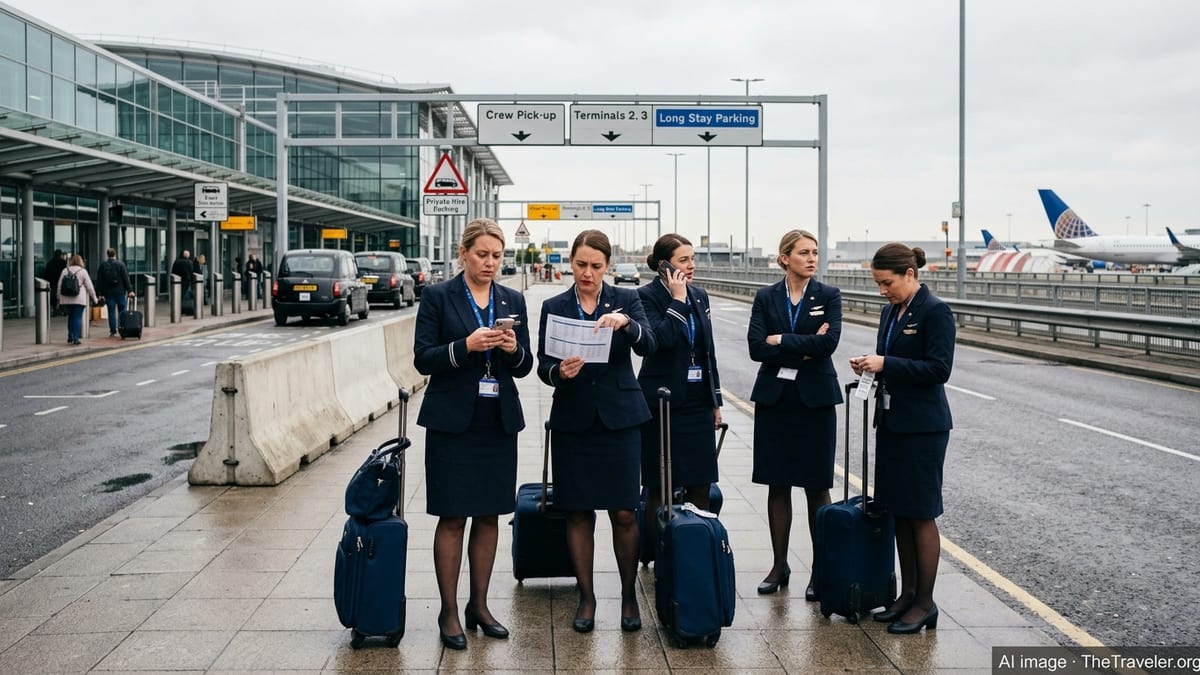
Confusion Highlights Strain in Transatlantic Crew Operations
Reports emerging from recent coverage of United Airlines operations describe confusion surrounding accommodation and ground transfers for crews passing through London, a key hub for the carrier’s transatlantic network. While exact figures remain the subject of interpretation, publicly available information on union representation indicates that roughly 30,000 flight attendants at United are watching developments in London as a bellwether for how the airline handles wider crew logistics.
London is one of United’s busiest international gateways, linking major U.S. hubs with Heathrow on a dense schedule of daily flights. When hotel allocations or airport transfers do not run smoothly, the disruption can quickly affect multiple flight rotations, placing additional pressure on duty-time limits and rest requirements that are central to aviation safety regulation in both the United Kingdom and the United States.
Published labor coverage notes that United’s flight attendants are already in a tense round of contract talks, with debates over compensation, scheduling and quality of life issues. Against that backdrop, any perceived breakdown in basic support services such as reliable hotel transfers in London can take on symbolic weight, fueling concerns that cost control is being prioritized over day-to-day working conditions.
Industry analysts note that London-based disruptions can be particularly complex because they often require coordination between U.S. corporate teams, UK-based suppliers, and airport services governed by British rules. Miscommunication anywhere in that chain can quickly cascade into missed shuttles, uneven hotel assignments and confusion over which vendor is responsible for getting crews to and from Heathrow.
Union Pressure Builds as Attendants Seek Better Support
Coverage of ongoing contract negotiations between United Airlines and the Association of Flight Attendants, which represents tens of thousands of crew members at the carrier, suggests that the London situation feeds into a broader narrative of underinvestment in frontline staff. Reports indicate that union leaders have repeatedly highlighted unpaid or undercompensated time, rising out-of-pocket expenses and stress caused by irregular operations.
In that context, a transfer mix-up in a high-profile market like London may be seen less as an isolated logistics issue and more as an example of systemic strain. When ground transport fails to appear or hotel information changes with little notice, attendants can be left waiting after long-haul flights, unsure which bus, car service or desk will handle their onward arrangements. These delays can cut into mandated rest windows, raising questions about fatigue and operational reliability.
Publicly available commentary from labor advocates emphasizes that crew members are often the last to receive timely information when plans change. If a contracted transport provider in London alters schedules, or if hotel allocations are rebooked due to late-running flights, updates may not filter quickly enough through scheduling systems to reach the crew. That lag increases the likelihood of groups of attendants arriving curbside to discover no vehicle waiting, or arriving at a hotel where rooms have not yet been correctly assigned.
Union representatives have framed such incidents as evidence that better technology integration and clearer accountability are needed. The London case, widely discussed among flight attendants online, underscores the importance of giving crews more direct visibility into their transport and accommodation details, rather than relying solely on opaque back-end coordination between vendors and airline departments.
Regulatory and Contractual Context in the UK and US
The apparent mix-up also throws a spotlight on the regulatory and contractual framework governing crew treatment on both sides of the Atlantic. In the United Kingdom, rest and duty regulations intersect with local employment and transportation rules, especially when crews overnight regularly at particular hotels near Heathrow. In the United States, federal regulations and union contracts set minimum rest periods and define how irregular operations should be handled.
When transfers falter in London, scheduling teams must ensure that any delays do not reduce rest below contractual and regulatory minima. If crews reach hotels later than planned because of transport confusion, adjustments may be needed to subsequent report times or pairings to remain compliant. Observers note that the sheer number of United flight attendants cycling through long-haul pairings each month means even a modest failure rate in transport coordination can have outsized operational effects.
Legal and labor specialists following the airline industry point out that crew logistics, including hotel and transfer arrangements, frequently sit in a grey area between hard contractual rights and softer company policies. While contracts may mandate rest in hours, the quality and predictability of that rest often depend on how effectively the airline manages vendors. The London disruption has therefore renewed debate over whether future agreements should spell out more detailed standards for ground handling of crews.
With negotiations continuing, labor commentators suggest that incidents like the London transfer confusion could influence bargaining priorities, pushing issues such as guaranteed transport reliability, faster reimbursement for any emergency expenses, and clearer escalation channels for crews when contracted services fail.
Impact on Passenger Experience and Brand Perception
Although the reported transfer mix-up centers on crew logistics, the ripple effects inevitably reach passengers. When flight attendants are delayed getting to hotels, lose rest time, or face stress at the end of long flights, that strain can reappear on subsequent segments, particularly if schedules are tight or pairings are re-crewed at short notice.
Travel industry observers note that United has invested heavily in its transatlantic product, marketing upgraded cabins, improved lounges and expanded schedules between the United States and the United Kingdom. However, those investments depend on crews arriving rested, informed and supported. Visible signs of disorganization around something as basic as a London airport transfer risk undercutting that message and reinforcing negative perceptions among frequent travelers.
Publicly available discussions in aviation forums and consumer coverage show that travelers are increasingly attuned to how airlines treat their staff. When complaints from flight attendants about logistical frustrations line up with operational hiccups seen by passengers, it can erode confidence in an airline’s ability to manage complex international operations.
Brand specialists argue that resolving issues like those reported in London is as much about perception as process. Demonstrably tightening coordination with ground vendors, improving communication tools for crews and showing that lessons have been learned may be key to convincing both attendants and customers that United can reliably manage a network stretching from U.S. hubs to major European gateways.
Calls for Modernized Crew Logistics Systems
The London situation has prompted renewed calls from industry commentators for airlines to modernize crew logistics systems, particularly on international routes where multiple vendors and legal regimes intersect. Many carriers, including United, rely on a patchwork of scheduling software, email notifications and third-party platforms to arrange hotels and ground transport for crews.
Technology analysts following the airline sector argue that integrating real-time data on flight status, hotel inventory and transport availability could significantly reduce the likelihood of large-scale mix-ups. Mobile applications that push live updates directly to crew devices, showing exact pick-up times, vehicle identifiers and hotel confirmations, are increasingly viewed as a baseline requirement rather than a luxury.
In the wake of the reported confusion in London, commentators also highlight the value of contingency planning. That includes clear protocols for when buses or shuttles fail to appear, guidelines for when attendants may arrange their own transport without fear of non-reimbursement, and rapid-response teams dedicated to resolving crew accommodation issues in major international cities.
For a carrier moving tens of thousands of flight attendants through global hubs, London included, the episode serves as a reminder that seemingly routine details like airport-to-hotel transfers can carry significant operational and reputational consequences. How United responds in refining its systems, vendors and communication practices is likely to be closely watched by crews across both the United Kingdom and the United States, as well as by travelers who depend on them.