

More news on this day
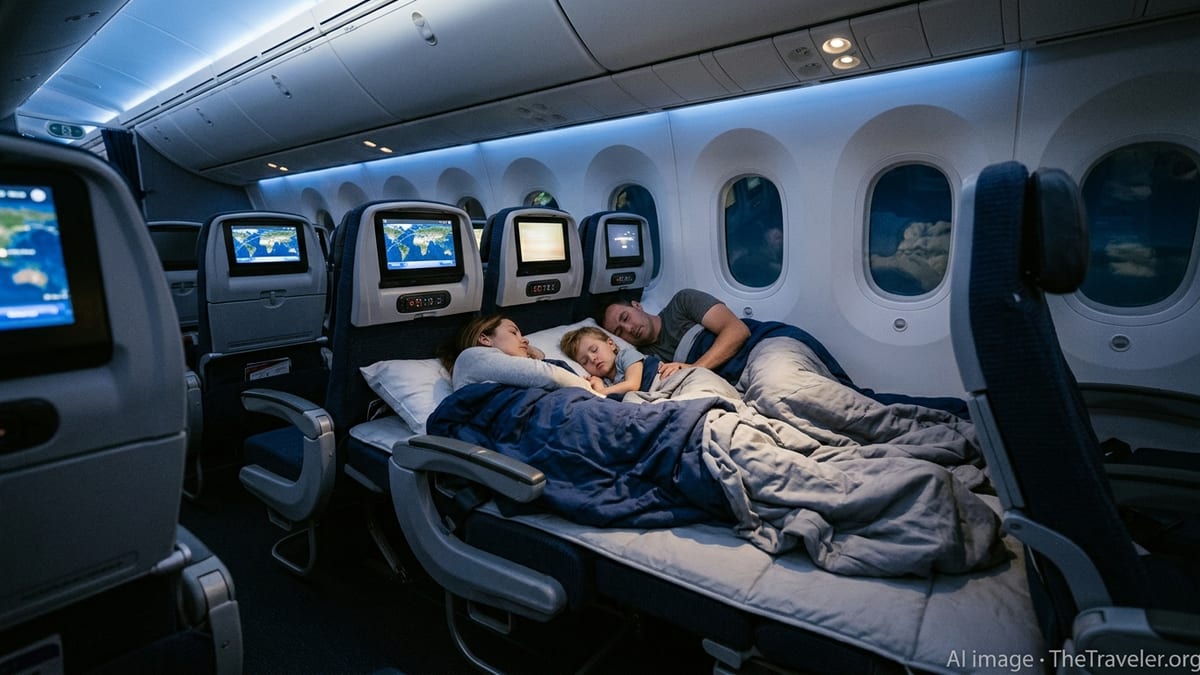
United Airlines is introducing an innovative Relax Row concept on select long-haul routes, a new seating option in economy designed to give travelers more space to stretch out, rest and work in a quieter, lower-density section of the cabin.
Get the latest news straight to your inbox!
A New Take on Comfort in the Economy Cabin
The Relax Row concept is positioned as an intermediate step between standard economy and United’s existing extra-legroom and premium economy products on long-haul flights. Publicly available information indicates that the airline is testing a more spacious configuration in designated rows, with a reduced number of seats, adjusted armrests and additional legroom to support more relaxed postures during overnight and ultra long-haul travel.
Reports indicate that Relax Row areas are located in targeted sections of the widebody cabin, often toward the front or rear of economy where noise and foot traffic are lower. The aim is to carve out a noticeably calmer environment without requiring travelers to upgrade all the way to premium economy or business class.
United has spent the past several years reshaping its long-haul experience, including refreshed interiors, upgraded seatback entertainment and enhanced connectivity. The Relax Row concept extends that strategy into the most price-sensitive part of the aircraft, broadening the airline’s portfolio of comfort-focused options for travelers who still wish to remain in the economy cabin.
While detailed fleet-by-fleet rollout plans have not been fully disclosed, early descriptions suggest that the Relax Row concept is being aligned with aircraft used on transatlantic and transpacific routes, where sleep, personal space and movement around the cabin are most valuable to passengers.
Design Features Focused on Space, Rest and Quiet
Relax Row layouts are described as using a lower-density seating plan compared with the rest of the economy cabin. That typically means fewer seats in a given block of rows, effectively increasing elbow room and creating more personal space at shoulder level. Combined with extra pitch, the configuration is intended to allow taller travelers to stretch their legs with less compromise.
Seatbacks in these rows are reported to integrate enhanced recline angles and improved cushioning, complementing the added legroom. Adjustable wings on headrests, along with upgraded pillows and lightweight blankets on longer flights, are designed to make it easier for passengers to adopt a more natural sleeping position during overnight sectors.
Lighting and acoustics also play a role. Relax Row sections are expected to take advantage of the latest long-haul cabin lighting systems already present on United’s widebody fleet, with softer, more gradual dimming during rest periods. Placement away from galleys and busy lavatory zones is intended to reduce ambient noise, footsteps and galley chatter, which can be disruptive during long flights.
United’s broader cabin modernization efforts, including large 4K seatback screens and expanded content libraries, are expected to extend into Relax Row areas where the hardware is already installed. That allows passengers in these rows to choose between a more restful environment and the option to watch films, work or listen to music with improved sound quality through personal devices.
How Relax Row Fits into United’s Long-Haul Strategy
United has been steadily layering new travel experiences across its cabins, from Polaris business class and Premium Plus premium economy to extra-legroom economy seating. Relax Row sits within that spectrum as a specialized configuration of economy that emphasizes space and quiet rather than full-service upgrades such as elevated catering or exclusive amenities.
According to published coverage of United’s recent cabin enhancements, the airline has invested heavily in reconfiguring its long-haul fleet, particularly Boeing 787 and 777 aircraft, to support a more consistent international product. The Relax Row concept leverages these aircraft layouts to carve out a niche for travelers who value a more restful experience but still want to remain close to standard economy pricing.
Industry observers note that airlines have been experimenting with flexible seating concepts designed for families, couples and solo travelers looking for additional comfort without paying business class fares. United’s Relax Row approach aligns with this wider trend, giving the carrier another differentiator on routes that see intense competition across the Atlantic and Pacific.
By incorporating Relax Row into its long-haul strategy, United can also fine-tune how it manages demand for different comfort levels. The airline can adjust the number of designated rows over time, depending on route performance, seasonality and customer response, allowing a more dynamic balance between standard and enhanced seating options.
Booking, Pricing and Target Routes
Early information suggests that Relax Row seating will be offered as a chargeable selection, similar in principle to extra-legroom or preferred seating options, with pricing that varies by route, aircraft type and booking demand. Travelers are expected to be able to select Relax Row seats during the booking process or later via the airline’s website or mobile app, subject to availability.
On busy long-haul routes, Relax Row fees are likely to reflect the added value of increased space and improved rest potential during overnight flights. On less congested services and shoulder-season itineraries, the incremental cost may be lower, giving more economy passengers the opportunity to try the concept without shifting travel budgets significantly.
Reports highlight that the concept is initially focused on intercontinental flights where passengers spend many hours in the air and are more likely to seek incremental comfort. Over time, the airline may expand Relax Row access to other long domestic or regional routes operated by widebody aircraft, particularly during peak holiday travel periods when demand for additional space in economy is strongest.
Travelers interested in Relax Row are advised by publicly available guidance to review seat maps carefully when booking, as these sections are limited in size and may sell out quickly on popular departure dates. Frequent flyers with elite status in the airline’s loyalty program may see tailored pricing or earlier access, depending on how the product is integrated into the broader seating and upgrade framework.
Implications for the Competitive Long-Haul Market
The launch of Relax Row underscores how competitive the long-haul market has become, particularly on routes linking major hubs in North America, Europe and Asia. Airlines across the industry are looking for ways to differentiate their economy cabins without sacrificing overall seat capacity or dramatically increasing ticket prices.
By carving out a more restful zone within economy, United adds another lever in its effort to attract travelers who might otherwise choose carriers with distinctive seating concepts or spacious premium cabins. The move also supports corporate travel buyers and leisure travelers who are increasingly segmenting budgets, purchasing a mix of standard and upgraded seats across their itineraries.
Analysts following the airline sector note that cabin innovations are often tested, refined and either expanded or scaled back based on traveler response and operational complexity. The performance of Relax Row on United’s long-haul routes will likely influence future decisions about cabin layouts, pricing strategies and ancillary revenue models for economy seating.
If the concept gains traction, it may encourage further experimentation with configurable zones inside the economy cabin, blending traditional seat classes with more tailored micro-products. For now, Relax Row represents a visible step in United Airlines’ broader push to transform the long-haul economy experience into something more flexible, rest-focused and adaptable to individual traveler needs.