

More news on this day
United Airlines flight attendants appear poised to vote on a new contract proposal after negotiators for the airline and the Association of Flight Attendants-CWA reached a fresh tentative agreement that aims to deliver industry-leading pay and quality-of-life improvements for more than 30,000 crew members.
Get the latest news straight to your inbox!
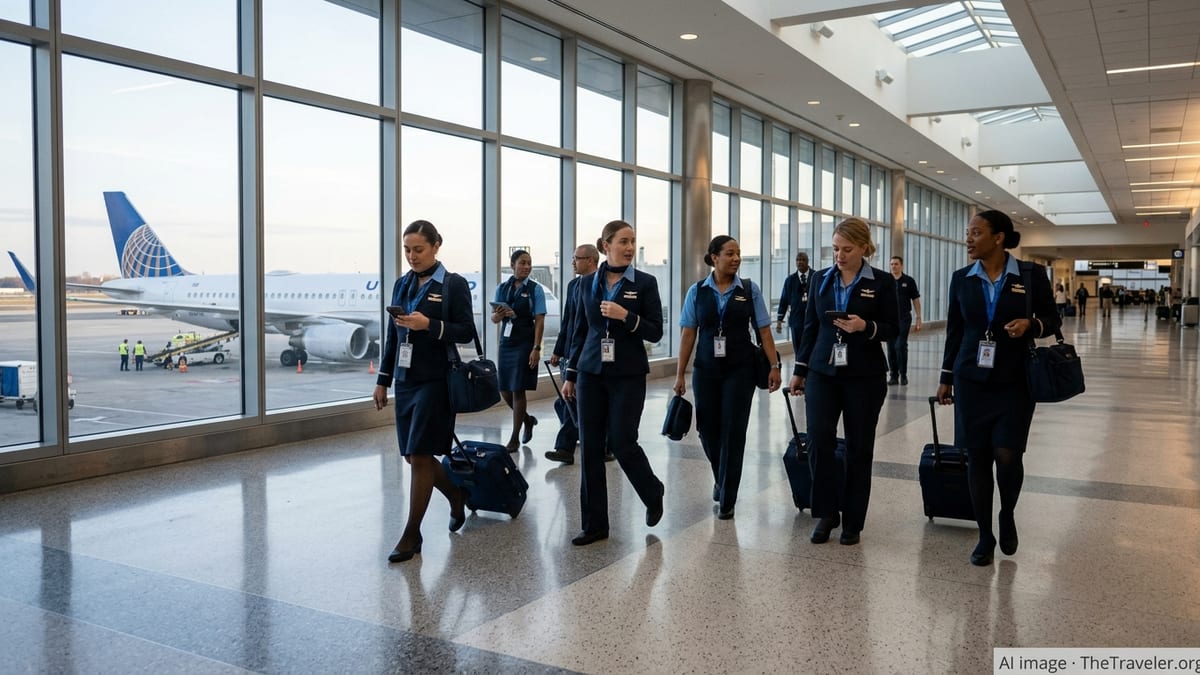
From Strike Authorization to a New Tentative Agreement
The latest breakthrough in negotiations caps a multi-year campaign by United Airlines flight attendants to secure a revamped labor agreement. Their current contract became amendable in August 2021, setting off a prolonged bargaining process marked by heightened labor actions and strike-preparedness efforts across the system.
Publicly available information shows that union members delivered an overwhelming strike-authorization vote in August 2024, signaling deep frustration with stagnant wages and scheduling rules as the airline expanded its international and domestic network. That vote, which did not automatically trigger a work stoppage under U.S. railway labor law procedures governing airlines, nonetheless increased pressure on management to move closer to union priorities at the bargaining table.
Negotiations produced a tentative agreement in 2025 that United and the Association of Flight Attendants (AFA) initially promoted as an industry-leading package. However, subsequent coverage and member communications indicated that rank-and-file flight attendants ultimately rejected that deal by a wide margin later that year, sending negotiators back into mediation to address pay progression, retroactive compensation and scheduling concerns.
The newly announced tentative agreement, reached in late March 2026, is being framed in union and company materials as a second attempt at a comprehensive contract overhaul that more closely reflects flight attendants’ expectations after years of high demand, full flights and inflation-driven cost-of-living pressures.
Key Economic Gains and Quality-of-Life Provisions
According to summaries circulated by United and the AFA, the new tentative agreement centers on higher base pay, additional premium structures and a mix of quality-of-life enhancements. Public documents from prior negotiation rounds already highlighted goals such as modernizing reserve rules, refining rest provisions and improving pay recognition for work formerly deemed unpaid or under-compensated.
Reports indicate that the latest proposal features wage increases designed to position United flight attendants at or near the top of the U.S. airline industry over the life of the contract. The package reportedly includes step-rate increases along the seniority scale, with an emphasis on accelerating earnings for mid-career and long-serving crewmembers who had argued that previous offers lagged behind settlements achieved by pilots and workers at competing carriers.
Quality-of-life changes are also a central selling point. Negotiation updates and investor filings in earlier phases pointed to improvements in scheduling flexibility, reserve requirements and trip construction. The current tentative agreement appears to build on those themes, with references to clearer rules around redeye flying, sit time between flights and protections for days off, all of which are critical to reducing fatigue and allowing for more predictable time at home.
In addition, publicly disclosed information suggests that a ratification bonus or other one-time payments are part of the economic framework, reflecting both the lengthy period since the prior contract became amendable and the intense workload flight attendants shouldered during the airline’s post-pandemic recovery and ongoing fleet and network expansion.
How the Voting Process Is Expected to Unfold
With a tentative agreement in hand, the focus now shifts to the internal union process and the timeline for a membership vote. Under AFA procedures, the United Master Executive Council, which is made up of local council presidents from bases across the network, is scheduled to review the agreement language at a special meeting in early April. Publicly available union updates indicate that this council will decide whether to send the tentative agreement out for a systemwide ratification ballot.
If the council approves, voting would be conducted electronically over several weeks, giving flight attendants time to examine contract book language, attend information sessions and review pay calculators and examples. Based on guidance shared in recent negotiation updates, a membership vote could take place in May, with results expected by mid to late May provided there are no procedural delays.
Union communications in past cycles have emphasized that once ballots are submitted they cannot be changed, which makes the education phase crucial. Negotiating committee members and local leaders typically host roadshows, virtual town halls and base visits to walk through key sections, answer questions about work rules and explain how proposed pay changes translate into monthly and annual income under different flying patterns.
Should the contract be ratified, implementation would roll out in phases. Preliminary timelines circulating among flight attendants suggest that headline pay increases and ratification bonuses could take effect first, followed by more complex scheduling and technology changes later in 2026 as crew systems are reprogrammed to reflect new rules. If flight attendants vote the agreement down again, negotiators would likely return to mediation with no guarantee of a rapid path to a third proposal.
Implications for United’s Network and the Wider Airline Industry
The outcome of this vote carries implications that reach far beyond United’s cabin crews. Labor costs are one of the airline’s largest expenses, and investor disclosures have already accounted for substantial potential outlays related to flight attendant retroactive pay and signing bonuses. A ratified contract would provide more certainty for long-term financial planning as United continues to receive new aircraft and add long-haul routes.
For travelers, a settled contract could reduce the risk of disruptive labor actions during peak travel periods. While U.S. law makes an immediate strike unlikely without a formal release from federal mediators, the high-profile strike-authorization vote and subsequent informational picketing campaigns have kept labor tensions in the public eye. A deal described in public materials as “industry-leading” would likely be viewed as a stabilizing development for customers watching the negotiations closely.
Across the airline industry, the United flight attendant agreement may also serve as a reference point for upcoming negotiations at other carriers. Contracts for pilots at several major U.S. airlines were recently reset with significant raises, and flight attendant groups at both mainline and regional airlines have been pushing for comparable gains, especially on issues such as boarding pay, duty-day limits and schedule flexibility.
If the United proposal secures strong support, it could strengthen bargaining positions for flight attendants at other airlines seeking similar economics and work-rule protections. Conversely, a second rejection would highlight ongoing dissatisfaction and could embolden union leaders elsewhere to resist deals they view as falling short of a new, higher standard for cabin crew contracts.
What This Means for Flight Attendants’ Day-to-Day Work
Beyond the headlines, the new tentative agreement has the potential to reshape daily life on the line for United’s flight attendants. Pay improvements would be immediately visible on paychecks, but many crewmembers are watching just as closely to see how the agreement handles schedule bidding, trip pairings and reserve obligations.
Negotiations materials have referenced efforts to modernize bidding tools and give flight attendants more influence over the kinds of trips they fly, whether that means long-haul international pairings, domestic turns or sequences that better align with childcare and commuting demands. Enhanced transparency around schedule construction could make it easier for crewmembers to plan their personal lives around consistent patterns rather than reacting to last-minute changes.
Adjustments to sit time, hotel rest and time between duty periods may also significantly affect fatigue levels, especially on demanding long-haul routes. Public information on the proposal suggests that these provisions, if implemented as described, are designed to bring United’s contract in line with or ahead of recent gains at other major airlines, where rest and recovery have become central bargaining themes.
For many flight attendants, the impending vote is therefore about more than headline wage percentages. It represents a decision on how their work will be valued, how predictable their schedules will become and how well the contract reflects the realities of flying in an era of high passenger volumes, evolving onboard service expectations and complex global operations.