

More news on this day
United Airlines is making targeted cuts to its 2026 flight schedule that are jolting some travelers, even as the carrier continues an aggressive expansion from major hubs such as Chicago O’Hare and Newark. For passengers planning spring and summer trips, the shifting map means fewer options on some routes, more choice on others, and a strong incentive to double-check itineraries before locking in plans.
Get the latest news straight to your inbox!
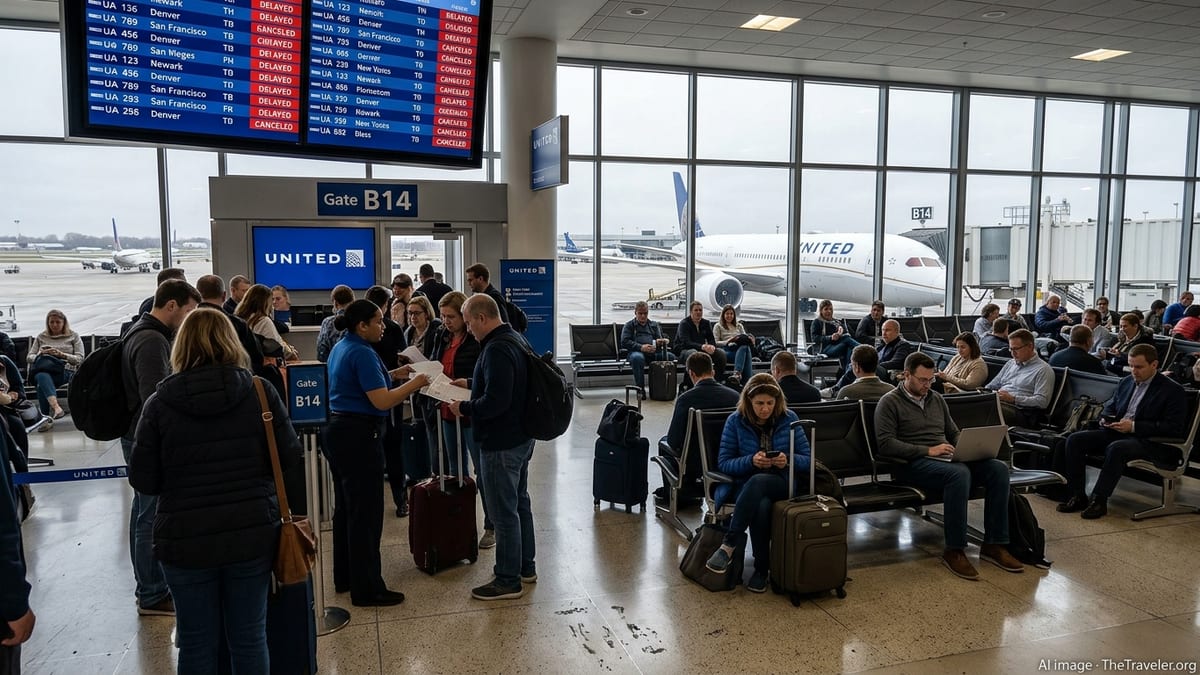
Where United Is Cutting Flights in 2026
Publicly available schedule data and recent industry coverage indicate that United has reduced or trimmed service to dozens of cities in the first half of 2026, effectively shaving about 1 percent from its overall planned schedule while still growing capacity in higher-demand markets. Reports highlight that some small and midsize destinations are seeing significantly fewer frequencies from United hubs compared with 2025, particularly from Newark Liberty International Airport and Chicago O’Hare.
On the transatlantic side, several European routes from Newark are seeing reduced weekly frequencies. Flights to Frankfurt are reported to fall from 11 to 8 per week, while daily services to Brussels and Edinburgh are being cut from two flights a day to one. These moves reduce duplicate flight times but keep nonstop links in place, concentrating demand into fewer departures.
Domestically, schedule reshuffles over the past year have already removed or pared back service on select West Coast and regional routes, especially from San Francisco and Los Angeles. Industry analyses describe United pulling back from underperforming spokes and reallocating aircraft to markets where demand and yields are stronger, a pattern that continues into 2026.
The upshot for travelers is that while outright destination losses are limited, many cities that once enjoyed multiple daily United departures to key hubs may now see fewer options, particularly at off-peak times or on traditionally weaker travel days.
Why United Says Cuts Are Necessary
According to recent coverage of United’s financial disclosures and executive commentary, the airline frames these schedule cuts as part of a broader optimization strategy rather than a retreat. The carrier has been clear in public statements that it is managing capacity to match demand more closely across its network, particularly after a period of rapid post-pandemic growth and infrastructure constraints at some major airports.
Air traffic control staffing issues and temporary government-directed schedule reductions have also shaped United’s planning. During 2025, the Federal Aviation Administration directed airlines, including United, to trim operations at certain high-traffic airports to relieve congestion and improve reliability. While many of those emergency cuts were temporary, they prompted carriers to reassess where limited slots and gates could deliver the best returns.
United has also been cycling older aircraft out of its fleet and redeploying newer, more efficient jets on long-haul and high-yield routes. That shift naturally favors bigger hubs and popular international destinations over thinner, lower-margin services, leading to visible cuts in some smaller or mid-tier markets even as overall capacity grows.
Taken together, these factors mean that United’s network is evolving away from broad, lightly used coverage toward fewer but fuller flights in markets where the airline sees the strongest long-term potential.
At the Same Time, Major Hubs Are Booming
Despite the headlines about cuts, publicly available information on United’s 2026 schedule paints a picture of expansion from key hubs. At Chicago O’Hare, United has announced a record-breaking summer operation, planning around 750 daily flights, which would make it the largest schedule ever flown by any carrier at the airport. Reports describe the build-up as a direct challenge to rivals and a signal that Chicago is becoming one of the airline’s most important global gateways.
Newark is also seeing growth, even with some transatlantic reductions. United continues to add new European destinations from the New York-area hub, including seasonal flights to cities such as Split in Croatia and additional points in Italy, Scotland, and Spain. While frequencies to long-established business markets like Frankfurt and Brussels are being trimmed, the overall number of destinations reachable nonstop from Newark is rising.
Elsewhere in the network, United is layering on new and resumed service from hubs including Denver and Houston to smaller U.S. cities, as well as launching additional long-haul flights to Latin America, the South Pacific, and Australia. Some regional airports that previously lost United service during earlier restructurings are slated to regain flights to Chicago in 2026, underscoring the carrier’s selective but significant growth.
For travelers, this contrast means that those starting in or connecting through major hubs will often see more choices and better connectivity than in past years, even as passengers in some smaller markets confront fewer nonstop options.
How These Changes Could Affect Your Next Trip
The most immediate impact for many passengers is schedule flexibility. With fewer daily departures on some routes, it may be harder to find flights that align perfectly with meeting times, cruise departures, or family events. Travelers who are used to choosing among multiple morning and evening options might now find only one or two departures that fit, especially from smaller airports.
Reduced frequencies can also narrow your options if a disruption occurs. When there are fewer flights each day between two cities, rebooking after a cancellation or major delay can take longer, and remaining seats on alternative departures may already be full. That makes it more important to build buffers into travel plans, especially when connecting to international long-haul flights or time-sensitive commitments.
On the other hand, the growth at hubs such as Chicago O’Hare and Newark may improve connection opportunities for many itineraries. More flights in and out of these mega-hubs, alongside new international destinations, can create additional one-stop options that did not exist before. For some travelers, that may actually shorten total travel time compared with older routing patterns.
Pricing may shift as well. In markets where United has cut frequencies but remains the dominant carrier, fewer seats could support higher average fares, particularly close to departure. Conversely, added capacity on new long-haul routes or competitive hub-to-hub corridors could lead to more fare sales and promotional offers as United seeks to fill additional seats.
What Travelers Should Do Now
With United’s network in flux, passengers planning trips later in 2026 may want to take a more proactive approach to booking and monitoring flights. Checking schedules early can reveal whether your usual nonstop still operates and whether departure times have shifted. In some cases, booking farther ahead can secure seats on the few remaining flights that best match your preferred timing.
Travelers who value flexibility may find it worthwhile to prioritize tickets that allow itinerary changes with minimal penalties, especially on routes seeing frequency cuts. Keeping a close eye on schedule updates through airline apps or email notifications can help catch time changes or equipment swaps well before departure.
For those starting from smaller or regional airports, it may be useful to compare itineraries that connect through different United hubs. A route that once relied on a single daily connection through Newark, for example, might now work better via Chicago or Denver given the carrier’s build-up of flights there.
Ultimately, United’s mix of flight cuts and expansion reflects a broader trend in the airline industry, where carriers are concentrating resources on their strongest hubs and most profitable routes. For travelers, that reality means paying closer attention to the fine print of schedules, being ready to adjust plans when networks shift, and taking advantage of new routes and added frequencies when they open up fresh possibilities for future trips.