

More news on this day
Growing security bottlenecks and staffing strains at U.S. airports during the latest government shutdown are rippling across major carriers, with United Airlines now joining Delta Air Lines, JetBlue and Alaska Airlines in facing mounting disruption, stranded passengers and fresh questions over how resilient the nation’s air travel system really is.
Get the latest news straight to your inbox!
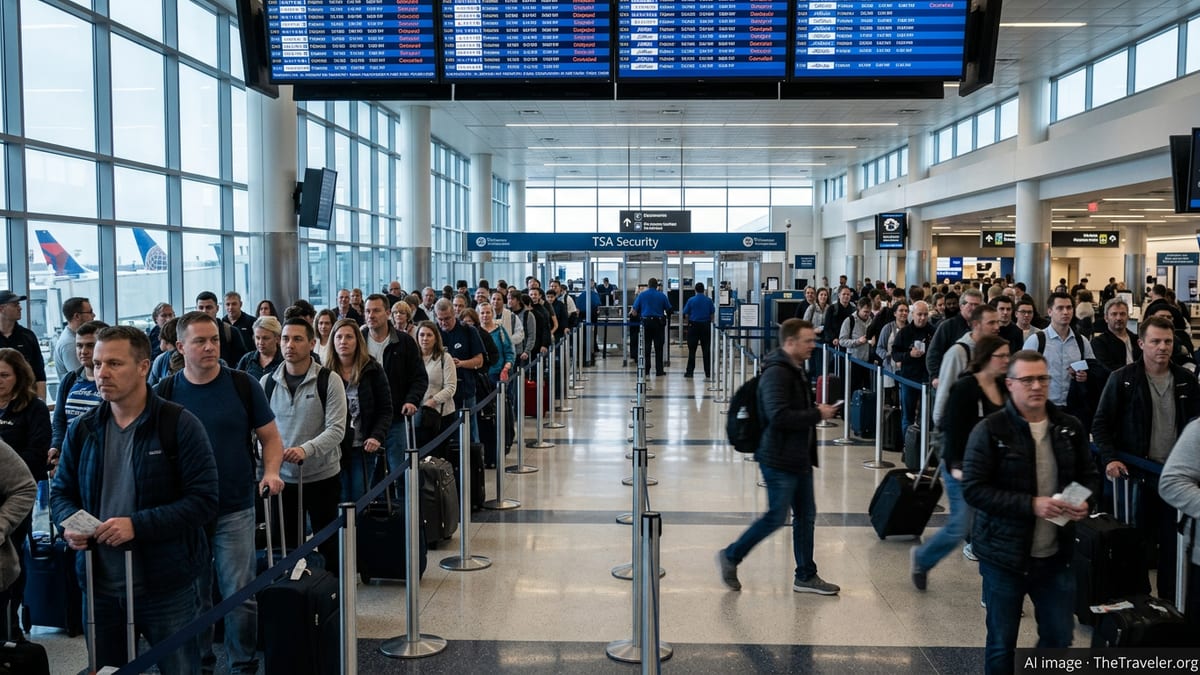
Shutdown Fallout Spills Into Peak Spring Travel
The Department of Homeland Security has been operating without full funding since February, leaving tens of thousands of Transportation Security Administration officers working without timely pay while passenger volumes climb into the spring break peak. Publicly available information shows that more TSA employees are taking unscheduled leave or seeking second jobs, eroding staffing levels at some of the country’s busiest hubs just as crowds swell.
Reports from airports including Houston, New Orleans and Orlando describe security wait times stretching well beyond an hour, with lines at times reaching into ticketing halls and parking structures. While such extreme conditions are not yet universal, travelers are increasingly warned that the impact of the shutdown is uneven and can change quickly from one airport, or even one time of day, to another.
Industry analysts note that air travel systems are highly sensitive to bottlenecks at checkpoints. Even moderate slowdowns at TSA lanes can push passengers to miss boarding cutoffs, which in turn leads to last minute rebooking, aircraft departing with baggage offloads, and knock-on delays that cascade through afternoon and evening schedules.
The current shutdown follows a series of funding standoffs in late 2025 and early 2026, and travel groups are warning that repeated disruptions are undermining confidence among both domestic and international visitors. Trade associations representing airlines and tourism businesses have called for longer term budget stability to insulate critical aviation functions from partisan disputes.
United, Delta, JetBlue and Alaska Face New Operational Pressures
Although TSA operates security screening and federal air traffic control, the immediate pain is showing up on airline departure boards. United, Delta, JetBlue and Alaska have all contended in recent months with separate technology and operational issues, and the shutdown-linked security turbulence is adding another layer of complexity to already tight schedules.
United Airlines, which dealt with a significant system outage last August that briefly grounded flights at major hubs, is now managing additional delays tied to passengers arriving late from extended security queues and ground handling stretched by rolling schedule changes. Travelers posting on forums dedicated to the airline describe missed connections, long rebooking lines and difficulty getting timely information when security conditions deteriorate rapidly.
Delta Air Lines has spent the past two years rebuilding reliability after a widely reported technology failure in 2024, and its leadership has repeatedly highlighted investments in operations control and staffing. Even so, recent shutdown coverage indicates that Delta’s flights have been affected when airport partners such as TSA and the Federal Aviation Administration reduce capacity for safety reasons during periods of short staffing.
JetBlue and Alaska Airlines, both of which have also experienced major technology outages over the last year, are seeing their coastal and transcontinental networks collide with the most stressed security checkpoints. At some West Coast airports, travelers report clearing security relatively quickly, while at others they encounter lines that add more than two hours to total journey time. For smaller stations with fewer daily departures, a single delayed TSA shift can disrupt the bulk of the day’s flying.
Passengers Stranded as Security Bottlenecks Trigger Missed Flights
For passengers, the most visible symptom of the crisis is a familiar one: being stuck. Social media posts and traveler accounts describe families arriving at airports two to three hours before departure and still watching flights push back without them. In some cases, carriers have been able to rebook travelers on later departures the same day, but heavily booked spring schedules mean that others are facing overnight stays or rerouting through distant hubs.
Travelers also face confusion over where responsibility lies when a flight is missed because of lengthy TSA lines. The latest Department of Transportation guidance on airline customer service makes clear that many forms of compensation, such as meal vouchers or hotel rooms, are typically reserved for disruptions within the carrier’s control, such as mechanical problems or crew issues. When the root cause is labeled as national aviation system or security related, travelers often receive fewer guaranteed protections.
Complicating matters further, the impact of TSA staffing shortages can be highly localized. Reports indicate that some major hubs are still processing passengers efficiently, particularly at times when extra lanes are open or supplemental staff are reassigned from quieter terminals. Others, especially where cost of living pressures are high or where vacancy rates were elevated before the shutdown, appear more vulnerable to callouts and fatigue among remaining officers.
As a result, travel advisers are urging passengers to treat recent experiences at one airport as an unreliable predictor of what they will find at another. Some airports that moved early to cross-train staff or deploy canines at checkpoints seem to be managing throughput more effectively, while others are relying on ad hoc measures and temporary lane closures that can change by the hour.
Calls Grow for Structural Fixes to Shield Aviation From Shutdowns
The latest wave of disruption has revived a long running debate in Washington and across the aviation sector: whether essential travel infrastructure should be insulated from the federal budget cycle. Publicly available letters from airline chiefs and trade groups argue that aviation has become too central to the economy to be routinely exposed to funding lapses that interrupt pay for security officers and air traffic controllers.
Several proposals have resurfaced in policy discussions, including measures that would guarantee continued pay for critical safety and security personnel during funding gaps, and ideas to allow certain aviation fees to be walled off from broader political disputes. Commentators have also noted that some airports use private contractors for front line screening under TSA oversight, and those facilities have in some cases reported fewer shutdown related staffing shocks.
Unions representing aviation workers, including flight attendants and pilots, have for years highlighted the stress placed on crews when operational unpredictability rises. Extended duty days caused by rolling delays, heightened passenger frustration in crowded terminals and the emotional toll of working through periods of political uncertainty are all cited as factors that can erode safety margins if left unaddressed.
Travel industry associations warn that the reputational impact of highly publicized shutdown travel problems often outlasts the immediate crisis. International visitors, in particular, may perceive the United States as a less reliable destination if they repeatedly encounter headlines about airport chaos, even if their own flights proceed smoothly.
What Travelers Can Expect in the Coming Days
With the shutdown still unresolved as of mid March, aviation analysts caution that conditions could worsen before they improve, especially if TSA officers continue to face delayed or partial paychecks. Historical patterns from earlier funding lapses suggest that unscheduled absences may increase over time as employees juggle rent, child care and transportation costs without a predictable income stream.
Travel experts are advising passengers to build in additional time at the airport, particularly at known pinch points such as Houston, New Orleans and major Florida and Southern California gateways popular with spring break travelers. Checking checkpoint status through airport apps, when available, and monitoring airline notifications closely can help reduce the risk of missing flights as conditions shift.
Airlines including United, Delta, JetBlue and Alaska are emphasizing digital tools for rebooking when disruptions occur, encouraging customers to use mobile apps rather than lining up at crowded airport counters. However, when a large number of flights are affected by the same security bottleneck, same day alternatives can be scarce.
For now, the outlook hinges on developments far from the departure hall. Unless lawmakers reach an agreement to restore full funding to the agencies that keep aviation moving, travelers are likely to see continued pockets of severe congestion and sporadic flight disruptions. The growing entanglement of government funding battles and air travel is turning what was once an occasional annoyance into a recurring risk factor for anyone flying within or to the United States.