

More news on this day
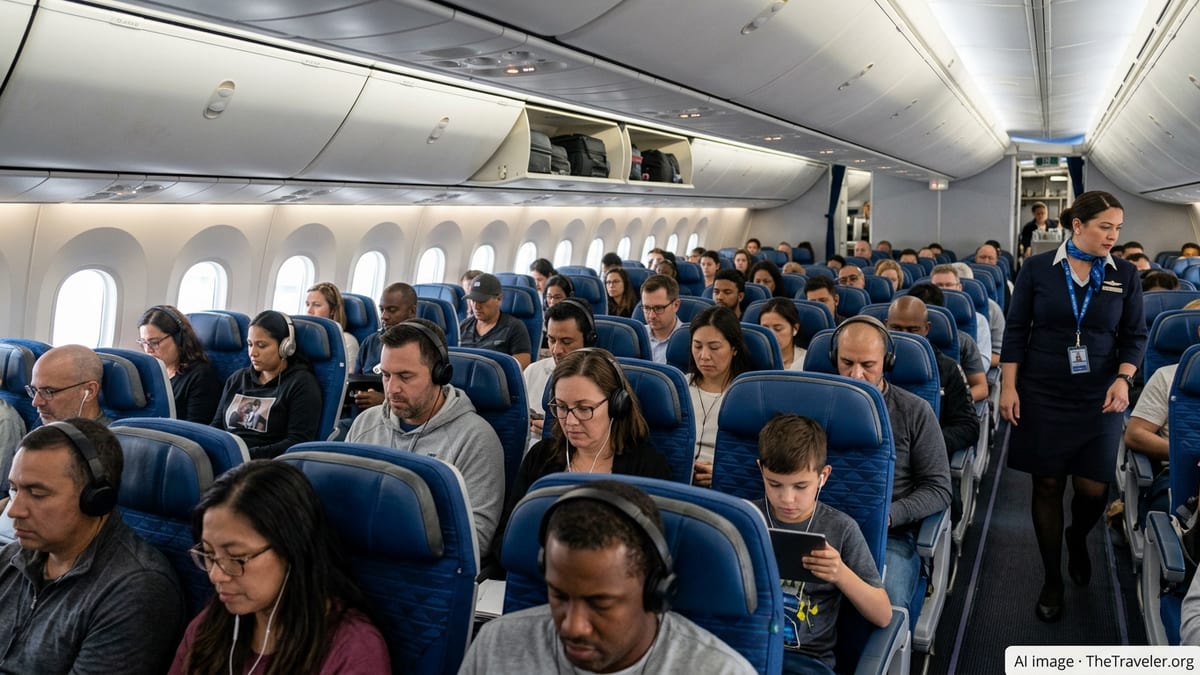
United Airlines has quietly rewritten its rulebook to crack down on one of air travel’s biggest etiquette complaints, formally giving staff the power to remove or even ban passengers who play audio or video over speakers without using headphones.
What Changed in United’s Contract of Carriage
The new policy appears in United’s contract of carriage, the legally binding agreement every customer accepts when buying a ticket. Updated on February 27, 2026, the document now lists failure to use headphones while listening to audio or watching video as a specific reason the airline may refuse to transport a passenger.
The clause has been added to Rule 21, under the “Refusal of Transport” safety section, as a new item allowing United to deny boarding, remove someone from a flight, or bar them from future travel if they do not comply. It moves what used to be a matter of courtesy into black-and-white policy, on the same page as rules covering disruptive behavior, indecent conduct and refusal to follow crew instructions.
United’s contract also states that passengers whose conduct causes the airline “loss, damage or expense” may be required to reimburse those costs. In practice, that provision has long applied to situations such as diversions or damaged equipment. Now, it clearly encompasses cases where a headphone dispute escalates into a more serious onboard incident.
The headphone requirement sits alongside a recently clarified prohibition on in-flight voice and video calls after the aircraft doors are closed, signaling a broader push by United to reduce noise and friction inside the cabin.
How the Headphone Rule Will Be Enforced
United already encouraged travelers to use headphones when enjoying entertainment on their own devices or on the airline’s seatback systems. The difference now is that cabin crew can point directly to a contract clause when asking a passenger to put headphones on or mute their device, and can escalate to removal if the person refuses.
Industry reports indicate that enforcement will follow a stepped approach: a reminder to use headphones, a clear warning that the rule is part of the contract of carriage, and, if noncompliance continues or the situation becomes heated, possible removal from the flight. In extreme or repeated cases, United reserves the right to issue a temporary or permanent ban from the airline.
Travelers who genuinely forget or misplace their headphones are unlikely to be treated as defiant rulebreakers. United states that basic wired earbuds are available on board at no charge when supplies allow, giving crew a practical way to help passengers comply. The policy is chiefly aimed at those who refuse to lower the volume or continue using device speakers after being asked to stop.
Experts note that, like other conduct rules, final discretion rests with the captain and cabin crew. Their assessment of whether a passenger’s refusal is causing disruption or safety concerns will guide whether the rule is enforced with a warning, a seat change or removal from the flight.
What This Means for Travelers on Upcoming Flights
For most travelers, the new rule simply formalizes what they are already doing. The vast majority of passengers use headphones or earbuds for music, movies and social media, especially on longer flights. If you are among them, your routine will not change; the main difference is that the airline now has firmer backing to intervene when someone nearby does not follow suit.
Where passengers may notice a shift is in how quickly and decisively crew respond to loud, speaker-based audio. Flight attendants now have clearer authority to step in, which could reduce the awkwardness of relying on seatmates to confront each other over noise. In cabins where multiple people are streaming content at once, that may translate into a noticeably quieter environment.
Travelers should also expect headphone use to be treated like fastening a seat belt or stowing a bag: a standard part of following instructions. Ignoring a crew member’s request to plug in headphones or turn off external speakers can now be viewed as a refusal to comply with safety-related directions, which is taken seriously under federal regulations and airline policies alike.
Families traveling with children and groups sharing screens should prepare accordingly. Devices playing cartoons or games will need to be paired with child-size headphones or kept on mute, particularly once other passengers raise concerns or crew become aware of the noise.
How United Compares With Other Airlines
United is believed to be the first major United States carrier to explicitly write a headphone requirement into its contract of carriage. Other airlines, including Delta and Southwest, already encourage customers to use headphones and, in some cases, state that headphones are required when listening to audio, but those expectations typically appear in customer guidelines or inflight announcements rather than in enforceable contract language.
The distinction matters because contract terms give airlines more legal clarity when taking action against a disruptive passenger. By embedding the headphone rule in its refusal-of-transport section, United gains a clearer basis for decisions such as removing a traveler, issuing a travel ban or defending its actions if a dispute leads to a complaint or legal claim.
Industry analysts say the move could influence competitors to formalize their own audio policies, especially as in-flight connectivity and streaming become ubiquitous. As more travelers watch short-form video or scroll social feeds for entire flights, airlines are under pressure to balance entertainment with comfort in increasingly crowded cabins.
For now, however, policies remain a patchwork. Passengers who frequently switch between carriers should not assume that what is written into United’s contract appears elsewhere. It remains essential to follow onboard announcements and crew instructions on each airline, regardless of what is or is not spelled out in the fine print.
Tips for Staying on the Right Side of the Rule
With the new contract language now in effect, travelers can take a few simple steps to avoid running afoul of United’s headphone requirement. The most basic is to pack reliable wired or wireless headphones in an easily accessible pocket of your personal item or carry-on, rather than buried in a checked bag or at the bottom of a backpack.
Because battery life and connectivity can fail at inconvenient times, many frequent flyers recommend carrying a backup pair of inexpensive wired earbuds that can plug into both personal devices and seatback entertainment systems. This is particularly useful on older aircraft, international routes or when Bluetooth connectivity is unavailable or restricted.
Passengers using wireless earbuds should be prepared for brief periods when crew ask that Bluetooth be turned off, such as during certain safety-critical phases of flight on specific aircraft types. In those moments, the safest choice is to pause all audio rather than switching to external speakers. Once the crew indicates it is acceptable, travelers can reconnect and resume listening.
Ultimately, the rule reflects a broader expectation: that flying is a shared, communal experience, and that basic courtesy is now backed by enforceable policy. For United customers, that means packing headphones is no longer just a good idea; it is part of the conditions for getting from gate to gate.