

More news on this day
United Airlines has asked U.S. transportation regulators to block a planned Lagos to New York launch by United Nigeria Airlines via a Turkish wet-lease, arguing the Nigerian carrier’s use of the “United” name could mislead passengers and infringe on long-held trademarks.
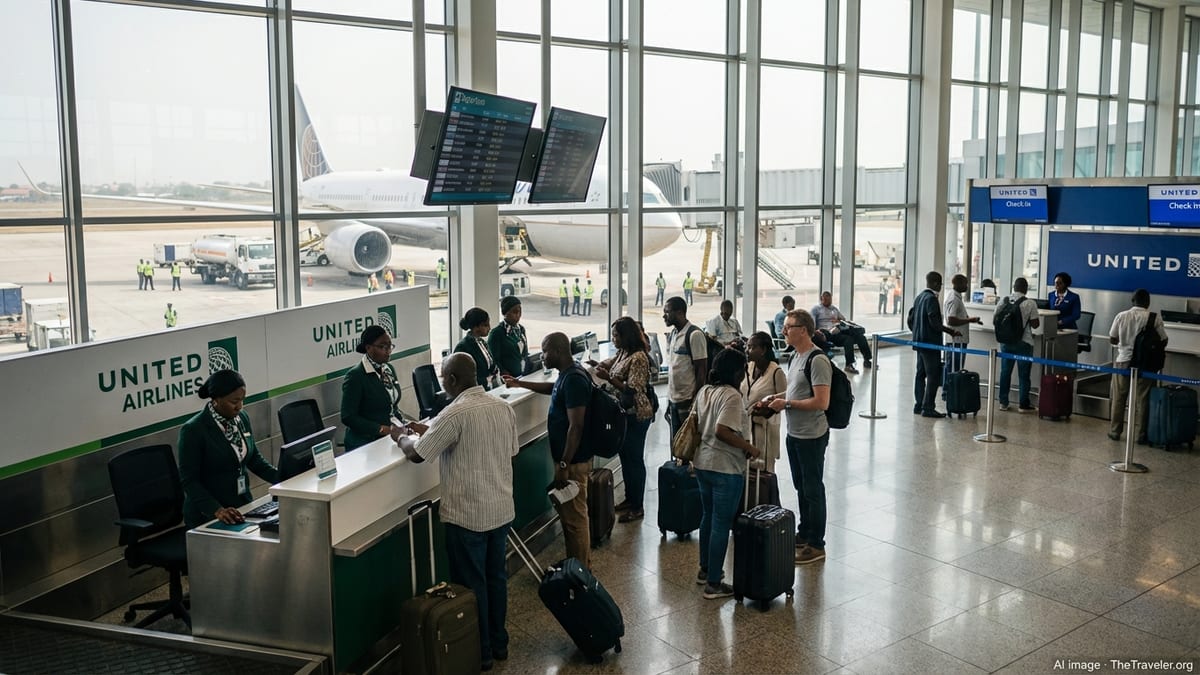
U.S. Filing Targets Planned Nigeria U.S. Service
In a recent filing with the U.S. Department of Transportation, Chicago based United Airlines urged officials to deny part of an application by Turkish carrier Air Anka that would support United Nigeria Airlines’ first foray into the U.S. market. Air Anka is seeking permission to operate to the United States and to wet-lease an Airbus A330 to United Nigeria for nonstop services between Nigeria and the U.S.
United Airlines told regulators it does not oppose Air Anka’s own U.S. Turkey operations but “strenuously objects” to the wet-lease arrangement tied to United Nigeria’s proposed Lagos New York flights. The U.S. carrier argues that allowing the service under United Nigeria’s current branding would trigger “misidentification, misunderstanding and deception” among travelers, particularly in an already competitive transatlantic market.
The filing puts a fresh spotlight on long-running tensions over brand identity in global aviation, as airlines from emerging markets push into lucrative intercontinental routes historically dominated by a handful of large North American and European players.
Trademark Dispute Reaches Across Borders
At the heart of United’s challenge is the claim that United Nigeria’s name infringes its trademarks in Nigeria and beyond. United Airlines says it has held registered trademarks for “United” and “United Airlines” in Nigeria since 2010 and has been locked in litigation in the country’s Federal High Court since 2021 in an effort to stop the local carrier from using what it views as a confusingly similar name.
United argues that confusion is not theoretical. In its DOT submission, the airline cites several alleged incidents in which the public, media or officials mistook United Nigeria for United Airlines. One episode involved a serious security breach in Nigeria, when a stowaway incident on a United Nigeria flight was initially reported as having occurred on a United Airlines service. The company also points to misdirected customer complaints and instances in which United Nigeria’s chief executive was incorrectly identified as United’s chief executive.
Such examples, the U.S. carrier contends, prove that coexistence of the brands on U.S. routes would heighten safety and reputational risks. United is asking regulators to consider those trademark and consumer protection issues as part of the economic authority process, even though the core legal dispute over the name itself is playing out in Nigerian courts.
United Nigeria’s Ambitions Meet Regulatory Headwinds
United Nigeria Airlines launched domestic operations in 2021 and has grown into a notable player within Nigeria’s aviation market, adding regional routes and pursuing international ambitions. The proposed wet-lease with Air Anka, using a widebody Airbus A330, represents its boldest step yet, offering the possibility of long haul services linking Lagos with New York for the first time under its own brand.
The carrier operates in a difficult environment. Nigerian airlines face volatile fuel prices, sharp currency swings, and infrastructure constraints that strain operating margins and complicate fleet expansion. United Nigeria has nevertheless invested in safety and operational standards, including achieving IATA Operational Safety Audit certification within its first few years of flying, a benchmark that signals compliance with internationally recognized safety practices.
Securing U.S. access would be a milestone for the privately owned airline and for Nigeria’s broader aviation ambitions, given past struggles to sustain a viable long haul flag carrier. The challenge from United Airlines, however, now adds a layer of uncertainty just as the Nigerian carrier seeks to transition from a domestic and regional operator into a long haul competitor.
Competitive Stakes in the Nigeria U.S. Corridor
The Nigeria U.S. market is currently served by United Airlines and Delta Air Lines, which operate nonstop services linking Lagos with Washington Dulles and Atlanta, alongside seasonal connections to New York during peak periods. Those routes cater to a substantial flow of business travelers, members of the Nigerian diaspora and an expanding leisure market.
A direct Lagos New York link marketed by a Nigerian carrier could reshape that landscape, potentially pressuring fares and offering passengers a locally branded alternative along one of West Africa’s most important long haul corridors. For United and Delta, additional competition on these routes would arrive at a time when both are investing heavily in transatlantic capacity and premium products.
United’s opposition therefore carries both legal and commercial dimensions. While the company frames its objections primarily in terms of trademark protection and consumer clarity, the outcome will also influence how quickly new entrants from Africa can chip away at entrenched incumbents on high value North America West Africa city pairs.
Implications for African Carriers Eyeing U.S. Routes
The dispute underscores a broader challenge for African airlines seeking to expand into North America: success increasingly depends not just on safety and financial strength, but also on branding choices that can withstand scrutiny in multiple legal jurisdictions. As Nigerian and other African carriers pursue wet-leases, partnerships and joint ventures to overcome fleet and capital constraints, the question of how their names and liveries interact with those of established global giants is coming under sharper focus.
For regulators, the case highlights the delicate line between aviation economic policy and intellectual property enforcement. Decisions on route authority and leasing approvals, once largely technical matters, now intersect with trademark law and consumer protection concerns that span borders. The outcome of United’s challenge could therefore set an informal precedent for how similar naming conflicts are weighed in future applications from emerging market airlines.
For travelers, the immediate impact will depend on how quickly the U.S. Department of Transportation rules and whether Air Anka and United Nigeria adjust their plans or branding to address the concerns raised. For now, the promise of a new Nigerian operated connection between Lagos and New York remains on hold, caught between an ambitious regional upstart and one of the world’s largest airlines determined to defend its name on both sides of the Atlantic.