

More news on this day
United Airlines has reached a new milestone in aviation history, with a veteran captain becoming the first woman to attain the highest seniority position on the carrier’s pilot list, a symbolic breakthrough in a profession that has long remained overwhelmingly male.
Get the latest news straight to your inbox!
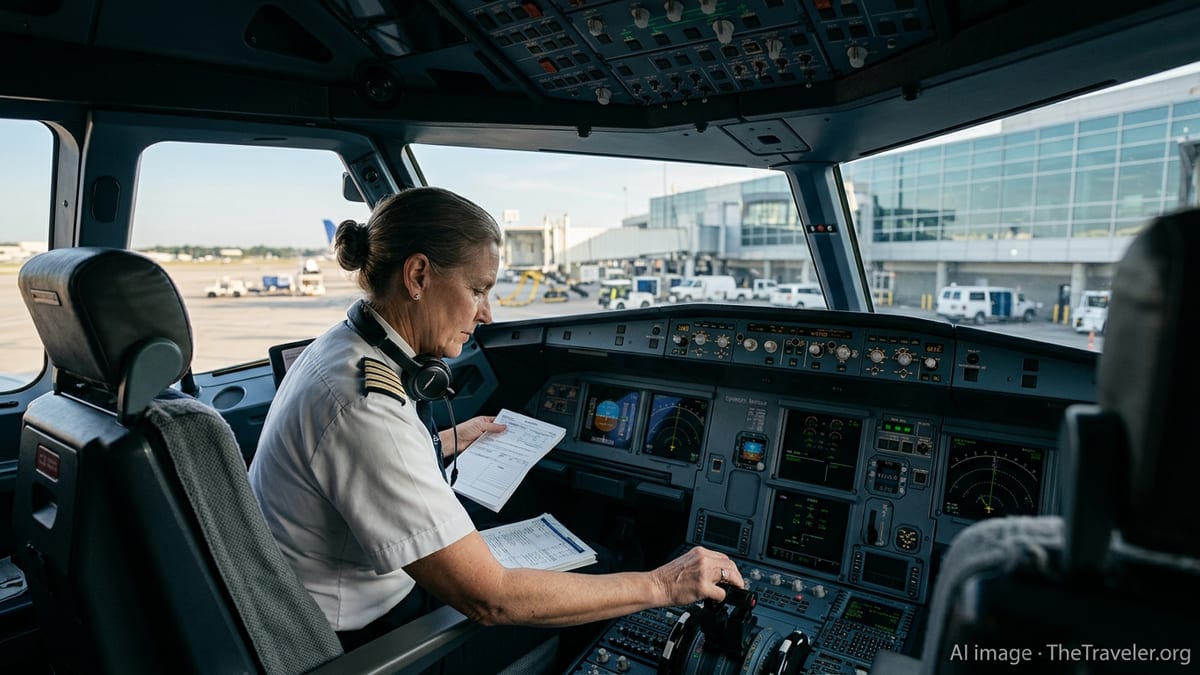
A Historic First in the United States Cockpit Ranks
The achievement is being noted across the U.S. aviation industry as a benchmark in gender representation among airline pilots. Publicly available information shows that women still account for only a small fraction of commercial flight deck crews worldwide, and even fewer occupy the most senior roles. Against that backdrop, United’s first female pilot to reach the top of the seniority list is being viewed as a notable shift in who holds the most coveted positions in the cockpit.
Seniority at major U.S. airlines is far more than a measure of tenure. It governs which aircraft a pilot flies, the routes they can bid for, the schedules they work and, over time, their earnings potential. Reaching the number one position on such a list typically reflects decades of service, consistent training and an absence of long career interruptions, all factors that have historically advantaged male pilots.
Reports indicate that the milestone at United comes at a time when carriers across the United States are working to broaden access to cockpit careers and address longstanding barriers for women and underrepresented groups. While individual pilot identities and personal details are subject to privacy and corporate policies, industry observers note that this seniority achievement underscores how earlier generations of women who joined legacy airlines in the 1970s and 1980s are now reaching the pinnacle of their careers.
The development resonates beyond one airline. In an industry where pilot career paths are largely locked in by the date of hire, a woman finally holding the very top seniority spot at a major U.S. carrier is being interpreted as further evidence that the demographics of the profession, although still skewed, are gradually changing.
Understanding Pilot Seniority and Why It Matters
At United Airlines, as at most large U.S. carriers, seniority is the backbone of a pilot’s professional life. Pilots are placed on a master seniority list by their date of hire, and that ranking follows them throughout their careers. Contract provisions define how that list determines bids for aircraft type, base location, line schedules and vacation, often down to fine details of monthly quality of life.
Published contract language for United pilots describes seniority as a pilot’s “relative seniority position on the United Pilot Seniority List,” a status that can shape nearly every major career decision. The most senior pilots typically gain the earliest access to widebody aircraft and long-haul international flying, choices that can bring higher pay rates as well as more control over time off. Reaching the top spot means that no other active pilot has greater bidding power.
The structure of such lists has historically made it difficult for women, who have often entered airline cockpits later and in smaller numbers, to rise to the very top. Career breaks related to family responsibilities or limited initial hiring opportunities have frequently slowed progression compared with male peers. The arrival of a woman at the apex of United’s seniority list suggests that some of the earliest cohorts of female hires at major U.S. airlines are now completing full-length careers at the same carriers.
Industry analyses of pilot pay and career progression also highlight how seniority interacts with collective bargaining agreements. With recent pilot contracts at large U.S. airlines emphasizing raises concentrated at the captain level and on larger aircraft, the financial gap between the most and least senior pilots has widened. A woman occupying the top seniority position therefore signals both symbolic and material gains in a field where representation at the highest earnings tiers has traditionally been limited.
Decades in the Making for Women Airline Pilots
The news from United Airlines arrives after more than half a century of incremental advances for women in the cockpit. Early breakthroughs included the first women hired as pilots by major U.S. airlines in the 1970s, followed by the first women captains of scheduled carriers and the first women to command widebody aircraft on long-haul routes. Each milestone chipped away at perceptions that commercial piloting was an exclusively male career.
Over the decades, United and other major airlines have seen trailblazing women join their pilot ranks, including some who became among the first female captains and among the first Black women to command large commercial aircraft. Publicly available biographical accounts describe how these pioneers moved from roles such as flight instructors or regional pilots into mainline cockpits, often facing both cultural and institutional resistance along the way.
Despite those advances, women have remained significantly underrepresented. Data regularly cited by professional organizations indicate that women still make up a low single-digit percentage of airline captains worldwide. In the United States, women have gradually appeared in positions such as check airmen, fleet leadership roles and union committee posts, but the most senior slots on company pilot lists have remained dominated by men until now.
The fact that a woman has now reached the very top of United’s seniority structure is being interpreted by industry commentators as a generational turning point. It reflects pilot hiring trends dating back several decades, when airlines began recruiting women in larger numbers, and shows how those early hires are now concluding long careers with maximum seniority and influence.
Diversity Efforts and the Future Pilot Pipeline
The milestone also intersects with broader efforts by United Airlines and other carriers to diversify the future pilot pipeline. Publicly available information on United’s training initiatives describes a goal of training thousands of new aviators by 2030, with an explicit target that half of those trainees be women or people of color. The airline’s dedicated pilot academy in Arizona is one example of how large carriers are attempting to reshape who has access to flight training.
These initiatives are unfolding at a time when the industry is confronting concerns about long-term pilot supply. As record numbers of pilots hired in past decades approach mandatory retirement age, airlines are working to attract new entrants who may not have previously seen themselves represented in the cockpit. The visibility of a woman at the top of United’s seniority list is likely to be cited by advocates as a tangible symbol of what is possible for new recruits.
Industry commentators point to the importance of role models in technical professions, noting that young people often evaluate potential careers based on who they see already occupying those roles. When the most senior pilot at a major U.S. airline is a woman, it can send a powerful signal to aspiring aviators that airline cockpits are open to them, regardless of gender.
At the same time, analysts caution that one historic appointment does not mean that structural challenges have been resolved. Barriers such as the high cost of flight training, limited access to financing and ongoing work-life balance pressures remain significant concerns for many would-be pilots. The progression of more women into leadership positions, including the highest seniority ranks, is likely to remain a focus as the industry debates how best to widen the pilot pipeline.
Industry Impact and Symbolism Beyond United
The first female pilot to reach United’s top seniority position is attracting attention beyond the airline’s own workforce. Aviation commentators and trade publications in the United States are framing the development as part of a broader narrative of change, connecting it to the achievements of women commanding large aircraft at carriers around the world and to ongoing efforts to boost diversity across aviation.
For many observers, the symbolism is multilayered. On one level, the event highlights the career longevity and technical proficiency required to reach such a seniority rank. On another, it underscores the slow but measurable progress of women in an area of aviation that has historically lagged behind ground-based technical fields in gender representation.
The milestone may also influence how other airlines present their own progress. As carriers seek to attract both customers and employees who value inclusion, visible examples of women in top cockpit positions can serve as tangible evidence of changing corporate cultures. Published coverage already shows airlines highlighting achievements such as the first women to captain specific aircraft types or to lead all-female flight crews, part of a broader trend of using representation milestones to signal modernity and openness.
Within the United States, where the aviation sector remains a significant employer and a critical element of the broader travel industry, the rise of a woman to the top seniority spot at United Airlines offers a new reference point. It illustrates how long-term shifts in hiring, training and workplace policies can eventually reshape even the most tradition-bound hierarchies, and it suggests that future seniority lists across the industry may look different from those of the past.