

More news on this day
United Airlines has reached a landmark tentative labor agreement with the union representing about 30,000 flight attendants, a deal that promises industry-leading pay, new forms of compensation and quality-of-life improvements after years of contentious negotiations and strike threats.
Get the latest news straight to your inbox!
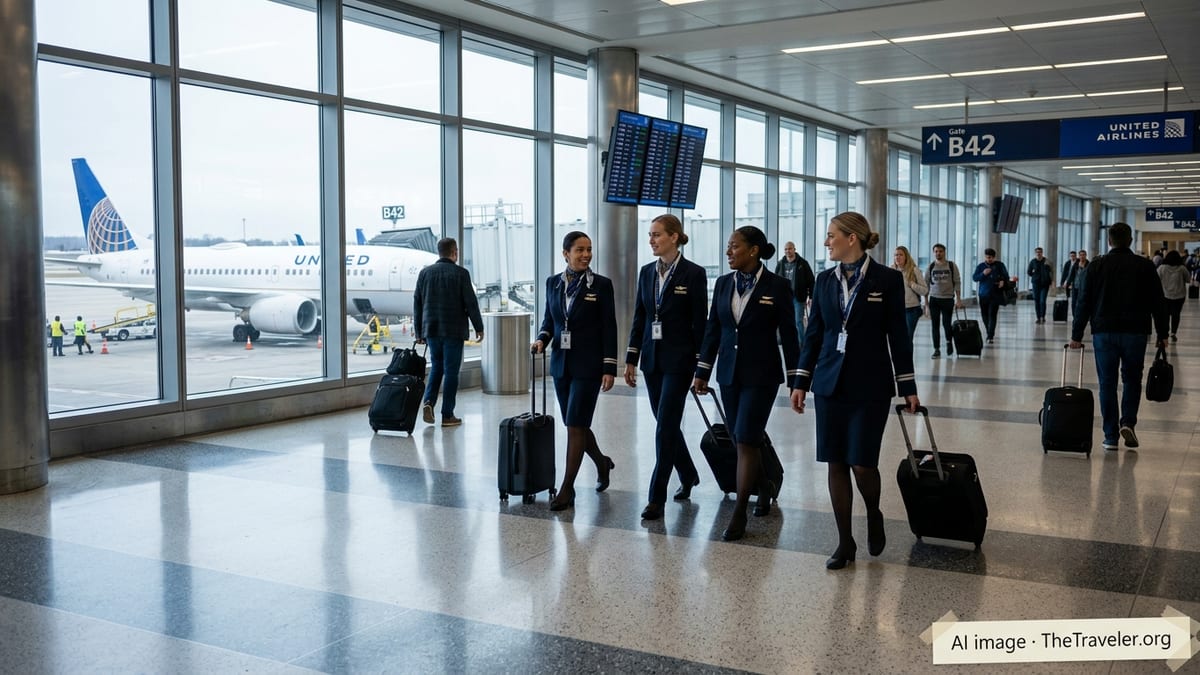
A Breakthrough After Years of Turbulent Talks
The tentative agreement, announced in late March 2026, follows a prolonged bargaining process between United Airlines and the Association of Flight Attendants-CWA. Publicly available information shows that negotiations stretched back to a contract that became amendable in 2021, with multiple rounds of mediation and sharp public campaigns by both the company and the union.
Reports indicate that the new deal arrives after flight attendants at United overwhelmingly authorized a strike in 2024 and later rejected at least one earlier tentative agreement. That sequence underscored deep frustration over pay, scheduling rules and retroactive compensation, and placed the carrier under increasing pressure to match the lucrative pilot contract it concluded earlier in the bargaining cycle.
According to published coverage summarizing the new accord, the latest agreement is described as "industry-leading" for cabin crew at a major U.S. airline. It is widely viewed as a major step toward labor stability at United, which has sought to grow its international and domestic network while facing recurring operational challenges and intense competition from rival carriers.
The deal remains subject to ratification by rank-and-file flight attendants. Until that vote is completed, it is formally classified as a tentative agreement, but analysts note that the scope of the wage and work-rule gains signals a serious effort to resolve some of the longest-running labor tensions on United’s front line.
Industry-Leading Pay and New Compensation Structures
Published summaries of the agreement indicate that United flight attendants would see immediate wage increases upon ratification, with top hourly rates scheduled to reach about 100 dollars by the end of the contract period. That threshold would place United cabin crew at or near the top of the U.S. airline industry pay scale and reflects a broader trend of sharply rising compensation in aviation following the pandemic travel rebound.
In addition to higher base pay, the agreement reportedly adds several new forms of compensation that flight attendants had sought for years. These include boarding pay, which compensates crew members for time spent on the aircraft before departure, and specific pay for lengthy gaps between flights. Such provisions address long-standing complaints that large portions of a duty day went unpaid despite requiring crew to remain available to the airline.
Reports further indicate the deal contains a substantial signing bonus package worth roughly 740 million dollars in total, to be shared among the 30,000 flight attendants. This one-time payment is intended to recognize years of work under an expired contract and to offset the absence of earlier pay increases while negotiations were under way.
Labor observers note that the combination of higher hourly rates, new paid categories of work time and a sizable signing bonus could meaningfully increase total annual earnings for many United flight attendants, particularly those with long service or complex schedules. The package also helps reset wage benchmarks that other flight attendant groups across the industry will likely reference in their own talks.
Scheduling Protections Aim to Improve Life on the Road
Beyond pay, a central goal of the negotiations was to improve scheduling rules, reserve practices and overall work-life balance. Public information about the tentative agreement indicates that it introduces or strengthens protections around long ground holds, extensive sit times between flights and late-duty changes that can significantly disrupt rest and recovery for crew members.
Reports suggest that new or revised rules would limit how long flight attendants can be left in extended duty days without adequate compensation or rest, and that the added pay for long gaps between segments is designed to discourage overly fragmented schedules. These measures are seen as especially important at large hub airports where irregular operations can lead to cascading delays and last-minute reroutes.
The agreement also appears to continue efforts to modernize bidding systems that determine monthly schedules. According to prior negotiation updates made public by the union, both sides have been working toward systems that give flight attendants more flexibility in prioritizing days off, preferred routes and time-of-day patterns. The new deal is expected to build on those initiatives, though specific implementation timelines will depend on ratification and subsequent joint work between the airline and the union.
For many flight attendants, improvements in predictability and rest can be as significant as wage increases. Analysts note that airlines increasingly recognize that fatigue, burnout and high turnover among front-line crews carry both safety and operational risks, particularly during peak travel seasons.
What the Deal Means for Travelers
For passengers, the most visible impact of the tentative agreement may be what does not happen. The strike authorization vote in 2024 and the rejection of previous deals had raised the prospect of labor disruptions at one of the world’s largest carriers. A ratified contract would significantly reduce the immediate risk of job actions that could upend flight schedules.
Travel industry commentators suggest that a more stable relationship between United and its flight attendants could translate into smoother operations during busy periods, including summer holidays and year-end travel peaks. With crew pay and scheduling issues moving toward resolution, the airline may be better positioned to focus on network planning, fleet upgrades and airport experience improvements that affect customers directly.
The agreement’s emphasis on compensating long ground times and irregular operations may also indirectly benefit travelers. When airlines face financial incentives to reduce extended delays and better manage crew time, they often invest more in contingency planning, staffing buffers and communication tools that improve the handling of weather events or air traffic constraints.
At the same time, higher labor costs can put upward pressure on fares over the long term, especially in markets where there is limited competition. Some analysts expect United and other carriers facing richer labor contracts to rely on a mix of modest fare increases, higher ancillary revenue and continued focus on operational efficiency to protect profitability.
A New Benchmark in Airline Labor Relations
The tentative deal at United marks one of the final major flight attendant contracts to be updated in a recent wave of aviation labor agreements in the United States. Other large carriers have already concluded new arrangements with their cabin crews and pilots, setting a pattern of significant wage increases and enhanced work rules across the sector.
According to publicly available union communications, the United agreement is framed as part of a broader strategy to restore so-called leapfrog bargaining, in which one group secures an industry-leading standard that others then seek to surpass. By reaching a package presented as setting a new bar for flight attendant pay, the United deal could influence ongoing or future talks at smaller or regional airlines.
For United, the accord caps a years-long process that began with a contract becoming amendable in 2021, a near-unanimous strike authorization, and multiple phases of mediation and membership votes. The pathway included at least one prior tentative agreement that flight attendants rejected by a wide margin, signaling that incremental adjustments would not be sufficient to resolve the dispute.
While the ratification vote will determine whether this latest agreement becomes a binding contract, the scope and framing of the deal already represent a significant moment in U.S. airline labor relations. For millions of travelers who rely on United’s global network, the outcome could help shape the reliability and experience of their journeys for years to come.