

More news on this day
United Airlines has moved to quieten its cabins by formally requiring passengers to use headphones for any personal audio or video, a policy change that gives flight crews clearer authority to remove or even ban travelers who refuse to comply.
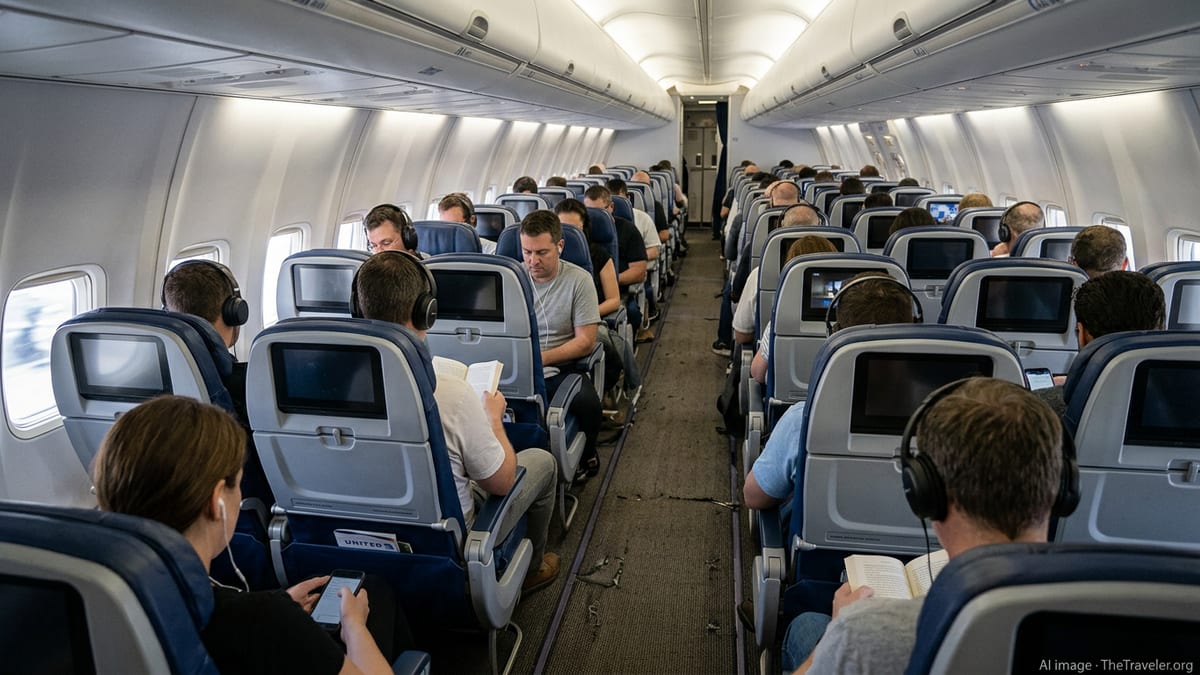
Headphone Rule Added to United’s Contract of Carriage
The Chicago based carrier quietly updated its contract of carriage on February 27, 2026, inserting a new clause in Rule 21, the section that governs when the airline can refuse transport to a passenger. The language specifies that customers who fail to use headphones while listening to audio or video content may be denied boarding or removed from a flight.
United has long encouraged travelers to keep sound to themselves, reminding customers in its onboard Wi Fi rules to use headphones for movies, music and games. The decision to elevate that guidance into the formal refusal of transport policy marks a shift from etiquette to enforceable condition of carriage, putting disruptive noise in the same category as refusing crew instructions or violating no smoking rules.
Under the revised policy, portable electronic devices that emit sound may be used only with headphones or earbuds, and even then only if the audio cannot be heard by other passengers. The new wording effectively bans listening through device speakers anywhere in the cabin, regardless of cabin class or seat location.
United has not announced a specific start date for active enforcement, but the contract update means the requirement applies across its network, from short domestic hops to long haul international services.
From Courtesy to Consequences for Noncompliant Flyers
By writing the headphone rule into its contract, United has given crews an explicit basis to act when passengers refuse to quiet their devices. The clause allows the airline to refuse transportation on a one time or permanent basis for travelers who will not use headphones when asked, placing the behavior alongside other grounds for bans such as physical assault or repeated disruptive conduct.
Cabin crew have long relied on softer tools to manage noise, from friendly reminders to discreet seat swaps for disturbed passengers. In practice, the new rule provides a stronger backstop in situations where a traveler insists on playing a video, podcast or music through speakers, despite multiple warnings. It signals institutional support for flight attendants who choose to escalate a case to removal when a customer will not comply.
Industry observers note that the vast majority of passengers already use headphones voluntarily, and that serious confrontations over speaker audio remain relatively rare. United’s move is less about punishing the many than about targeting a small number of high impact offenders whose behavior can sour the experience for an entire cabin.
The airline has indicated that decisions about removal or bans will still rest with crew and security teams, who are expected to weigh the overall situation, passenger behavior and the potential impact on safety and order onboard.
Passenger Reactions Highlight Growing Focus on Cabin Etiquette
The rule change has sparked energetic debate among travelers, frequent flyer communities and etiquette experts, many of whom say the policy simply codifies what should already be common courtesy in a confined space. Supporters argue that blasting a video on a phone or tablet can be just as intrusive as loud conversation, especially on overnight or long haul flights where rest is at a premium.
On social media and travel forums, many passengers have welcomed the update as long overdue, pointing to crowded cabins where competing audio from multiple devices often layers over engine noise and in flight announcements. For them, a clear requirement, backed by the possibility of removal, represents a concrete step toward more civil shared spaces in the sky.
Critics, however, raise concerns about uneven enforcement and the potential for conflicts to escalate when headphones fail mid flight or when a traveler briefly takes a call during boarding. Disability advocates have also called for clear guidance on how the rule will interact with assistive listening devices, and whether exceptions will be made for passengers who rely on specific audio equipment.
United has not released detailed public guidance on exemptions, but the contract language focuses on audible disturbance rather than the specific type of device, suggesting that crew discretion will be central in edge cases such as low volume speaker use for brief safety or medical needs.
Aligning With Broader Efforts to Reduce Noise and Disruption
The headphone mandate dovetails with a wider industry shift toward managing disruptive behavior and reducing sensory overload in aircraft cabins. United’s refusal of transport section also addresses barefoot passengers, post departure phone and video calls, and violations of the no smoking and vaping rules, reflecting a rising emphasis on maintaining a predictable, low conflict environment during flight.
Airlines have seen a surge of complaints in recent years tied to onboard behavior, ranging from seat reclining disputes to arguments over armrests and personal space. Noise has emerged as a particularly common trigger, as more travelers rely on streaming media and personal devices to pass the time. By directly targeting open speaker use, United is betting that it can head off a subset of these conflicts before they begin.
The new policy also comes as the carrier invests in upgraded in flight entertainment and audio experiences, including partnerships aimed at improving sound quality and reducing listening fatigue. Encouraging, and now requiring, passengers to contain their own device audio fits neatly alongside efforts to shape a calmer, more controlled sonic environment overall.
Airport communities and regulators have increasingly highlighted noise impacts on both travelers and staff, noting that prolonged exposure to high volume environments can contribute to stress and fatigue. Within that context, cabin level policies such as United’s headphone rule are likely to be watched closely by other carriers weighing similar steps.
What Travelers Should Expect on Upcoming Flights
For most United customers, the practical impact of the policy will be straightforward: carry and use headphones or earbuds whenever watching or listening to content on a personal device, and keep the volume low enough that seatmates cannot hear it. Travelers who rely on their phone speakers for accessibility or communication reasons may want to speak with crew proactively to find workable accommodations.
Passengers can still expect the first response to uncovered speakers to be a polite reminder rather than immediate removal. Only if a traveler refuses to comply after being informed of the rule would more serious consequences, including denial of passage or a potential ban, come into play. The updated contract language primarily serves as a formal underpinning for those rare escalated scenarios.
Travelers planning upcoming trips with United may wish to add a pair of wired or wireless headphones to their carry on checklist, alongside chargers and travel documents. On full flights in particular, having a reliable way to keep audio private is now not only considerate but contractually required.
As airline cabins grow busier and more digitally connected, United’s tightened headphone policy underscores an emerging reality of modern air travel: personal entertainment is welcome at 35,000 feet, so long as it does not become everyone else’s soundtrack.