

More news on this day
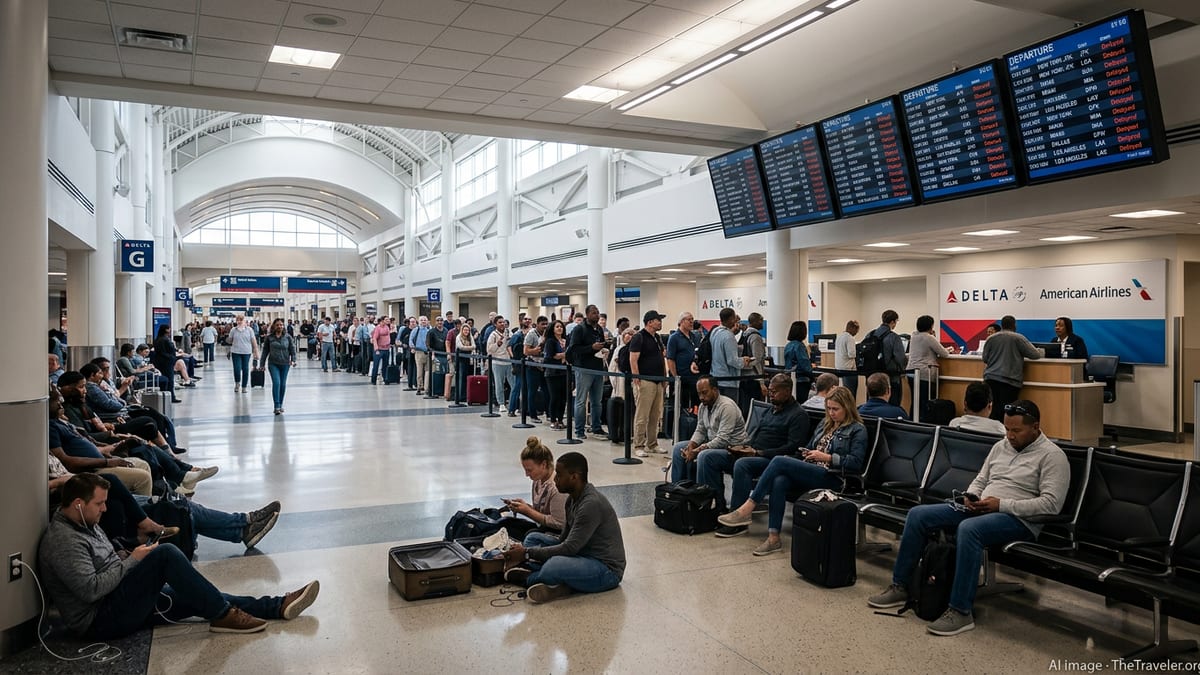
United Airlines passengers across the United States are confronting a turbulent start to April as hundreds of flights are canceled and more than 2,000 delayed, creating widespread disruption at major hubs and secondary airports alike.
Get the latest news straight to your inbox!
Wave of Disruptions Hits United’s Core Hubs
Publicly available flight-tracking data and airline scheduling information indicate that United’s latest disruption is centered on its largest hubs, including Chicago O’Hare, Denver, Houston Intercontinental, Newark Liberty and Washington Dulles. Operational data show that cancellations and rolling delays at these airports are feeding into the carrier’s broader network, quickly amplifying the scale of the disruption.
Reports from flight-status dashboards suggest that Chicago O’Hare is once again carrying a significant share of the strain. A combination of early April thunderstorms, traffic management initiatives and congested airspace in the Upper Midwest has led to dense clusters of late departures and missed arrival slots. These schedule gaps are then propagating across onward connections to the East and West Coasts, magnifying the impact for connecting passengers.
At Newark and Denver, delays are more heavily concentrated in peak bank periods when United schedules a high volume of departures to maximize connectivity. When even a small number of those flights are forced into holding patterns or pushed back at the gate, the knock-on effect across the following waves can be substantial, rapidly adding to the total of delayed and canceled services.
Although some airports show fewer outright cancellations, prolonged ground times and rolling gate changes are stretching crew and aircraft availability. This results in aircraft and pilots being out of position for later departures, contributing to the overall tally of more than 2,000 delayed flights linked to United’s operation.
Weather, Congested Airspace and System Strain Converge
The latest bout of turmoil for United comes amid a broader period of instability across the U.S. aviation system. Recent coverage of major storms and a historic March blizzard describes thousands of delays and cancellations nationwide, affecting multiple large carriers on several days in March and early April. Within that environment, United’s hub-and-spoke model has proven particularly sensitive to overlapping weather and traffic management constraints.
Thunderstorms and rapidly changing conditions in and around Chicago, the Mid-Atlantic and the Northeast have triggered a series of air traffic control initiatives in recent days. Measures such as ground delay programs, reroutes and reduced arrival rates, particularly at complex airports, cut into the margin that airlines rely on to keep tightly timed schedules running. For an airline like United, which banks many of its flights to facilitate connections, these constraints can quickly translate into missed slots and cascading delays.
Runway and airspace limitations at key airports add another layer of pressure. Recent reports on reduced arrival capacity at busy coastal hubs and temporary ground stops in the Washington and Baltimore region illustrate how safety-driven restrictions ripple through the system. Even when United is not the only airline affected at a given airport, high exposure at that location can turn a regional constraint into a systemwide headache.
The combined effect is a fragile operating environment in which a single day of severe storms or airspace restrictions can leave airlines with little room to recover. For United, that means a disruption pattern characterized by hundreds of cancellations concentrated in specific windows, alongside thousands of delayed flights that leave passengers facing extended waits, missed connections and unplanned overnight stays.
Passengers Face Long Lines, Missed Connections and Limited Options
For travelers, the statistics translate into a familiar set of frustrations: long check-in and security queues, crowded rebooking counters and hours spent refreshing flight-status pages. With more than 2,000 United flights delayed, passengers connecting through major hubs are especially vulnerable, as a delay of even an hour on an inbound leg can wipe out carefully planned transfer windows.
Published accounts of recent disruption days across the United States show that missed connections are a major driver of passenger stress and added expense. Travelers who budgeted tight layovers are finding themselves rebooked on later flights, sometimes a full day or more after their original itineraries. In heavily impacted hubs, hotel availability near airports can quickly become constrained, increasing costs for stranded passengers.
Travel guidance from aviation and consumer outlets consistently recommends that passengers maintain documentation of delays or cancellations, including written notices from airlines and timestamped boarding passes or app screenshots. This paper trail can be useful when seeking reimbursements for meals and accommodations or when contesting rebooking fees.
In the short term, publicly available travel advisories suggest that those with flexibility may wish to adjust itineraries away from the most affected hubs or avoid tight same-day connections. Several recent travel-waiver announcements linked to storms and regional disruptions show airlines, including United, offering fee-free changes during defined windows, though conditions and eligibility vary case by case.
United Under Scrutiny Amid Wider Industry Disruptions
United’s latest operational problems are unfolding against a backdrop of heightened attention to airline reliability in the United States. Recent analyses of industrywide disruption, including technology outages and storm-driven cancellations at multiple carriers, have highlighted how quickly modern airline networks can unravel when a key system or major hub is compromised.
Previous high-profile disruption events at U.S. airlines have prompted increased scrutiny from consumer advocates and regulators regarding how carriers prepare for and manage large-scale irregular operations. Publicly available government reports and policy proposals focus on transparency around causes of delays, passenger notification standards and the responsibilities airlines bear when disruptions are considered avoidable rather than purely weather-related.
For United, repeated episodes of large-scale cancellations and delays risk eroding consumer confidence, especially among business travelers and frequent flyers who depend on tight schedules. While severe weather and air traffic control constraints are often contributing factors, passengers tend to assess airlines on the basis of how quickly and clearly they communicate, how efficiently they rebook disrupted trips and whether they provide reasonable care during long waits.
Industry commentary suggests that, in the wake of major meltdowns at several carriers over the past few years, travelers are becoming more attuned to operational track records when choosing flights. Metrics such as on-time performance, cancellation rates and recovery speed after storms or system outages are increasingly being used as informal benchmarks to compare airlines, including United, on reliability.
What Travelers Can Expect in the Coming Days
Looking ahead, operational patterns from recent disruption cycles indicate that the impact of United’s current wave of cancellations and delays may extend beyond the initial day of chaos. Aircraft and crews knocked off schedule typically require several rotation cycles to come back into balance, particularly in complex global networks that include long-haul flights and overnight layovers.
Travel data from past events suggest that even after headline cancellation numbers subside, elevated delay levels can persist for one or two additional days as airlines reposition aircraft and complete maintenance tasks that were deferred during the height of the disruption. For passengers, that can mean residual delays on flights that appear normal on the timetable but still bear the imprint of earlier irregular operations.
Travel planners and aviation analysts recommend that, during periods of heightened disruption, passengers consider scheduling longer connection times, opting for earlier departures in the day and monitoring airline apps closely for gate or time changes. In some cases, rerouting through less congested hubs or selecting nonstop flights, where available, can reduce exposure to cascading delays across multiple airports.
With spring travel demand climbing and weather patterns in the central and eastern United States remaining unsettled, further bouts of turbulence for airlines are possible. For United passengers, staying informed and building additional flexibility into travel plans may be the most practical defenses against a system that is currently showing clear signs of strain.