

More news on this day
Air travel in and out of Argentina came under fresh strain this week as more than 30 flights operated by United Airlines and low cost carrier Flybondi were cancelled, disrupting key domestic and international routes linking Buenos Aires, Córdoba, Bariloche, Iguazú, Houston and other major destinations.
Get the latest news straight to your inbox!
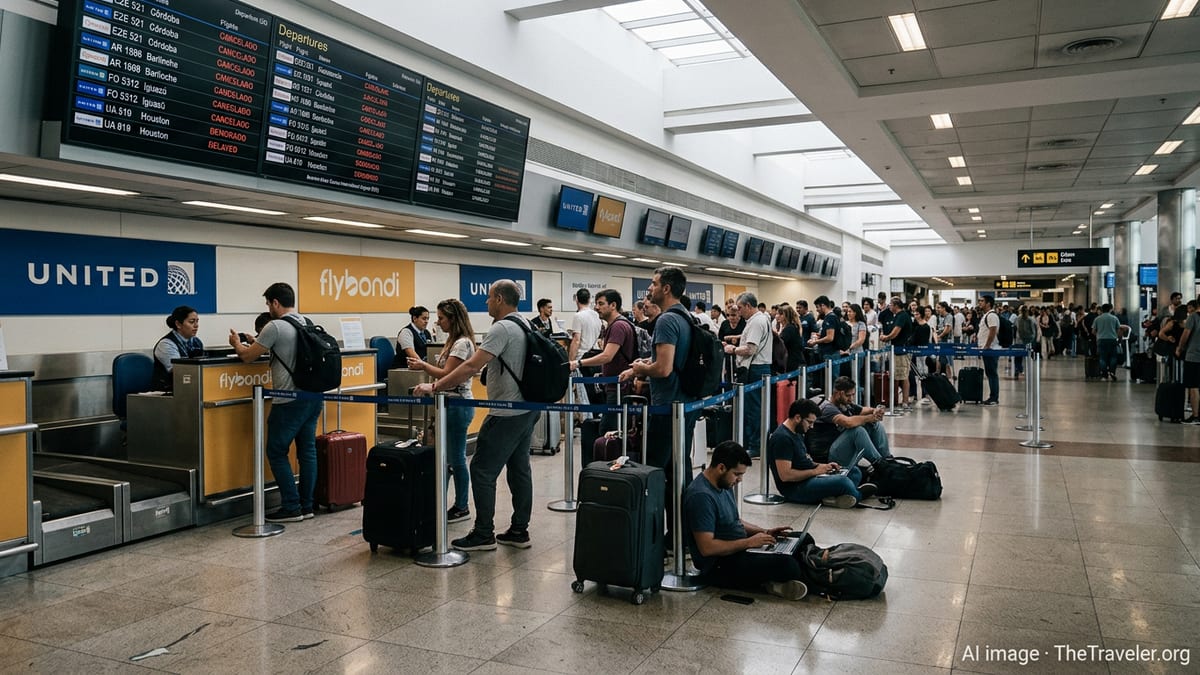
Widespread Cancellations Hit Key Domestic and International Routes
According to airport operations data and live flight-tracking services, Flybondi grounded a significant share of its morning and midday schedule from Buenos Aires, with cancellations and extended delays on services to Córdoba, San Carlos de Bariloche, Puerto Iguazú, Salta, Neuquén, San Juan and regional hubs such as Asunción. Multiple flights from Jorge Newbery Aeroparque and Ezeiza International Airport were either listed as cancelled or retimed by several hours, stranding passengers and compressing capacity on the remaining departures.
United Airlines operations were also affected on northbound and southbound services between Houston and Buenos Aires, with cancellations and schedule changes reported on select long haul segments. Travellers connecting through Houston to and from the United States reported missed onward connections and forced overnight stays as they scrambled to rebook on later flights or alternative routings via other gateways.
In total, more than 30 flights across the two carriers were either cancelled outright or subject to major retiming, adding a fresh wave of disruption to an already fragile air travel environment in Argentina, where recent strikes and operational issues have repeatedly upended plans for both domestic and international travellers.
The impact has been particularly acute for passengers heading to popular leisure destinations such as Bariloche and Iguazú, where limited daily frequencies mean a single cancellation can wipe out most of a day’s capacity and force travellers to cut short hotel stays, tours and pre-paid excursions.
Passengers Face Long Queues, Missed Connections and Limited Alternatives
At Buenos Aires’ Ezeiza International Airport, passengers on cancelled United and Flybondi services reported long queues at check-in and customer service counters, with some travellers waiting hours to obtain rebooking options or written confirmation of cancellations needed for insurance claims. With many flights close to full at the start of the southern hemisphere autumn travel period, same day alternatives were scarce on several domestic and international routes.
Travellers connecting from Argentina’s interior via Buenos Aires to long haul services, including those bound for Houston and other US hubs, were among the hardest hit. A cancelled leg from Córdoba, Bariloche or Iguazú into the capital often meant missing the onward international flight, leaving passengers scrambling to secure overnight accommodation and alternative routings just as hotels near the airport were filling up.
Some passengers reported being split across different flights or rerouted via other South American hubs as airlines worked to protect as many itineraries as possible with limited spare capacity. Others accepted extended layovers or downgraded cabin classes simply to ensure they could depart within 24 hours of their original schedule.
For domestic travellers, cancellations on trunk routes such as Buenos Aires to Córdoba, Bariloche and Iguazú forced many to turn to long distance buses or last minute tickets on rival carriers, often at significantly higher fares than originally paid. Travel agents in Buenos Aires and Córdoba described a surge in urgent rebooking requests as they tried to piece together new itineraries across multiple airlines.
Operational Strain and Broader Regional Disruptions
The latest wave of cancellations in Argentina comes against a backdrop of wider disruption across South America, where airlines have been grappling with tight fleet availability, high demand on leisure routes and lingering staffing constraints. Industry monitoring sites have recorded dozens of cancellations and hundreds of delays across the region in recent days, affecting carriers from low cost operators to full service international airlines.
Flybondi in particular has been under scrutiny from Argentine regulators over cancellations and schedule reliability after previous episodes left thousands of passengers stranded over key travel weekends. While the airline has announced ambitious growth plans for the 2025 to 2026 season, including record numbers of flights from Córdoba and expanded services to Bariloche and Iguazú, the latest disruptions highlight the ongoing challenges of sustaining punctual operations with a relatively small fleet.
United’s long haul schedule has also been operating with limited slack, meaning that any technical or operational issue on aircraft serving routes such as Houston to Buenos Aires can quickly cascade into cancellations or rolling delays. With flights often timed to feed complex transcontinental and domestic banks at its US hubs, a single cancellation can affect passengers well beyond those travelling solely between Argentina and the United States.
Aviation analysts note that the combination of tight capacity, strong demand for Argentina’s key tourist destinations and limited redundancy on some domestic sectors leaves the system especially vulnerable to disruption. When multiple carriers are affected on the same day, airports such as Ezeiza and Aeroparque can quickly become congested, compounding delays as ground handling and air traffic services struggle to cope.
What Affected Travelers Should Do Now
Passengers whose flights on United Airlines or Flybondi have been cancelled or significantly delayed are being urged to take proactive steps to protect their trips. Travellers are advised to check their flight status frequently through official airline channels, confirm whether they have been automatically rebooked and keep all documentation related to the disruption, including boarding passes, emails and receipts for meals or accommodation.
In many cases, airlines are offering free date changes or the option to reroute passengers to their final destination at no additional fare when space is available. Some affected travellers may also opt for travel vouchers or refunds instead of rebooking, particularly if the disruption has rendered their original itinerary unworkable due to missed tours, cruises or events.
For those with onward connections, especially on separate tickets, travel experts recommend contacting both the operating carrier and any other airlines involved as soon as a cancellation or major delay is confirmed. While protection on separate tickets is not guaranteed, some carriers will offer flexibility as a goodwill gesture when severe operational issues arise.
Travel insurance with coverage for trip interruption and missed connections can play a crucial role for passengers now facing unplanned hotel stays or the need to purchase last minute replacement flights. Policyholders should carefully review the terms of their coverage and notify their insurer as soon as possible, providing detailed records of extra expenses incurred due to the disruption.
Outlook for the Coming Days and Key Advice for Future Trips
Airport and airline officials in Argentina expect knock-on effects from this latest round of cancellations to linger for at least the next 24 to 48 hours as aircraft and crews gradually return to their assigned rotations. Peak departure waves from Buenos Aires to domestic leisure destinations and evening long haul departures to North America and Europe are likely to remain busy, increasing the risk of further minor delays even on flights that are operating as scheduled.
Travellers due to fly in the coming days are being encouraged to build extra time into connections, particularly when self-connecting between domestic and international flights or changing airports between Aeroparque and Ezeiza. Arriving earlier than usual at the airport, travelling with carry on baggage where possible and staying flexible about routing options can all increase the chances of reaching a destination on the intended day.
For future trips within Argentina, many travel advisers continue to recommend avoiding tight same day connections to long haul flights when using smaller carriers with lean fleets, and to consider booking longer layovers or overnight stays in Buenos Aires before major international departures. Choosing early morning flights, which are less exposed to the day’s accumulating delays, may also help reduce risk on key domestic segments.
As Argentina heads into another busy travel period with strong demand for destinations such as Bariloche, Iguazú and Córdoba, the latest disruptions on United and Flybondi underscore the importance of careful itinerary planning and real time monitoring of flight status. While most journeys will still operate close to schedule, the margin for error remains thin, making preparation and flexibility essential tools for anyone flying in and out of the country in the weeks ahead.