

More news on this day
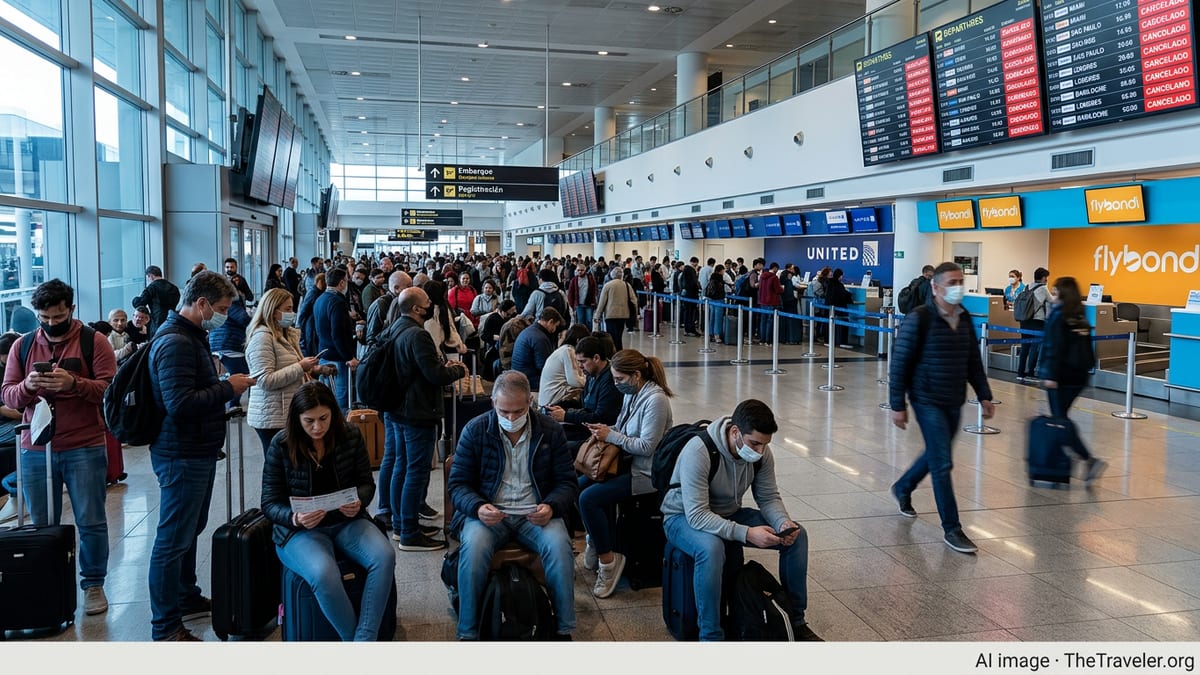
Travelers flying between the United States and Argentina, as well as across key domestic leisure routes, are facing a fresh wave of disruption after around 30 United Airlines and Flybondi flights were canceled or heavily rescheduled, impacting services in and out of Buenos Aires, Córdoba, Bariloche, Iguazú, Houston and other major cities.
Get the latest news straight to your inbox!
What We Know About the Latest Cancellations
The latest round of disruptions has unfolded as Argentina’s aviation network continues to grapple with operational strain, union actions and recurring timetable changes. Industry tracking sites and passenger reports indicate that roughly 30 flights involving United Airlines’ long-haul services and Flybondi’s domestic and regional operations have been canceled or significantly altered over recent days, snarling itineraries at some of the country’s busiest gateways.
The most affected corridors include domestic leisure routes between Buenos Aires, Córdoba, Bariloche and Iguazú, along with international services linking Buenos Aires and Houston. Passengers have reported last-minute notices, overnight delays and airport switches, particularly on Flybondi’s low-cost network, which already carries a reputation for higher-than-average cancellations and schedule changes.
While some flights have been proactively rescheduled to later dates or consolidated onto fewer departures, others were pulled from the schedule within hours of departure, leaving travelers scrambling for alternatives at peak travel times. Airlines have been rebooking customers where possible, but limited spare capacity across Argentina’s domestic market has heightened the knock-on effect.
Major Routes Hit: From Buenos Aires to Bariloche and Beyond
Domestically, the disruption is hitting many of Argentina’s marquee tourism links. Routes connecting Buenos Aires with Córdoba, San Carlos de Bariloche and Puerto Iguazú are among the most affected, according to passenger accounts and real-time flight monitoring services, with several departures outright canceled and others delayed far beyond their original times.
These routes are critical for both international visitors and local travelers heading to Patagonia’s lake district and to Iguazú Falls. Even a handful of cancellations can cascade through the system, as many itineraries rely on tight same-day connections between Buenos Aires and onward domestic flights. Travelers who arrived on time to connect to Bariloche or Iguazú have reported missed connections, last-minute rebookings and unexpected overnight stays.
Smaller secondary routes, including interprovincial services linking Córdoba with tourist hotspots such as Bariloche and Iguazú, have also seen sporadic cancellations. In some cases, passengers have been shifted to flights on other carriers or rerouted through Buenos Aires, adding significant travel time and uncertainty to what are normally straightforward domestic hops.
Transcontinental Impact on the Houston to Buenos Aires Corridor
United Airlines’ long-haul services between Houston and Buenos Aires have not been spared. Recent schedule changes and select cancellations on this corridor have forced some travelers to reroute through other North American hubs or modify their travel dates altogether. The Houston to Buenos Aires link is a key gateway for U.S. travelers heading not only to the Argentine capital but also onward to Patagonia, the northwest and Brazil.
The combination of long-haul changes and domestic cancellations has created a ripple effect. Passengers arriving from Houston and other U.S. cities have found that their originally booked same-day domestic connections on low-cost carriers were no longer operating. In practical terms, that has meant unplanned nights in Buenos Aires, reissued tickets at short notice and, for some, the loss of prepaid tours and hotel bookings in remote destinations.
Although United has been offering rebooking options and, in some cases, travel credits for severely disrupted itineraries, the lack of spare seats during busy travel periods has limited the options available on preferred dates. Travelers who booked separate tickets between the United States and their domestic legs are particularly exposed, as protection across carriers is not automatically guaranteed.
Why Argentina Flights Are So Vulnerable Right Now
The latest wave of cancellations comes against a backdrop of broader instability in Argentina’s aviation sector. Recent nationwide strikes, union actions and staffing disputes have repeatedly disrupted airport operations, at times bringing air travel close to a standstill and forcing carriers to compress or rearrange schedules at short notice.
Low-cost airlines such as Flybondi are especially sensitive to these shocks. With lean fleets and tight turnaround times, even minor operational issues or air traffic control constraints can lead to cascading delays and cancellations. Industry observers note that Flybondi already operates with a higher rate of last-minute schedule adjustments compared with legacy competitors, making it more vulnerable when labor unrest or weather problems hit busy hubs like Buenos Aires.
On the international side, long-haul carriers including United must also navigate shifting demand patterns, aircraft rotations and crew availability across multiple continents. When domestic disruptions in Argentina collide with operational challenges in North America, it increases the likelihood that certain flights are consolidated, retimed or dropped from the schedule altogether, especially on routes with seasonal demand swings.
What Affected Travelers Can Do Now
Passengers holding United Airlines tickets on the Houston to Buenos Aires route or other U.S. gateways should immediately verify their flight status through official airline channels and mobile apps before leaving for the airport. If a flight is canceled or significantly delayed, travelers may be entitled to rebooking on the next available service, refunds or travel credits, depending on the fare type and the nature of the disruption.
Those booked on Flybondi within Argentina should prepare for potential schedule shifts by building extra buffer time into their itineraries, especially when connecting to or from international flights. Checking departure airports and times repeatedly in the 24 hours before departure is essential, as some travelers have reported airport changes between Buenos Aires’ Aeroparque and Ezeiza, as well as altered departure times communicated late in the process.
For travelers already stranded in airports such as Buenos Aires, Córdoba, Bariloche or Iguazú, the immediate priority is to get written confirmation of the cancellation or lengthy delay from the airline’s counter or digital channels. This documentation can be crucial when seeking refunds, insurance claims or compensation later. Where possible, passengers should also explore alternative carriers operating similar routes, even if that means adjusting their original plans by flying to a different Argentine city and continuing overland.
With Argentina’s skies experiencing repeated bouts of turbulence, experts advise building flexibility into travel plans, avoiding ultra-tight connections between international and domestic flights, and considering more robust protection through travel insurance that explicitly covers airline schedule changes and cancellations on both sides of the equator.