

More news on this day
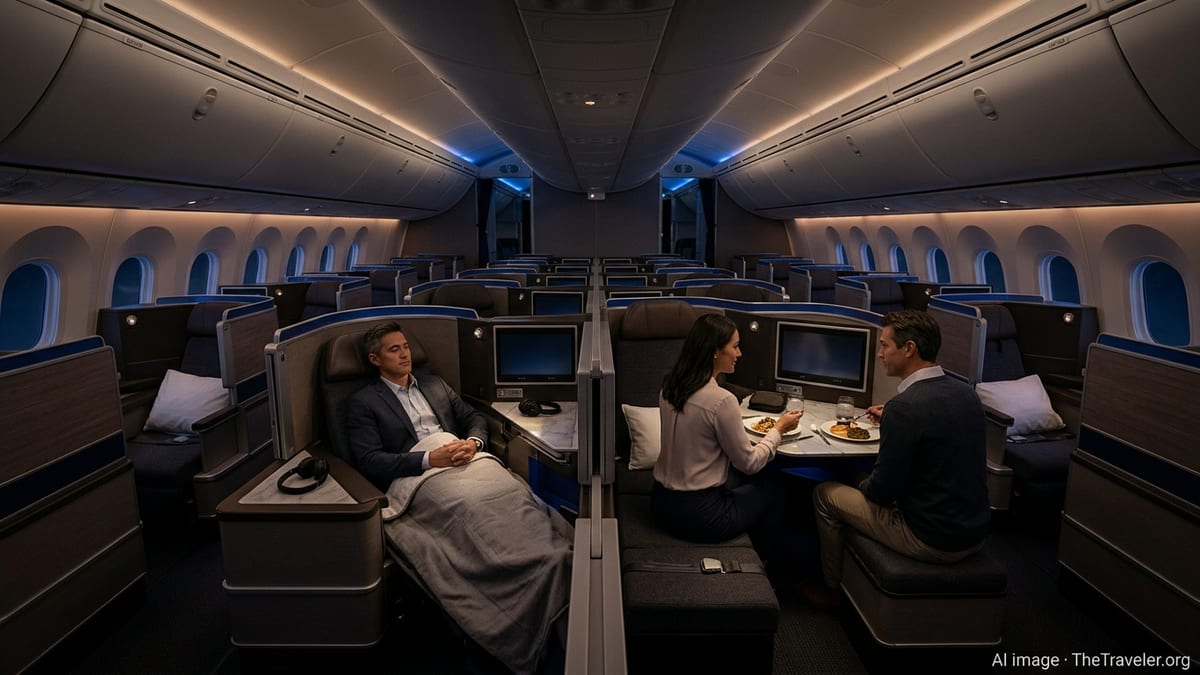
United Airlines is sharpening its focus on high-yield long-haul travelers with the introduction of Polaris Studio, an enhanced business-class suite concept debuting on a new premium-heavy configuration of the Boeing 787-9 Dreamliner.
Get the latest news straight to your inbox!
Premium-Heavy 787-9 Fleet Targets Long-Haul Growth
Publicly available fleet documentation and industry briefings indicate that United’s latest Boeing 787-9 deliveries are configured with a significantly expanded premium cabin, positioning the aircraft for long-haul routes where demand for business travel and high-fare leisure traffic is strongest. The layout centers on 64 Polaris business-class seats, supported by an enlarged United Premium Plus section and a reduced number of standard economy seats compared with earlier 787-9 configurations.
Travel-industry reports describe the cabin strategy as part of a broader “premium-heavy” push, aligning United more closely with competitors on ultra-long sectors between North America, Europe and Asia. The airline is expected to deploy these aircraft on routes such as San Francisco to London and San Francisco to Singapore, where strong corporate contracts and high-spend leisure passengers can support the additional premium capacity.
The new 787-9 configuration also reflects a shift in revenue management priorities, with more real estate devoted to high-yield seats and fewer low-yield economy positions. Observers note that this trend mirrors moves by several global network carriers that are rebalancing cabins toward business and premium economy following sustained demand recovery in these segments.
Polaris Studio: A Larger, More Private Front-Row Suite
At the heart of the redesign is Polaris Studio, a new front-row suite concept integrated into the latest version of United Polaris business class. According to published product summaries and translated technical descriptions, Polaris Studio occupies the first row of each Polaris cabin section, creating a total of eight Studio suites per aircraft. These seats are reported to offer approximately 25 percent more personal space than standard Polaris, with a longer footwell and expanded side surfaces.
Each Polaris Studio suite includes a fully flat bed with direct aisle access and enhanced privacy. The seats incorporate a sliding privacy door, although some traveler reports indicate that door usage is initially limited pending final regulatory clearances on certain aircraft. The overall design is based on the Adient Ascent platform, tailored for United’s “Elevated” interior concept across the 787-9 fleet.
Cabin materials focus on a softer, residential feel, with wool-blend upholstery and wood-grain trim around the seat shell. Travelers can expect larger surfaces for working or dining, including quartzite-look tables and expanded storage spaces designed to hold laptops, personal devices and amenity kits without encroaching on the sleeping area.
Technology Upgrades and Caviar-Topped Service
One of the headline features of Polaris Studio is its inflight entertainment and connectivity package. Product briefs highlight a 27-inch 4K OLED seatback screen, described in multiple airline and industry documents as the largest installed on any U.S. carrier. The display is paired with Bluetooth audio connectivity, allowing passengers to use personal wireless headphones, along with wireless charging pads, USB-C power and traditional AC outlets at each seat.
Service elements are also being elevated for Studio customers. Publicly available descriptions of the program reference an enhanced dining sequence that includes an Ossetra caviar course as an appetizer, a dedicated main-course selection available exclusively to Studio guests, and expanded beverage options. Studio travelers receive upgraded amenity kits stocked with premium skincare products from Perricone MD, along with Saks Fifth Avenue bedding that includes multiple pillow types and a day blanket.
Additional soft-product touches reportedly include exclusive loungewear such as hoodie-style pajamas and slippers on long-haul flights, as well as United-branded accessories like playing cards designed for use at the in-seat ottoman. Collectively, these enhancements are framed as an attempt to bridge the gap between traditional business class and the forward “first class” suites offered by some international competitors.
Ottoman Seating, Companion Dining and Cabin Zoning
A distinctive aspect of Polaris Studio is the integration of an ottoman with a certified seatbelt in most of the front-row suites. Industry coverage notes that six of the eight Studio seats feature this secondary seating position, allowing a traveling companion to join for a face-to-face meal or conversation during the flight. This arrangement is designed to appeal to couples, families and business partners who value social or collaborative space while retaining the ability to sleep separately.
The premium-heavy 787-9 cabin is divided into two Polaris zones, with a Studio row anchoring each section. This zoning approach creates a sense of separation between the forward, more exclusive mini-cabin and the larger rear business-class area, a layout that frequent-flyer commentary suggests is popular among travelers seeking quieter surroundings on overnight flights.
Beyond business class, the updated 787-9 layout includes an expanded United Premium Plus cabin with additional rows and refined seats that incorporate privacy wings and personal device storage. Economy and Economy Plus seats receive upgraded inflight entertainment as part of the same interior program, with larger, higher-resolution screens and improved user interfaces designed to reduce the perceived gap between cabins in terms of digital experience, even as space and service levels continue to differ.
Strategic Play in the Transcontinental and Transpacific Market
Analysts following United’s network strategy view Polaris Studio and the premium-heavy 787-9 as key tools in the carrier’s competition against leading transatlantic and transpacific rivals. Carriers such as Singapore Airlines and Cathay Pacific already operate long-range aircraft with relatively low seat counts and a strong emphasis on business class, and United’s updated Dreamliners appear intended to compete more directly on comfort and privacy while maximizing yield on thin but lucrative routes.
Corporate travel updates and travel-management newsletters in mid-2025 emphasized that all future 787 deliveries for United are expected to feature the Elevated interior and Polaris Studio concept. This consistency allows the airline to market a clearer premium proposition to corporate accounts, with the promise of sliding-door suites, large-format screens and enhanced dining as standard on selected long-haul services.
Early seat maps and traveler chatter suggest that United is initially assigning these aircraft to select West Coast gateways, with a focus on long overwater segments where sleep quality, privacy and productivity have the greatest influence on purchase decisions. As more airframes enter the fleet, the carrier is likely to broaden deployment to additional hubs and high-profile international city pairs, consolidating its position in the increasingly competitive market for long-haul business-class travelers.