

More news on this day
United Airlines is preparing a major reboot of its ultra-long-haul offering between the United States and Australia in 2026, combining high-speed Starlink satellite Wi-Fi with newly upgraded Boeing 787-9 Dreamliners in an effort to turn some of the world’s longest flights into more connected, premium-feeling journeys.
Get the latest news straight to your inbox!
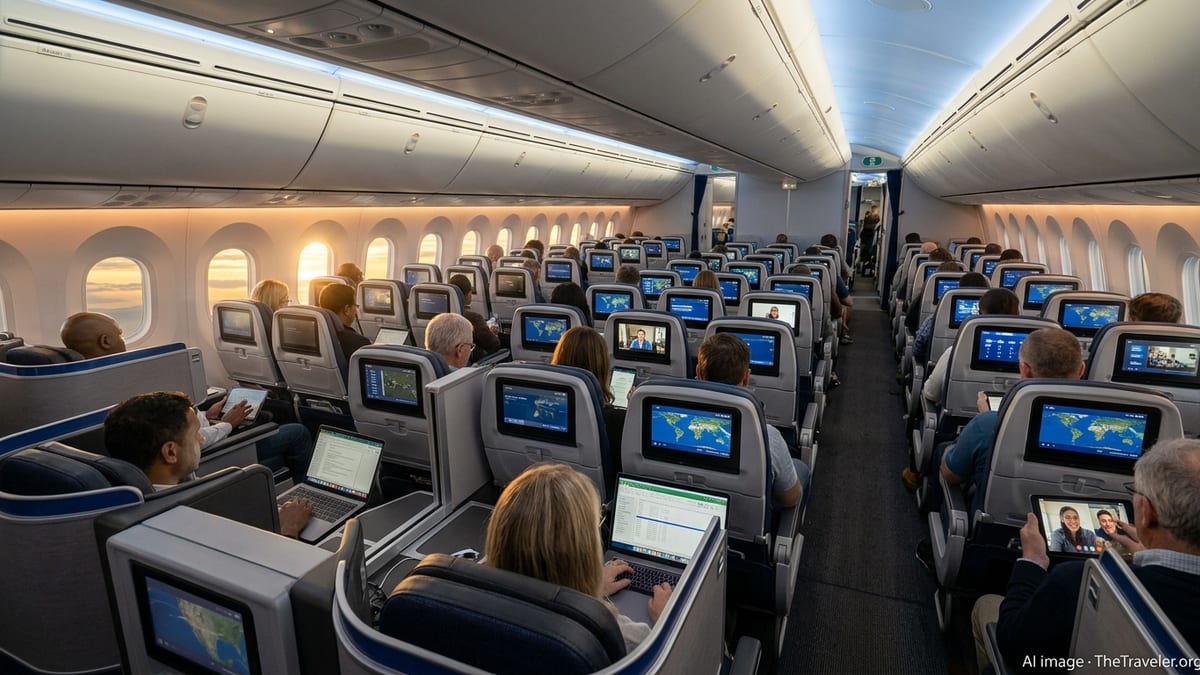
Starlink Wi-Fi Moves From Regional Jets to Ultra-Long-Haul
Publicly available information shows that United’s rollout of SpaceX’s Starlink inflight connectivity has already transformed much of its two-cabin regional fleet, with reports indicating that more than 300 Embraer 175 aircraft are now equipped as of early 2026. The airline has also outlined plans to extend the system to at least half of its mainline jets by the end of 2026, creating the foundation for a global, high-bandwidth network in the sky.
Industry coverage of the United–Starlink agreement, first detailed in 2024 and accelerated through 2025, describes it as one of the largest satellite Wi-Fi deals in commercial aviation. Starlink’s low‑Earth‑orbit network is designed to deliver low-latency, home‑like speeds that allow streaming, video calls, cloud work, and gaming at cruising altitude, addressing long‑standing complaints about sluggish, expensive inflight internet on oceanic routes.
Aviation analysts note that the technology is particularly suited to long transoceanic sectors such as those between North America and Australia, where traditional air‑to‑ground systems are unavailable and legacy satellite solutions often struggle. As Starlink antennas migrate from regional jets to widebody aircraft, United’s US–Australia services are expected to become a showcase for what always‑on, high‑capacity connectivity can look like on flights exceeding 14 hours.
Commentary from frequent flyers on early Starlink‑equipped United flights already highlights a step change compared with the airline’s previous systems, with passengers reporting stable video streaming and responsive browsing. If similar performance is delivered on the carrier’s Pacific network, United’s connectivity could become a decisive factor for travelers choosing between competing US–Australia options.
Elevated 787-9 Interior Targets Premium Long-Haul Demand
United’s upgraded Boeing 787-9 Dreamliners, marketed under the “Elevated” interior banner, form the second pillar of its 2026 long‑haul strategy. According to manufacturer and airline materials, the new configuration adds more premium seats overall, including next‑generation Polaris Studio business suites, refreshed Polaris business cabins, and redesigned Premium Plus seats with privacy features and wireless charging.
Across the cabin, the Dreamliners will introduce significantly larger 4K seatback entertainment screens, with reports indicating that United aims to boast some of the largest displays available on a US airline in both premium and economy sections. The airline is also leaning into an expanded culinary and beverage program on these jets, including an upgraded Polaris dining service and an onboard snack bar concept aimed at long‑haul travelers who prefer to dine on their own schedule.
Independent coverage of United’s fleet plans suggests that at least 30 787-9 aircraft are slated to receive the Elevated interior through 2027, with the first deliveries arriving before the end of 2025. By 2026, these more premium‑heavy Dreamliners are expected to appear increasingly on flagship routes from United hubs such as San Francisco and Houston, including services to Sydney and other major Asia‑Pacific gateways.
For the US–Australia market, the move to a denser premium cabin aligns with broader trends. Demand for lie‑flat business class, premium economy, and extra‑legroom seating has remained strong on extended overnight flights, particularly among corporate travelers, high‑spend leisure passengers, and those connecting from secondary US cities onto transpacific services.
US–Australia Routes Poised as a Testbed for the New Experience
United has steadily grown its Australia network in recent years, operating Boeing 787-9 Dreamliners on key routes such as Houston–Sydney as part of a broader Pacific expansion. Planning documents, schedule filings, and trade coverage for 2026 point to continued reliance on the 787-9 as the backbone of these services, positioning the type as the natural platform for the airline’s new interior and connectivity package.
Aviation industry reports indicate that newly delivered Elevated 787-9s will initially be deployed on other long-haul routes in 2026, particularly from San Francisco to major Asian and European hubs, before becoming more widely available. As additional airframes join the fleet, United is expected to rotate the upgraded Dreamliners onto its Australia services, especially during peak travel seasons when premium demand is strongest.
For travelers flying between the US and Australia, the combination of a quieter, more fuel‑efficient Dreamliner with larger seatback screens, upgraded seating, and high‑bandwidth Starlink connectivity could substantially change the onboard experience. Instead of treating Wi-Fi as a last‑resort option for basic messaging, passengers may find they can reliably participate in video meetings, stream entertainment from their own subscriptions, or stay in touch with family throughout the journey.
Analysts note that this evolution fits into a wider competitive landscape in which Australian and Gulf carriers have long used product quality to differentiate on ultra‑long‑haul flights. As United leans into Starlink and the Elevated cabin, the airline is signaling that its Pacific network will compete on technology and comfort, not just on schedule and alliance connectivity.
What Passengers Can Expect Onboard in 2026
While specific US–Australia pairings for Elevated 787-9s and Starlink‑equipped widebodies have not all been detailed publicly, the outlines of the 2026 onboard experience are becoming clear. Passengers in Polaris Studio and Polaris business suites can expect direct aisle access, closing doors or high privacy shells depending on seat type, enhanced bedding amenities, and upgraded dining with expanded course options tailored to long‑haul fatigue.
Premium Plus travelers are set to benefit from wider seats with leg rests, greater recline, segregated cabins, and personal storage, alongside larger seatback screens and improved catering. In economy and extra‑legroom economy, United’s plans call for larger 4K displays, Bluetooth audio pairing, and revised menus, which together aim to soften the strain of 14‑ to 17‑hour journeys.
Across all cabins, Starlink connectivity is expected to support a mix of complimentary access for certain loyalty or premium segments and paid tiers for other travelers, although final pricing structures may vary by route and timing. Early technical descriptions indicate that United’s widebody installations will feature dual Starlink antennas to increase available bandwidth, a configuration designed to keep speeds usable even when large numbers of passengers are online simultaneously.
Travel industry observers highlight that, if executed as described, the package could make United one of the most technologically forward carriers on the US–Australia corridor in 2026. For travelers choosing between one‑stop itineraries via Asia or the Pacific, the promise of consistent high‑speed Wi-Fi and a refreshed Dreamliner cabin may become as important a consideration as total travel time or loyalty program status.
A High-Stakes Bet on Connected, Premium Long-Haul Travel
United’s twin investments in Starlink connectivity and Elevated 787 interiors represent a sizable strategic wager that passengers will pay attention to onboard technology and comfort on very long flights. Industry coverage notes that the airline is committing significant capital across aircraft hardware, cabin refurbishment, and satellite bandwidth at a moment when travel demand across the Pacific continues to normalize and grow.
For the US–Australia market, where sector lengths can exceed 8,000 miles and block times regularly stretch past 15 hours, the upside of getting this formula right is considerable. A better‑rested, more connected passenger is more likely to view the journey as a productive extension of their workday or a smoother start to a long‑awaited holiday, rather than an endurance test.
At the same time, aviation analysts caution that expectations will rise alongside these improvements. Once high‑speed connectivity and next‑generation cabins are widely advertised, any inconsistency in aircraft assignment, service reliability, or Wi-Fi performance will quickly surface in traveler feedback. Maintaining a uniform standard across a global network will be central to United’s ability to turn its 2026 upgrades into a lasting competitive advantage.
As deliveries of Elevated Dreamliners continue and Starlink hardware appears on more of the long-haul fleet, US–Australia routes offer one of the clearest proving grounds for this strategy. For many travelers booking transpacific trips in 2026, the promise of fast Wi-Fi and a significantly upgraded 787 cabin may be the most tangible sign yet that long-haul flying is entering a new, more connected era.