

More news on this day
United Airlines is reshaping how travelers earn and redeem miles, introducing a wave of MileagePlus changes that make holding a United co-branded credit card more valuable than ever while dialing back rewards for those who fly without one.
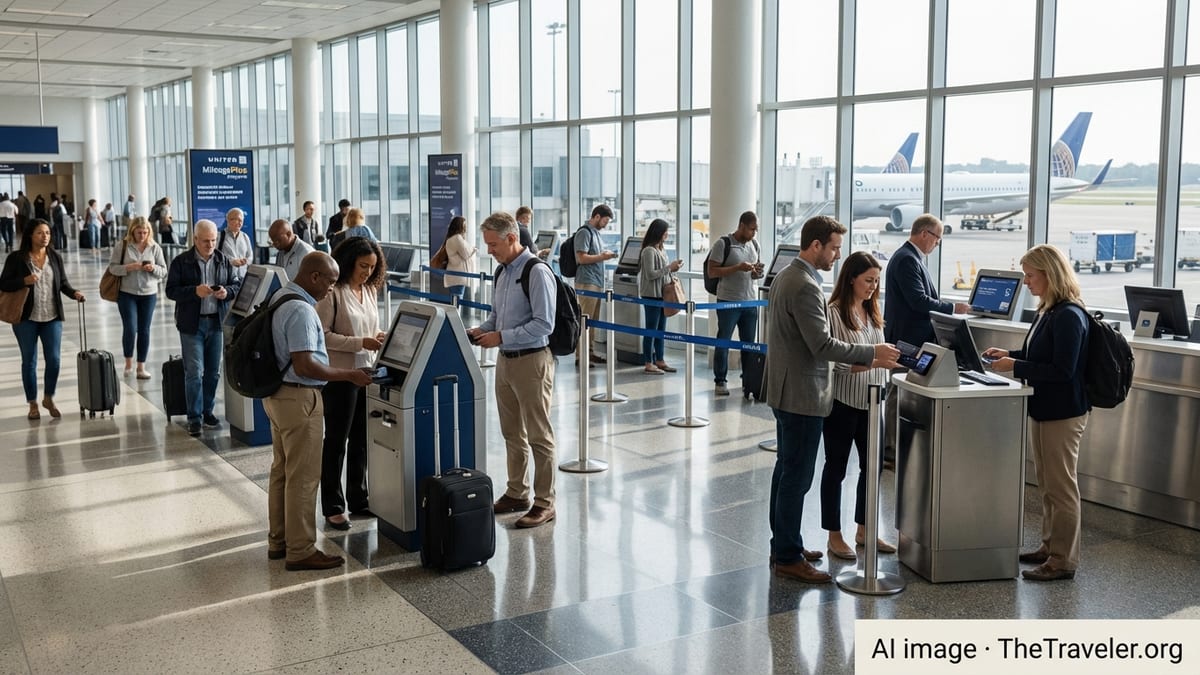
New Mileage Earning Rules Put Cardholders First
United is rolling out a new earning structure that tilts the MileagePlus program decisively toward customers who hold a United credit card. Beginning with flights ticketed in early April, MileagePlus members who pay for United flights with an eligible co-branded card will earn substantially more miles per dollar than flyers who do not carry the card. The revised framework adds a clear financial edge for cardholders on both paid and award travel.
Under the new rules, general MileagePlus members with a United card will earn a higher base rate of miles per dollar spent on United-operated flights, with even richer returns when they use their United card to pay for the ticket. Premier elites see boosted mileage multipliers layered on top of their status bonuses, so the combination of elite status and card membership produces some of the most generous earn rates in the domestic airline market.
By contrast, MileagePlus members who do not have a United credit card will see their earning rate fall on the same itineraries. For some general members, mileage accrual on United flights will drop to just a fraction of what co-branded cardholders receive for identical spend. United is effectively turning its credit cards into the gateway to full-value mileage earning on its network.
Devalued Earnings for Non-Cardholders Raise the Stakes
The flip side of richer rewards for cardholders is a marked pullback for everyone else. As the revised earning tables take effect, non-cardholding MileagePlus members will earn fewer miles per dollar across almost every Premier tier, from general members all the way up to top-tier elites. For some travelers, especially those who fly frequently but decline to take a credit card, the change will feel like a quiet devaluation of the program.
Basic economy customers without a United card will be hit hardest. Under the upcoming rules, many general members traveling on basic economy tickets will not earn any miles at all, erasing one of the few remaining perks attached to the lowest-priced fares. To continue earning on these tickets, travelers will increasingly be nudged toward obtaining at least an entry-level United credit card.
The message is clear: United wants customers who generate both flight revenue and card spend. For regular flyers who have avoided co-branded plastic on principle, the new MileagePlus structure transforms that decision into a more costly one, as they watch their mileage balances grow more slowly than those of peers who carry a card.
Cardholders Gain Richer Award Discounts and Hidden Saver Seats
Beyond day-to-day earning, United is sweetening the deal for MileagePlus cardholders at redemption time. Co-branded card members now enjoy built-in discounts on every United-operated award ticket they book, typically around 10 percent off the standard mileage price and in some cases more for higher-level Premier members. A domestic economy award that once cost 15,000 miles, for example, may now start at 13,500 miles for a cardholder, effectively stretching the value of each mile.
United is also expanding access to Saver-level award seats, the lower-priced awards that can be scarce on popular routes and dates. Historically, the most desirable long-haul Saver space in cabins such as United Polaris business class was largely reserved for upper-tier elites. Under the enhanced rules, general MileagePlus members who hold a United card gain entry to more of this inventory, letting them tap premium cabins at reduced mileage rates that were previously hard to find.
The combination of discounted award pricing and better access to Saver seats could prove especially powerful on long-haul international routes, where a modest percentage discount translates into thousands of miles saved per ticket. For cardholders who plan strategically, the new structure makes aspirational redemptions, such as lie-flat business class to Europe or Asia, more achievable than before.
PlusPoints and Elite Status Get a Credit Card Boost
United is also deepening the connection between its credit cards and elite status. Beginning with the 2026 program year, Premier 1K members and above will be able to generate additional PlusPoints, the upgrade currency of MileagePlus, through eligible spending on United credit cards. Previously, only qualifying flights could unlock extra PlusPoints beyond the standard allotment that comes with hitting Platinum and 1K thresholds.
With the new policy, Premier 1K members earn incremental PlusPoints each time they reach defined spend-based milestones in Premier Qualifying Points, and crucially, the Premier Qualifying Points generated from card spending now count toward these bonus upgrade rewards. For heavy spenders, that means more PlusPoints they can use to request upgrades, convert into TravelBank cash, or even gift status to family members.
At the same time, several United cards are increasing the volume of Premier-qualifying points that can be earned through everyday purchases. Some mid-tier and premium cards can now generate tens of thousands of qualifying points annually, giving cardholders a realistic path to climbing or maintaining status through a mix of flying and card activity. Taken together, these changes position United plastic as a central tool for status-conscious travelers.
Chase and United Refresh Card Benefits, Raise Annual Fees
The more generous MileagePlus treatment for cardholders sits atop a broader refresh of United’s co-branded card lineup with Chase. In 2025, the partners introduced higher annual fees across most personal and business cards while layering in a thicker package of statement credits, travel perks and partner offers. The new fee levels remain in place through 2026 for both new applicants and existing cardmembers as their renewal dates arrive.
For instance, the mid-tier United Quest card saw its annual fee climb, but its United travel credit was expanded and restructured, shifting from a smaller statement credit into larger United TravelBank cash that can be applied directly toward future United or United Express flights. Cardholders also gained access to award flight discounts, hotel credits through United’s curated booking channels and a higher cap on the Premier-qualifying points they can earn through ongoing spending.
At the very top of the portfolio, the United Club card’s fee rose sharply, reflecting its role as a premium lounge and travel product. In return, cardmembers now receive broader rideshare credits, enhanced hotel and rental car reimbursements, and higher ceilings on the Premier-qualifying points they can earn each year. For frequent United flyers who also spend heavily on their cards, these benefits can offset a significant portion of the higher fee.
Travel Credits, Partner Perks and Everyday Value
To make the economics work for travelers, Chase and United have engineered a thick layer of recurring credits and partner perks into many MileagePlus cards. Depending on the product, cardholders can receive annual United travel credits that function like cash toward flights, hotel statement credits on stays booked through select platforms, and targeted rebates on car rentals with preferred brands.
On top of core travel benefits, United has added lifestyle-oriented perks with everyday utility. Many cardholders, for example, receive complimentary or discounted memberships to grocery delivery services, plus monthly or annual credits that can add up to hundreds of dollars for those who regularly use delivery to stock up before or after a trip. Rideshare credits, often dispensed monthly, can be used for trips to and from the airport, blurring the line between trip-specific value and daily convenience.
The result is that for engaged customers who maximize the available perks, the nominal annual fee can be more than offset by a combination of travel savings and day-to-day credits. That reality stands in contrast with non-cardholding MileagePlus members, whose earning rates are being trimmed without any corresponding set of added benefits.
TravelBank and Award Discounts Reshape Redemption Strategy
One of the more technical but meaningful shifts accompanies the way certain United travel credits are delivered. Rather than issuing traditional statement credits after qualifying purchases, United is increasingly turning to TravelBank cash, a dedicated balance that can be used toward eligible United and United Express flights. While this narrows the flexibility of the benefit compared with cash-like credits, the face value of the TravelBank deposits is often higher than the prior statement credit amounts.
For cardholders, this change encourages a more flight-centric redemption strategy. Instead of using credits to offset baggage fees or onboard purchases, many will now apply TravelBank balances to base fares or taxes on new tickets, effectively subsidizing future travel. Combined with automatic mileage discounts on award bookings and better Saver availability, the overall redemption equation becomes more favorable for those who are willing to plan trips around United metal.
However, TravelBank balances typically come with shorter expiration windows than standard stored-value credits, a detail that puts some pressure on casual travelers. Customers who fly United just once or twice a year will need to track expiration dates closely to avoid forfeiting value, another subtle nudge toward deeper engagement with the airline.
What the New MileagePlus Landscape Means for Travelers
For United loyalists who already hold or are considering a co-branded card, the revamped MileagePlus rules largely represent a win. Higher earning rates on paid tickets, built-in discounts on award travel, and expanded access to premium Saver seats all push more value toward those willing to add a United card to their wallet. Elite flyers stand to benefit further through easier paths to qualifying points and expanded opportunities to earn PlusPoints upgrades through card spending.
For non-cardholders, the picture is more mixed. While the underlying MileagePlus program still offers redeemable miles, elite benefits and flexible award rules, the opportunity cost of remaining outside the credit card ecosystem has grown. Lower mileage earning on the same flights, especially in lower fare classes, means balances will build more slowly, and basic economy customers in particular may find themselves earning little or nothing without a card.
The broader trend is unmistakable: airlines are increasingly using loyalty programs to tie together flying, spending and financial products. With its latest MileagePlus changes, United is betting that richer rewards for co-branded cardholders will keep its most valuable customers close, even as it quietly reduces benefits for those who choose to fly without plastic attached.