

More news on this day
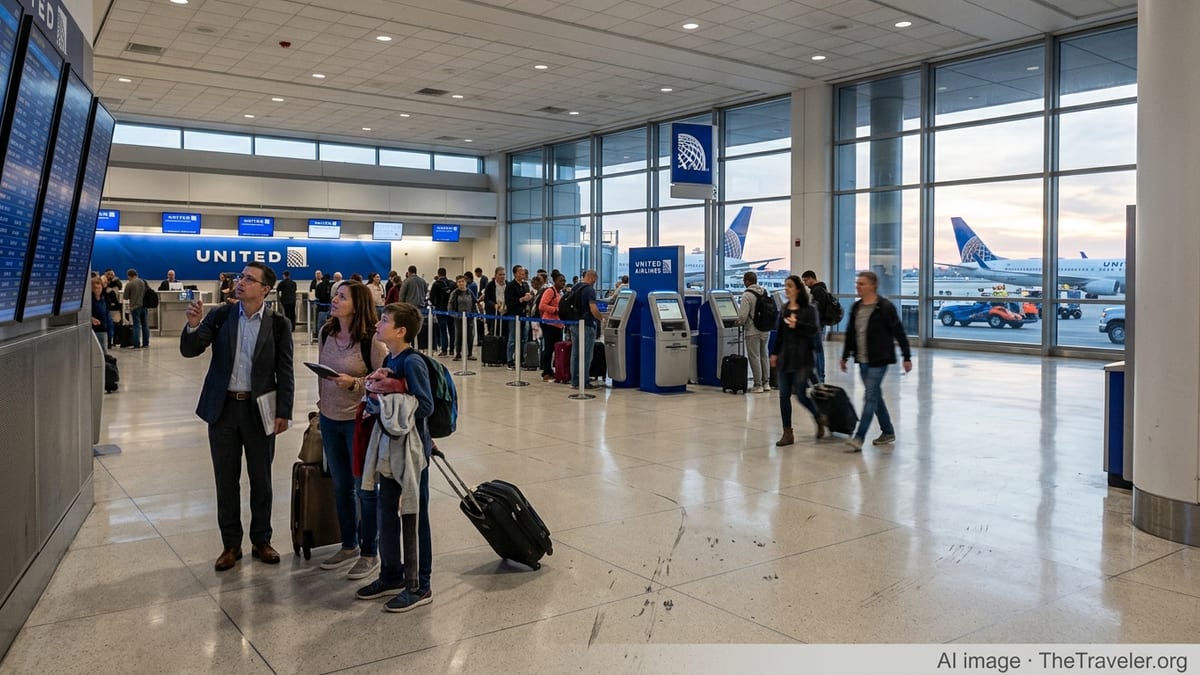
United Airlines CEO Scott Kirby is signaling that travelers should brace for more airfare spikes as jet fuel prices climb and industry capacity tightens, even as he continues to highlight the potential for future airline deals amid a shifting competitive landscape.
Get the latest news straight to your inbox!
Fuel Price Shock Sets the Stage for Higher Fares
Recent spikes in oil and jet fuel prices are emerging as a central driver behind United Airlines’ warning that ticket prices are likely to move higher. Publicly available information shows that fuel accounts for a significant share of airline operating expenses, and the rapid increase in energy costs since late February 2026 is squeezing margins across the sector. With major U.S. carriers, including United, largely unhedged on fuel, sudden jumps in prices are feeding directly into operating costs.
Reports indicate that United has already seen fuel costs nearly double over a matter of weeks, prompting fresh scrutiny from investors and travelers about how far fares may rise. Commentary from market analysts suggests that United believes it can offset a meaningful portion of the fuel shock through higher ticket prices, reflecting a still-solid demand environment and a willingness by many travelers to pay more, at least in the near term.
Kirby has previously emphasized that United is planning for a scenario in which oil remains elevated for an extended period, rather than treating the current surge as a brief spike. Internal messages cited in industry coverage describe contingency planning around oil potentially moving well above the 100-dollar-per-barrel range, reinforcing expectations that airlines will lean heavily on pricing and capacity adjustments to protect profitability.
For passengers, this dynamic translates into a growing risk that already-elevated airfares on many domestic and transatlantic routes could climb further heading into the peak spring and summer travel months, particularly on routes where United holds a strong position and competition is limited.
Capacity Cuts and Network Strategy Add Up to Pricing Power
Beyond fuel, United’s own network decisions are poised to influence what travelers pay. Industry reports note that the airline is trimming capacity on select off-peak flights, including redeye services and traditionally weaker midweek segments. While framed as a response to higher fuel costs and a way to optimize the schedule, such cuts also have the effect of tightening supply on routes where demand remains robust.
Available information from aviation forums and corporate communications indicates that United is preparing to reduce flying by several percentage points through the busy months, targeting flights with thinner margins or lower load factors. Analysts view these moves as an attempt to stay ahead of a possible demand slowdown while preserving pricing power on remaining services. Fewer seats in the market can support higher average fares, particularly at hubs where United already holds a dominant share.
At the same time, United continues to take delivery of new aircraft and invest in premium cabins, seatback entertainment and onboard connectivity, positioning itself as a higher-yield carrier focused on business travelers and affluent leisure passengers. Industry research on airline strategy in 2026 points to a broader trend among large network carriers of prioritizing revenue quality over pure volume growth, a shift that often coincides with higher average fares and more segmented pricing.
For travelers, the result may be a network that still expands to new destinations over the long term, but with sharper peaks and valleys in frequency and pricing. Peak-time and last-minute fares are likely to face the steepest increases, while off-peak bargains could become harder to find as United balances demand, fuel costs and aircraft utilization.
Consolidation Talk and the Prospect of Future Deals
Alongside warnings about fares, Kirby has periodically drawn attention to the potential for further consolidation in the U.S. airline industry. Public remarks over the past several years have pointed to certain mid-sized carriers as logical partners in any future wave of deals, though he has also stressed that regulatory and competitive hurdles remain significant. In previous comments highlighted by transportation and financial media, Kirby has suggested that any large-scale tie-up with another carrier would depend heavily on the stance of regulators and the strategic priorities of potential partners.
The broader industry context underscores why the topic continues to resurface. A series of mergers in prior decades dramatically reshaped U.S. aviation, leaving a small group of large network airlines controlling the majority of domestic capacity. Policy reports and academic analyses have noted that this consolidation has often reduced head-to-head competition in major hubs, with implications for both fares and service levels. Kirby’s more recent comments about possible future deals are being interpreted by analysts as a signal that United wants to remain positioned to act if market conditions and regulation allow.
At the same time, legal and political scrutiny of airline mergers has intensified. Recent enforcement actions and investigations documented in public government reports emphasize concerns about concentration, pricing power and consumer choice. That backdrop suggests any new transaction involving United would be subject to a lengthy review and potentially stringent conditions, especially in regions where competition is already limited.
For travelers, the prospect of further consolidation raises familiar questions. Supporters of large-scale deals often argue that stronger balance sheets and larger networks can fund new aircraft, more routes and better onboard products. Critics counter that fewer independent competitors on key routes tend to mean higher fares and more restrictive fee structures over time. United’s moves and messaging around potential deals are therefore being closely watched by both investors and consumer advocates.
Travelers Face Trade-Offs as Demand Remains Resilient
Despite the cost pressures and capacity adjustments, demand for air travel remains relatively resilient, according to booking data cited in financial commentary. The early weeks of 2026 have reportedly produced some of the strongest booking periods in United’s history, particularly for long-haul and premium-cabin travel. This robust demand is giving the airline latitude to pass on higher costs through fares without an immediate collapse in volumes.
However, consumer sentiment indicators and political debate show growing sensitivity to travel costs, especially after several years of rising prices in both air and ground transportation. Advocacy groups and legislative reports focusing on the travel sector have highlighted concerns about so-called junk fees, complex fare structures and the diminishing presence of ultra-low-cost competitors in some markets. As fuel-driven fare increases intersect with these broader issues, travelers may become more selective about discretionary trips and more willing to mix and match carriers where competition still exists.
For now, the practical takeaway for many passengers is that timing and flexibility matter more than ever. Experts in fare trends suggest that travelers willing to book earlier, travel midweek or consider nearby airports may still find relatively competitive prices, even as headline fares drift upward. Loyalty program dynamics, corporate travel policies and the comparative strength of competing airlines at specific hubs will also shape how sharply individual travelers feel the impact of United’s latest cost and capacity moves.
As United navigates the twin challenges of volatile fuel markets and a complex regulatory environment for potential deals, its strategy is likely to remain centered on maintaining pricing power in key hubs while continuing to grow higher-yield segments. For travelers, the combination of fare pressure and possible future consolidation points to a more expensive, if still in-demand, era of air travel in the United States.