

More news on this day
United Airlines is paring back its 2026 flying schedule by about 5 percent as war involving Iran rattles global energy markets, sending jet fuel costs sharply higher and forcing carriers to rethink growth plans just as demand for air travel remains strong.
Get the latest news straight to your inbox!
Jet Fuel Spike Ripples Through Airline Economics
Published coverage of the conflict involving Iran describes a sharp jump in crude oil and refined products, with jet fuel among the most exposed to supply disruptions. Analysts note that key shipping lanes near the Strait of Hormuz are central to global oil flows, magnifying the impact of any military escalation on aviation fuel costs worldwide.
Industry financial filings show that fuel is typically one of the largest single expenses for major airlines, often accounting for roughly a quarter to a third of operating costs in recent years. When prices rise quickly, carriers struggle to adjust fares fast enough, especially on tickets sold months in advance, and profitability can swing dramatically in a single quarter.
Economic briefings from aviation bodies and recent market commentary indicate that jet fuel benchmarks have climbed far faster than broader consumer prices since late February 2026, as strikes and retaliatory actions in and around Iran reshaped expectations for oil supply. That surge has already translated into hundreds of millions of dollars in additional costs across the industry, with United and other large U.S. airlines among the most exposed because of their global networks.
Airlines can soften the blow with fuel hedging and efficiency gains, but such tools have limits when energy markets move as violently as they have in recent weeks. Publicly available data suggest that for every sustained increase in the price of a barrel of jet fuel, large network carriers must either absorb the hit, raise fares, trim capacity, or use some combination of all three.
United’s 5 Percent Capacity Pullback
According to recent investor-focused reports and widely circulated internal communications, United is planning to cut roughly 5 percent of its scheduled capacity in the near term to cope with the spike in fuel costs linked to the Iran war. The reduction applies to available seat capacity rather than a blanket elimination of routes, giving the airline flexibility to fine tune which flights operate and how frequently.
Public information indicates that the cuts will be concentrated in less profitable frequencies and time slots, such as marginal late-night flights and off-peak services, rather than United’s most in-demand business and leisure routes. By trimming these edges of the schedule, the airline aims to burn less fuel overall while keeping aircraft as full as possible on the flights that do operate.
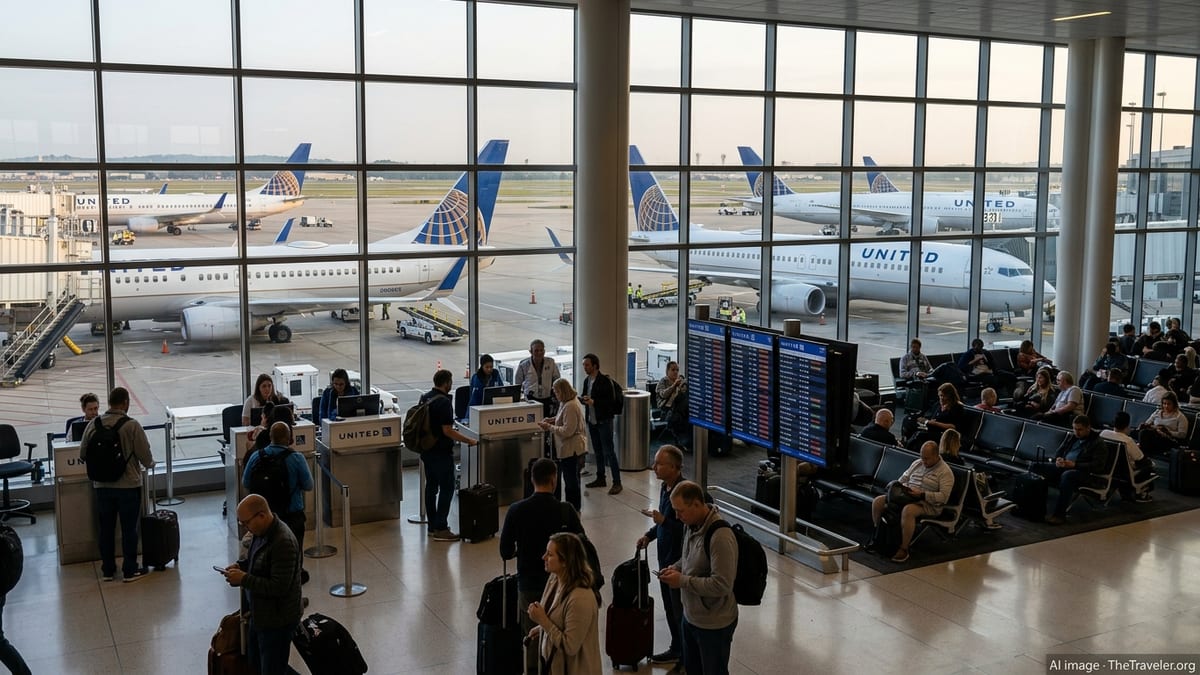
The move comes as United and its peers face a delicate balance between managing costs and meeting still-robust demand for travel. Recent coverage from major news outlets suggests that bookings across U.S. airlines remain strong despite geopolitical tensions, giving carriers some room to scale back capacity without leaving planes half empty or terminals deserted.
United’s decision also reflects a broader shift from the aggressive growth that followed the pandemic recovery to a more defensive posture shaped by volatile energy prices and geopolitical risk. Rather than chasing market share at any cost, large airlines are increasingly focused on protecting margins and preserving the flexibility to ramp up or down as conditions change.
Impact on Fares, Routes, and Travelers
Travel industry analysts say a 5 percent cut by a single carrier may sound modest on paper, but it can have noticeable effects in specific markets where competition is limited or where United holds a dominant share. With fewer seats available, basic supply and demand dynamics tend to push fares higher, particularly on routes where business travelers and long-haul passengers have fewer alternatives.
Reports from consumer-facing travel sites and fare trackers already point to higher prices on many domestic and international routes as airlines factor rising fuel costs into their pricing algorithms. Travelers may see fewer discounted seats, more dynamic fare movements, and shorter sale windows as carriers try to keep ahead of market swings in jet fuel.
Route maps are also likely to evolve. Historically, sharp fuel spikes have prompted airlines to reassess ultra-long-haul flights, thin point-to-point links, and seasonal leisure routes that only break even under stable cost conditions. Publicly discussed strategies suggest that United will prioritize core hubs and high-yield business corridors while it waits for more clarity on energy markets and the trajectory of the conflict.
For passengers, the practical effects may include reduced flight time options, more crowded cabins on popular departures, and potentially longer connection times if certain frequencies are removed. While most existing bookings are expected to be accommodated, some travelers could face schedule changes or rebookings as the new capacity plan filters through reservation systems.
Global Aviation Feels the Iran Shockwave
United’s capacity pullback is unfolding against a wider industry backdrop in which airlines around the world are grappling with the same fuel shock. Financial disclosures and restructuring documents from other carriers, including several lower-cost operators, highlight the strain that war-driven price spikes are putting on balance sheets already stretched by pandemic-era debt and ongoing fleet investments.
International aviation organizations have long warned that conflicts affecting major oil producers can trigger abrupt increases in operating costs, especially when sanctions, shipping risks, or refinery disruptions affect the supply of jet fuel. The current crisis involving Iran is reinforcing those concerns, reviving memories of previous energy shocks that forced airlines to raise surcharges, consolidate routes, and delay aircraft orders.
At the same time, some carriers are treating the moment as a catalyst to accelerate efficiency improvements. Public strategies include retiring older, less fuel-efficient aircraft, adding next-generation jets with better fuel burn, and experimenting with more direct routings where airspace restrictions allow. Over the longer term, higher fossil fuel prices could also strengthen the economic case for sustainable aviation fuels, though supplies remain limited and costs elevated.
For global travelers, the combined effect is a more fragile, less predictable network. Routes that once seemed permanent can disappear or shrink, and ticket prices can swing dramatically from one month to the next as airlines hedge against geopolitical risks.
What It Means for Travelers Planning 2026 Trips
For leisure and business travelers mapping out trips for late 2026, the latest developments suggest a more strategic approach to booking. Travel advisors and industry commentators increasingly recommend locking in key itineraries earlier than usual on routes where capacity is tightening, while remaining flexible about dates, departure times, and even departure airports to keep costs in check.
Travelers may benefit from monitoring schedule updates more closely in the weeks before departure, as airlines like United continue to refine timetables in response to fuel prices and demand trends. Tools that track schedule changes and alternative flight options can help minimize disruption if a planned flight is rescheduled or removed.
For frequent flyers loyal to United, the capacity cut could also mean fuller cabins and potentially more competition for upgrades and award seats on certain routes. However, with demand still solid and airlines aiming to keep their most valuable customers onboard, observers expect loyalty programs and schedule reliability to remain central to United’s strategy despite the fuel shock.
As the war involving Iran continues to shape global jet fuel markets, United’s 5 percent capacity trim underscores how quickly geopolitical events can alter the travel landscape. For now, the skies remain busy, but every seat and every gallon of fuel is being counted more carefully than before.