

More news on this day
United States long-haul travel is poised for a notable upgrade as United’s new Boeing 787-9 Dreamliners, equipped with the carrier’s Polaris Studio suites, begin rolling out on high-demand routes linking San Francisco with Singapore and London from 2026.
Get the latest news straight to your inbox!
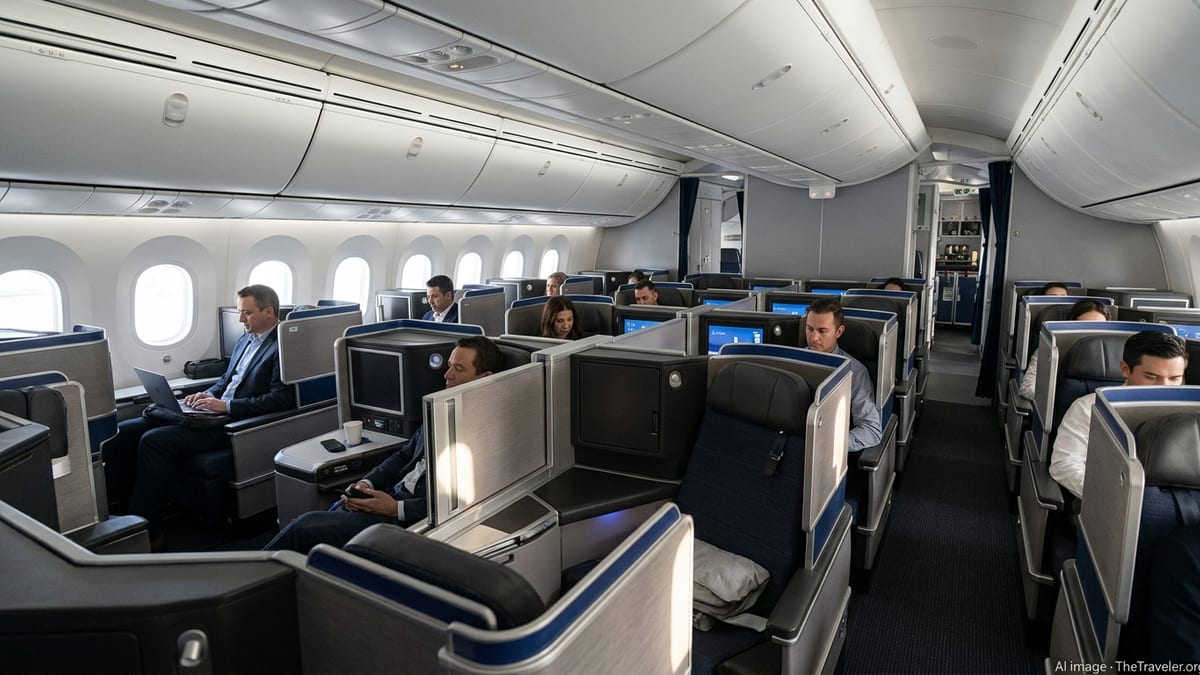
Elevated 787-9 Interior Targets Premium Long-Haul Demand
Publicly available information shows that United’s latest Boeing 787-9s feature a new “Elevated” interior concept designed specifically around premium long-haul flying. The layout focuses on increasing the share of high-yield seats while maintaining the 787-9’s range and fuel efficiency for ultra-long sectors such as San Francisco to Singapore.
Reports indicate that these aircraft will carry one of the highest proportions of premium seating among United’s widebody fleet, with nearly 100 seats spread across Polaris Studio suites, standard Polaris business class, Premium Plus and Economy Plus. This configuration responds to steadily rising demand for extra comfort on routes where travelers routinely face flight times of 11 to 18 hours.
Industry coverage highlights that the Elevated interior applies a nose-to-tail refresh, from redesigned lighting and trim to updated economy cabins with larger seatback screens. The emphasis on a cohesive premium feel throughout the aircraft signals a strategic bid to keep U.S. long-haul products competitive with leading Asian and European carriers.
Polaris Studio Suites: A New Flagship at the Front of the Cabin
The Polaris Studio suites are positioned as an ultra-premium tier within United’s existing Polaris business class. According to airline specifications shared in recent reports, there will be eight Polaris Studio suites on each new 787-9, located in the first row of each business-class section and designed as the most spacious seats on board.
Published details describe these suites as around 25 percent larger than standard Polaris seats, retaining fully flat beds and direct aisle access while adding higher privacy surrounds and closing doors. Each Studio suite will feature a large 27-inch 4K OLED screen, cited as one of the biggest seatback displays offered by a U.S. carrier, along with Bluetooth audio, wireless charging, and both USB-C and universal power outlets.
Travel industry analyses note that an extra ottoman with a certified seatbelt allows a companion to join for dining or conversation, mirroring concepts seen in some international first-class products. Enhanced amenities such as upgraded skincare kits, expanded dining options and caviar service on select flights position Polaris Studio as a bridge between business and traditional first class, without reintroducing a separate first-class cabin.
San Francisco to Singapore and London Set as Launch Routes
Reports from aviation and travel outlets indicate that the Elevated 787-9s are scheduled to enter commercial service on international routes from 2026, with San Francisco to Singapore and San Francisco to London Heathrow chosen as initial long-haul deployments. These corridors are among United’s most strategically important, linking a major West Coast hub with two key global financial and technology centers.
San Francisco to Singapore is one of the world’s longest regularly scheduled flights, spanning more than 8,400 miles and often running around 18 hours. Market commentary suggests that this route in particular sees a high concentration of corporate and tech-related travel, making it a natural fit for a cabin that prioritizes privacy, rest and productivity.
The San Francisco to London Heathrow route, while shorter, is a vital transatlantic link with strong premium demand from both business and high-end leisure travelers. Deploying the new 787-9 configuration here allows the carrier to showcase its latest product on a marquee route where U.S. and European competitors have already invested heavily in next-generation business-class suites.
Comfort, Privacy and Technology at the Center of the Experience
Travel publications analyzing the new design point to three recurring themes in the Polaris Studio concept: comfort, privacy and embedded technology. Fully flat beds with more personal space are combined with taller privacy doors that shield passengers from aisle traffic, a feature that has rapidly become standard in the latest generation of business cabins worldwide.
The in-flight entertainment system is central to the experience, anchored by the 27-inch 4K OLED display in each Studio suite. Reports highlight that passengers will be able to pair their own headphones via Bluetooth and keep devices powered through wireless charging pads in addition to wired options. These features are intended to reduce clutter while supporting travelers who work or stream throughout long flights.
Cabin renderings and descriptions shared in trade coverage also reference refined lighting schemes, soft-touch materials and subdued color palettes meant to create a calmer environment on overnight and ultra-long sectors. A self-service snack bar for Polaris passengers, stocked with premium-brand snacks and beverages, adds another layer of convenience on flights that span multiple mealtimes.
Implications for the U.S. Long-Haul Competitive Landscape
The introduction of Polaris Studio suites on the 787-9 underscores a broader trend in which U.S. airlines are upgrading and expanding their most premium cabins, especially on flagship intercontinental routes. Industry analysts note that premium demand has remained robust even as overall capacity has grown, encouraging carriers to allocate more cabin real estate to higher-yield products.
By focusing the first wave of Elevated 787-9 deployments on San Francisco links to Singapore and London, the United States’ largest transpacific and transatlantic markets gain a higher standard of onboard comfort that more closely matches some Asian and European rivals. This could influence how corporate travel managers and frequent flyers evaluate long-haul options out of the Bay Area in the coming years.
Observers also point out that the new configuration may serve as a template for future widebody deliveries and potential retrofits, although current information suggests the initial focus is on newly delivered 787-9s rather than the existing Dreamliner fleet. As these aircraft gradually join the network through the latter half of the decade, travelers on select long-haul routes can expect a noticeable step up in privacy and amenities at the front of the cabin, signaling a new phase in U.S. premium long-haul travel.