

More news on this day
A United Airlines Boeing 737-800 operating as Flight 605 from Denver to Nashville struck a de-icing truck at Denver International Airport on Friday morning, as a fast-intensifying snowstorm disrupted air travel across large parts of the United States and triggered hundreds of delays and cancellations.
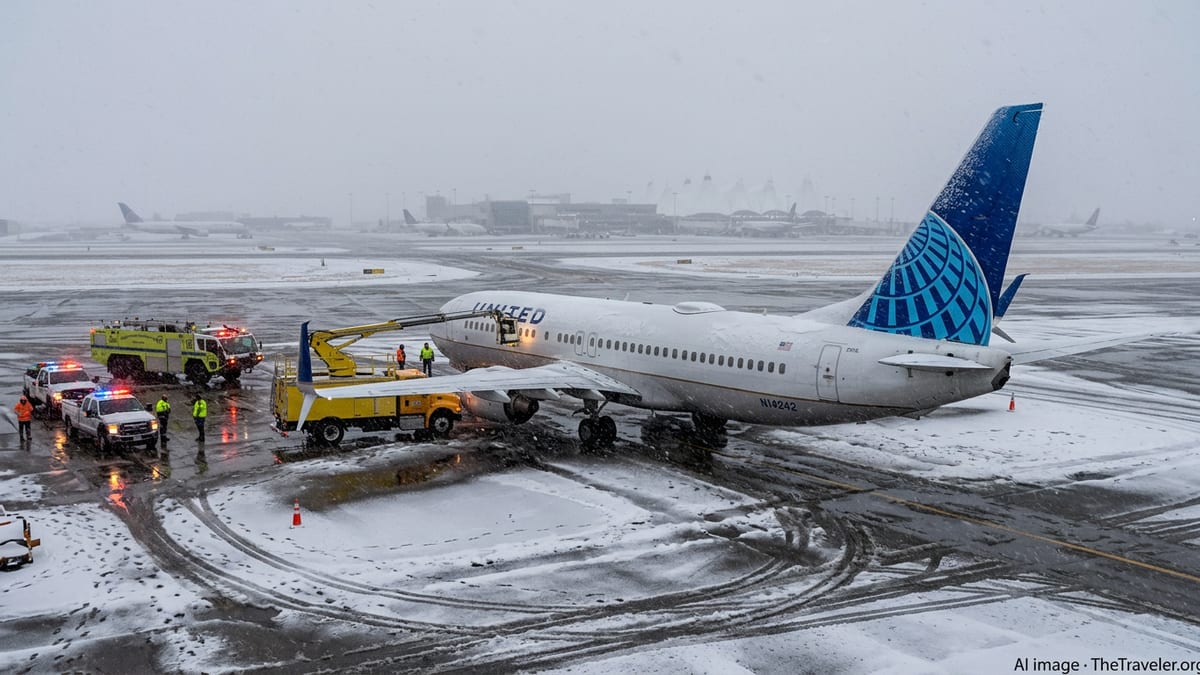
Collision on the De-Icing Pad at Denver International
Airport officials confirmed that United Flight 605, bound for Nashville, made contact with a de-icing truck while maneuvering off a de-icing pad at Denver International Airport shortly after 8:20 a.m. local time on March 6. The aircraft was in the final stages of ground preparation when it clipped the truck, which was positioned alongside the jet and actively servicing the plane.
Denver emergency crews responded to the airfield and treated the driver of the de-icing vehicle, who was transported to a local hospital with what authorities described as non-life-threatening injuries. No injuries were reported among passengers or crew on board the 737-800, though many described feeling a jolt and seeing the truck shudder after the impact.
Photos from the scene showed the narrow-body jet surrounded by emergency vehicles on a remote de-icing pad, with the truck stopped near one of the wings. The aircraft’s damage appeared to be limited, but it will undergo a detailed inspection before returning to service, in line with standard airline safety procedures.
United Airlines said in a statement that the aircraft “made contact with ground equipment during de-icing operations” and that the carrier was cooperating with airport officials and federal investigators. The airline added that it was working to re-accommodate customers on alternative flights to Nashville.
Passengers Deplaned on the Ramp as Storm Intensifies
Passengers aboard Flight 605 reported that the incident occurred after the jet had pushed back from the gate and taxied to the de-icing area, where it waited in falling snow and reduced visibility. After the impact, the captain informed those on board that the aircraft had contacted a de-icing vehicle and would be inspected before any further movement.
With the aircraft parked on a remote pad, travelers were eventually deplaned via mobile stairs and transferred to the terminal using airport buses, a process that took more than an hour for some. Several passengers said they could see plows and additional de-icing vehicles working frantically across the airfield as the snowfall increased and winds picked up.
For many on Flight 605, the collision underscored a morning already marked by long lines, weather alerts and rolling delays. Some had received text messages about possible disruptions from the airline before they even arrived at the airport, while others were monitoring flight-tracking apps that showed Denver emerging as one of the country’s most affected hubs.
Once back inside the terminal, passengers were rebooked on later departures to Nashville or routed via other United hubs, including Houston and Chicago. With seats at a premium during the storm, a number of travelers were offered hotel and meal vouchers as they waited for the weather and the airline’s schedule to stabilize.
Brutal Winter System Slams Denver and Major US Hubs
The collision came as a potent March snowstorm bore down on Colorado’s Front Range, reducing visibility and coating runways and taxiways in wet, heavy snow. Forecasters had warned of rapid deterioration in conditions through Friday, with snowfall rates strong enough at times to outpace plowing and de-icing efforts.
By midafternoon, more than 600 flights into and out of Denver had been delayed and scores canceled, according to data from flight-tracking services, with United and Southwest among the hardest-hit carriers. Operations at Denver rippled across the national network, as disrupted aircraft and crews led to knock-on delays for travelers in cities from the West Coast to the Southeast.
The storm was part of a broader winter system sweeping across the central United States, bringing a mix of snow, ice and gusty winds to major hubs including Chicago, Minneapolis and Dallas. Airlines had issued weather waivers allowing customers to change travel plans without fees, but many travelers still chose to attempt their journeys, packing terminals ahead of the worst of the weather.
At Denver International, airport officials urged passengers to arrive early, build in extra time for security and ground transport, and stay closely tuned to airline notifications. Road conditions around the airport, located on the high plains northeast of downtown Denver, also deteriorated, slowing the flow of arriving and departing travelers.
Safety Procedures and Investigation Underway
Although the contact between Flight 605 and the de-icing truck was relatively low-speed, any collision on an active airfield triggers a robust safety response and detailed review. The Federal Aviation Administration opened an inquiry into the incident, focusing on communication between the flight crew, ground handlers and de-icing personnel, as well as visibility and surface conditions on the pad at the time.
De-icing operations are among the most intricate aspects of winter flying, requiring tightly choreographed movements between aircraft and ground vehicles in tight spaces and often in poor visibility. In heavy snow or blowing conditions, ground crews work against the clock to clear ice from wings and tail surfaces while keeping exposure times within strict safety limits.
Industry analysts noted that while minor ground-vehicle strikes are not unheard of at large airports, the combination of reduced visibility, slick pavement and an intense operational tempo can raise the risk during major storms. They emphasized that commercial aviation in the United States remains highly safe, and that incidents like the one involving Flight 605 typically prompt procedural refinements designed to prevent recurrences.
For United and Denver International, the review is expected to cover not only the minutes leading up to the collision but also staffing levels, equipment positioning and the broader challenges of running a major hub in challenging winter weather. Any recommended changes to de-icing pad layouts, lighting or communication protocols would likely be implemented before the next significant storm cycle.
Travelers Face Cascading Disruptions Across the Network
For passengers, the collision and the storm combined into a day of cascading disruptions that extended far beyond Denver. As aircraft and crews fell out of position, flights in cities as far away as Los Angeles, New York and Atlanta experienced delays tied back to the Colorado hub. Some travelers missed connections by minutes, only to find that the next available seats were not until the following day.
Airlines sought to ease the strain by deploying larger aircraft on select routes, adding late-night departures where possible and waiving certain change fees. Airport hotels near Denver and in key connecting cities reported a sharp uptick in last-minute bookings as stranded passengers scrambled for beds.
Travel advisers said the episode is a reminder of the outsized role that Denver plays in the US aviation system, particularly in winter, when storms that sweep across the Rockies and Plains can quickly snarl cross-country itineraries. They recommended that passengers traveling through major mountain hubs in the cold season build generous buffers into their schedules and consider morning flights, which tend to be more resilient when weather hits later in the day.
As crews cleared snow and visibility gradually improved into the evening, operations at Denver began a slow march back toward normal. For those on Flight 605 and thousands of other travelers caught up in the storm, the day underscored both the vulnerability of modern air travel to fast-changing weather and the extensive safety layers in place when the unexpected happens on the airfield.