

More news on this day
United Airlines has reached a tentative agreement with its flight attendants that would lift top hourly pay to 100 dollars by the end of the contract period, a level that publicly available industry data indicates would make United’s most senior cabin crew among the highest paid in the world.
Get the latest news straight to your inbox!
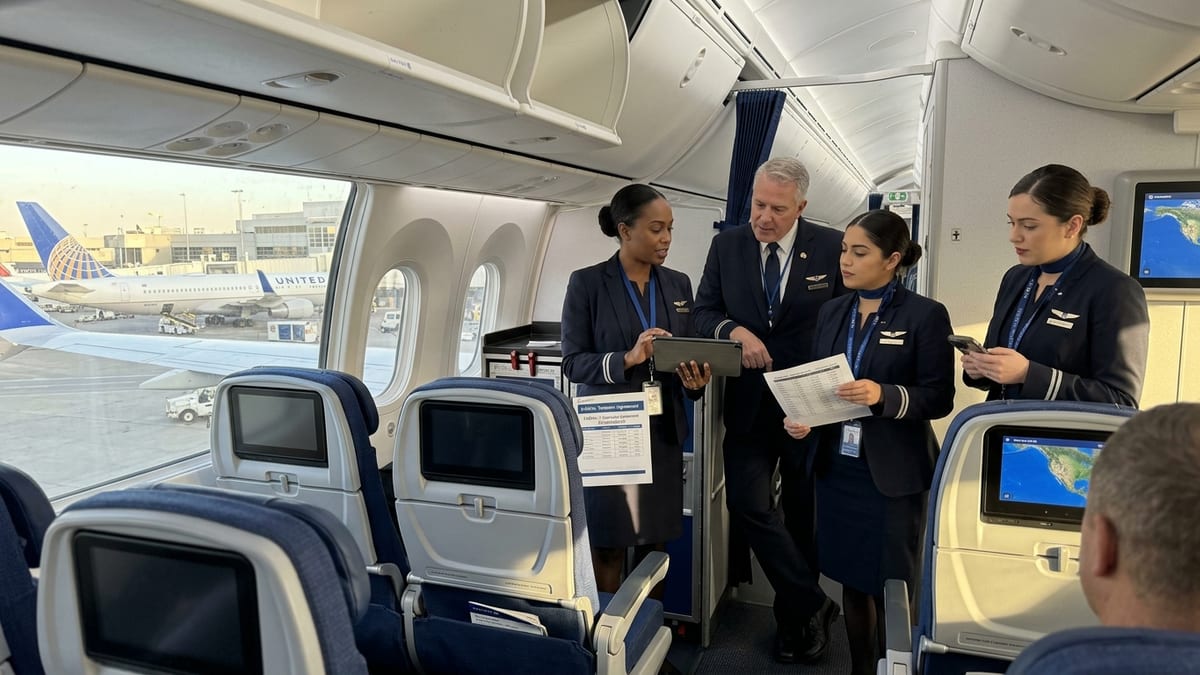
Landmark Tentative Deal Caps Years of Dispute
The tentative agreement, reached in late March after years of contentious bargaining, follows previous failed contract votes in which United flight attendants rejected earlier proposals. Publicly available union communications and media coverage describe the new deal as a significantly improved package that addresses long-standing concerns over stagnant wages and compensation during non-flying duties.
Under the proposed contract, top-of-scale pay rates for senior flight attendants would climb to 100 dollars per flight hour by the end of the agreement’s term. Reports indicate that the raises would be phased in over several years, with immediate increases at ratification and subsequent stepped adjustments that gradually lift the maximum hourly rate.
The agreement still requires approval from the flight attendants’ membership before it can take effect. Voting procedures are expected to unfold over the coming weeks, during which union leaders will conduct roadshows and briefings to explain the full pay tables, work-rule changes, and ancillary benefits connected to the new deal.
United’s move comes as large U.S. airlines work to lock in longer term labor peace while navigating higher fuel costs and a choppy demand environment. The contract path for flight attendants has lagged behind that of pilots, who secured substantial raises in recent years, sharpening pressure on carriers to close the gap for cabin crew.
How 100 Dollars an Hour Compares Globally
The headline figure of 100 dollars per hour has drawn attention across the global aviation industry, where cabin crew compensation varies widely by country, airline model, and currency. Publicly available compensation guides for major international carriers show that even at premium Gulf and Asian airlines, hourly flight pay for experienced crew typically converts to levels below United’s proposed top-of-scale hourly rate when measured in U.S. dollars.
Analyses of pay at European legacy airlines and low-cost carriers similarly suggest that while total annual compensation can be competitive once allowances and benefits are included, base hourly flying pay for senior flight attendants rarely reaches the equivalent of 100 U.S. dollars. In many markets, cabin crew rely on a mix of flight-hour pay, per diems, and overnight allowances rather than a high headline hourly rate.
Industry commentary notes that U.S. carriers have traditionally lagged some foreign competitors in areas such as onboard product and non-wage perks, but they have increasingly stood out for the absolute dollar value of pilot and, increasingly, flight attendant contracts. The United deal, if ratified, would reinforce the United States as a reference point for top-end cabin crew wages and could become a benchmark cited in future bargaining at other airlines.
Observers caution that comparisons are complicated by differences in tax regimes, cost of living, and workload rules. Still, the symbolic weight of a six-figure hourly ceiling in U.S. dollars is widely viewed as a new upper marker for the profession.
Beyond the Headline Rate: Boarding Pay and Bonuses
While the 100 dollar hourly cap is attracting the most attention, the tentative agreement’s structure reflects broader changes in how cabin crew are compensated. Publicly available summaries indicate that the deal adds or enhances pay for time that historically went unpaid, particularly the boarding process and extended gaps between flights when crews remain on duty.
Boarding pay has become a focal point in North American labor talks, with unions arguing that a significant share of customer-facing work occurs before the aircraft door closes, when traditional pay clocks have not yet started. The United proposal reportedly introduces specific boarding compensation and additional pay protections for long ground periods, which could materially increase effective hourly earnings beyond the posted flight-hour rate.
The package also includes a sizable signing bonus pool, described in public reporting as totaling hundreds of millions of dollars across the flight attendant group. Such lump-sum payments have become more common in recent aviation labor settlements as a way to address years of frozen pay scales and to secure member ratification without pushing near-term hourly rates even higher.
For many flight attendants, the combination of higher hourly pay, expanded paid time, and an upfront bonus may matter more to take-home income than the final step rate alone. Union communication materials have encouraged members to review modeled schedules and sample paychecks to understand how the new rules would translate into monthly earnings.
Implications for Fares, Labor Relations, and Rival Carriers
The tentative deal lands at a time when United and other U.S. airlines are already grappling with higher fuel prices and periodic operational disruptions. Airline executives have recently warned that sustained cost pressures, including labor agreements across work groups, could limit capacity growth and exert upward pressure on ticket prices over the next several years.
Industry analysts note that labor compensation is one of the largest controllable expenses for network airlines, and richer contracts for pilots, mechanics, and now flight attendants compress margins unless offset by higher revenue or efficiency gains. Carriers may respond by fine-tuning schedules, emphasizing higher-yield routes, and pushing ancillary revenues to protect profitability.
The United agreement is also likely to reverberate through labor negotiations at competing U.S. airlines, where flight attendant unions are pursuing their own pay and work-rule improvements. Public commentary from industry forums and labor watchers suggests that a 100 dollar top rate at a major network carrier will quickly become a reference point in bargaining discussions at rivals, even if differences in fleet mix and route structures lead to varied outcomes.
For now, the focus remains on whether United’s flight attendants will ratify the tentative contract after previously rejecting an earlier offer. The vote will determine whether the proposed 100 dollar hourly peak, and the broader package around it, becomes an enforceable standard or a springboard for yet another round of negotiations in a U.S. aviation labor landscape that remains highly active.