

More news on this day
United Airlines and the Association of Flight Attendants-CWA have reached a second tentative contract agreement that would eventually push top hourly pay for flight attendants above 100 dollars, but many elements of the new deal have not yet been publicly disclosed.
Get the latest news straight to your inbox!
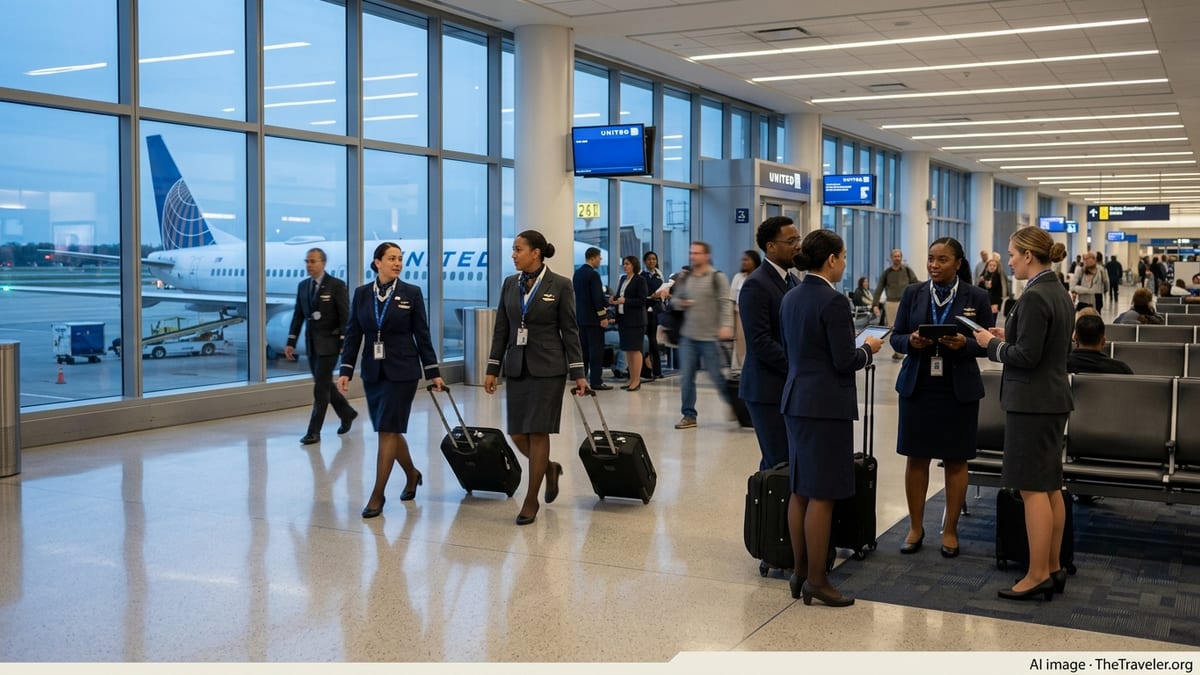
Second Tentative Agreement Follows Rejected 2025 Deal
The latest tentative agreement, reached in late March 2026 after mediated bargaining sessions in Chicago, comes less than a year after United flight attendants voted down an earlier contract proposal in July 2025. That first tentative agreement, negotiated in 2025, included sizable raises and retroactive pay but failed to win majority support, sending both sides back to the bargaining table.
According to publicly available union communications and company statements summarized in recent coverage, the new accord, often referred to among flight attendants as “TA2,” is designed to address concerns that the first deal did not go far enough on wages, scheduling and quality-of-life protections. The restart of talks in late 2025 and early 2026 unfolded against a backdrop of continued labor activism across the airline industry and strong demand for air travel.
The agreement remains subject to review by the Association of Flight Attendants’ United Master Executive Council and then to a ratification vote by roughly 30,000 United flight attendants. Until that internal process is complete, only broad outlines of the package have been made public, leaving front-line crew members and analysts to examine early summaries and informal discussions to gauge what has changed.
Headline Pay: Top Rates Above $100 Per Hour
United has indicated through public channels that the new tentative agreement would deliver immediate pay increases upon ratification and lift the top wage rate for flight attendants to about 100 dollars per hour by the end of the contract term. Supporters of the deal note that this would put United’s flight attendants at or near the top of the U.S. industry pay scale, a key goal for the union as other major carriers have secured substantial raises for cabin crew in recent years.
Online discussions referencing company communications describe a wage structure that starts with a significant jump on the date of signing, followed by step-ups over the life of the agreement. While full pay tables have not yet been widely released in official summaries, early indications suggest that long-tenured flight attendants would see some of the biggest nominal gains, reflecting the seniority-based nature of airline pay systems.
Labor analysts point out that “100 dollars an hour” can be a symbolic benchmark in negotiations, but the real impact on take-home pay depends on how many paid hours flight attendants can actually log and how additional forms of compensation are structured. That context has contributed to close scrutiny of non-wage elements that have been signaled but not fully detailed.
Boarding Pay, Schedule Rules and Quality-of-Life Issues
Beyond hourly rates, the second tentative agreement is reported to include several provisions that respond directly to long-running complaints from flight attendants about unpaid work time and unpredictable schedules. Published coverage and member updates describe the addition of boarding pay, a relatively new feature in U.S. cabin crew contracts that compensates flight attendants during the time passengers are boarding, which historically has not been paid at full hourly rates.
Reports also indicate that the agreement would introduce new compensation for extended gaps between flights, along with changes to scheduling rules that could affect how trips are built, how reserve duty is managed and how rest periods are protected. These kinds of provisions can be complex, and their value often depends on how they interact with specific trip patterns and base operations.
For many flight attendants, improvements in quality-of-life areas such as hotel standards, layover protections and predictability of bidding are as important as headline wage numbers. The 2025 rejection vote highlighted frustration with aspects of the prior proposal’s scheduling and reserve language, and union leaders have framed the return to bargaining as an effort to secure stronger safeguards while still locking in industry-leading pay.
Details Still Opaque Ahead of Member Review
Despite the high-profile nature of the new tentative deal, relatively few concrete details have been formally released so far. According to union updates, the full text and explanatory materials are expected to be shared first with local union leaders, who will review the package before deciding whether to send it to the membership for a ratification vote.
This staged process mirrors how the 2025 agreement was handled, with summary bullet points emerging before members could see complete contract language. As a result, much of the early discussion among flight attendants has centered on partial information, informal briefings and interpretations of what boarding pay, new premiums and schedule changes might look like in practice.
Some online commentary from flight attendants welcomes the prospect of higher top-out pay and new forms of compensation, while others express caution, pointing to the previous deal’s defeat as evidence that members will closely parse every section once full documents are available. The extent to which the second agreement addresses specific pain points from the first proposal is likely to be decisive when ballots are cast.
Implications for United’s Network and the Wider Airline Labor Landscape
The prospective agreement lands at a time when United is in expansion mode, adding international routes and reshaping its network out of major hubs such as Newark, Chicago and San Francisco. Competitive pay and more predictable working conditions are seen by industry observers as tools to retain experienced flight attendants, support operational reliability and help the airline staff new flying as capacity grows.
At the same time, the deal fits into a broader pattern of significant labor settlements across North American airlines, where pilots, mechanics and other workgroups have used a combination of tight labor markets and robust demand to negotiate higher wages and stronger protections. A successfully ratified United flight attendant contract with pay topping 100 dollars per hour could influence bargaining expectations at other carriers where cabin crew talks are still underway or due to begin.
For travelers, the negotiations are largely playing out behind the scenes, but the outcome may have indirect effects on reliability and customer experience. Stable labor relations and clear rules for scheduling and rest can contribute to fewer disruptions, while higher compensation may help airlines attract and retain staff in demanding, customer-facing roles. For now, United passengers and crew alike are watching to see whether the second tentative agreement secures the support that eluded the first.