

More news on this day
A United Airlines Boeing 787-9 operating Flight UA2127 from Los Angeles to Newark made an emergency return to Los Angeles International Airport after an engine fire alert shortly after takeoff, prompting a full evacuation on the runway and briefly disrupting operations at one of the nation’s busiest hubs.
Get the latest news straight to your inbox!
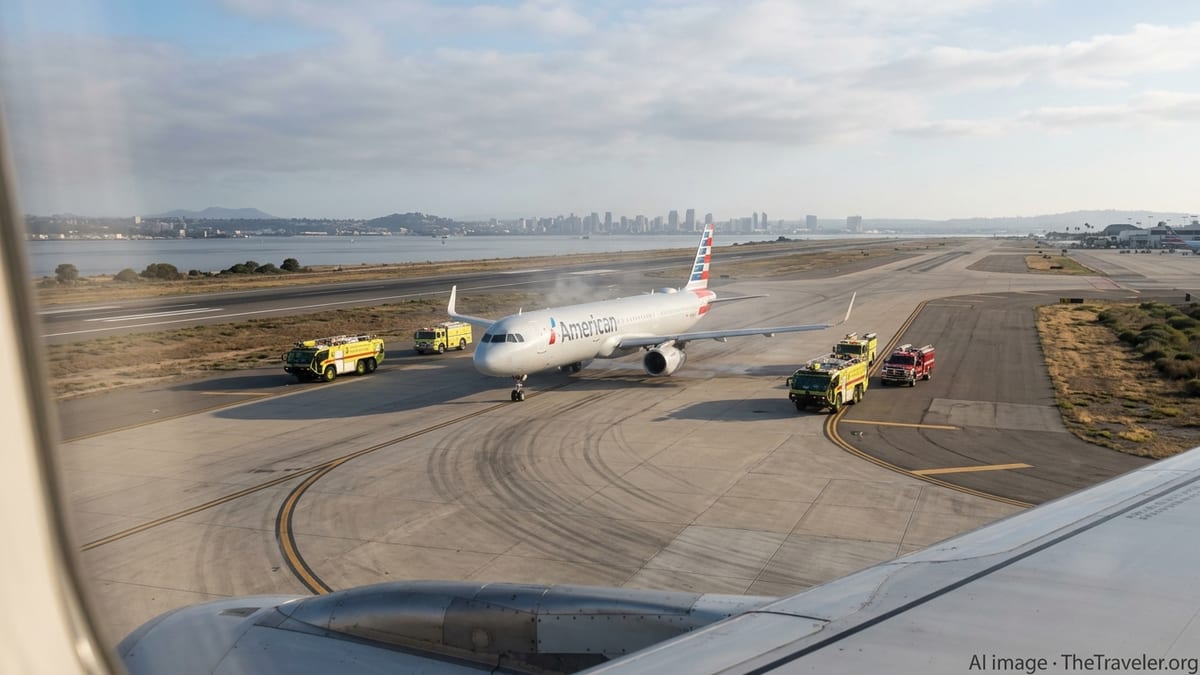
Engine Fire Alert Shortly After Departure
Publicly available flight data and media reports indicate that Flight UA2127 departed Los Angeles International Airport on the morning of March 2, 2026, bound for Newark, New Jersey. The widebody Boeing 787-9 had more than 230 passengers on board, along with a crew of over 10 people, for the transcontinental service from the West Coast to the East Coast.
Shortly after departure, while the aircraft was climbing through its initial altitude, cockpit indications pointed to a fire in the left engine. Aviation incident summaries and specialist coverage describe the crew halting the climb and declaring an emergency. The aircraft reportedly leveled off around the mid-teens in thousands of feet before turning back toward Los Angeles.
According to several aviation news outlets, the crew attempted to use the onboard fire suppression system, but the indication of an engine fire persisted. With a potential fire in one of its engines and significant fuel still on board for the long flight to Newark, the decision was made to return to Los Angeles for an expedited landing.
The aircraft landed back at LAX after less than an hour in the air. Runway operations were temporarily adjusted while emergency vehicles took up positions along the landing path, reflecting the elevated caution that typically accompanies a suspected engine fire in a twin-engine long-haul aircraft.
Runway Evacuation and Passenger Impact
After the aircraft touched down safely, it came to a stop on the runway where fire crews visually assessed the affected engine. Reports from the scene and subsequent media coverage describe flames and smoke associated with the left engine, with ground crews working quickly to ensure the situation was under control.
Passengers were evacuated through emergency slides directly onto the runway, a measure generally reserved for high-risk situations where remaining on board is not considered advisable. Accounts shared publicly by travelers and observers describe a rapid but controlled evacuation, with individuals exiting via multiple doors and gathering at safe distances under the direction of crew members and airport staff.
Information referenced in local media and aviation forums indicates that all passengers and crew were able to exit the aircraft, with only minor injuries reported in connection with the slide evacuations and the rush to leave the cabin. Emergency medical teams on site evaluated individuals for bumps, bruises, and anxiety-related symptoms commonly associated with such high-stress events.
Once evacuated, passengers were transported by bus from the runway area back to terminal facilities. Some reports mention that airline lounges and gate areas were used to accommodate travelers, many of whom faced significant delays and rebooking as the airline worked to place them on alternate flights to the East Coast and other destinations.
Temporary Ground Stop and Airport Operations
The incident had immediate operational repercussions at Los Angeles International Airport. According to published aviation advisories and media summaries, a brief ground stop was implemented for departures while the emergency response unfolded. Arriving flights also experienced delays as the runway and associated taxiways were occupied by the aircraft and responding vehicles.
Traffic flow at LAX, a critical hub for both domestic and international travel, was moderately disrupted during the height of the response. Airlines adjusted departure times and rerouted aircraft around the affected runway complex, while air traffic controllers coordinated with crews already in the air to manage holding patterns and arrival sequences.
Within a relatively short period, airport operations began returning toward normal as the disabled aircraft was towed from the runway to a remote stand for inspection. Subsequent departures resumed once the runway was cleared and fire crews confirmed there was no remaining hazard to other aircraft movements.
For passengers inside the terminal, the episode produced visible signs of disruption, including congested gate areas, flight delays, and rebooking queues. However, the broader airport network continued functioning, demonstrating how major hubs are structured to absorb unexpected incidents while minimizing prolonged impacts on the national air system.
Aircraft Type, Safety Procedures, and Investigation
Flight UA2127 was operated by a Boeing 787-9 Dreamliner, a long-haul twin-engine jet frequently used by United Airlines on high-demand domestic and international routes. The aircraft type is designed with multiple redundant safety systems, including engine fire detection and suppression, as well as strict procedures for crews to follow in the event of an in-flight emergency.
Aviation incident reporting indicates that, in accordance with standard practice, the crew followed established checklists for an engine fire, including throttling back the affected engine, activating fire suppression bottles, and coordinating with air traffic control to prioritize a return and landing. The decision to carry out a full slide evacuation on the runway is consistent with safety guidelines that prioritize rapid egress when a fire is suspected or confirmed.
The exact cause of the engine fire has not yet been fully detailed in public reporting. Typically, events of this nature trigger an investigation involving the airline, engine manufacturer, and federal safety agencies. Investigators commonly examine the engine’s recent maintenance history, fuel and oil systems, sensors, and any evidence of component failure or foreign object damage.
In the weeks and months following such an event, findings may lead to targeted inspections of similar engines across the fleet, service bulletins from manufacturers, or additional safety recommendations for operators. Until detailed technical conclusions are released, publicly available information centers primarily on the sequence of events and the performance of emergency procedures.
Broader Context for U.S. Air Travel Safety
The emergency return of Flight UA2127 adds to a series of recent high-profile aviation incidents that have drawn attention to engine reliability and in-flight safety across commercial fleets. While serious events capture headlines, safety data for U.S. commercial air travel continues to show that such occurrences remain rare compared with the vast number of uneventful flights operating each day.
Industry analysts often emphasize that the robust safety record is built on layers of regulation, rigorous maintenance requirements, ongoing monitoring of aircraft systems, and training that prepares crews for exactly the type of emergency encountered on UA2127. The successful landing and safe evacuation, despite the dramatic circumstances, are viewed by many observers as an example of these systems working as intended.
For travelers, the incident may raise questions about engine technologies, aging fleets, and the rapid growth of flight schedules in and out of major hubs such as LAX. Aviation commentators note that newer-generation aircraft and engines introduce both improvements in efficiency and new technical challenges that must be continually evaluated through data collection and incident analysis.
As investigators review Flight UA2127 and similar events, their findings are expected to feed into the broader cycle of safety improvements, from updated maintenance protocols to refined crew training scenarios. For now, the publicly documented sequence of events highlights both the vulnerability of modern aviation to unexpected technical failures and the capacity of safety systems and trained personnel to prevent loss of life when they occur.