

More news on this day
A United Airlines flight operating from Houston to Knoxville made an urgent emergency landing at Shreveport Regional Airport on Tuesday after the crew reported the smell of smoke on board, prompting a full emergency response but resulting in a safe landing and no reported injuries.
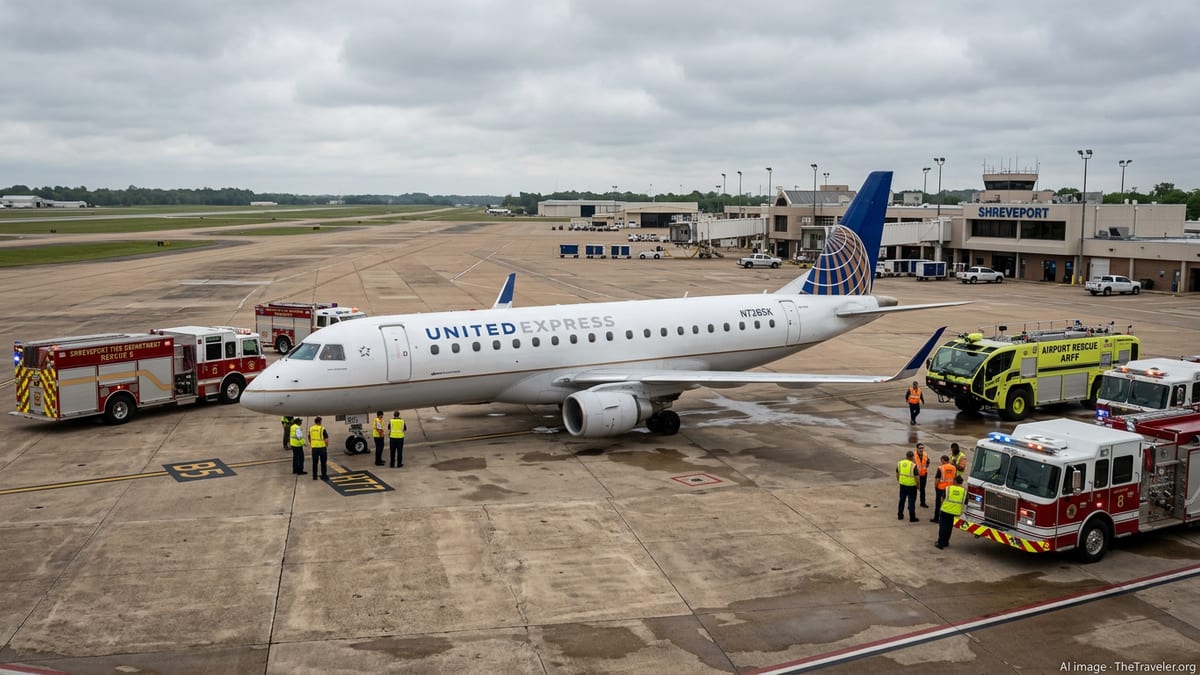
Smoke Alert Prompts Diversion to Shreveport
United Airlines Flight UA4887, operating the morning route from Houston George Bush Intercontinental Airport to Knoxville McGhee Tyson Airport on March 10, was diverted to Shreveport Regional Airport in Louisiana after the crew detected the smell of smoke in the cockpit and cabin area. Airport officials said an aircraft emergency was declared and relayed to local 911 dispatchers shortly after 11:20 a.m. local time.
Emergency crews were positioned on the airfield as the regional jet made its approach into Shreveport. Despite the concern in the cabin, the aircraft landed without incident and taxied to the gate under its own power. Passengers remained seated as fire and rescue personnel conducted an external inspection before the aircraft door was opened.
Initial assessments at the airport indicated that while crew members reported a smoke odor, no visible smoke or active fire was found once the aircraft was on the ground. The incident was described by airport officials as a precautionary diversion in line with standard safety protocols.
Passengers Safe After Precautionary Landing
All passengers and crew aboard UA4887 were reported safe following the diversion. After the aircraft came to a stop at the gate, responders boarded to verify conditions inside the cabin. No injuries or medical issues related to the incident were reported by local authorities.
Several travelers were seen being escorted into the terminal while crews continued to examine the aircraft. For many on board, the most noticeable sign of an emergency was the presence of fire trucks and ambulances flanking the runway as the jet landed, a visual reminder of the seriousness with which airlines and airports treat any potential smoke event.
United Airlines has not released the exact number of passengers on the flight, which is typically operated by a regional partner using a smaller jet. The carrier has said its teams are working to support customers affected by the disruption and to arrange onward travel to Knoxville.
Investigation Under Way Into Source of Smoke Odor
Airport officials said that, as of Tuesday afternoon, the precise source of the reported smoke smell on UA4887 had not yet been determined. Maintenance teams began inspecting the aircraft after passengers disembarked, focusing on possible electrical, ventilation or galley components that can sometimes produce odors similar to smoke without a visible plume.
In modern commercial aviation, any indication of smoke or burning, whether from equipment, wiring or environmental systems, is treated as a potential fire risk. Even when no visible smoke is present, a distinct odor can trigger immediate checklists in the cockpit and lead flight crews to seek the nearest suitable airport for landing.
Officials at Shreveport Regional Airport noted that such diversions are relatively uncommon but not unprecedented. In many cases, investigations ultimately trace the smell to overheated components or transient electrical issues that do not result in lasting damage. A full technical review of the aircraft will be required before it is cleared to return to regular service.
Operations in Houston, Shreveport and Knoxville Affected
The emergency diversion briefly added unscheduled activity to Shreveport Regional Airport on what was otherwise a routine weekday morning. Fire and rescue units remained on standby on the airfield while the aircraft was brought to the gate and then were released back to normal duties once inspectors confirmed there was no ongoing hazard.
For travelers originating in Houston and continuing to Knoxville, the incident meant missed connections and delays as United rebooked passengers on later services. The airline’s operations teams in Houston, Shreveport and Knoxville worked through the day to reposition customers and, if necessary, secure hotel accommodations for those facing longer waits.
Flight-tracking schedules showed UA4887 as part of United’s regular regional network linking key business and leisure markets across the southeastern United States. The diversion is expected to have a knock-on effect on at least one subsequent rotation for the aircraft, as maintenance and safety checks take precedence over schedule recovery.
Safety Protocols Highlight Conservative Industry Approach
The handling of Flight UA4887 underscores the conservative approach airlines and regulators take toward any potential fire-related issue in flight. Global aviation safety guidance strongly favors immediate diversion when smoke is reported, even if the crew cannot immediately confirm its source.
Industry analysts note that this cautious posture has contributed to commercial air travel’s strong safety record in recent decades. In-cabin smells that ultimately turn out to be benign still trigger the same emergency procedures, prioritizing passenger safety over schedule reliability or operational cost.
For passengers on UA4887, the day’s events translated into an unexpected stop in Shreveport and travel disruption, but also a demonstration of how quickly flight crews, air traffic controllers and airport emergency teams respond when something does not smell right at 30,000 feet. As inspections continue, the aircraft involved will remain grounded until technicians and safety managers are satisfied it is safe to reenter service.