

More news on this day
Two United Airlines jets narrowly avoided a high-speed runway collision at Los Angeles International Airport after one aircraft mistakenly entered an active runway as another accelerated for takeoff, an incident that investigators say could have led to a major aviation disaster.
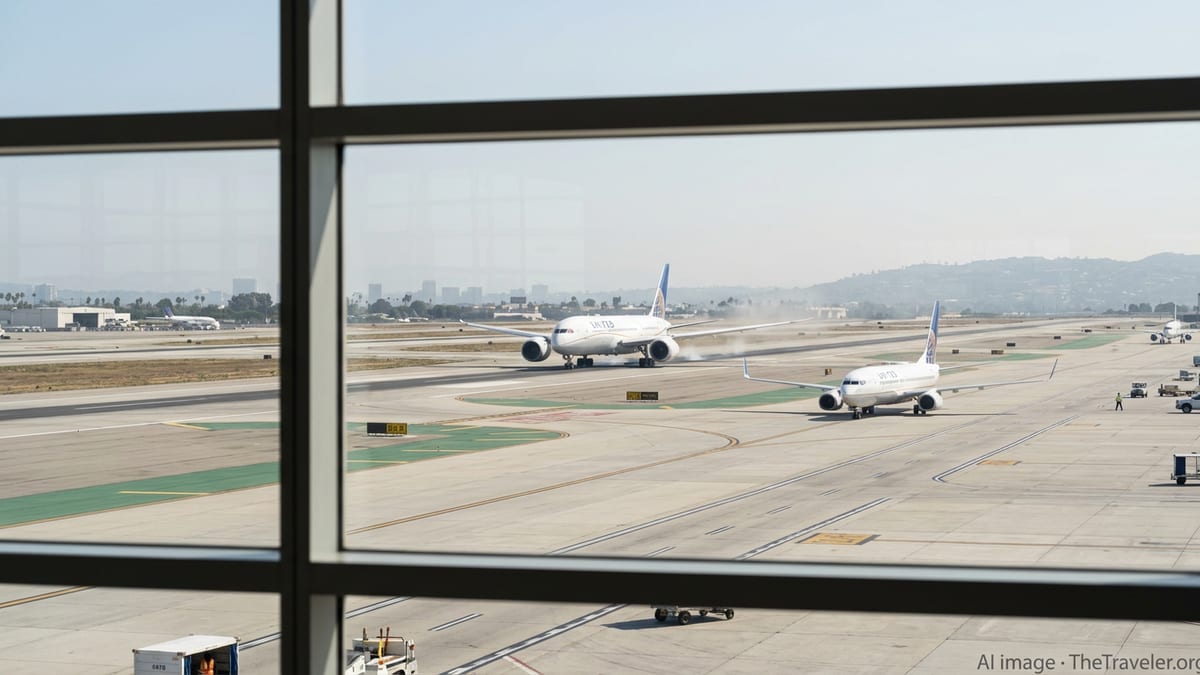
High-Speed Abort Averts Potential Disaster
The close call occurred late on the morning of March 2 at Los Angeles International Airport, when a United Airlines Boeing 787 Dreamliner accelerating for departure was forced to abort its takeoff after another United jet moved onto the same runway. According to preliminary accounts from aviation outlets and air traffic control recordings, the widebody jet was already traveling at high speed when controllers ordered the crew to reject the takeoff.
The second aircraft, reported to be a United Airbus A321neo, had crossed the hold-short line and begun to enter the runway, creating an immediate risk of collision. Swift action by both the tower controller and the 787 flight crew brought the heavily loaded long-haul aircraft to a halt before it reached the intruding jet, avoiding impact by what observers described as a narrow margin.
Passengers on board the departing flight reported a sudden surge of braking power and the roar of reversing thrust, followed by an abrupt stop and a period of silence on the runway. Many did not initially understand what had happened until pilots and cabin crews explained there had been a runway conflict and that the aircraft would be returning to a gate for checks and new departure planning.
No injuries were reported on either aircraft, but the rejected takeoff and subsequent inspections forced a temporary halt to operations on the affected runway, triggering delays that rippled through one of the country’s busiest aviation hubs for much of the afternoon.
Investigations Focus on Pilot Actions and Air Traffic Control
The Federal Aviation Administration has opened an investigation into the runway incursion, while the National Transportation Safety Board is gathering data on cockpit decision-making, tower instructions and the performance of surface radar and warning systems at the airport. Early attention is focused on why the A321 crew proceeded onto the runway without full clearance and how close the two aircraft came to colliding.
Investigators are expected to review cockpit voice recordings, flight data from both jets and detailed transcripts of air traffic control communications. They will also examine whether runway status lights, stop-bar indications or other visual cues were active and visible to the A321 crew as they moved toward the departure point.
Safety specialists say particular focus will be placed on the timing of the controller’s order and the 787 crew’s response. A high-speed rejected takeoff places significant stress on aircraft brakes and tires and is typically attempted only below a calculated decision speed where stopping is still considered safe. The fact that the widebody jet was able to stop in time suggests the order came just within that critical window.
The FAA routinely classifies such incidents according to the level of collision risk, and early descriptions from regulators and industry sources suggest this event will likely be rated among the more serious categories, reflecting the small separation and the high-energy state of the departing aircraft when the abort was initiated.
Renewed Scrutiny of Runway Safety Across the United States
The near collision at LAX comes amid growing scrutiny of airfield safety in the United States, following a series of close calls at major airports over the past two years. Runway incursions, where an aircraft or vehicle mistakenly enters an active runway environment, have become a particular focus for regulators and airlines striving to maintain a strong safety record in an era of heavy air traffic and tight schedules.
Industry analysts note that the LAX event follows other high-profile near misses involving large commercial jets, underscoring systemic challenges around cockpit workload, complex airport layouts and occasionally strained communications between pilots and controllers. The recent increase in such incidents has already prompted calls in Washington for additional investment in surface movement technology and enhanced controller staffing.
Airline and union representatives point out that, even with these high-profile events, commercial aviation in the United States remains statistically one of the safest forms of travel. They also emphasize that in many of these close calls, including the latest one in Los Angeles, procedures ultimately worked as intended: controllers issued immediate instructions, pilots reacted quickly and trained crews brought their aircraft to a safe stop.
Nonetheless, safety advocates argue that recurring near misses highlight vulnerabilities that must be addressed before they result in a catastrophic crash. They are pressing for faster deployment of modernized ground radar, automated runway incursion alerts and standardized training that better reflects the pace and density of today’s traffic at large hubs.
LAX Operations Disrupted as Passengers Face Delays
In the hours that followed the runway incident, operations at Los Angeles International slowed markedly as airport authorities temporarily suspended departures on the affected runway to inspect the pavement and allow crews to cool and evaluate the 787’s brakes. Aircraft waiting to depart were held at gates and taxiways, while some arriving flights circled or were briefly delayed on approach.
Passengers on the two United flights were eventually brought back to terminals as technicians assessed potential wear on tires, landing gear components and braking systems. Many travelers missed onward connections, and rebooking desks quickly grew crowded as the airline worked to reaccommodate those with tight itineraries, including international departures.
Airport officials said they coordinated closely with federal regulators and airlines to restore normal runway configurations as soon as it was safe to do so. By later in the day, flight operations had largely recovered, although schedule disruptions continued into the evening as aircraft and crews ended up out of position.
For some travelers, the incident has heightened awareness of the complexity and risk inherent in airport operations that most passengers rarely see. Social media posts from the scene described a mix of relief at the successful abort and frustration over missed plans, while others praised the professionalism of pilots and ground crews who calmly managed the aftermath.
Broader Questions About Training and Technology
Beyond the immediate investigation, the events in Los Angeles are feeding into a broader conversation about how best to prevent runway incursions at busy multi-runway airports. Aviation experts say the combination of human factors, infrastructure design and technological capability will all be under review as regulators and airlines digest lessons from this near miss.
Pilot groups have long urged more detailed, scenario-based training on complex ground operations, particularly at large hubs with intersecting runways, heavy construction activity or unusual taxi patterns. They argue that recurrent simulator sessions should include more emphasis on real-world runway incursion scenarios, from misheard clearances to last-second abort commands issued by the tower.
On the technology side, attention has turned to advanced ground surveillance systems, cockpit displays of traffic information and standardized runway status lighting that can give crews additional visual confirmation before entering an active runway. Some airports have already deployed such tools, while others, including busy gateways like LAX, are in various stages of upgrades and testing.
For now, the near collision between the two United jets stands as another reminder of how quickly an ordinary departure can turn into a high-stakes safety challenge. Investigators will likely take months to complete their analysis, but the incident has already intensified pressure on aviation authorities to accelerate reforms aimed at ensuring that America’s crowded runways remain as safe as its skies.